The best VR headsets in 2027 cover every kind of buyer, from a first-time player to a professional designer. The best VR headsets in 2027 are sharper, lighter, and easier to use than the models of just a few years ago. Standalone headsets now run games and apps without a PC, mixed reality lets you see your room while virtual objects sit on your desk, and high-end headsets deliver the resolution that creative work demands. Prices still span a wide range, from around $299 to around $3,499, so the right choice depends on what you will actually do with it.
Choosing well matters because VR headsets are not interchangeable. A standalone headset is the easiest way to start, a console headset is the best route for PlayStation owners, and a PC headset delivers the highest fidelity if you already own a powerful computer.
This guide compares seven current VR headsets from Meta, Apple, Sony, Valve, HTC, and Samsung, with prices from around $299 to around $3,499. Meta Quest 3 leads overall, Quest 3S is the best value, and Apple Vision Pro is the best headset for professional and mixed reality work.
Key takeaways
- Meta Quest 3 is the best VR headset overall, with sharp displays, strong mixed reality, and the largest standalone game library.
- Meta Quest 3S is the best value, offering most of the Quest 3 experience for around $299.
- Apple Vision Pro is the best headset for professional work and mixed reality, with the sharpest displays and the best eye and hand tracking.
- PlayStation VR2 is the best headset for PlayStation 5 owners, with excellent HDR OLED displays and exclusive games.
- Samsung Galaxy XR is the best Android mixed reality headset, built on Google software with Gemini AI built in.
At a glance: the shortlist
| Headset | Best for | Starting price | Standout limit |
|---|---|---|---|
| Meta Quest 3 | Best overall | About $499 | Battery lasts about two hours |
| Meta Quest 3S | Best value | About $299 | Lower resolution than Quest 3 |
| Apple Vision Pro | Professional work | About $3,499 | Very expensive; heavy |
| PlayStation VR2 | PlayStation 5 owners | About $549 | Needs a PS5; small library |
| Valve Index | PC VR enthusiasts | About $999 | Ageing displays; needs base stations |
| HTC Vive Pro 2 | High-resolution PC VR | About $799 | Needs a powerful PC; pricey |
| Samsung Galaxy XR | Android mixed reality | About $1,799 | New platform; limited apps |
Meta Quest 3 — Best overall
Meta Quest 3 is the best VR headset for most people in 2027. It is a standalone headset, so it needs no PC or console, and it runs on the Snapdragon XR2 Gen 2 chip with 4K+ Infinite Display resolution of 2064 by 2208 pixels per eye. The pancake lenses keep the image sharp across more of the view, and the headset is slimmer and better balanced. Full-colour passthrough makes mixed reality genuinely useful, letting you see your room while virtual screens and objects appear in it.
The Touch Plus controllers track well without tracking rings, and the Quest library is the largest in standalone VR. The main weakness is battery life of around two hours, so long sessions need a battery strap or a cable. At around $499, Quest 3 is the default recommendation: it does the most things well, and it is the headset most new buyers should start with. Our guide to the best gaming monitors in 2027 covers screens that suit a mixed VR and desktop setup.
Pros: Sharp pancake lenses; strong mixed reality; largest standalone library; no PC needed.
Cons: About two hours of battery; comfort needs a better strap for long sessions.
Meta Quest 3S — Best value
Meta Quest 3S is the cheapest way into good VR in 2027, at around $299. It uses the same Snapdragon XR2 Gen 2 chip as the Quest 3 and the same Touch Plus controllers, so it runs the same games and apps at the same speed. The savings come from older Fresnel lenses and a lower resolution of 1832 by 1920 pixels per eye, giving a slightly softer image.
For a first headset, those compromises are easy to accept. Quest 3S still offers full-colour passthrough for mixed reality, the same vast app library, and the same standalone freedom. Daily players should spend the extra on the Quest 3.
Pros: Same chip and library as Quest 3; very affordable; standalone and easy to use.
Cons: Softer image; older lenses with a narrower sweet spot.
Apple Vision Pro — Best for professional work
Apple Vision Pro is the most advanced headset in this guide and the most expensive, at around $3,499. Its micro-OLED displays deliver 23 million pixels in total, making text sharp enough to read comfortably and virtual screens large enough to replace a monitor. Eye and hand tracking are the best available: you look at an item and tap your fingers to select it.
Vision Pro is a mixed reality device first and a VR headset second. It is heavy at around 600 to 650 grams, battery life is about two hours on the tethered pack, and the app library is much smaller than Meta’s. This is a professional tool for work, not a gaming headset. Check current pricing before buying.
Pros: Sharpest displays available; superb eye and hand tracking; excellent for productivity and media.
Cons: Very expensive; heavy; small app library.
PlayStation VR2 — Best for PlayStation 5 owners
PlayStation VR2 is the best VR headset for anyone who already owns a PlayStation 5. It connects with a single cable and uses HDR OLED displays at 2000 by 2040 pixels per eye, with a 120Hz refresh rate that keeps motion smooth. Eye tracking, headset haptics, and adaptive triggers on the Sense controllers add immersion that standalone headsets cannot match.
The library is smaller than Meta Quest, and it needs a PS5, so the total cost is higher than the headline price. If you do not own a PS5, buy a Quest 3 instead.
Pros: Beautiful HDR OLED displays; excellent haptics and eye tracking; strong exclusive games.
Cons: Needs a PS5; smaller library than Quest.
Valve Index — Best for PC VR enthusiasts
Valve Index is the oldest headset in this guide and still the favourite of many PC VR enthusiasts. Its 1440 by 1600 pixel per eye LCD displays run at up to 144Hz, which makes motion feel exceptionally smooth, and its field of view is wider than most rivals. The Knuckles controllers track individual fingers, and the lighthouse base stations deliver the most precise room-scale tracking available.
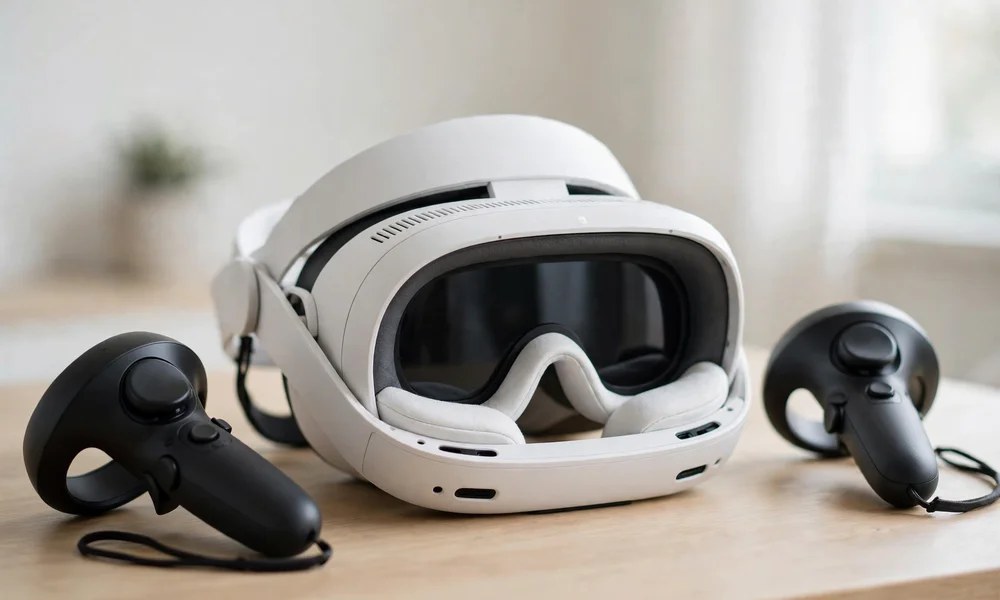
The Index shows its age in resolution: newer headsets are sharper, and the setup is more involved, with base stations to mount and a wired connection to a PC. It remains worth considering for enthusiasts who value refresh rate, field of view, and finger tracking, and who already own a powerful gaming PC.
Pros: Up to 144Hz refresh rate; wide field of view; best finger tracking; precise base station tracking.
Cons: Ageing resolution; complex setup; expensive for its age.
HTC Vive Pro 2 — Best for high-resolution PC VR
HTC Vive Pro 2 is built for PC users who want maximum resolution. Its displays run at 2448 by 2448 pixels per eye, among the highest in any consumer headset, with a 120Hz refresh rate and a 120-degree field of view. For flight simulation, racing simulation, and design work, that resolution makes instruments and fine detail easy to read.
The headset needs a powerful PC with DisplayPort, and it uses SteamVR base stations for tracking, so setup is more involved than a standalone headset. The full kit costs around $799 before you count the PC. Vive Pro 2 is a specialist tool: superb for simulation and design work, overkill for casual gaming.
Pros: Very high resolution; wide field of view; good for simulation and design work.
Cons: Needs a powerful PC; complex setup; expensive overall.
Samsung Galaxy XR — Best for Android mixed reality
Samsung Galaxy XR is the newest headset in this guide and the first major Android XR device, built with Google and Qualcomm. It runs Android XR with Gemini AI built in, uses micro-OLED displays at 4K resolution per eye, and supports both hand tracking and controllers.
The hardware is impressive, with sharp displays and strong passthrough. The open question is software. Android XR is new, so the app library is far smaller than Meta’s, and it will take time for developers to build for it. At around $1,799, it is a premium buy for early adopters. Check current pricing and the app list before buying.
Pros: Sharp 4K micro-OLED displays; Gemini AI built in; comfortable mixed reality design.
Cons: New platform with few apps; expensive.
How to choose
Start with what you already own. PlayStation 5 owners should buy PlayStation VR2, and owners of a powerful gaming PC should consider a PC headset such as Valve Index or Vive Pro 2. Everyone else should buy a standalone Meta Quest, which needs no other hardware. If you go the PC VR route, our guide to the best laptops for gaming in 2027 covers machines powerful enough to drive a headset. For work and mixed reality, Apple Vision Pro leads, while Android users who want the newest platform should look at Samsung Galaxy XR.
Next, think about comfort and space. Try a headset on before buying if you can: weight balance, fit, and the feel of the strap matter more than a specification sheet.
Finally, check the content library. A headset is only as good as the games and apps you will use on it. Meta Quest has the largest library by a wide margin.
Checklist: before you pay
- Decide whether you want standalone, console, or PC VR, and what hardware you already own.
- Check the headset weight and whether you need glasses inserts or a better strap.
- Measure your play space and confirm you have at least two metres square clear.
- List the games and apps you want and confirm they exist on your chosen platform.
- Check current pricing, since VR headsets are discounted often during sale events.
- Confirm the return policy, so you can test comfort and fit at home.
Frequently asked questions
Do I need a PC to use a VR headset?
Not for a standalone headset such as the Meta Quest 3 or Quest 3S, which run games on their own. PlayStation VR2 needs a PS5, and PC headsets need a gaming computer.
Which VR headset is best for beginners?
Meta Quest 3S is the best first headset: it is affordable, easy to set up, and runs the largest app library. Quest 3 is the better buy if you plan to play often and want a sharper image.
Can VR headsets cause motion sickness?
Yes, some people feel sick at first, especially in games with smooth movement. Start with short sessions and use teleport movement where offered.
Is Apple Vision Pro good for gaming?
It can play games, but it is not built for gaming. Vision Pro is best for productivity, media, and mixed reality work. Gamers should buy a Quest 3 or a PlayStation VR2 instead.
What audio should I use with a VR headset?
Built-in speakers are good enough for casual play, but headphones improve immersion a lot. Our guide to the best wireless earbuds for running in 2027 covers light, secure earbuds that also work well for active VR sessions.
How long will a VR headset last?
Expect three to five years from a current headset.
The bottom line
Meta Quest 3 is the best VR headset in 2027 for most buyers, with the sharpest standalone image, the best mixed reality, and the largest library. Quest 3S is the best value at around $299, PlayStation VR2 is the best choice for PS5 owners, and Apple Vision Pro is the best headset for professional work.
Match the headset to your hardware and your habits. Check your play space, the games you actually want, and the current price.