
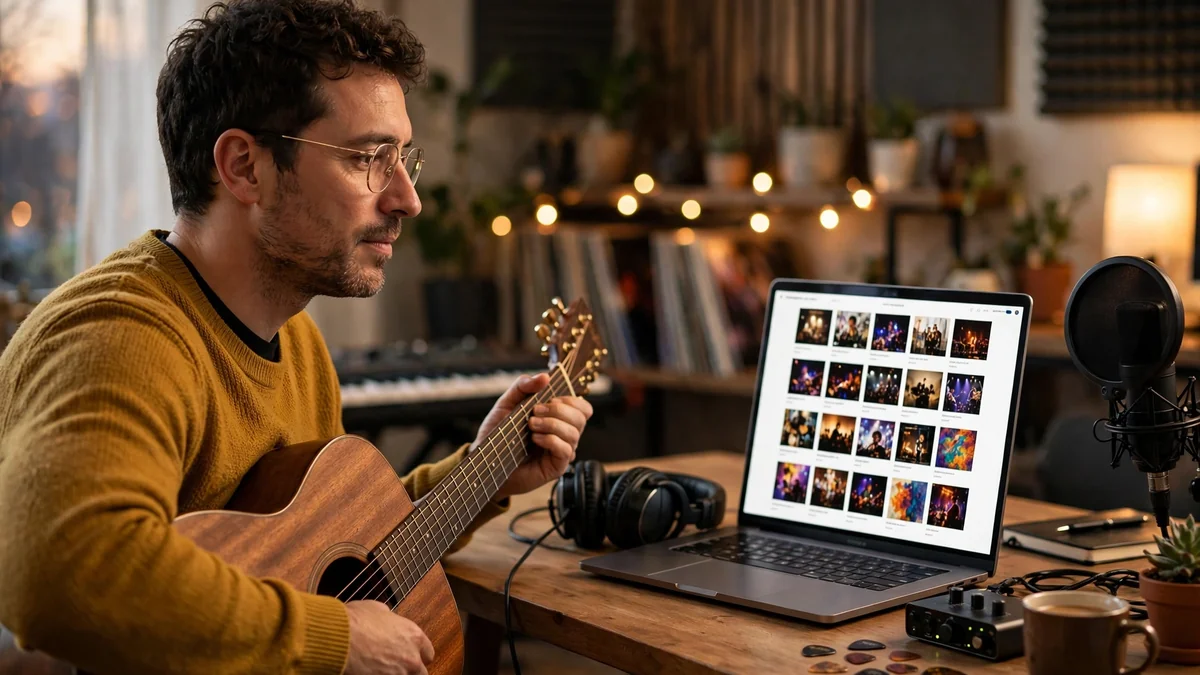
The best website builders for musicians in 2027 do more than show a photo and a biography. They play your music, sell tickets and merchandise, collect email signups, and give venues, press, and fans one place to find everything about you. For a working musician, the website is the home base that social media can never replace, because you own it and it never changes its algorithm.
Musicians have needs that a generic business site does not cover. A music player that works on a phone matters more than a contact form, and tour dates, streaming links, and a mailing list matter more than a blog. The best builders for musicians understand that, with built-in players, event calendars, and tools for selling songs, albums, and merch directly to fans.
This guide compares eight builders that work well for musicians, from the music-specific Bandzoogle to all-rounders such as Wix and Squarespace and budget picks such as Hostinger. Prices below are approximate starting prices, so check current pricing before you buy.
Key takeaways
- Bandzoogle is the best overall pick for musicians because it is built for music, with players, tour dates, and fan tools included.
- Wix is the best all-rounder for musicians who also need bookings, lessons, or a general business site.
- Squarespace is the best choice when visual design matters most, with elegant templates for photos and videos.
- Shopify is the best option for musicians who sell a lot of merchandise online.
- Keep your mailing list with you: the builder should let you export fan email addresses at any time.
At a glance: the shortlist
| Builder | Best for | Starting price | Standout limit |
|---|---|---|---|
| Bandzoogle | Most musicians | About $8 per month | Fewer general business tools |
| Wix | All-round use | About $17 per month | Music tools are add-ons |
| Squarespace | Design-led artists | About $16 per month | No built-in music store extras |
| WordPress.com | Blogging and content | About $4 per month | Plugins need a higher plan |
| Shopify | Selling merchandise | About $29 per month | Higher cost for a simple site |
| Webflow | Custom design | About $14 per month | Steeper learning curve |
| Hostinger | Tight budgets | About $3 per month | Simpler music features |
| Format | Photo portfolios | About $12 per month | Weak selling tools |
Bandzoogle — Best overall for musicians
Bandzoogle is the only builder on this list made specifically for musicians, and it shows in every feature. It includes a built-in music player, tour date listings, mailing list tools, fan subscriptions, and a store for selling music and merchandise, all without add-ons or third-party apps. You can upload tracks, set prices, and keep all of the revenue, with no commission on sales.

Plans start from around $8 per month, making Bandzoogle one of the cheapest options here, and every plan includes the full music toolkit. The main trade-off is that it is less suited to a general business site, so a musician who also runs a teaching studio or agency may want a broader builder.
Pros: Built for musicians, no commission on music and merch sales, very affordable.
Cons: Fewer general business tools, smaller template range than Wix.
Wix — Best all-rounder
Wix is the best all-round option for a musician who needs more than a music site. Its editor is easy to use, the template range is huge, and built-in tools cover bookings, lessons, contact forms, and an online store. A musician who teaches, plays weddings, and sells merch can run all of it from one Wix site.
Music features are less specialised than Bandzoogle. Wix has audio players and event listings, but they are add-ons rather than the core of the platform, and selling music files takes more setup. Paid plans include a custom domain with no Wix branding.
Pros: Very flexible, great for lessons and bookings as well as music, huge template library.
Cons: Music tools are less specialised, and costs rise with add-ons.
Squarespace — Best for design
Squarespace is the pick for musicians whose image matters as much as their sound. Its templates are elegant and image-led, with strong typography and video support, so a press kit, photo gallery, and showreel can look genuinely professional without a designer. The audio blocks play tracks cleanly, and event pages handle tour dates well.
The editor is more structured than Wix, which keeps pages tidy but allows less free movement of elements. Squarespace includes solid blogging, email campaigns, and selling tools, and plans start from around $16 per month.
Pros: Beautiful templates, strong photo and video handling, good email and selling tools.
Cons: No music-specific extras, less flexible editor than Wix.
WordPress.com — Best for blogging and content
WordPress.com is the best choice for a musician who publishes a lot: tour diaries, gear reviews, songwriting notes, and press coverage. Its blogging tools are the strongest on this list, and content is easy to organise by tour, album, or topic, which helps fans and search engines find older posts.
Plans start from around $4 per month, the cheapest entry point here, but plugins and custom themes need a higher plan, and embedding players or selling music takes more setup than on Bandzoogle. The payoff is full control over your content and a site that can grow with your career.
Pros: Best blogging tools, very low starting price, full control over content.
Cons: Plugins need a pricier plan, music features need extra setup.
Shopify — Best for selling merchandise
If merchandise is a serious income stream, Shopify is the strongest selling platform on this list. It handles product pages, sizes and variants, discount codes, abandoned-cart emails, and shipping with a polish that other builders cannot match. A band selling vinyl, shirts, and signed posters will find everything it needs here.
The trade-off is that Shopify is built for shops, not musicians. Its music, tour date, and press kit features are basic, and plans start from around $29 per month, which is a lot for a simple artist site. Compare it with dedicated website builders for online stores to confirm it fits your catalogue size.
Pros: Best merchandise selling tools, reliable checkout, huge app store.
Cons: Expensive for a simple site, weak music-specific features.
Webflow — Best for custom design
Webflow gives a musician far more design control than any drag-and-drop builder, with precise layouts, animation, and responsive behaviour. For an artist with a strong visual identity, or one working with a designer, Webflow can produce a site that looks nothing like a template, which matters when the site is also a press kit.
The learning curve is the real cost. Webflow takes longer to master than Wix or Squarespace, and a musician who only updates tour dates a few times a year may find it slow going. Music players need embedding from a streaming service.
Pros: Outstanding design control, fast sites, strong content management.
Cons: Steeper learning curve, no built-in music player or tour tools.
Hostinger Website Builder — Best for tight budgets
Hostinger’s website builder is the cheapest way to get a musician site online, with plans from around $3 per month and hosting included. Its AI setup builds a starter site from a few questions, and the editor is simple, with ready-made sections for music, galleries, and contact details.
Features are simpler than the bigger names: the music player is basic, selling tools are limited, and the template range is smaller. For a new artist testing a first website, it is a sensible low-cost start.
Pros: Very low cost, fast setup, hosting included.
Cons: Basic music features, smaller template range, limited selling tools.
Format — Best for photo portfolios
Format is built for visual portfolios, and it suits musicians with a strong photographic side: live shots, album artwork, and behind-the-scenes galleries. Its image handling is excellent, with clean layouts and client proofing tools that other builders lack, which also makes it useful for photographers who shoot gigs.
Music features are thin, with no built-in player or tour calendar, so Format works best as a visual site paired with streaming links. Plans start from around $12 per month.
Pros: Excellent image galleries, clean portfolio layouts, client proofing tools.
Cons: No built-in music player, weak selling and tour tools.
How to choose
Start with the main job of the site. If it is the hub for your music career, shortlist Bandzoogle first. If it is a shop, shortlist Shopify. If it is a beautiful press kit, shortlist Squarespace or Webflow. Match the builder to the job, not to the longest feature list.
Next, check that the player works well on a phone, since most fans will listen there, and confirm you can add tour dates quickly from the road. Our guide to the best AI tools for web design can help if you want a head start on layouts and images before choosing a builder.
Finally, protect your fan list. Make sure the builder lets you export email addresses, because a mailing list you cannot take with you is not really yours. Test the editor with a free trial and build a real page before paying.
Checklist: before you pay
- Start a free trial and build a real music page, with a player and tour dates, before entering card details.
- Test the music player on a phone, since most fans listen on mobile.
- Check the renewal price after the first year, not just the introductory offer.
- Confirm you can sell music and merchandise without commission, or know the rate.
- Check that you can export your mailing list and fan email addresses.
- Confirm you can connect a custom domain that matches your artist name.
Frequently asked questions
What is the best website builder for musicians?
Bandzoogle is the best overall pick because it is built for musicians, with a music player, tour dates, mailing list, and commission-free sales included from around $8 per month. Wix is the best all-rounder if you also need bookings or lessons.
Do musicians need a website in 2027?
Yes. Social platforms change their rules and reach, while a website is an address you own. Venues, press, and licensing contacts still expect a professional site with music, photos, and contact details in one place.
Can I sell music directly from my website?
Yes. Bandzoogle lets you sell tracks and albums with no commission, and Shopify and Wix also support digital sales. Selling direct usually earns more per sale than streaming, and it builds your mailing list at the same time.
Which builder is best for a band portfolio?
Bands need photos, videos, music, and tour dates in one place. Our guide to the best website builders for portfolios compares the strongest visual options, with Squarespace and Format among the best for image-led sites.
How much does a musician website cost?
Expect around $3 to $29 per month for the builder, plus a domain at roughly $10 to $15 per year. Bandzoogle and Hostinger are the cheapest options here, while Shopify is the priciest. Check current pricing and renewal rates before committing.
Can I switch website builders later?
You can, but it usually means rebuilding the design, since templates do not transfer between builders. Content can usually be copied across, so treat a switch as a rebuild and keep your mailing list export safe.
The bottom line
For most musicians in 2027, Bandzoogle is the best starting point: it is affordable, built for music, and includes the player, tour dates, mailing list, and store in one place. Wix is the better pick when the site must also handle lessons or bookings, and Squarespace when design leads.
Whichever you choose, keep the music easy to play, the next gig easy to find, and the mailing list signup easy to spot. A musician website earns its keep by turning listeners into fans, and fans into ticket and merch buyers.



