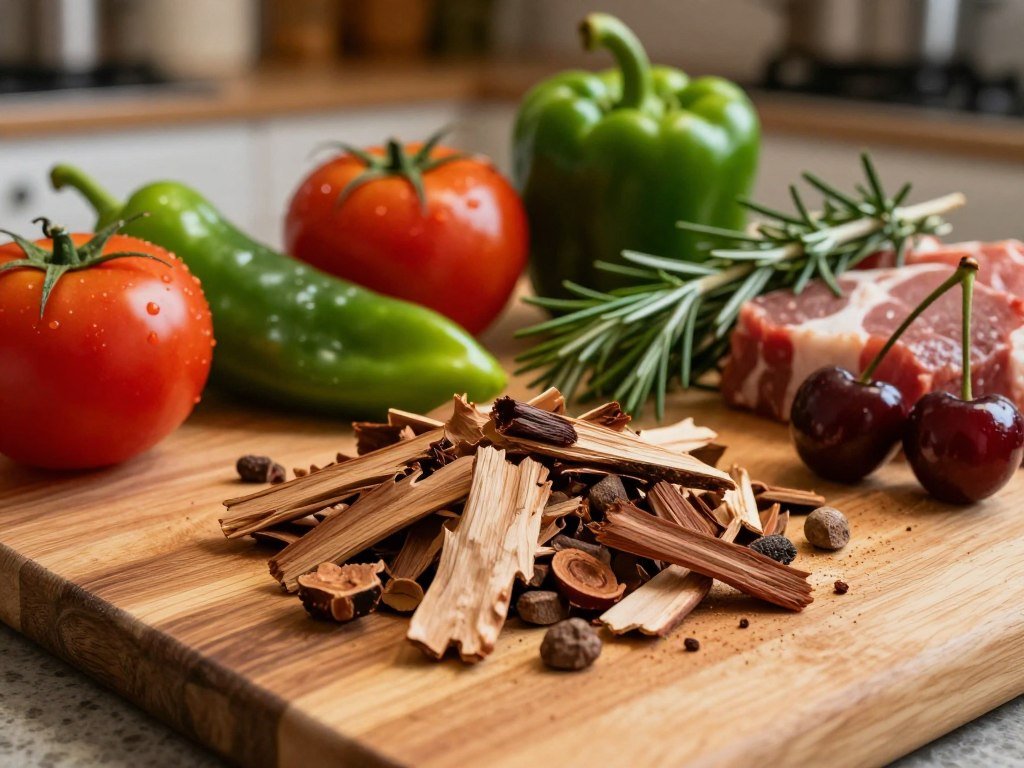
Oak is a dependable beef wood chip; hickory suits pork, and cherry gives poultry mild, sweet smoke. The best choice depends on both smoke strength and the food on your grill.
Delicate fish calls for a milder wood, while rich cuts can stand up to stronger smoke. Thin blue smoke means faint, pale-blue smoke produced by clean-burning wood.
For better BBQ results, start with a simple match and adjust your grilling tips to suit your taste. Start with a small amount of one wood so you can learn its flavor before changing the blend.
Key Takeaways
- Start beef with oak, pork with hickory, and poultry with cherry.
- Choose mild fruit woods for delicate fish and seafood.
- Match smoke strength to the food, not just the wood name.
- Use a modest amount while learning a new wood’s flavor.
- Keep smoke faint and blue for a cleaner taste.
- Pick a wood form that fits your grill and cook length.
Best Wood Chips for Smoking Different Meats by Protein
For brisket, start with oak; for pork butt, start with hickory; for chicken, start with cherry. These starting points make the best wood chips for smoking different meats easier to choose.
Use the chart as a starting point, then adjust the wood to your taste.
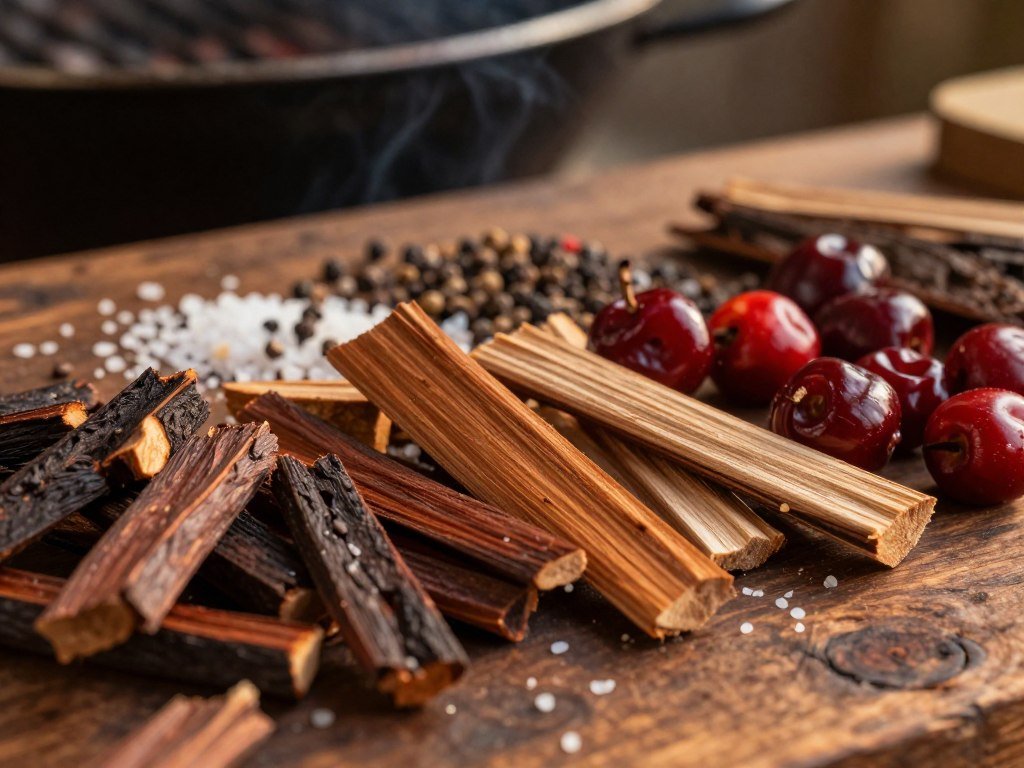
| Food | Starting wood | Alternatives |
|---|---|---|
| Beef: brisket and beef ribs | Oak | Hickory, bourbon-barrel wood |
| Pork: butt, ribs, chops | Hickory | Cherry, apple, pecan |
| Poultry: chicken and turkey | Cherry | Apple, pecan, almond |
| Seafood: fish, shrimp, scallops | Alder or almond | Cherry, apple |
- Wild game: try bourbon-barrel wood, with oak or red-wine-barrel wood as alternatives.
- Vegetables: start with almond, or try cherry and pecan.
- Cheese or cold smoking: start with apple, with cherry and pecan as alternatives.
Think of the listed wood as a first test, not a rule you must follow for every cook.
Beef cuts such as brisket and ribs have plenty of flavor to pair with oak. Chicken and turkey are easy places to test a sweeter fruit wood.
For a new cook, choose the starting wood in the chart before experimenting with alternatives.
How Do the Main Smoking Woods Taste?
Apple gives mild fruitiness, cherry adds sweetness and darker bark, and hickory brings a much stronger bacon-like note. Pick a smoke strength that suits the food and your taste.
The same wood can taste different when you add a little or a lot. A measured blend lets you fine-tune the flavor without turning the cook into a guessing game.
Mild Woods for Delicate Smoke
Apple has a sweet, fruity taste and a mild smoke. It works well with sauced food because it adds flavor without crowding the sauce.
Cherry is mild and sweet, with a subtle fruit note. It can also darken a meat’s bark to a deep mahogany-red color, making it a useful choice when appearance matters.
Pecan brings a nutty, slightly sweet flavor. It is milder than hickory, so it can add depth without the same strong bacon-like edge.
Apple chips have smooth sweetness and mild-to-medium strength. Cherry wood chips give a subtle fruit flavor with mild smoke, while pecan chips offer a smooth, nutty note at mild-to-medium strength.
Stronger Woods for Richer Cuts
Hickory has an assertive, bacon-like flavor that suits pork and ribs. A heavy dose can overwhelm poultry or fish, so use it with care on delicate food.
Oak burns cleanly and steadily, with a more neutral flavor. Post oak is the classic choice for central-Texas brisket.
Mesquite is earthy, very strong, and burns hot and fast. Mesquite chips bring bold flavor and very strong smoke, which suits grilling better than a long, low cook.
Chicken can take more than one kind of wood. Apple and pecan are mild, cherry and maple are medium, and hickory and mesquite are strong. Chicken also pairs with apple, hickory, or post oak, with maple, cherry, or peach as companion woods.
Hickory gives chicken a bold, bacon-like taste, while mesquite can feel intense or off-putting. Competition-blend chips mix cherry, maple, and hickory for medium-strength smoke.
For a simple blend, use one base wood and one accent wood at roughly 70/30. Oak with cherry or hickory with apple keeps the mix easy to track.
Treat mesquite as a small accent or a grilling wood, not the default for a long cook.
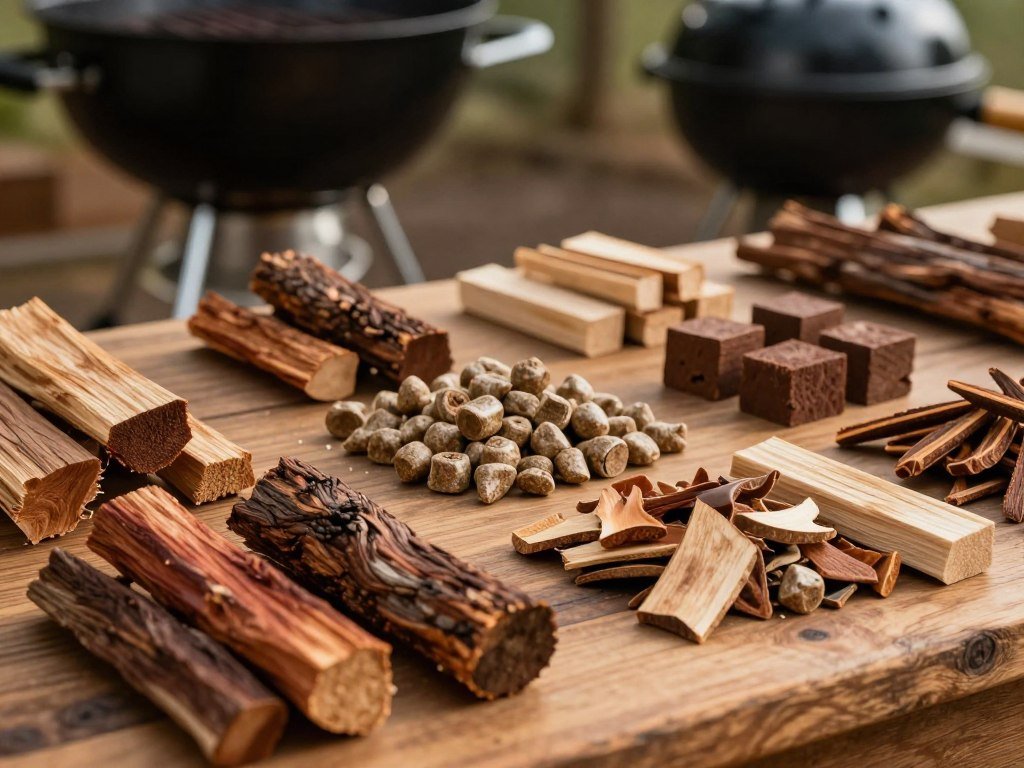
Which Wood-Chip Form Fits Your Grill?
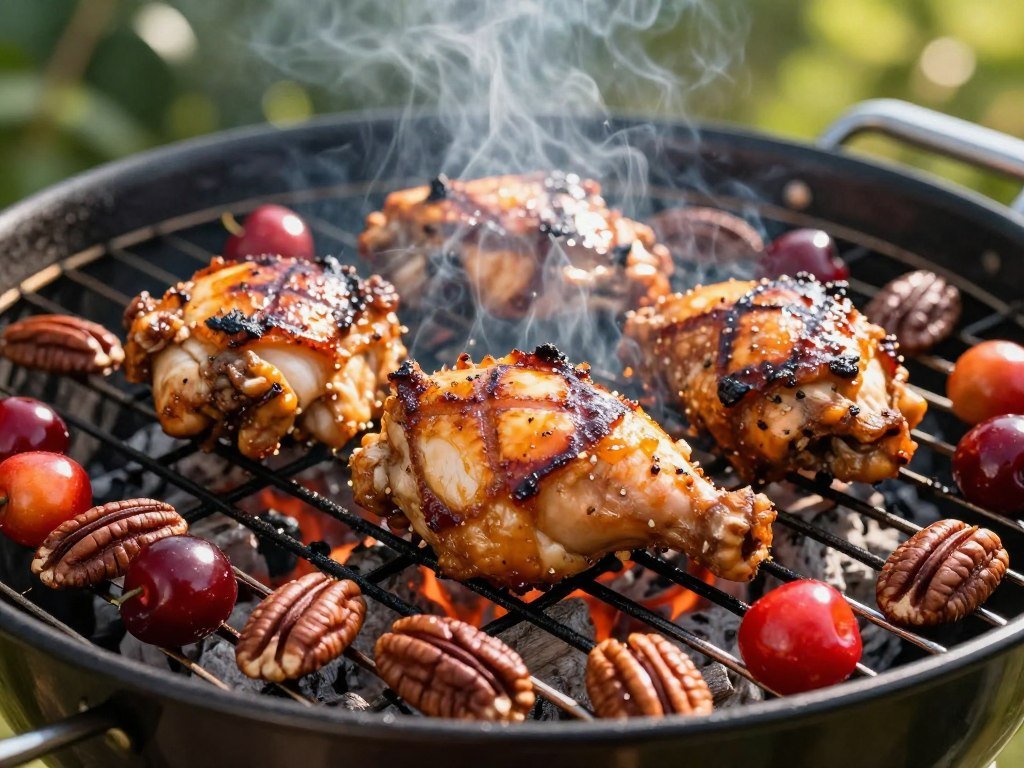
Chips make sense for a pork chop or salmon fillet cooked quickly, while chunks are more practical for a longer charcoal cook. Choose the form that fits your grill and cook length.
Chips typically burn for 15 to 20 minutes, so they suit short cooks rather than brisket. Chunks smolder for 30 to 60 minutes each.
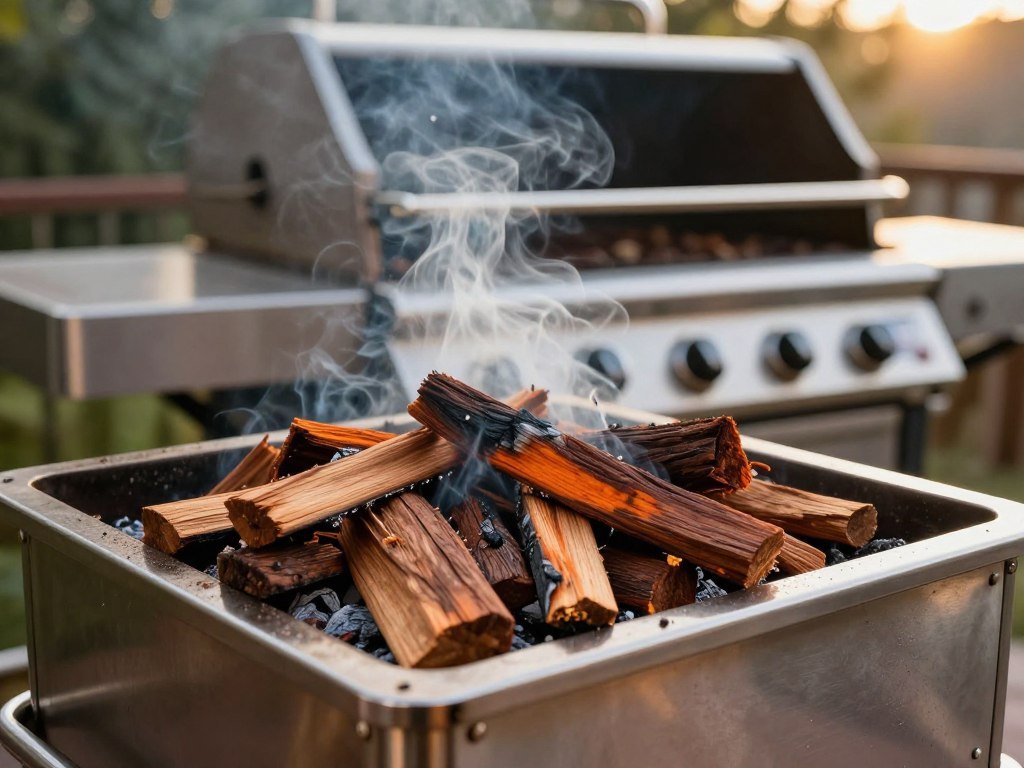
| Form | Typical use | Compatible cooker | Main limit |
|---|---|---|---|
| Chips | Short cooks, smoker boxes | Gas grill | Burn for 15 to 20 minutes |
| Chunks | Longer cooks | Charcoal grill or smoker | Each smolders 30 to 60 minutes |
| Splits | Long cooks | Offset smoker | Need a steady fire |
| Pellets | Smoking and grilling | Pellet grill | Made for pellet grills |
To learn how to use wood chips for smoking on a gas grill, follow these steps:
- Place the chips in a smoker box.
- Set the box over an active burner.
- Keep the food over an unlit area.
- Wait for the chips to start smoking before cooking.
Grocery, hardware, and barbecue specialty stores near you may carry wood chips for smoking; call to check stock. The best brand of wood chips for smoking is less important than a clear wood label and fuel made for food smoking.
Water reaches only 1 to 2 mm into soaked chips, so soaking mainly delays ignition rather than improving smoke. Match the form to the cooker before buying a large bag.
How Much Wood Should Each Smoker Use?
For a long charcoal cook, start with 3 to 4 chunks total in a kettle or bullet smoker, spread across the first two hours. Adding more wood than the cook needs can make the smoke flavor too strong.
Begin with a modest amount, then let the fire do its work. The right amount depends on the cooker and the length of the cook.
Charcoal Kettles, Bullets, Kamados, and Drums
For a long cook on a charcoal kettle or bullet smoker, add 3 to 4 chunks during the first two hours. The timing gives the wood time to smoke while the meat cooks.
For a kamado cook, bury 2 to 4 chunks in the charcoal at the start. The buried pieces release smoke as the coals reach them.
On a drum smoker, place 3 to 5 chunks on top of the coal bed. Spread them out so they do not all begin smoking at once.
Chips can burn through quickly during a long cook, while chunks give charcoal cookers a steadier supply. The goal is a measured stream of smoke, not a pile of wood.
Offsets Need a Clean, Steady Fire
An offset smoker uses splits rather than handfuls of chips. Add a split every 45 to 60 minutes, sizing each one to keep the fire clean.
A split that is too large can cool the fire, while a small one may burn away before the next check. Watch how the fire responds and adjust the split size to keep it steady.
Keep the feed rate tied to the fire, not just the clock. Start at the low end of the recommended amount if you prefer a lighter smoke flavor.
How Can You Keep Smoke Clean and Flavorful?
The first few hours matter most because smoke deposits most efficiently on a cool, moist surface. Thin, faintly blue smoke shows that wood is burning cleanly.
Smoke can still flavor meat after the surface warms, but it deposits less efficiently. The smoke ring stops forming once the meat’s surface passes about 140°F.
Add Smoke While the Surface Is Cool and Moist
The meat’s surface is cool and moist early in the cook, so smoke sticks more easily then. That makes the first few hours the best window for building smoke flavor.
The smoke ring is a visual mark, not a measure of flavor. It stops forming when the surface rises above about 140°F, even as the cook continues.
Spot Clean Combustion
Thin blue smoke is faint and pale, while billowing white smoke can leave bitter creosote on food. Thick smoke often signals that the fire needs more heat or air.
Seasoned wood has dried for six to twelve months and sits around 20% moisture or below. Dry wood catches and burns more cleanly than wet wood.
Keep the exhaust open so smoke can leave the cooker. Use the intake to control the fire instead of closing the exhaust and trapping smoke.
Add wood to a hot fire, where it can start burning cleanly. If smoke looks heavy, use less wood rather than choking the fire.
Small fire changes can shift the smoke quickly, so check the exhaust as the wood catches. If smoke turns thick and white, improve airflow and fire heat before adding more wood.
Which Wood Is Safe to Burn, and How Should You Store It?
Use only identifiable, untreated wood intended for food smoking, and keep conifers and treated lumber out of the fire. Never burn wood you cannot identify or trust.
Green wood is unseasoned and can create poor smoke. Keep these materials out of the fire:
- Conifers such as pine, spruce, fir, and cedar.
- Treated, painted, or stained lumber.
- Unknown pallet wood.
- Green or unseasoned wood.
A cedar plank is a cooking surface for salmon, not fuel to burn. The plank holds the fish while it cooks, so it is different from using cedar as smoking wood.
For wood chips for smoking drinks, use only untreated wood intended for food smoking. Food-grade smoke can flavor a drink, but that does not make every smoking chip safe for beverages.
Keep wood dry, ventilated, and off the ground. Sealed bags of chips and chunks can stay indoors for years if they remain dry.
Store chips in a dry, closed bag and keep larger wood pieces off damp ground.
What Health Risks Can Wood Smoke Pose?
No, do not smoke wood like a cigarette; wood smoke contains fine particles that can harm the respiratory and cardiovascular systems. Fine particles, called PM2.5, are the biggest health threat in wood smoke.
PM2.5 can irritate the eyes and airways, causing burning eyes, a runny nose, and bronchitis. Wood smoke can worsen asthma and trigger asthma attacks, heart attacks, strokes, irregular heart rhythms, and heart failure, especially for people already at risk.
Wood smoke also contains toxic air pollutants, including benzene, formaldehyde, acrolein, and polycyclic aromatic hydrocarbons. Cleaner-burning smoke does not remove every exposure to these particles and pollutants.
Children, teenagers, older adults, and people with lung or heart disease face greater risk. Outdoor workers and people with low socioeconomic status are also among the groups at greater risk.
Wood smoke can harm health even when the smoke from a cook looks faint.
Keep people at greater risk, especially children and anyone with lung or heart disease, away from concentrated smoke.
Conclusion
A good first wood is the one that suits both the food and the smoke intensity you enjoy. A mild fruit wood can let delicate food shine, while stronger smoke can stand up to richer cuts.
Begin with a modest amount so the wood’s flavor does not take over the meal. Choose a single wood for the next cook, then compare its taste with the food and note what you might change.
Pick one starting wood for your next cook and jot down what you would adjust next time.
FAQ
Do I need to soak wood chips before smoking?
No, you usually do not need to soak wood chips before smoking. Water penetrates only about 1 to 2 mm, so soaking mainly delays ignition instead of improving the smoke. Dry chips are easier to handle and can go straight into a smoker box or other setup made for chips.
Can I use wood from a tree in my yard for smoking?
Yes, but only if you can identify it as untreated hardwood intended for food smoking. Avoid conifers, treated or painted lumber, unknown pallet wood, and green wood. Tree wood may have been exposed to stains or chemicals, so do not burn it if you cannot confirm its type and condition.
Can wood chips be reused after a cook?
No, fully burned chips cannot make more smoke. Use fresh, dry chips for another cook rather than relying on ash left in the smoker box. If some chips remain unburned, their condition can vary, so check that they are dry and clean before using them again.
What wood works well for smoking sausage?
Apple, cherry, and hickory all work for smoking sausage. Choose apple or cherry when you want a mild fruit note that will not dominate the meat. Hickory brings a stronger, bacon-like flavor, so use it when you want a bolder smoke taste.
What wood should I use for cold-smoking cheese?
Apple is a good starting choice for cold-smoking cheese, with cherry and pecan as alternatives. Use a setup designed for cold smoking, since cheese needs smoke without the heat of a regular cook. Keep the cheese and equipment clean, and follow safe food-handling practices throughout the process.
Does a smoke ring mean meat is safe to eat?
No, a smoke ring is a visual effect, not a food-safety test. The ring can form while meat cooks, but its color does not show whether the center reached a safe temperature. Check doneness with a food thermometer, and follow safe handling practices before and after cooking.