
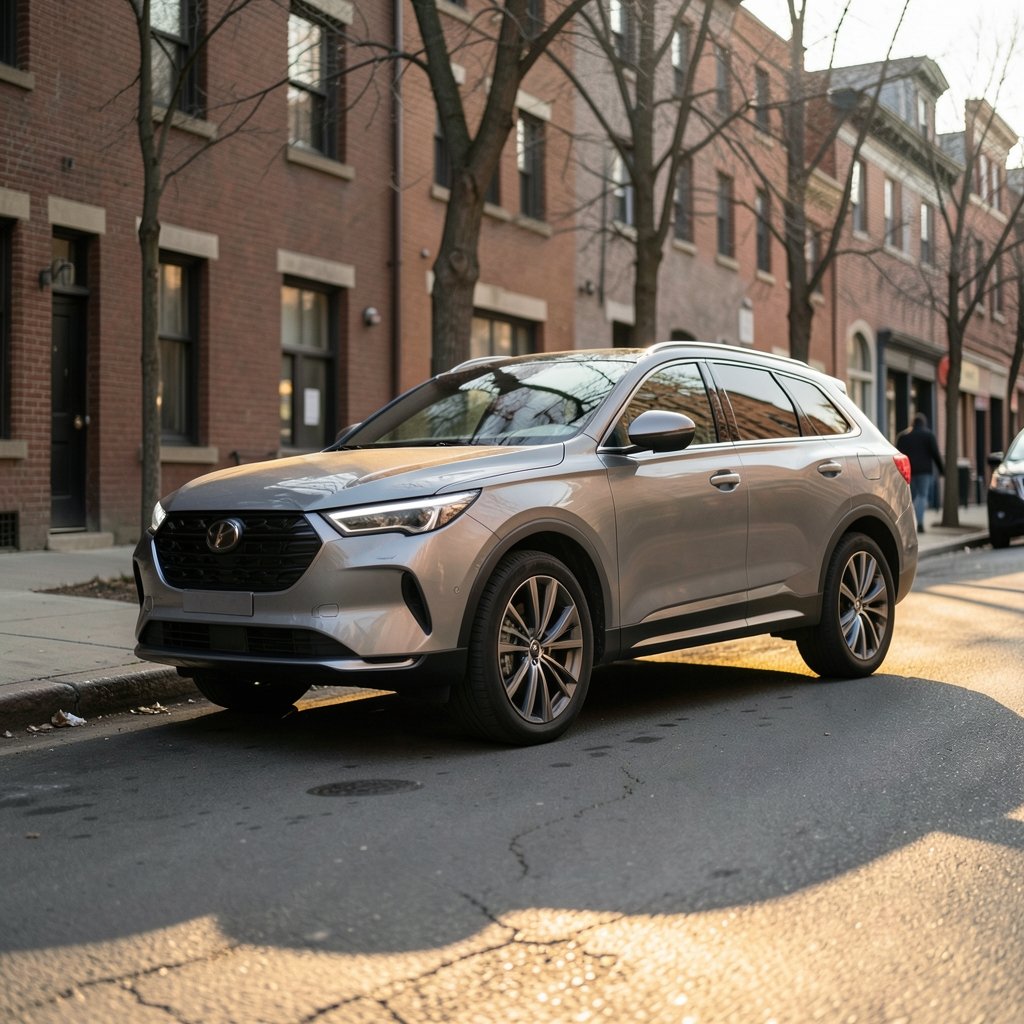
What will the BMW X5 look like when the 2027 model year arrives? That question has been circulating among SUV buyers, lease planners, and BMW fans for a while now, and the answer is more interesting than a simple facelift. The X5 is heading into its fifth generation, and this time the changes go deeper than sheet metal. A new platform, an electric variant, and a naming shake-up are all part of the story.
This article breaks down what is confirmed, what is still reported but unverified, and what buyers should realistically expect when the 2027 X5 reaches showrooms. It also covers the practical side: timing, pricing pressure, and how to avoid the classic mistakes people make when they plan a purchase around a next-generation vehicle.
Why the 2027 X5 Matters More Than a Normal Redesign
Most SUV redesigns are incremental. The 2027 X5 is different for one structural reason: it sits at the intersection of BMW’s combustion heritage and its electric future.
The X5 lineage started in 1999 with the first-generation E53, and the fourth-generation G05 arrived in 2018. BMW refreshed the G05 in February 2023, with production starting in April 2023. That gives the current model a lifecycle that lines up neatly with a next-generation launch in the 2026 to 2027 window.
What makes this transition significant is BMW’s Neue Klasse architecture, announced in 2021, with the first models slated from 2025. The Neue Klasse is not just a new chassis. It is a rethink of electronics, battery packaging, and software. If the next X5 adopts elements of that thinking, the 2027 model year could be the point where the X5 stops being a combustion SUV with an electric offshoot and becomes a genuinely dual-path vehicle.
There is also a naming wrinkle. BMW has used the iX5 badge for its hydrogen fuel-cell pilot fleet, a small test program running since 2023 rather than a series-production model. That means the “electric X5” name is not as straightforward as outsiders assume, and buyers should watch for how BMW separates hydrogen, battery-electric, and plug-in hybrid variants in its branding.
What Is Confirmed, Reported, and Still Guesswork
Honest sourcing matters here, because “x5 2027” is a phrase that floats between confirmed product plans and enthusiast speculation. The table below separates the tiers.
| Claim | Status | What It Means for Buyers |
|---|---|---|
| A next-generation X5 is in development | Confirmed by BMW’s public statements on future models | A redesign is coming, not just a trim update |
| Production expected around 2026–2027 | Reported, not firmly dated | Treat specific months as unconfirmed |
| A fully electric X5 variant | Reported and consistent with BMW’s EV roadmap | Expect at least one electric option |
| Neue Klasse technology influence | Confirmed as a platform strategy from 2025 | Software and battery improvements likely |
| iX5 Hydrogen as a production model | Not confirmed; it remains a pilot fleet | Do not plan a purchase around hydrogen |
| Exact pricing and trims | Unknown | Budget with a wide margin |
The practical takeaway: the redesign is real, the electric variant is very likely, and the calendar is soft. Anyone who needs a car in the next twelve months should not build a plan around a precise 2027 launch date.
The Model-Year Trap That Confuses Almost Everyone
Here is a mistake that catches even experienced buyers. In the United States, a vehicle’s model year is defined by regulation under 40 CFR Part 85, and it generally may precede the calendar year of sale. That is why a “2027” vehicle can appear on a dealer lot in 2026.
This matters for three reasons:
- Insurance and resale. A 2027 model year car sold in 2026 depreciates on a model-year curve, not a calendar curve. The difference can be meaningful at trade-in.
- Lease residuals. Lenders set residuals by model year. A car labeled a year ahead can carry different monthly payments than an identical car labeled a year behind.
- Software and hardware revisions. Early build cars sometimes ship with hardware that later builds revise. Waiting a few months after launch is often smarter than buying the first batch.
The fix is simple: ask for the build date, not just the model year. A car built in late 2026 and sold as a 2027 model is a different proposition from one built in mid-2027.
Platform, Powertrains, and What Actually Changes
BMW’s Neue Klasse strategy points toward three shifts that will shape the 2027 X5.
Electrification goes mainstream, not niche
The current X5 already offers plug-in hybrid power, but the next generation is expected to push further. A fully electric variant would put the X5 directly against electric luxury SUVs that have taken market share in the past few years. The engineering question is packaging: a battery large enough for real range eats cabin space unless the platform is designed for it from the start.
Software becomes the differentiator
Modern luxury SUVs are judged on interface quality as much as horsepower. Over-the-air updates, driver assistance behavior, and charging route planning are now purchase criteria. Buyers comparing systems should look past the screen size and test how the car handles a genuinely confusing situation, like a poorly marked charging station or a highway merge at dusk. For a broader look at how assistant software is judged in practice, this comparison of deepseek vs chatgpt vs gemini output quality shows how quickly quality gaps appear between tools that look similar on paper.
Interior packaging gets a reset
The X5 has always been a family-capable SUV, and the next generation will likely lean harder into rear-seat comfort and cargo flexibility. That is where electric platform design helps, because flat floors and repositioned batteries free up space that combustion architecture locks away.
How to Plan a Purchase Around an Uncertain Launch
Buyers who want the 2027 X5 face a timing problem. Waiting has a cost, and so does buying early. Here is a practical sequence that works.
- Set a decision date, not a launch date. Pick the month by which you need a car. If the X5 has not launched by then, buy something else rather than stretching.
- Track the current model’s incentives. As a generation ages, discounts and lease support usually improve. A well-optioned outgoing X5 at a strong lease rate can beat a full-price first-year redesign.
- Test the electric option against your real charging situation. Home charging changes the math completely. Without it, a plug-in hybrid or conventional model often makes more sense.
- Ask about build dates and allocation. Dealers know their allocation schedule before public launch dates firm up. Ask directly.
- Check insurance quotes before signing. New-generation vehicles with expensive sensors and unique body panels can carry surprising premiums in year one.
The most common mistake is emotional: buyers anchor on a launch date they read somewhere, then either overpay for an early allocation or delay a needed purchase for months. A decision date fixes both problems.
Where the X5 Fits Against Rivals in 2027
The luxury SUV segment is crowded, and the 2027 X5 will not launch into the same market the G05 entered in 2018. Electric rivals have matured, and software expectations have risen sharply.
| Buyer Priority | What the 2027 X5 Likely Offers | What to Watch |
|---|---|---|
| Brand and driving feel | Strong chassis heritage, refined handling | Whether electric variants keep the feel |
| Electrification | At least one electric option expected | Real-world range and charging speed |
| Technology | Neue Klasse-influenced software | Update cadence after launch |
| Practicality | Family-sized cabin and cargo space | Battery packaging impact on trunk |
| Value | Broad trim spread | First-year pricing discipline |
For shoppers cross-comparing digital tools alongside their car research, resources like this roundup of the 10 best AI chatbots under the hood in 2027 illustrate how fast product cycles move and why first-year hardware is rarely the best long-term buy.
Common Mistakes Buyers Make With Next-Gen Vehicles
A few patterns repeat every time a major redesign launches.
Assuming the first year is the best year. It rarely is. Early production runs often carry software bugs, limited trim availability, and no incentives. The second model year usually delivers a better ownership experience at a better price.
Ignoring the outgoing model. Dealers discount older generations aggressively near the end of a run. If the current X5 meets your needs, the final model year can be excellent value.
Confusing concept with production. Concept vehicles shown at auto shows often feature wheels, lighting, and interior materials that never reach production. Judge the production car, not the show car.
Overlooking running costs. Insurance, tires, and charging installation all shift with a new platform. A monthly payment comparison alone hides the real cost.
Skipping the test of everyday tasks. School runs, tight parking garages, and winter tires matter more than a launch-control demo. Test the car doing what you actually do.
The Electric Question Nobody Answers Well
The single biggest unknown for the 2027 X5 is how BMW structures its electric offering. The company’s hydrogen pilot fleet has muddied the naming conversation, and buyers reasonably ask whether the electric X5 will be a mainstream model or a limited-volume statement.
The realistic expectation is a mainstream battery-electric variant, because that is where the market has moved. But the details that matter to buyers are unglamorous: charging curve shape, preconditioning behavior in cold weather, and whether the vehicle supports the fastest public chargers available in the buyer’s region.
A useful habit is to read the charging specifications rather than the range headline. Peak charging rate matters less than the shape of the curve between 10 and 80 percent. A car that holds high power longer can beat a car with a higher peak.
What to Do Right Now
If the 2027 X5 is on a shortlist, three actions make sense today.
First, get on a dealer’s contact list for the next generation without committing to a deposit. Information flows earlier to people who ask.
Second, evaluate whether the current X5 meets your needs. If it does, watch for end-of-run incentives rather than waiting.
Third, decide your electric readiness honestly. Home charging access, commute length, and winter conditions determine whether an electric SUV is a convenience or a chore.
For readers who also research the digital side of ownership, whether that is in-car assistants or the tools they use to compare options, this guide to the best AI chatbots for e-commerce in 2027 is a useful reference on how automated support has matured.
Conclusion
The 2027 BMW X5 is a real redesign, not a rumor, but the details that matter most to buyers remain partly unconfirmed. What is clear is the direction: a next-generation platform, a strong likelihood of a fully electric variant, and software that matters as much as the engine. The model-year labeling rules mean some 2027 vehicles will appear on lots earlier than expected, so build dates deserve more attention than badges.
The smart approach is neither blind waiting nor impulsive early adoption. Set a decision date, test the outgoing model honestly, verify charging realities, and read the specification details rather than the headlines. Do that, and the 2027 X5 becomes a manageable purchase decision instead of a moving target.
FAQ
When will the BMW X5 2027 go on sale?
BMW has confirmed a next-generation X5 is in development, with production widely reported for the 2026 to 2027 window. Exact launch dates and market rollout timing are not firmly established, so buyers should treat specific months as unconfirmed until official announcements appear.
Will there be an electric BMW X5?
A fully electric X5 variant is widely reported and consistent with BMW’s electrification roadmap. Note that the iX5 badge has been used for a hydrogen fuel-cell pilot fleet running since 2023, not a production model, so the naming of the electric version is worth watching closely.
What is the Neue Klasse platform?
The Neue Klasse is BMW’s next-generation architecture, announced in 2021, with the first models slated from 2025. It focuses on new electronics, battery packaging, and software rather than just a new chassis, and it is expected to influence how the next X5 is engineered.
Why can a 2027 model be sold in 2026?
In the United States, a vehicle’s model year is defined under 40 CFR Part 85 and generally may precede the calendar year of sale. That is why a car labeled a 2027 model can reach dealers during 2026. Always ask for the build date, not just the model year.
Should I wait for the 2027 X5 or buy the current model?
It depends on timing and incentives. The current X5 received a refresh unveiled in February 2023 with production from April 2023, and end-of-generation models often carry strong discounts and lease support. If you need a car within a year, the outgoing model may deliver better value than a full-price first-year redesign.
What will the 2027 X5 cost?
Pricing has not been announced. First-year redesigns typically launch with limited incentives and higher transaction prices, while later model years add trims and discounting. Budget with a wide margin and check insurance quotes early, since new sensors and body panels can raise premiums in year one.



