
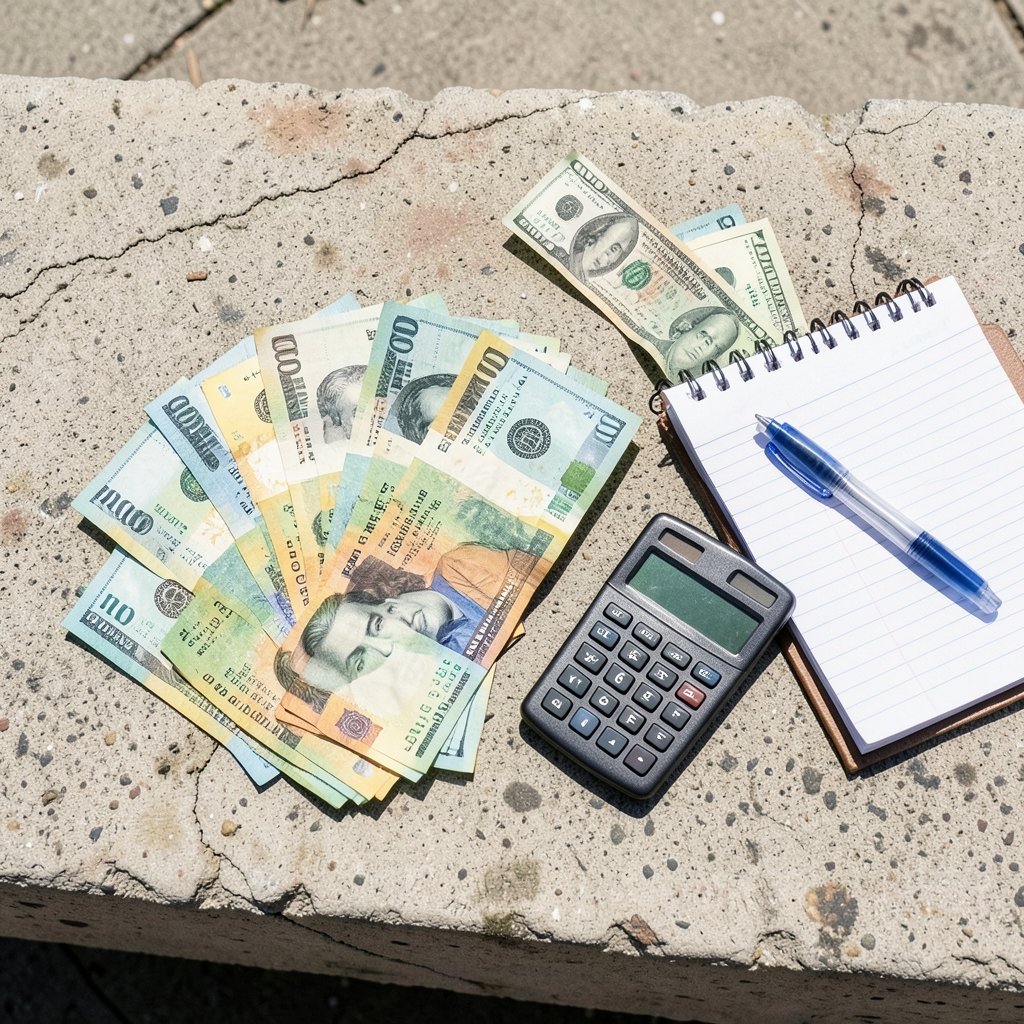
What does it actually cost to turn Brazilian reais into US dollars, and why do two people converting the same amount end up with different results? Anyone who has wired money home from São Paulo, priced a vacation in Rio, or invoiced a Brazilian client has felt that small jolt of confusion when the number on the screen doesn’t match the number in the account. The gap is rarely a mystery. It comes from how the rate is quoted, which rate you’re actually getting, and the fees folded quietly into the transaction. Understanding those layers turns a frustrating guessing game into simple arithmetic.
What “Brazil money to USD” Actually Means
Brazil’s currency is the real (plural: reais), written with the symbol R$ and carrying the ISO code BRL. The ISO 4217 standard assigns three-letter codes to every currency so banks and payment systems can reference them without ambiguity. One real divides into 100 centavos, the way a dollar divides into cents.
When someone says “Brazil money to USD,” they mean converting an amount in reais into US dollars. That’s it. The phrase is casual, but the underlying task is a currency conversion, and the direction matters. Converting BRL to USD is not the same calculation as converting USD to BRL, and mixing them up is one of the most common mistakes people make when checking rates quickly.
The real itself has a relatively short modern history. It replaced the cruzeiro real on 1 July 1994 as part of the Plano Real, a stabilization program designed to end years of extreme inflation. That origin story still shapes how Brazilians think about money and why exchange-rate stability is a sensitive topic in the country. (Brazilian real)
The One Calculation You Need

The core math is simple. To convert reais to dollars, divide the real amount by the number of reais it takes to buy one US dollar.
If the rate is 5.40 BRL per USD, then R$1,000 becomes about $185.19 (1,000 ÷ 5.40). If you only know the inverse rate, say 0.185 USD per BRL, you multiply instead: 1,000 × 0.185 = $185.
Two habits prevent most errors:
- Always confirm which direction the rate is quoted. A headline saying “5.40” almost always means reais per dollar, not dollars per real.
- Round only at the end. Rounding mid-calculation on large amounts can shift the result by several dollars.
For everyday estimates, a rough mental shortcut works: divide by five and adjust. If the rate is near 5.4, take the real amount, divide by 5, then shave off about 7 percent. It won’t be exact, but it’s close enough to sanity-check a quote before you commit.
Why the Rate You See Is Never the Rate You Get
Brazil has operated a floating exchange rate regime since January 1999, which means the BRL/USD rate is set by supply and demand in the market rather than fixed by decree. The rate moves constantly during trading hours, and it can move a lot over weeks and months. Sharp depreciation episodes in 2002, 2015–2016, and 2020 reminded everyone how quickly sentiment can shift.
That volatility creates a practical problem: the rate you see on a search engine or news site is a snapshot, often a mid-market or interbank rate. It is a reference point, not an offer. No bank or exchange service will hand you that exact number, because they build their margin into the rate they quote you.
The Banco Central do Brasil publishes the PTAX, a daily reference exchange rate used for official and accounting purposes. It’s useful for contracts, tax filings, and record-keeping, but it is also not a rate you can transact at. Treat it as an official benchmark, not a shopping price.
For historical context, the Federal Reserve Bank of St. Louis maintains a long-running BRL/USD series that shows how the pair has moved over decades. Looking at that history is a useful reality check: anyone quoting a “normal” rate is usually remembering a moment that didn’t last.
Where the Money Quietly Disappears
The difference between the mid-market rate and what lands in your account is called the spread, and it’s where most of the cost hides. A service advertising “zero fees” often makes its money on a wider spread instead. The commission is real; it’s just baked into the exchange rate rather than listed as a line item. (Identity threat detection really costs where money goes)
Costs vary by channel, and no single percentage applies across the board. What matters is comparing the total cost, not the headline fee. Ask one question: how many dollars will actually arrive? That single number cuts through every marketing claim.
| Channel | Typical strength | Typical weakness |
|---|---|---|
| Bank wire | Familiar, regulated, good for large sums | Wider spreads, correspondent bank fees, slow settlement |
| Online transfer services | Competitive rates, transparent pricing | Limits vary, verification can take time |
| Airport or tourist exchange counters | Instant cash | Among the worst rates available |
| ATM withdrawal abroad | Convenient for small amounts | Foreign transaction and operator fees stack up |
| Cards and payment apps | Easy for purchases | Dynamic currency conversion can add a hidden markup |
The airport counter deserves a special mention. It is the most convenient option and almost always the most expensive. If you need cash on arrival, withdraw a small amount and convert the rest through a cheaper channel later.
A related trap appears at payment terminals abroad. When a card machine offers to charge you in dollars instead of reais, that’s dynamic currency conversion, and the rate is set by the merchant’s provider, not the market. Decline it and pay in the local currency. The same discipline applies to the broader question of how digital money systems handle conversion, which is evolving as central banks explore new forms of currency. (Cbdc digital currency central bank money going digital) (Central Bank of Brazil)
Practical Steps That Actually Work
Experience from people who move money between Brazil and the US regularly points to a handful of habits that consistently save money.
First, compare the amount received, not the rate advertised. Get quotes from at least three providers on the same day for the same amount, and compare the final dollar figure.
Second, watch the calendar. Rates respond to economic data releases, central bank decisions, and political news. Spreading a large conversion across several transactions reduces the risk of catching a bad day. Nobody times the market perfectly, and pretending otherwise is how people lose money.
Third, check who pays the fees. International transfers often let the sender or receiver absorb costs. Confirm this before sending, because the difference can be significant on larger amounts.
Fourth, keep records. If you’re converting for a business, a property purchase, or a tax filing, document the rate and date used. Official reference rates exist precisely so you can point to a defensible number later.
Finally, be skeptical of anything promising a rate better than the market. It usually isn’t. Scams that target people converting money often rely on urgency and unrealistic offers, and the pattern shows up in everything from fake currency exchanges to gift card fraud, where victims rarely recover their funds. If a deal feels too good, walk away.
Common Mistakes and How to Avoid Them
Mistakes in currency conversion tend to cluster around a few predictable errors.
- Using the wrong direction. Dividing when you should multiply produces an answer that’s wildly off. Sanity-check by asking whether the result seems plausible for the amount.
- Forgetting the spread. Comparing a provider’s rate to the mid-market rate and calling the difference a fee is fine, but comparing two providers’ headline rates without checking their spreads is not.
- Converting everything at once out of anxiety. Large lump-sum conversions expose you fully to one day’s rate.
- Ignoring the receiving bank’s fees. The sending side may be cheap while the receiving bank charges an inbound wire fee.
- Trusting a stale quote. Rates from last week are history, not information.
There’s also a subtler issue: identity and fraud risk. Large transfers attract attention, and verifying that the recipient account details are correct before sending is essential. Fraud in this space is well documented, and the cost of prevention is almost always lower than the cost of recovery.
How Volatility Shapes Your Decision
Because the real floats, the rate you get depends heavily on when you convert. Brazil’s currency has historically been sensitive to commodity prices, interest rate differentials, and global risk appetite. When investors are nervous, money tends to flow toward the dollar, and the real weakens.
For someone converting a fixed amount, this cuts both ways. A weaker real means more dollars for the same reais, which is good news for anyone holding BRL. A stronger real means fewer dollars, which favors anyone holding USD who plans to spend in Brazil.
The practical takeaway isn’t to predict the rate. It’s to decide in advance how much currency exposure you’re comfortable with, then act in tranches rather than betting everything on a single day. That approach won’t maximize your outcome in hindsight, but it reliably reduces regret.
Conclusion
Converting Brazilian reais to US dollars is straightforward arithmetic wrapped in a layer of market reality. The formula is simple: divide the real amount by the reais-per-dollar rate. The complexity comes from the spread, the fees, and the fact that the rate moves constantly. Focus on the amount that actually arrives in your account, compare providers on the same day, avoid airport counters and dynamic currency conversion, and spread large conversions over time. Do those things and the process stops feeling like a gamble. The rate will always be outside your control, but the cost of converting it doesn’t have to be.
Frequently Asked Questions
How do I convert Brazilian reais to US dollars?
Divide the amount in reais by the current BRL-per-USD rate. For example, at 5.40 reais per dollar, R$1,000 equals about $185.19. If you only have the inverse rate (USD per BRL), multiply instead. Always confirm which direction the rate is quoted before calculating.
What is the BRL currency code?
BRL is the ISO 4217 code for the Brazilian real, the official currency of Brazil since July 1994. The symbol is R$, and one real equals 100 centavos. The code appears on bank statements, invoices, and payment systems worldwide.
Why is the exchange rate I’m offered different from the one online?
The rate online is usually a mid-market or reference rate that reflects interbank trading. Providers add a spread to cover their costs and profit, and some charge separate fees. The gap between the reference rate and your actual rate is the real cost of the transaction.
Is it better to convert money in Brazil or in the US?
It depends on the channel, not the country. Online transfer services and bank wires are generally cheaper than airport counters and tourist exchange offices in either country. Compare the final amount received from several providers rather than assuming one location is always better.
What is the PTAX rate?
PTAX is a daily reference exchange rate published by Brazil’s central bank. It’s used for official purposes such as contracts, accounting, and tax filings. It is a benchmark, not a rate you can transact at, so expect your actual conversion to differ from it.
Does the exchange rate change every day?
Yes. Brazil has used a floating exchange rate since 1999, so the BRL/USD rate moves continuously during trading hours and can shift significantly over weeks. Rates respond to interest rate decisions, inflation data, commodity prices, and global investor sentiment.



