
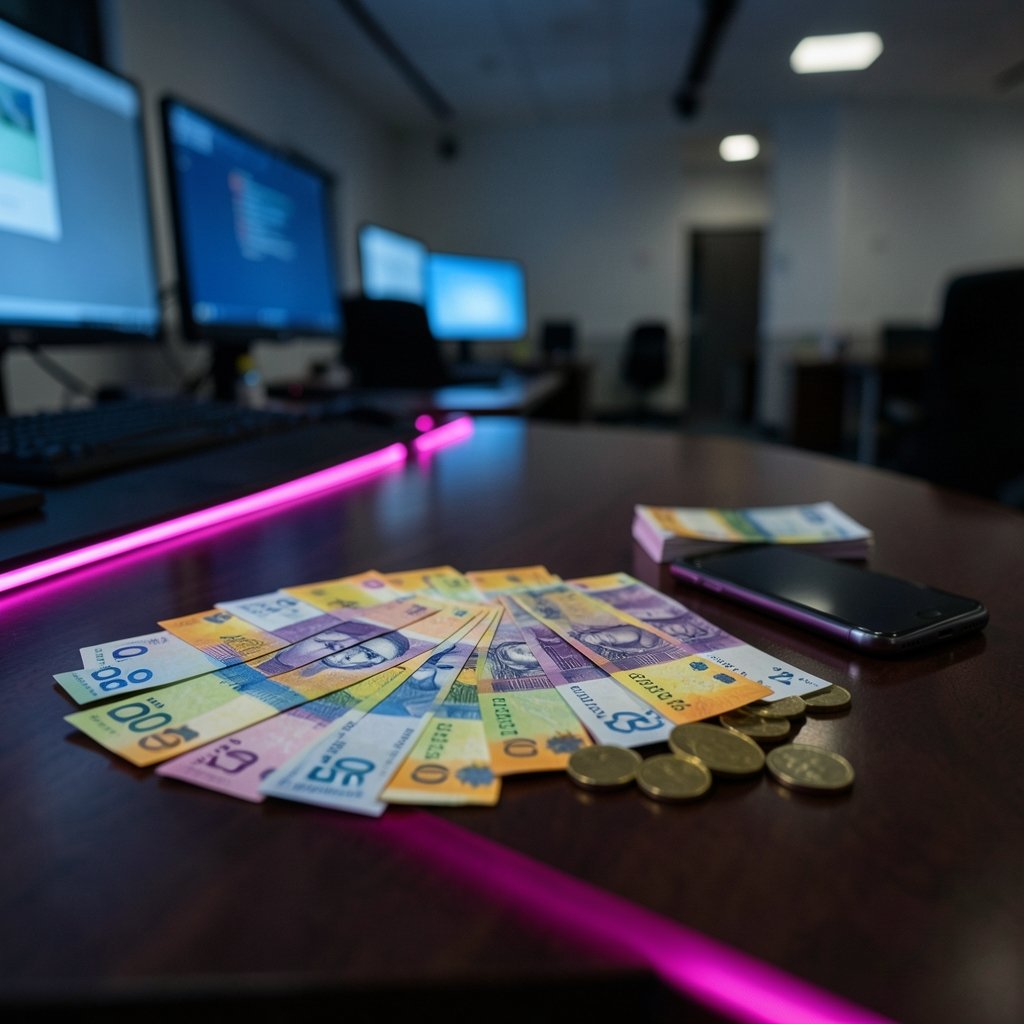
What makes Brazilian money so confusing to outsiders? The banknotes look simple enough, but the story behind them involves seven currencies in about fifty years, a currency that lost value by the hour, and a country that now runs one of the fastest payment systems on earth. Anyone who travels to Brazil, does business there, or simply wants to understand Latin America’s largest economy needs more than a quick look at today’s exchange rate. This guide covers what the real actually is, how it came to exist, how Brazilians pay for things in 2025, and the mistakes visitors make with cash.
What Is Brazilian Money Called?
Brazil’s official currency is the real (plural: reais), written with the symbol R$ and carrying the ISO 4217 code BRL. One real divides into 100 centavos. The name means “royal” in Portuguese, a leftover from the colonial era when the Portuguese crown’s money circulated in the territory.
The real has been in circulation since 1 July 1994, which makes it young by European standards but older than the euro. It is issued by the Banco Central do Brasil (BCB), the country’s central bank, which sets monetary policy, manages reserves, and supervises the financial system.
For a full breakdown of the currency’s history and denominations, the overview of the Brazilian real is a useful starting point.
Banknotes and coins in circulation
| Denomination | Type | Notes |
|---|---|---|
| 5, 10, 25, 50 centavos | Coin | Small transactions, bus fares in some cities |
| R$1 | Coin | Increasingly rare in daily use |
| R$2 | Banknote | Common for small purchases |
| R$5 | Banknote | Widely used |
| R$10 | Banknote | Everyday note |
| R$20 | Banknote | Everyday note |
| R$50 | Banknote | Common for larger payments |
| R$100 | Banknote | Standard high-value note |
| R$200 | Banknote | Issued in 2020, still uncommon in change |
The R$200 note is a practical detail worth remembering. Many small shops and street vendors genuinely cannot break it, so carrying smaller notes is one of the simplest things a visitor can do to avoid friction.
Why Brazil Has Changed Currency So Many Times
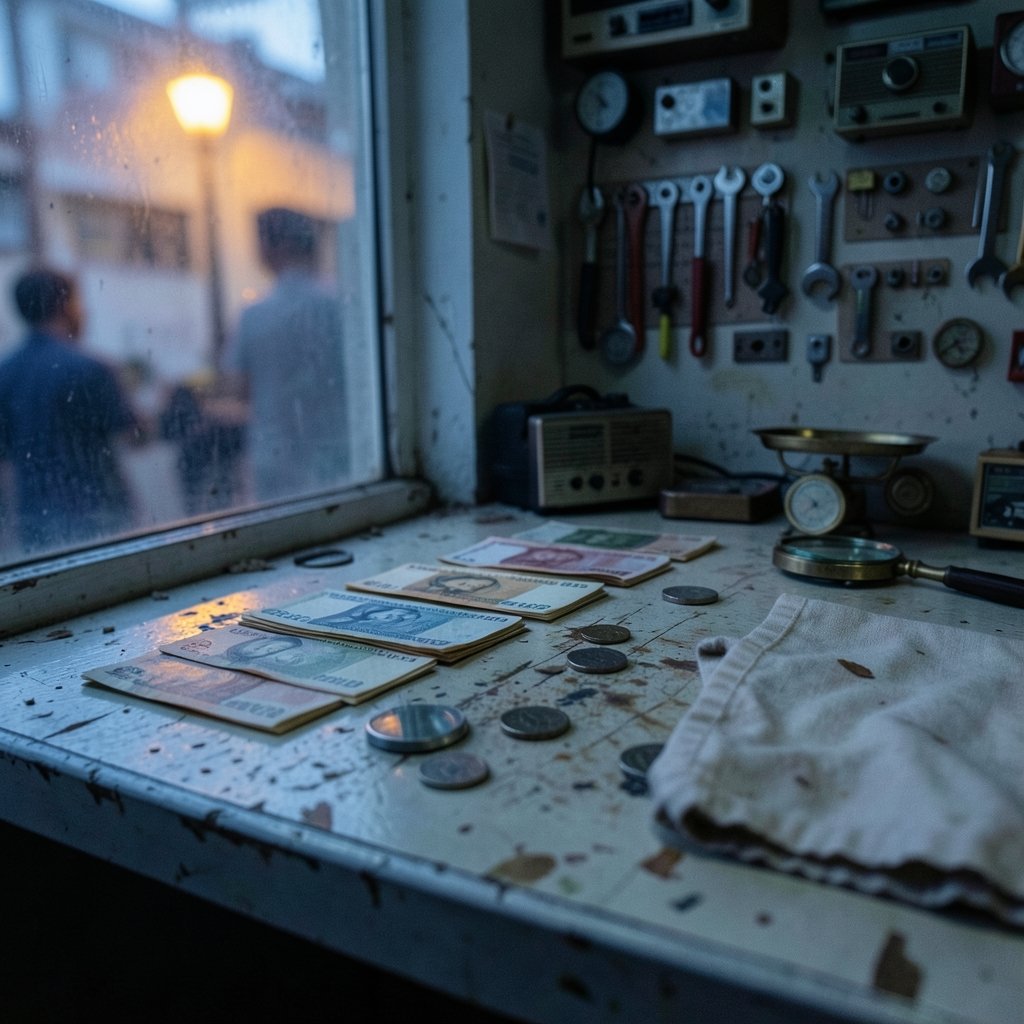
Brazil’s currency history is a case study in what inflation can do to a country. Between 1942 and 1993, the country cycled through the cruzeiro, the cruzeiro novo, the cruzado, the cruzado novo, the cruzeiro again, and finally the cruzeiro real. Each change came with a redenomination that stripped zeros off the currency.
The reason was hyperinflation. Through the late 1980s and early 1990s, prices rose so fast that wages were indexed almost continuously, and people rushed to spend money before it lost value. Supermarkets reportedly repriced goods overnight. Planning a purchase a week ahead was nearly impossible.
The Plano Real and the URV trick
The stabilization came in 1994 with the Plano Real, a multi-stage program designed by a team of economists. Its cleverest feature was a transitional unit of account called the URV (Unidade Real de Valor). For several months, prices, wages, and contracts were quoted in both cruzeiros reais and URVs, with the URV tracking the dollar. This effectively de-indexed the economy without a shock freeze. When the real launched on 1 July 1994, it was worth one URV, and the old currency was converted at a fixed rate. (Brazilian real)
The plan worked. Inflation fell from rates in the thousands of percent annually to single digits within a year. The history of the Plano Real explains the URV mechanism in more detail if you want to follow how the transition was engineered.
What came after
The first years of the real were not smooth. An early overvaluation contributed to a currency crisis, and in January 1999 the BCB let the real float. Since then, the exchange rate has moved with global risk appetite, commodity prices, and domestic politics. Over the past quarter century, the dollar has bought anywhere from just over one real to more than six.
In 1999, Brazil also adopted an inflation-targeting regime. The National Monetary Council sets a target, and the central bank uses the benchmark Selic interest rate to pursue it. In 2021, a complementary law granted the BCB formal autonomy, with fixed terms for its governor and directors.
How Brazilians Actually Pay: Pix and the Cashless Shift
Here is the part that surprises most visitors. Brazil is often imagined as a cash economy, but day-to-day payment has moved decisively digital.
The BCB launched Pix, an instant payment system, in November 2020. It runs on the central bank’s own infrastructure rather than through card networks, and it is free for individuals. Within a few years it became the country’s dominant payment rail, handling more transactions than credit and debit cards combined. Adoption statistics change monthly, so anyone quoting a number should pull it from the BCB’s own Pix data rather than a blog post.
Practically, this means:
- Street vendors, taxi drivers, and market stalls often display a QR code for Pix.
- Many small businesses prefer Pix to cards because fees are lower.
- Cash is still accepted almost everywhere, but some kiosks and small shops may struggle with change.
- Foreign visitors can use Pix only if they have a Brazilian bank account, which most do not.
For tourists, the practical result is that cards and cash remain the fallback, while locals tap a QR code. Contactless card acceptance is broad in cities, less reliable in small towns.
The digital shift also matters for security. Payment fraud has followed the money online, and the costs of defending identity and accounts have risen accordingly; a breakdown of where identity threat detection costs really go shows how much of that spending lands on monitoring and response rather than prevention. Brazil’s banks have invested heavily in anti-fraud systems for Pix, including transaction limits and account-holder verification.
What Moves the Value of the Real
The real is a floating currency, and its value against the dollar and euro swings more than most major currencies. Several forces drive that.
Commodity prices
Brazil is a major exporter of iron ore, soybeans, oil, coffee, and beef. When commodity prices are high, foreign currency flows in, and the real tends to strengthen. When they fall, the opposite happens.
Interest rates
Brazil has historically run some of the highest real interest rates in the world. High rates attract foreign capital seeking yield, which supports the currency. When the central bank cuts, that support weakens.
Fiscal and political risk
Markets react to signals about government spending, debt trajectories, and institutional stability. Election cycles and budget announcements regularly produce sharp moves.
Global risk appetite
When investors are nervous worldwide, they pull money out of emerging markets, and the real weakens. When they are optimistic, it strengthens. This risk-on, risk-off pattern often matters more than domestic news.
For travelers, the practical takeaway is to check the rate on the day and avoid relying on a number from a guidebook. Exchange rates quoted in older articles are almost always wrong.
Practical Tips for Handling Brazilian Money
These are the things that actually make a difference in practice, drawn from the patterns that trip people up most often.
Use a card with no foreign transaction fee
Most Brazilian card terminals accept Visa and Mastercard widely, and American Express less so. A card with no foreign transaction fee saves roughly 3 percent on every purchase compared with a standard card. This is one of the highest-return travel decisions available.
Withdraw from bank ATMs, not standalone machines
Standalone ATMs in tourist areas often charge high fees and offer poor rates. Bank-branded ATMs, especially those inside branches during business hours, are usually safer and cheaper. Withdraw larger amounts less often to minimize fixed fees.
Always pay in reais, never in your home currency
When a card terminal offers to charge you in dollars or euros, decline. This is card-terminal currency conversion, and the markup is typically 3 to 7 percent. Choosing reais lets your bank apply its own rate.
Carry small notes
As noted, R$100 and R$200 notes are hard to break in small shops. Keep a stash of R$10, R$20, and R$50 notes for taxis, snacks, and market purchases.
Watch for card skimming
Card cloning is a real risk in some areas. Keep your card in sight during payment, avoid letting a waiter take it away, and check statements after the trip. Using a virtual card number through a phone wallet reduces exposure.
Do not carry large amounts of cash
Street robbery is a genuine concern in some cities. Carry what you need for the day, keep a backup card separate, and avoid displaying expensive phones or watches.
Understand the IOF tax
Brazil levies a financial transactions tax called IOF on some foreign exchange operations and certain card uses. Rules change, so check current rates before relying on a specific percentage.
Common Mistakes People Make
A few errors come up again and again.
Assuming cash is king. It is not. Many Brazilians barely carry cash. Expect to pay by card or Pix.
Confusing reais with other currencies. The Argentine peso and the Brazilian real are entirely different, and no, they are not interchangeable at the border.
Trusting the airport exchange desk. Airport rates are among the worst available. Exchange at a bank or use an ATM instead.
Forgetting the decimal comma. Brazil uses a comma for decimals and a period for thousands. “R$ 1.500” means 1,500 reais, not one and a half.
Ignoring the note redesign. Brazil has issued new banknote series over the years, and older notes are gradually withdrawn. Counterfeit detection features differ between series, so check the security thread and watermark.
How Brazilian Money Connects to the Wider Economy
Currency is never just a travel detail. Brazil’s monetary stability underpins a large consumer economy, and the country’s fintech sector has grown fast on top of it. Instant payments, digital accounts, and open banking have created new business models, and the broader question of how AI companies make money is increasingly relevant as Brazilian startups apply automation to credit scoring and fraud detection.
The central bank has also been exploring a digital version of the real, part of a global wave of central bank digital currency research. Any launch would sit alongside Pix rather than replace it, but it signals how seriously the BCB treats payment infrastructure as public infrastructure.
For businesses entering the market, the practical lesson is that payment habits in Brazil are not a copy of the United States or Europe. They evolved fast, skipped some steps, and landed in a place where a QR code is often the fastest way to get paid. Anyone building a budget for a Brazilian operation should model AI business automation without wasting money carefully, because local payment integration is rarely plug-and-play.
Conclusion
Brazilian money tells a story in three acts: decades of inflation that destroyed several currencies, a stabilization plan clever enough to work, and a digital payments leap that put the country ahead of much of the developed world. The real is a floating currency with real volatility, and its value depends on commodities, interest rates, politics, and global mood. For visitors, the practical rules are simple: carry smaller notes, pay in reais, use a fee-free card, and treat Pix as something locals use rather than something you can join. For anyone doing business there, the deeper lesson is that Brazil’s financial system is modern, fast, and built on its own logic, and understanding that logic is worth more than any single exchange rate.
Frequently Asked Questions
What is the currency of Brazil called?
It is the real, plural reais, written R$ and coded BRL. It replaced the cruzeiro real on 1 July 1994 as part of the Plano Real stabilization program.
Is the Brazilian real the same as the Argentine peso?
No. They are separate currencies issued by separate central banks, with different values and different histories. The real has been relatively stable since the mid-1990s, while Argentina has experienced repeated currency crises and redenominations.
Can I use US dollars in Brazil?
Generally no. Prices are quoted in reais, and most shops, restaurants, and taxis accept only reais, cards, or Pix. Some tourist-facing businesses may accept dollars at poor rates, but relying on them is expensive and inconvenient.
Why has Brazil changed its currency so many times?
Because of hyperinflation. Between 1942 and 1993, repeated redenominations stripped zeros from the currency as prices spiraled. The Plano Real broke the cycle in 1994 by de-indexing the economy through a transitional unit called the URV before launching the new real.
Is it better to use cash or card in Brazil?
Cards are widely accepted in cities, and Pix dominates local payments. Cash remains useful for small vendors, tips, and places with unreliable terminals. Carry a modest amount of cash in small notes and use a card with no foreign transaction fee for larger purchases.
What is the Selic rate and why does it matter?
The Selic is Brazil’s benchmark interest rate, set by the central bank’s monetary policy committee to pursue the inflation target. It matters to visitors and investors because high rates tend to support the real by attracting foreign capital, while cuts can weaken it.



