
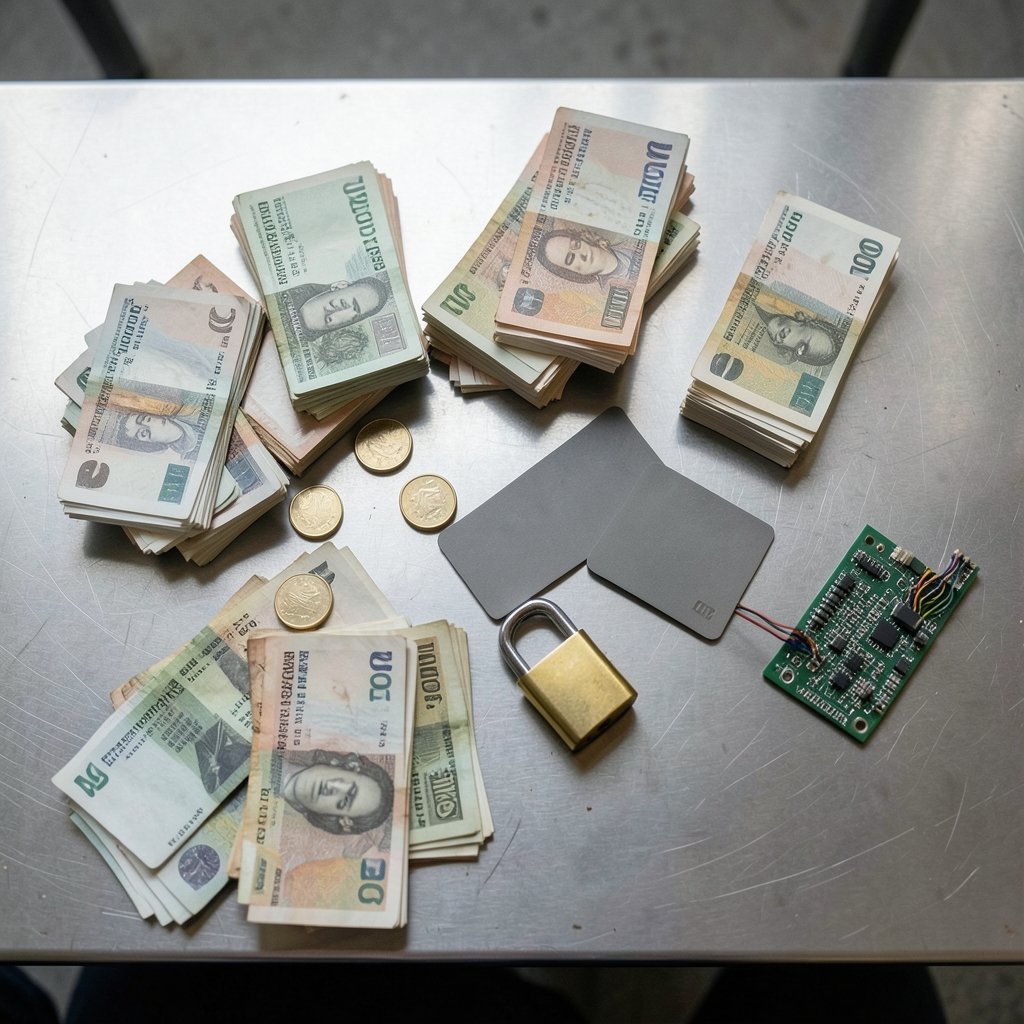
What if the money in your bank account could think? Not literally, of course. But by 2027, the systems behind your money will lean heavily on artificial intelligence, and central banks around the world are quietly building the rails for it. That combination, central bank digital currencies (CBDCs) plus AI, is one of the least understood shifts in modern finance. It rarely makes headlines unless a conspiracy theory goes viral, yet it touches savings, payments, privacy, and how governments respond to crises.
Here is the honest picture: what is real, what is hype, and what it actually means for you.
What a CBDC Actually Is, in Plain Terms
A CBDC is digital money issued directly by a central bank. It is not a commercial bank deposit, not a credit card balance, and not Bitcoin. It is a direct claim on the central bank, the same institution that prints physical cash.
Think of it as the digital twin of a banknote. Where cash sits in your wallet, a CBDC would sit in a digital wallet, likely managed through your existing bank or payment app. The key difference is that every unit is a digital record, which means it can be programmed, tracked, and analyzed in ways paper money never could.
According to the Atlantic Council’s CBDC tracker, roughly 134 countries and currency unions, representing about 98% of global GDP, were exploring a CBDC as of mid-2023. By 2024 and 2025, nearly every G20 economy had some form of CBDC work underway. The direction is clear even if the destination is not. For background on how this fits into the broader shift toward digital money, see this explanation of CBDC digital currency and central bank money going digital.
The Three Flavors You Will Hear About
| Type | Who uses it | Real-world example | Status |
|---|---|---|---|
| Retail CBDC | Everyday consumers | China’s e-CNY | Advanced pilot |
| Wholesale CBDC | Banks and institutions | Project mBridge, Project Agorá | Testing phase |
| Tokenized deposits | Bank customers | Commercial bank pilots | Early experiments |
Retail CBDCs get the attention, but wholesale versions are moving faster. That matters because wholesale systems are where AI integration is most advanced and least visible.
Where AI Actually Shows Up in CBDC Design

This is where the conversation usually goes off the rails. Claims that AI will “control” what you can buy with a CBDC are speculative. Distinguish research concepts from deployed systems, and the picture becomes much more grounded.
AI is being applied in specific, documented ways:
- Transaction monitoring and anti-money-laundering analytics. Machine learning models flag suspicious patterns far faster than rule-based systems.
- Fraud detection. Anomaly detection catches unusual spending behavior in real time.
- Programmability. Smart contracts could allow conditional payments, such as money that only works for rent or groceries.
That last point is the most contested. Research papers have explored “purpose-bound money,” which restricts what money can be spent on. Critics argue this enables social control; supporters say it prevents fraud and misuse of subsidies. The critical distinction is that these are research concepts, not deployed retail systems. No major central bank has launched a retail CBDC with spending restrictions built in.
There is also no official central bank document that frames “AI plus CBDC” as a single 2027 policy package. Treat any claim of a coordinated global rollout with heavy skepticism.
The 2027 Question: Is There a Deadline?
Short answer: no. 2027 is not an official CBDC launch date for any major jurisdiction. It is a plausible horizon, a marker on a timeline, not a fact.
Here is what is actually scheduled:
The EU AI Act. Regulation (EU) 2024/1689 entered into force on August 1, 2024, with obligations phased in through 2025, 2026, and 2027. Financial-sector AI use falls partly under its high-risk categories. This is the most concrete, legally binding 2027-relevant timeline in the entire conversation. It governs how AI systems are built and audited, not how money works.
The digital euro. The European Central Bank moved to a “preparation phase” in November 2023. A governing council decision on whether to proceed to issuance was expected after that phase, originally framed as roughly two years. As of the latest available information, no issuance decision had been made. A 2027 launch is not confirmed.
China’s e-CNY. The most advanced large-economy pilot, expanded from a handful of cities in 2020 and 2021 to nationwide pilot use. Cumulative transaction figures were reported in the hundreds of billions of yuan by 2023 and 2024, though the numbers are self-reported and not independently audited.
The United States. No retail CBDC project exists. In May 2024, the US House passed the CBDC Anti-Surveillance State Act (H.R. 5403) to bar a Federal Reserve retail CBDC without congressional authorization. The Fed has said it would not issue one without explicit legislation.
So why does 2027 keep coming up? Because several regulatory and infrastructure timelines converge around then, and because humans love a round number. The honest answer is that 2027 is a checkpoint, not a countdown.
Privacy: The Real Battlefield
Forget the sci-fi scenarios. The genuine tension is privacy, and it is being fought in design documents right now.
The ECB has published design commitments for a digital euro that include offline functionality and pseudonymization. China’s e-CNY uses tiered anonymity based on wallet size, meaning small wallets require less identity verification. These are official design statements, not guarantees of implementation.
The practical question for you is simple: who can see your transaction data, and under what rules? With cash, nobody sees it by default. With a CBDC, someone builds the database, and that database has an owner, an access policy, and a government behind it.
This is where AI cuts both ways. The same machine learning that spots fraud can also profile spending. The same analytics that catch money laundering can flag political donations. Whether that line holds depends entirely on legal safeguards, not technology. If you have followed how digital identity systems handle similar trade-offs, the pattern will feel familiar.
Wholesale First, Retail Later
Here is the pattern most people miss. The infrastructure being built fastest is not consumer-facing at all.
Project Agorá, announced in April 2024, tests tokenized cross-border payments combining central bank money with commercial bank deposits, with major banks participating. It is wholesale, not retail.
Project mBridge, running from 2021 to 2024, explored cross-border settlement between central banks. Its expansion to more participants in 2024 drew political attention, including concerns about sanctions evasion. Participation details change, so verify before citing specifics.
Why does wholesale matter to you? Because cross-border payments are where the fees and delays live. A remittance that takes three days and costs 6% today could settle in minutes for pennies. That is a genuine consumer benefit, and it is arriving through back-end plumbing rather than a shiny new app.
What This Means for You, Practically
Strip away the noise and a few grounded implications remain.
Your cash is not disappearing tomorrow. Physical currency coexists with every CBDC design under discussion. Sweden, one of the most cashless societies on earth, still protects cash access by law.
Your bank is not going away either. Most retail CBDC designs route through commercial banks rather than replacing them, precisely to avoid destabilizing the banking system.
AI regulation will hit your finances before CBDCs do. If you use a bank, a broker, or a lender, AI is already making decisions about you, from credit scoring to fraud flags. The EU AI Act’s phased obligations through 2027 will shape how those systems are audited and explained. That is the near-term change with real teeth.
Watch the pilots, not the press releases. Concrete milestones, like a central bank publishing a design paper or a legislature passing a bill, tell you far more than a headline about a “digital currency revolution.”
Common Mistakes People Make
- Confusing CBDCs with cryptocurrency. They share the word “digital” and almost nothing else. A CBDC is centralized by definition.
- Assuming a 2027 launch. No major jurisdiction has confirmed one.
- Treating research papers as deployed systems. Purpose-bound money is a concept, not a product you can use.
- Ignoring wholesale developments. The boring infrastructure story is where the real change is happening.
- Believing the e-CNY numbers are audited. They are self-reported and methodologically inconsistent.
What Actually Works If You Want to Stay Informed
Follow primary sources, not aggregators. Central bank publications and legislative records move slower than social media but tell the truth. Set a calendar reminder to check the major CBDC trackers twice a year. And when you see a viral claim, ask one question: which central bank document says this? If there is no answer, file it as speculation.
The same discipline applies to AI claims. The technology is real and consequential, but it is being layered onto existing payment systems incrementally, not switched on overnight. If you are curious how quickly digital habits can shift across a whole generation, the story of Brazil’s first smartphone generation and Lula’s digital push shows how fast adoption can move when policy and infrastructure align.
The Bigger Picture: Money as Software
Step back and the trend is unmistakable. Money is becoming software, and software increasingly runs on AI. That shift changes what money can do, who can see it, and who gets to set the rules.
The optimistic case is compelling: faster settlement, cheaper remittances, better fraud detection, and targeted relief payments that reach people instantly in a crisis. The cautious case is equally serious: surveillance capacity, exclusion risk for people without digital access, and the slow erosion of anonymous cash transactions.
Neither case is guaranteed. What determines the outcome is governance, meaning legislation, design choices, and public pressure. Technology sets the boundaries; people decide where to draw the lines inside them. For a lighter look at how language and meaning shift around money and tech culture, this piece on what the “take my money” meme really means and where it came from is a fun detour, but the serious point stands: the vocabulary of money is changing as fast as the money itself.
Conclusion
By 2027, the most likely reality is neither a cashless utopia nor a surveillance nightmare. It is something messier: more AI in the background of your banking, more wholesale infrastructure quietly settling cross-border payments, a digital euro still deciding whether to exist, and a genuine legislative fight over privacy that most people will ignore until it affects them.
The smart move is not panic or apathy. It is attention. Know what a CBDC is, know what AI is actually doing inside financial systems, and know which claims are documented versus invented. The money in your pocket is changing. Understanding how gives you a vote in what it becomes.
Frequently Asked Questions
Will a CBDC replace cash by 2027?
No. No major jurisdiction has announced plans to eliminate physical currency, and most CBDC designs explicitly preserve cash as a parallel option. Even advanced pilots like China’s e-CNY operate alongside banknotes. Cash access is also protected by law in several countries, including Sweden. Treat “cash ban” claims as speculation unless a specific law says otherwise.
Is AI already controlling CBDCs?
No. AI is being applied to specific functions like fraud detection, anti-money-laundering monitoring, and transaction analytics. Claims that AI controls what people can spend are speculative. Programmability, including purpose-bound money, exists mainly in research papers rather than deployed retail systems. The gap between a published concept and a live system is enormous.
What is the digital euro’s actual status?
The European Central Bank entered a preparation phase in November 2023. A decision on whether to proceed to issuance was expected after that phase, originally framed as roughly two years. As of the latest available information, no issuance decision had been made, and a 2027 launch is not confirmed. The ECB has published design commitments on privacy, including offline functionality and pseudonymization.
Does the United States have a CBDC?
No retail CBDC project exists. In May 2024, the US House passed the CBDC Anti-Surveillance State Act (H.R. 5403) to bar a Federal Reserve retail CBDC without congressional authorization. The Senate status remained unresolved. The Federal Reserve has stated it would not issue a CBDC without explicit legislation from Congress.
Why do people keep mentioning 2027?
Because several timelines converge around then, most notably the EU AI Act’s phased obligations, which run through 2025 to 2027. That regulation governs AI systems, including financial-sector uses, and is legally binding. It does not mandate a CBDC. The year has become shorthand for “the near future of digital money,” which is useful for headlines but misleading as a deadline.
How can I tell reliable CBDC information from hype?
Check the source. Central bank publications, legislative records, and official design papers are primary sources. Aggregators and social media are not. When you see a claim, ask which official document supports it. If the answer is none, treat it as speculation. Also distinguish wholesale projects, which involve banks, from retail projects, which involve you.



