
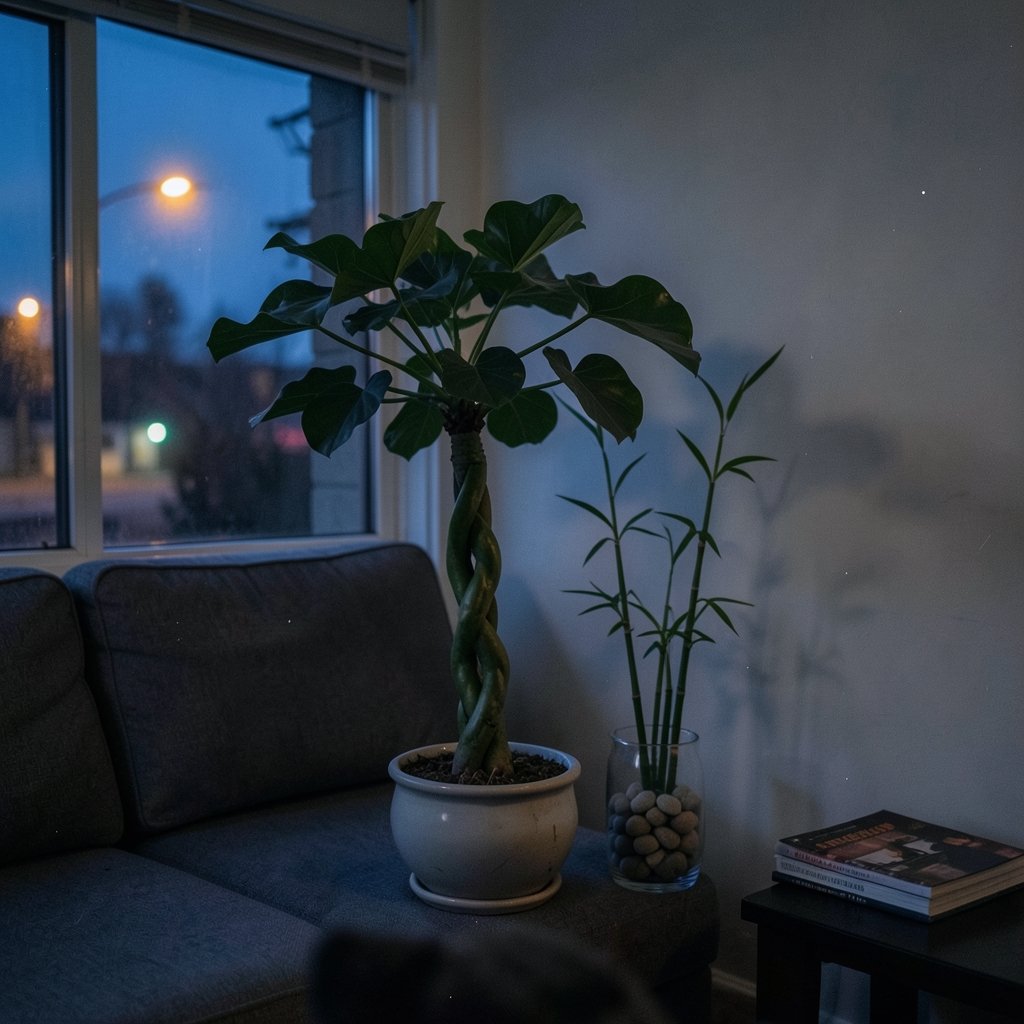
Ever wondered why the braided little tree on the supermarket shelf costs less than a coffee maker but comes with a promise of good fortune? The Chinese money tree is one of the most recognizable houseplants in the world, yet most of what people “know” about it is half folklore and half marketing. The plant itself is a tropical wetland species with real needs, real quirks, and a genuinely interesting backstory. This guide separates the myth from the horticulture so the tree on your windowsill survives longer than the lucky bamboo next to it.
What the Chinese Money Tree Actually Is
The plant sold as a money tree is Pachira aquatica, a member of the mallow family, Malvaceae. Older references place it in Bombacaceae, a family that modern classification folded into Malvaceae under the APG system first published in 1998. That reclassification matters mainly to botanists, but it explains why two plant books can disagree about the same tree.
In the wild, Pachira aquatica is a wetland tree native to tropical Central and South America, ranging from southern Mexico into northern South America. It grows in swamps and along slow rivers, which is the single most useful fact for anyone keeping one indoors. This is a plant that evolved with wet feet. It tolerates soggy soil far better than most houseplants, and that tolerance is exactly why nurseries feel comfortable selling it to beginners.
It also carries other common names: Malabar chestnut and provision tree. The “money tree” label is commercial and cultural, not botanical. And here is a trap worth flagging: some retailers and articles use “money tree” for the unrelated jade plant, Crassula ovata. Before following any care advice, confirm which plant the writer means. A jade plant wants gritty, dry soil; a Pachira wants moisture. Treating one like the other is the fastest way to kill it.
Why the Trunk Is Braided
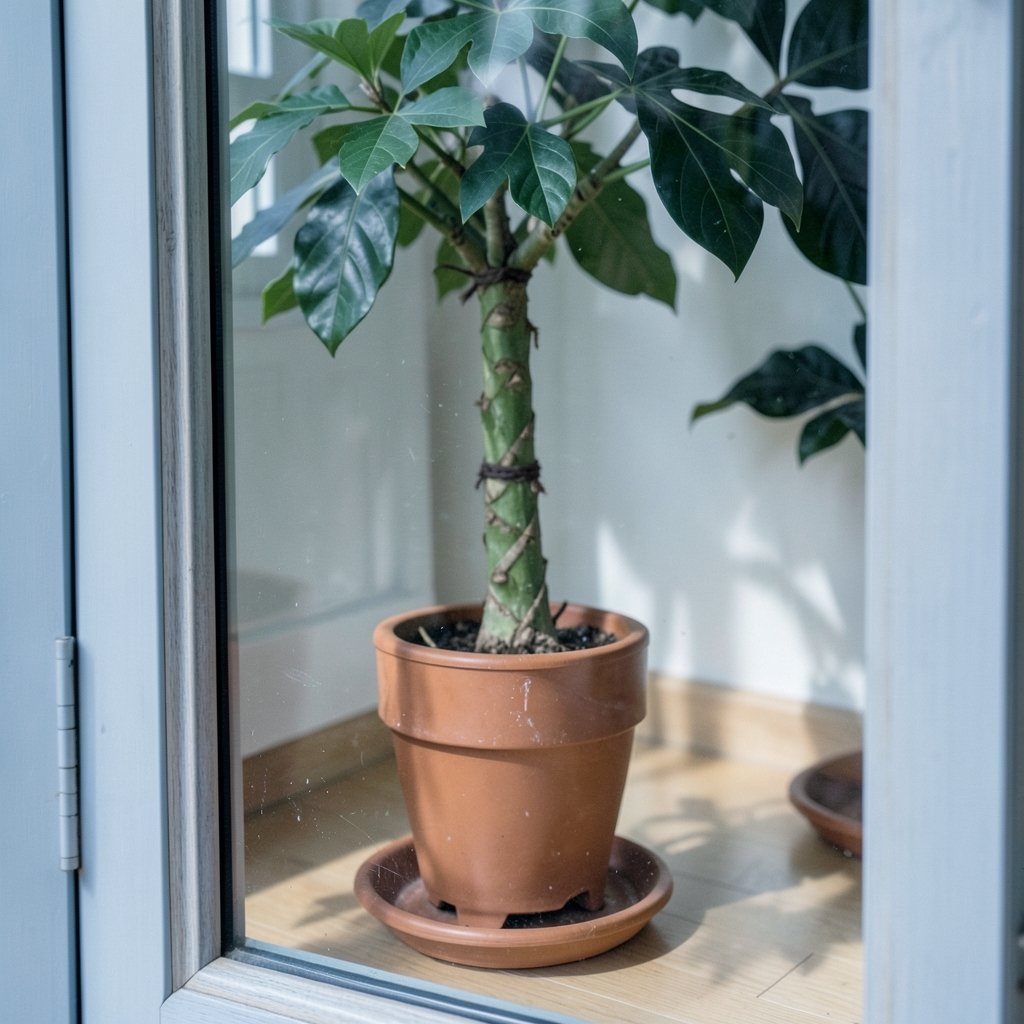
The twisted trunk that defines the retail look is not natural. Growers plant several young seedlings together and braid them as they stretch upward, then bind the braid so the stems fuse over time. It is a nursery technique, nothing more. The braid does not make the plant luckier, and it does not change how it grows.
It does, however, change how the plant behaves indoors. Braided stems compete for light, and the binding can constrict growth if it is left too tight for too many years. Practical tip: check the tie at the top of the braid once a year. If it is digging into the bark, loosen it gently. Also rotate the pot a quarter turn every few weeks. Braided trunks lean toward light unevenly, and a lopsided money tree is hard to correct later.
Where the Money Association Comes From
The fortune connection is usually traced to East Asian lucky-plant traditions, especially Chinese feng shui, where the five-lobed leaves are sometimes read as five elements or five directions. The braided form, marketed heavily from Taiwan and later from the Netherlands, cemented the association for Western buyers.
Be careful with confident origin stories, though. The precise timeline is poorly documented in reliable sources, and many articles repeat the same unverified tale. What is certain is that the name is a sales device first and a cultural symbol second. That does not make it meaningless. Plenty of people buy the tree for a new business or a new home, and the ritual has value. Just do not expect the plant to file your taxes.
If you are interested in how luck-themed products turn into real markets, the mechanics are not so different from other hype-driven niches. The same pattern shows up in how people chase quick returns with new tools, as explored in this look at how to make money with AI and the more sober analysis of how AI companies make money. A compelling story sells; the underlying reality is usually more ordinary.
Light, Water, and the Mistakes That Kill It
Most money trees die from kindness, not neglect. The three classic errors are overwatering in poor drainage, sudden cold drafts, and too little light.
Light
Give it bright, indirect light. A spot a meter or two back from a south- or west-facing window works well in most homes. Direct midday summer sun can scorch the leaves, but a dim corner produces leggy, pale growth and yellowing lower leaves. If the plant is stretching toward the window with wide gaps between leaves, it is asking for more light.
Water
Here is where the wetland origin helps and hurts. The tree tolerates wet soil better than most, but it still needs drainage. A pot without a drainage hole is a slow execution. Water when the top few centimeters of soil feel dry, and empty the saucer rather than letting the pot sit in water for days. In winter, cut back. In summer, expect to water more often.
Soil and temperature
Use a free-draining mix, not heavy garden soil. Keep the plant above roughly 12°C; cold windowsills in winter are a common killer. It likes humidity, which is unsurprising for a swamp species, so a bathroom with a window or a grouped cluster of plants helps.
Common mistakes at a glance
| Mistake | What happens | Fix |
|---|---|---|
| Watering on a fixed schedule | Root rot or drought stress | Check soil moisture first |
| Pot without drainage | Roots drown, trunk softens | Repot into a draining pot |
| Tight braid binding | Constricted, scarred stems | Loosen the tie annually |
| Dim corner placement | Leggy, pale growth | Move to brighter indirect light |
| Cold draft or windowsill | Leaf drop in winter | Keep above about 12°C |
One more practical note: leaf drop after purchase is normal. The plant has just moved from a greenhouse to your living room. Give it a few weeks of stable conditions before panicking or repotting.
Is the Money Tree Edible?
The seeds are reported to be edible when cooked, which is where the name Malabar chestnut comes from. Treat that claim with caution. Preparation requirements and safety are not well documented in accessible sources, and this is not dietary advice. Do not snack on your houseplant based on a blog post. If you want to explore the edible-seed question seriously, look for a botanical garden or extension service that covers the species directly rather than a retailer’s product page.
Buying Smart: What the Label Won’t Tell You
A few practical checks before you pay:
- Look at the base of the trunk. Soft, mushy bark means rot has already started.
- Check the drainage hole. If there isn’t one, budget for a new pot on day one.
- Inspect leaf undersides for pests, especially spider mites and mealybugs, which love dry indoor air.
- Feel the soil. Soggy soil in the shop suggests the plant has been sitting in water.
- Skip the tiny “lucky” versions in sealed decorative pots unless you plan to repot immediately.
Price is a poor guide to quality here. A modest, healthy plant in a draining pot beats a large braided specimen with a rotting base every time.
The Cost Side Nobody Mentions
Houseplants are cheap until they are not. A money tree itself is modest, but the accessories add up: a proper pot, saucer, quality soil mix, fertilizer, and possibly a grow light for a dim room. If you are the type who researches before spending, this breakdown of where identity threat detection money really goes is a useful reminder that hidden costs are everywhere, and the same discipline applies to hobbies. A little planning beats impulse buying.
There is also a broader lesson in the money-tree phenomenon: symbols of wealth are easy to sell, and buyers often pay for the story rather than the object. That pattern shows up far beyond houseplants. The cautionary tale of the gift card scam where victims rarely get their money back is a sharper version of the same idea, and the rise of CBDC digital currency as central bank money goes digital shows how even money itself is being rebranded. None of this makes a money tree a bad purchase. It just means you should buy it for the plant, not the promise.
Repotting and Long-Term Care
Repot every two to three years, or when roots circle the pot. Move up one pot size, no more. A too-large pot holds excess moisture and invites rot, which is the opposite of what a wetland tree needs despite its origins.
Feed lightly during the growing season with a balanced fertilizer at half strength. Overfeeding causes leaf burn and salt buildup. Prune leggy stems in spring to encourage branching; the plant responds well to a trim. If the braid starts to look fused and scarred, that is cosmetic, not fatal.
Propagation is possible from cuttings or seeds, though the braided look requires starting several seedlings together. A single-stem plant will grow into a small tree rather than the twisted retail form, which many growers prefer once they know the braid is optional.
Conclusion
The Chinese money tree is a swamp-loving tropical species dressed up as a lucky charm. That is not a reason to avoid it. It is a reason to water it properly, give it decent light, and ignore the fortune claims while enjoying a genuinely forgiving houseplant. The braid is a nursery trick, the name is marketing, and the care is simpler than most guides admit: bright indirect light, drainage, warmth, and restraint with the watering can. Buy one because you like how it looks. The luck, if it exists, is a bonus.
Frequently Asked Questions
Is a Chinese money tree the same as a jade plant?
No. The Chinese money tree is Pachira aquatica, a wetland tree in the mallow family. The jade plant is Crassula ovata, a succulent from southern Africa. Some sellers use “money tree” for both, so check the botanical name before following care advice. Their water needs are close to opposites.
How often should I water a money tree?
Water when the top few centimeters of soil feel dry, not on a fixed schedule. In summer that might mean weekly; in winter, every two to three weeks. Always empty the saucer. The tree tolerates moisture better than most houseplants, but standing water still rots the roots.
Why are the leaves turning yellow and dropping?
Yellow lower leaves usually mean overwatering or poor drainage. Sudden leaf drop often follows a move, a cold draft, or a change in light. Check the soil first, then the temperature. Give the plant a few stable weeks before making more changes.
Does the braided trunk hurt the plant?
The braid is a nursery technique, not a natural form, and it does not harm the tree if maintained. The risk is the binding tie. Check it once a year and loosen it if it is pressing into the bark. Rotate the pot regularly so the braid grows evenly toward the light.
Can I eat the seeds of a money tree?
The seeds are reported to be edible when cooked, which is why the plant is also called the Malabar chestnut. However, preparation and safety are not well documented in accessible sources. Do not eat houseplant seeds based on internet claims. Treat it as an ornamental.
How much light does a money tree need?
Bright, indirect light works best, such as a spot a meter or two from a south- or west-facing window. Direct midday summer sun can scorch leaves, while a dim corner causes pale, leggy growth. If the stems stretch with wide gaps between leaves, move the plant somewhere brighter.



