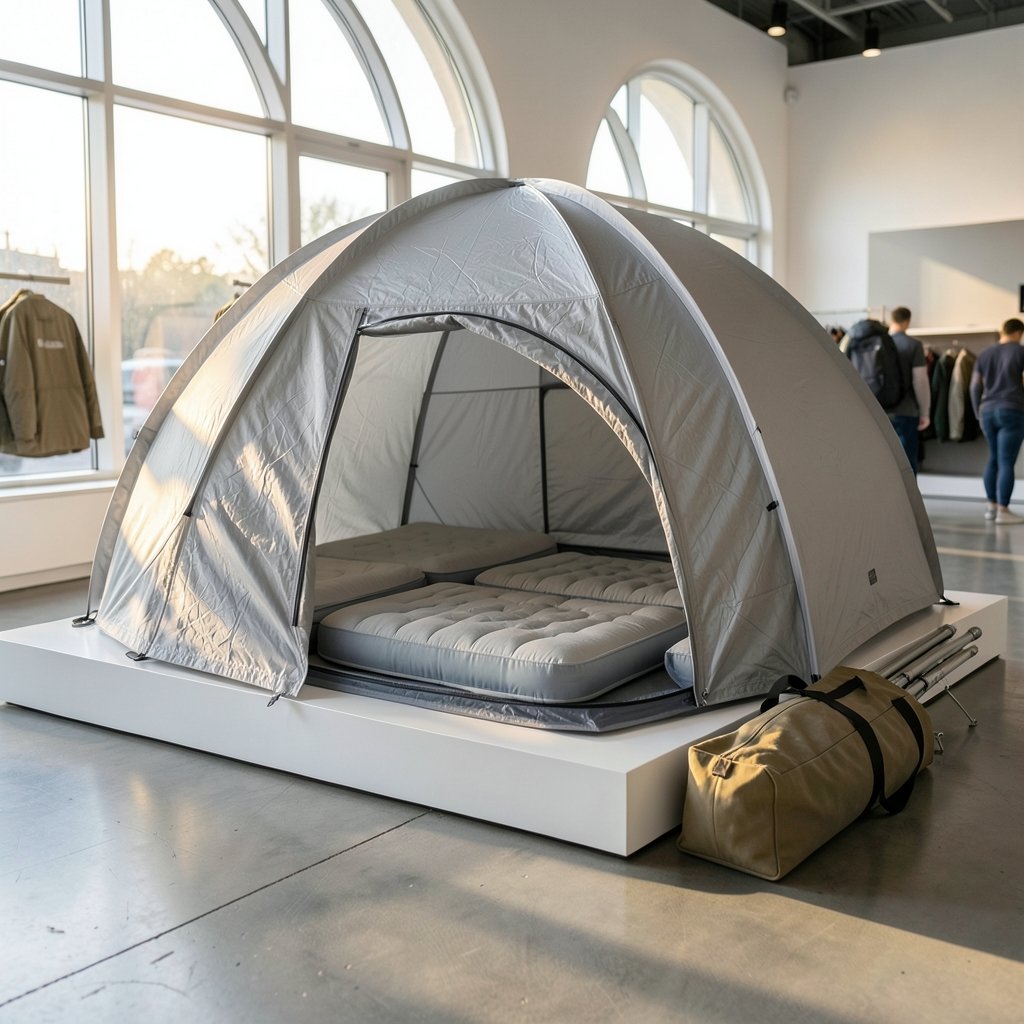
Ever pitched a “six-person” tent and watched five friends squeeze in like sardines while someone’s gear sat outside in the rain? You’re not alone. The label on the box promises room for six, but the reality often tells a different story. A 6 person tent can be a fantastic basecamp for a family or a cramped mistake, and the difference comes down to understanding how these tents are actually sized, built, and used.
This guide breaks down what the capacity rating really means, how to match a tent to your group, and the practical details that separate a comfortable weekend from a soggy, sleepless one. No hype, just the stuff that matters when you’re standing in a field at dusk with a bag of poles.
What Does “6 Person” Actually Mean on a Tent Box?
Here’s the first thing to know: tent capacity ratings are not standardized. There’s no regulated definition that says a six-person tent must sleep six adults comfortably. The number is a manufacturer’s marketing label, and it’s usually based on a best-case scenario where everyone sleeps head-to-toe with no gear inside.
Industry practice does measure floor area, and there are standards bodies that publish test methods for measuring tent floors. But measuring floor space is not the same as defining how many humans fit on it. That gap is where disappointment lives.
A useful rule of thumb many outdoor retailers use is roughly 15 to 20 square feet (1.4 to 1.9 square meters) of floor area per person for backpacking-style, tight sleeping. For car camping comfort, that number climbs to 30 or more square feet (2.8+ square meters) per person. So a typical six-person tent lands somewhere around 90 to 120 square feet (8.4 to 11.1 square meters) of floor space.
Do the math and the picture gets clearer. If you want six adults to sleep with a little breathing room and a duffel bag each, you’re really shopping for something closer to 180 square feet. A standard six-person tent is better understood as a comfortable four-person tent, or a six-person tent for people who like each other a lot and travel light.
The Real-World Math: Who Fits in a Six-Person Tent?
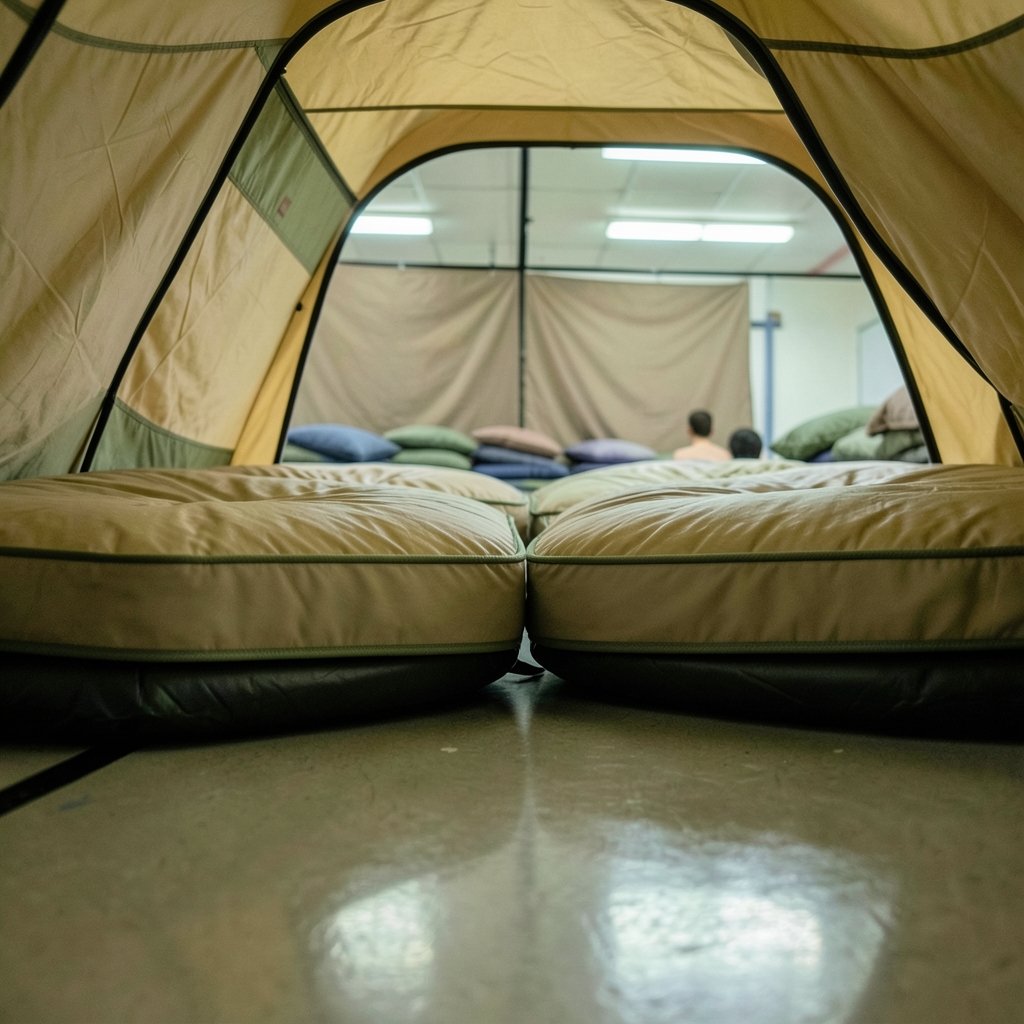
The honest answer depends on who’s sleeping and what they’re bringing. Here’s a practical breakdown that reflects how people actually use these tents.
| Group | Sleeps comfortably? | Notes |
|---|---|---|
| 6 adults, no gear | Tight but possible | Head-to-toe arrangement, minimal movement |
| 4 adults + gear | Yes | The realistic sweet spot for most models |
| 2 adults + 3–4 kids | Yes | Kids take less space; great family setup |
| 6 adults + duffels | No | You’ll want a 8-person or larger |
| 3 adults + camp furniture | Yes | Room for cots or air mattresses |
A common mistake is buying for the maximum headcount. A family of five buys a six-person tent, then discovers that five sleeping pads plus a cooler plus everyone’s bags fills every inch. The fix is simple: buy one size up from your headcount if you’re car camping and want to move around without climbing over people.
Another trap is air mattresses. A queen-size air mattress eats about 60 square feet on its own. Two of them will swallow most of a six-person tent’s floor. If you’re an air-mattress household, measure the mattress footprint before you buy, not after.
Floor Area vs. Peak Height: What Makes a Tent Feel Roomy
Square footage only tells half the story. Peak height is the other half, and it’s what makes a tent feel livable rather than claustrophobic.
Most six-person tents are cabin or dome designs with peak heights around 6 to 7 feet (1.8 to 2.1 meters). That’s tall enough for most adults to stand upright or nearly so, which matters more than you’d think when you’re changing clothes, wrangling a sleeping bag, or trying to find a flashlight at 2 a.m. Cabin-style tents maximize vertical walls, so the usable space extends closer to the edges. Dome tents shed wind and rain better but taper at the sides, which cuts into real standing room.
When comparing models, look at three numbers together: floor area, peak height, and the floor dimensions (length times width). A long, narrow tent can feel tighter than a slightly smaller square one because the square shape gives everyone a corner.
It also helps to think about airflow and layout. Common configurations include two rooms separated by a divider curtain, two doors, and two to four windows. Two doors are a genuine quality-of-life upgrade with a group, because nobody has to crawl over sleeping bodies for a midnight bathroom trip. If you’re planning content around your camping setup or gear reviews, the same principle of matching format to purpose applies as when you’re choosing visuals for a project with an AI infographic generator for visual content — the right structure makes everything easier to work with.
Weight, Packed Size, and Why Six-Person Tents Are Usually Car Campers
Six-person tents are heavy. Most models pack down to somewhere between 15 and 30 pounds (7 to 14 kilograms), and that’s before you add stakes, a footprint, and the air mattress. That weight is the trade-off for space, tall ceilings, and sturdy poles.
Lightweight six-person backpacking tents do exist, but they’re a small niche and usually cost significantly more. For most buyers, a six-person tent is a car-camping product: you drive to the site, walk it a short distance, and set up a basecamp. If you’re hiking miles to your spot, a six-person tent is the wrong tool, and you’d be better served by splitting into smaller backpacking tents.
Packed size matters too. A bulky tent bag can dominate a trunk. Check the packed dimensions in addition to the weight, especially if you drive a smaller car or share space with a cooler and firewood.
Weather Resistance: Reading the Specs Without Getting Fooled
Tent marketing throws around terms that sound official but aren’t. Here’s how to cut through them.
“3-season” and “4-season” are informal industry classifications, not standards. A three-season tent handles spring through fall in most conditions. A four-season tent is built for snow load and high wind, and it’s usually heavier and less ventilated, which makes it a poor choice for summer family camping.
Hydrostatic head is the more useful number. It measures water resistance in millimeters for the fly and floor fabrics, and higher numbers mean more resistance to water pressure. There’s no universal minimum that defines “waterproof,” so treat the number as a comparison tool between models rather than a pass-fail grade. A tent with a higher hydrostatic head on the floor will handle standing water and prolonged rain better than one with a thin coating.
Other practical checks:
- Taped or sealed seams on the fly and floor reduce leaks at stitch lines.
- A full-coverage rainfly protects more of the tent body than a partial fly.
- Ventilation prevents condensation, which is the real cause of most “my tent leaked” complaints. A tent that traps moisture will feel wet even when no rain gets in.
- Guy-out points let you anchor the tent in wind.
Many six-person tents are sold with or accept a footprint (groundsheet) to protect the floor from abrasion and moisture. It’s optional and model-specific, but it extends the life of the floor and adds a layer of protection. A cheap tarp cut to size works as a substitute, as long as it doesn’t stick out past the tent edges, where it will channel rain underneath.
Setup, Storage, and the Mistakes That Ruin Trips
Setup difficulty varies wildly. Some six-person tents go up in a few minutes with color-coded poles. Others require a second person and a fair amount of patience. If you’ll be setting up alone or in the dark after a long drive, practice a dry run in the yard first. It sounds obvious, and almost nobody does it.
Common mistakes worth avoiding:
- Pitching on a slope or in a low spot. Water collects in depressions. Pick high, level ground.
- Skipping the stakes. An unsecured tent becomes a kite in a gust.
- Ignoring the wind direction. Pitch the low, sturdy end into the wind.
- Storing the tent wet. Mildew is permanent. Dry it fully before packing.
- Overloading the tent with gear. Bags and coolers belong in a vestibule or the car, not on the sleeping floor.
Safety Inside a Six-Person Tent
A bigger tent feels like a small room, and that’s exactly why safety rules matter. Camping tents are typically made of flammable synthetic fabrics, and fire-safety guidance consistently advises against open flames, stoves, or heaters inside tents.
The bigger risk is carbon monoxide. Fuel-burning devices such as stoves, lanterns, and heaters used in enclosed or semi-enclosed spaces like tents can cause fatal CO poisoning. This applies to every tent size, including six-person models, and it applies even when the tent feels well ventilated. Keep combustion devices outside, and never use a camping heater inside a tent while you sleep. The same caution applies to any enclosed space where you’re generating content or working with equipment — planning ahead is the theme, whether you’re organizing a campsite or figuring out how to use AI for content creation without cutting corners.
Matching the Tent to Your Crew: A Practical Checklist
Before you buy, run through these questions:
- How many people are actually sleeping? Add one to the count for gear space.
- Will you use air mattresses or cots? Measure them and compare to floor dimensions.
- Do you need two doors? With more than three people, yes.
- What’s the climate? Three-season covers most trips; four-season is for winter.
- How far from the car? If it’s more than a short walk, weight matters.
- Do you want a room divider? Useful for families, optional for friends.
- Is a footprint included? If not, budget for one.
If you’re documenting your gear or building a camping-focused channel, the same discipline of matching format to audience applies as when you’re reviewing the top beauty content types on Facebook and Instagram in 2026 — know your audience, then build for it.
Conclusion
A 6 person tent is one of the most versatile pieces of camping gear you can own, but only if you read past the label. Treat the capacity number as a starting point, not a promise. Look at floor area, peak height, door count, and hydrostatic head. Buy one size larger than your headcount if comfort matters. Practice setting it up before the trip. And keep every flame and fuel-burning device outside, no matter how roomy the tent feels.
Get those basics right, and a six-person tent becomes what it’s meant to be: a dry, roomy basecamp where the whole crew can actually relax. Get them wrong, and you’ll spend the weekend playing Tetris with sleeping bags. The choice is mostly in the specs.
Frequently Asked Questions
How many people can actually sleep in a 6 person tent?
Most six-person tents comfortably sleep four adults with gear, or two adults and three to four children. Six adults can fit, but only in a tight head-to-toe arrangement with minimal belongings inside. If you want genuine room for six adults plus bags, look at an eight-person model.
Is a 6 person tent big enough for a family of four?
Yes, comfortably. A family of four typically has room for sleeping pads or air mattresses plus duffels and a few extras. Families of five often do fine too, especially with younger children who take up less floor space. The main constraint is air mattresses, which consume a lot of square footage.
What is a good floor area for a 6 person tent?
Aim for at least 90 to 120 square feet (8.4 to 11.1 square meters) as a baseline, which is typical for this class. For car camping comfort with gear and furniture, more is better. A common heuristic is 30 or more square feet per person for comfortable car camping, so a true comfort-focused six-person tent trends toward the larger end.
Can you stand up in a 6 person tent?
In many models, yes, or close to it. Peak heights usually run about 6 to 7 feet (1.8 to 2.1 meters), which lets most adults stand upright or nearly upright. Cabin-style tents offer the most standing room because their walls are more vertical, while dome tents taper toward the sides.
Are 6 person tents too heavy for backpacking?
Generally, yes. Most six-person tents weigh roughly 15 to 30 pounds (7 to 14 kilograms) packed, which makes them car-camping products. Lightweight six-person backpacking tents exist but are a small, pricier niche. For hiking trips, splitting into smaller tents is usually the better plan.
Can you use a heater or stove inside a 6 person tent?
No. Camping tents are typically made of flammable synthetic fabrics, and fuel-burning devices used in enclosed spaces like tents can cause fatal carbon monoxide poisoning. Keep stoves, lanterns, and heaters outside, and never run a combustion heater inside a tent while sleeping, regardless of tent size.