

Quick Answer: How do I choose a data engineering company?
Choosing a data engineering company starts with defining the business problem and the data you already hold, then matching vendors against that brief rather than against a glossy pitch deck. You can act on this by writing a clear problem statement, checking security and data protection credentials, and asking for verifiable references from similar projects.
Some firms build pipelines and warehouses, others specialize in governance, migration, or analytics enablement, and a few are generalist consultancies that subcontract the hard parts. The scope differs enormously, so compare proposals line by line instead of by headline price.
Before signing, check the scope of work, data protection contracts, security certifications such as ISO/IEC 27001, named engineers versus sales promises, data contract and documentation practices, exit and handover terms, and total cost including ongoing support.
Why the Vendor Question Is Harder Than It Looks
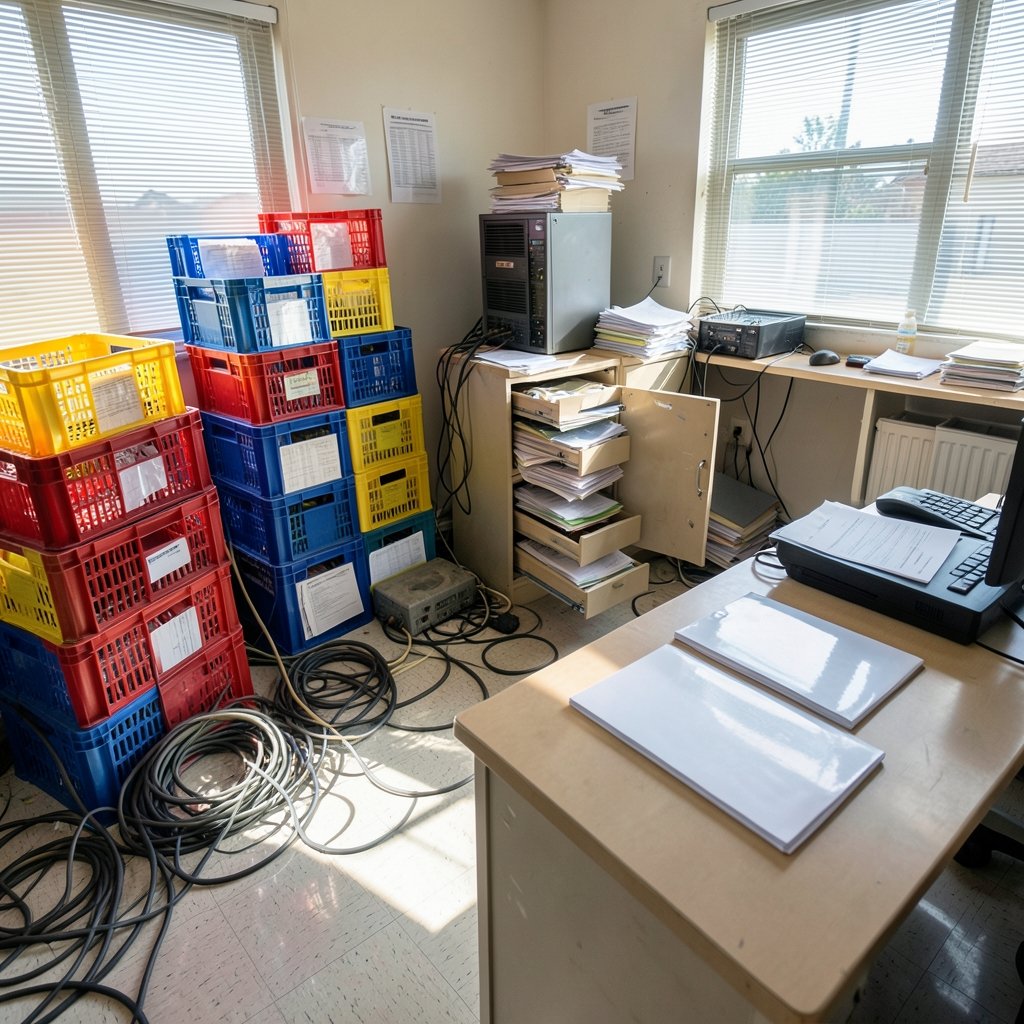
What happens when three data engineering companies send you three polished proposals, all promising a modern data stack, and none of them quite describes your actual mess of spreadsheets, half-migrated CRMs, and a warehouse nobody trusts? That is the moment most buyers realize the hard part is not finding vendors. It is knowing what to ask them.
Data engineering sits awkwardly between IT, analytics, and business operations. A firm that excels at building pipelines may be weak on governance. A firm with brilliant governance credentials may take nine months to ship anything. And the sales conversation rarely surfaces that difference.
The practical fix is to treat vendor selection like a procurement exercise, not a popularity contest. Start with the problem, not the platform. The UK Government Digital Service’s service manual has long recommended beginning with user needs and a clear problem statement before buying or building technology, and that principle applies just as well to a private company buying a data platform.
Start With the Problem, Not the Platform
Before anyone mentions Snowflake, Databricks, or dbt, write down what decision the data should improve. “We want a data warehouse” is a wish. “We need daily stock accuracy across four warehouses so finance can close the month in three days instead of ten” is a brief a vendor can actually answer.
A useful brief includes the systems your data lives in, who will use the output, how fresh the data must be, what regulations apply, and what “done” looks like in six months. It also names the internal owner. Vendors can smell an unowned project immediately, and it usually shows up as scope creep later.
If your team is still deciding which platform direction makes sense, it helps to read up on how to choose the right cloud data warehouse platform before you invite bids. Otherwise every vendor will quietly steer you toward whatever stack they know best.
Common Mistake: Letting the Vendor Write the Requirements
One of the most frequent errors is asking vendors to “propose an approach” before you have written your own success criteria. You then end up comparing three different definitions of the problem. Write the brief first, share it with all bidders, and score responses against it.
What to Check Before You Shortlist
A shortlist should be built on evidence, not vibes. The table below shows the dimensions worth scoring and what good looks like in practice.
| Dimension | What to check | Warning sign |
|---|---|---|
| Problem fit | Case studies in your sector or data shape | Only generic “digital transformation” stories |
| Named team | Who actually does the work, and their availability | Senior names in the pitch, juniors on delivery |
| Security | ISO/IEC 27001 certification or equivalent controls | Vague answers about access management |
| Data protection | Written processor terms and clear data flows | “Our legal team will sort that later” |
| Engineering practice | Version control, testing, documentation, data contracts | Everything lives in one person’s head |
| Handover | Runbooks, training, and code ownership terms | Vendor retains all operational knowledge |
| Cost | Total cost including support and change requests | Suspiciously low day rate with huge change fees |
ISO/IEC 27001 is the international standard for information security management systems, first published in 2005, with the current edition dated 2022. A certification is not a guarantee of good engineering, but the absence of any structured security framework is a genuine red flag when a vendor will touch your customer data.
Ask About Data Contracts Early
Data contracts are written agreements between the team producing data and the team consuming it, covering schema, semantics, and quality expectations. There is even an open specification for machine-readable contracts maintained by the Bitol project under the Linux Foundation. You do not need to adopt a formal standard on day one, but a vendor who has never heard of the concept is likely to build pipelines that break silently.
If your project involves sensitive personal data, pair that conversation with a clear view of how the vendor’s approach to data loss prevention compares with the alternatives, because pipeline design and data protection decisions overlap far more than most buyers expect.
The Procurement Process That Saves Money
A structured process protects you in two ways: it makes bids comparable, and it gives you a paper trail if things go wrong. Public-sector buyers in the UK often use Crown Commercial Service frameworks for digital and data services, and private buyers can borrow the same discipline even without a formal framework.
- Write the problem statement and success criteria, and get sign-off from the budget holder.
- Define mandatory requirements: security certification, insurance, data protection terms, and availability of named staff.
- Issue the brief to four to six vendors, with a fixed response format so answers line up side by side.
- Score responses against weighted criteria, with technical quality weighted above price.
- Run a paid discovery or proof-of-value phase with the top two before committing to full delivery.
- Check references by phone, asking specifically what went wrong on the project.
- Sign a contract with clear milestones, acceptance criteria, and handover obligations.
That fifth step matters more than buyers expect. A short paid discovery, typically a few weeks, reveals how a vendor thinks, how they communicate, and whether their estimates survive contact with your actual data. It costs far less than discovering the same problems six months into a build.
Common Mistake: Skipping the Paid Discovery
Buyers often try to get discovery for free by asking for a detailed proposal. What they receive is a sales document written to win the deal, not an honest assessment. Paying a modest fee for a real discovery phase changes the incentive completely.
Security, Privacy, and the Contract Details People Forget
If personal data is involved, data protection law imposes duties on both controllers and processors, including the requirement for written contracts setting out how data is handled. In the UK, the Data Protection Act 2018 received Royal Assent on 23 May 2018, and the UK GDPR took effect on 1 January 2021. Whatever your jurisdiction, the pattern is similar: the vendor needs to be a named processor with defined obligations.
Ask where data will be stored, who can access it, how access is logged, and what happens at contract end. Deletion certificates sound bureaucratic until you need one. Also ask how the vendor handles test data: copying production customer records into a development environment is one of the most common and most avoidable privacy failures in data projects.
Cloud providers publish compliance and certification listings for their services, so you can check the underlying platform independently. Just remember that the platform’s certification does not automatically cover the vendor’s own processes on top of it.
The Handover Clause Nobody Reads
The single most expensive omission in data engineering contracts is a weak handover clause. If the vendor builds, runs, and understands the platform while your team watches, you have bought a dependency rather than a capability. Insist on documentation, runbooks, architecture decision records, and a named internal engineer who shadows the build. The same logic applies to any technical migration you run in-house, which is why guides on how to format a USB drive in Windows 11 without losing data stress preparation and verification over speed. Data platforms deserve the same caution, at a larger scale.
Judging Engineering Quality Without Being an Engineer
Most buyers are not data engineers, so how do they tell a strong team from a persuasive one? A few signals cut through the noise.
Ask to see a repository structure, a sample data contract, or a runbook, with sensitive details redacted. Strong teams are usually proud to show this. Ask how they test pipelines and what happens when an upstream source changes a column name at short notice. Ask what monitoring exists and who gets paged at 3 a.m.
The open Data Engineering Cookbook, maintained by Andreas Kretz, is a widely used community reference covering core concepts and practices. Skim a few sections before interviews and you will ask noticeably better questions, even without writing a line of code.
For teams comparing tooling as part of the decision, the same evaluation discipline used when beginners choose the right design tool among Figma alternatives applies here: match the tool to the work, not the hype cycle.
References: Ask the Awkward Questions
Ask referees three things: what the vendor underestimated, how they handled a missed deadline, and whether they would hire them again. The pause before the third answer tells you plenty. Be wary of references that are all from one long-standing client, since that can hide how the vendor behaves with everyone else.
Cost, Contracts, and Exit Terms
Data engineering quotes vary wildly because scope varies wildly. A fixed-price build and a time-and-materials engagement are different products. Fixed price shifts risk to the vendor, who will price that risk in. Time and materials gives flexibility but requires you to manage scope actively.
Whichever you choose, model the total cost over three years, including support, change requests, cloud spend, and internal staff time. Cloud bills are the classic surprise: a pipeline that runs beautifully in testing can cost far more at production volume if nobody sized it properly.
Finally, negotiate exit terms before you sign. Who owns the code? Can you take the platform in-house? What is the notice period? A vendor confident in its work will agree to reasonable exit terms without drama.
Conclusion
Choosing a data engineering company is less about finding the most impressive pitch and more about running a disciplined process. Define the problem in plain language, score vendors against written criteria, verify security and data protection arrangements, pay for a short discovery phase, and protect yourself with clear handover and exit terms. The vendors worth hiring will welcome that rigor. The ones who resist it have just told you something useful.
FAQ
How long should a data engineering project take before showing results?
Most well-scoped projects should deliver something visible within the first quarter, even if that is only a reliable pipeline for one critical dataset. Be cautious of any plan where nothing usable appears for six months or more. Early delivery is the best evidence that the vendor’s estimates are grounded in reality.
Should I hire a specialist data engineering firm or a generalist consultancy?
Specialists usually bring deeper technical practice and better hiring pipelines for engineers, while generalists may handle adjacent work such as change management or application development. If your core need is pipelines, governance, and platform reliability, a specialist is often the better fit. If the data work is one strand of a much larger transformation, a generalist with genuine data depth can work, provided you check the named team carefully.
What certifications should a data engineering vendor hold?
ISO/IEC 27001 for information security management is the most widely recognized baseline. Depending on your sector, also look for sector-specific attestations or independent audit reports. Certifications should be current and should cover the specific services and locations the vendor will use for your project, rather than only their head office.
How do I compare proposals when the prices differ enormously?
Normalize the proposals first: same scope, same deliverables, same support period, same assumptions. Then compare the underlying effort estimates and the assumptions each vendor made. A very low price usually means narrower scope, more excluded items, or a change-request model that recovers margin later. Score technical quality and delivery confidence alongside price rather than letting the cheapest number win by default.
What should be in the contract regarding data ownership?
The contract should state clearly that you own your data and the deliverables you paid for, including code and documentation, and should set out the vendor’s obligations as a data processor. It should also cover deletion of data at contract end, confidentiality, and what happens to operational knowledge if the relationship ends.
Can a small internal team manage a data engineering vendor effectively?
Yes, provided one person owns the relationship and has enough technical literacy to ask informed questions. That person does not need to write pipelines, but should understand the architecture, review milestones, and hold the vendor to documented acceptance criteria. Budget time for this role; projects without an informed internal owner are the ones most likely to drift.



