

What if the biggest thing holding back a player’s game isn’t their swing, their fitness, or their coach, but the racket sitting in their bag? It sounds dramatic, but walk onto any club court and you’ll see it: players fighting equipment that doesn’t match how they actually hit the ball. A beginner swinging a heavy player’s frame. A strong hitter stuck with a featherweight starter racket. Someone with arm pain gripping a board-stiff frame strung way too tight.
Choosing a racket isn’t about buying the most expensive model or copying what a favorite pro uses. It’s a matching exercise. Weight, head size, balance, stiffness, grip size, and string pattern all interact, and the goal is to find the combination that suits a player’s strength, technique, and body. This guide walks through each variable in plain language, flags the mistakes people make most often, and explains what actually works in practice.
Start With Honest Self-Assessment
Before comparing specs, a buyer needs to answer three questions honestly. How long have they been playing? How often do they play? And do they have any arm or shoulder sensitivity?
A player who hits twice a month for fun has different needs from someone training four times a week. A teenager still growing shouldn’t be locked into an adult frame. Someone with tennis elbow should treat comfort as a priority, not an afterthought. Getting this self-assessment right matters more than any single number on a spec sheet, because every later decision flows from it.
It helps to think of the same logic used for other big purchases: the fit matters more than the label. The same principle behind how to choose a study abroad country that fits you applies here. A racket that suits one player’s game can be completely wrong for another, even if both are “good” rackets.
Weight: The Variable That Changes Everything
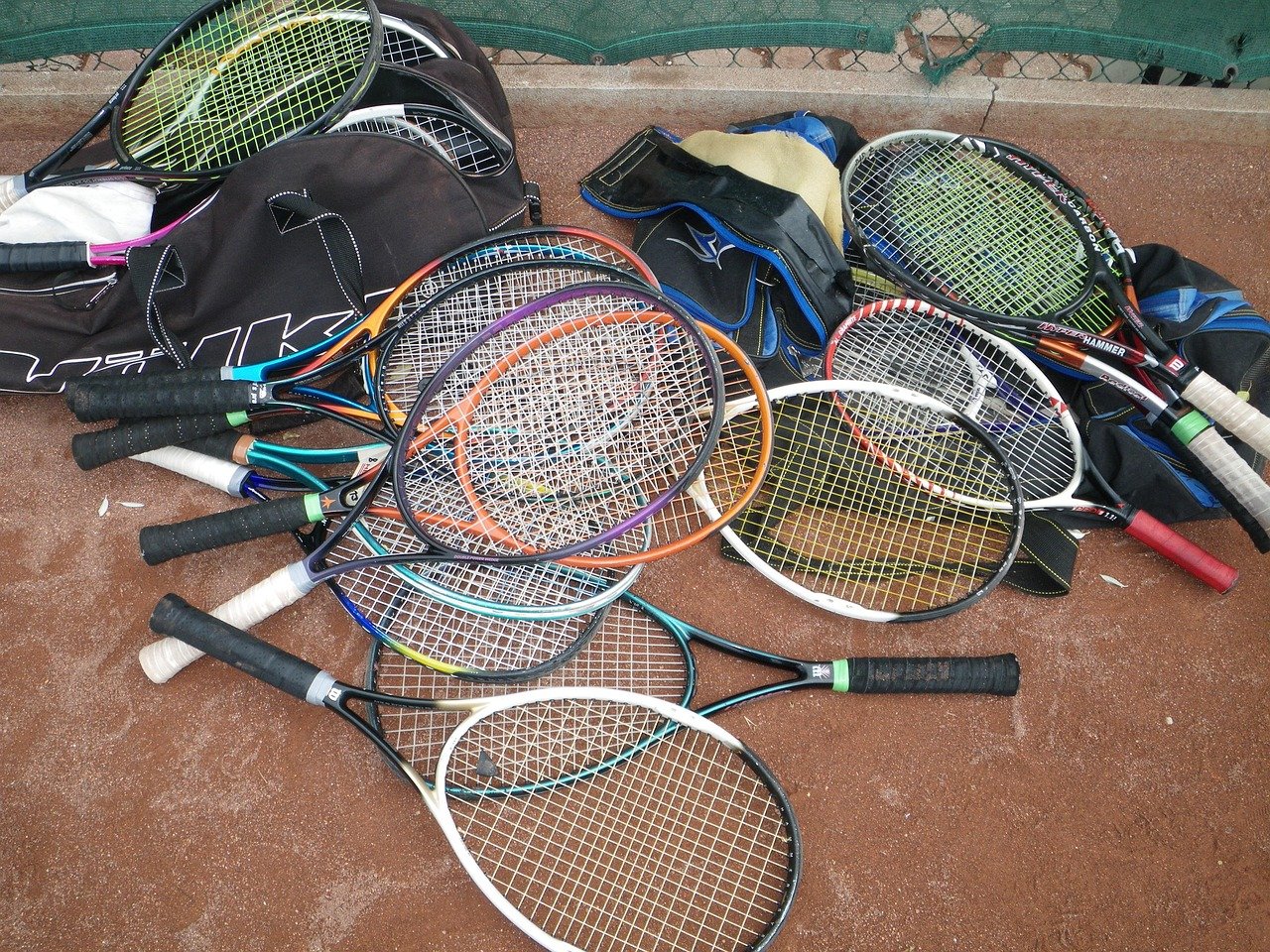
Racket weight is almost always listed unstrung. Typical adult frames run roughly 250 to 340 grams unstrung, and strings add about 15 to 20 grams. That’s a meaningful difference, because a heavier racket generally offers more stability and power but demands more strength and earlier preparation.
Here’s the practical breakdown:
| Player type | Typical unstrung weight | Why |
|---|---|---|
| Beginner or casual | 250–280 g | Easy to swing, forgiving on late contact |
| Improving intermediate | 280–300 g | Balance of power and control |
| Strong intermediate to advanced | 300–320 g | More plow-through and stability |
| Advanced or heavy hitter | 320–340 g | Maximum stability against pace |
The most common mistake is buying too heavy too soon. A player who can’t swing a frame smoothly for a full match will lose more points to late contact than they gain from stability. The second most common mistake is the opposite: a strong player staying on an ultra-light racket for years and wondering why every heavy ball feels like it’s pushing them around.
A useful test in practice: hit for twenty minutes with a demo frame. If the arm tires noticeably or the swing slows late in the session, the racket is probably too heavy. If it feels twitchy and unstable against pace, it’s probably too light.
Head Size and the Sweet Spot
Head size affects the sweet spot and control. Common adult head sizes fall between about 95 and 110 square inches (roughly 610 to 710 cm²). Larger heads give a bigger sweet spot and more forgiveness on off-center hits. Smaller heads favor control and precision.
For most recreational players, the sweet spot of the market sits around 100 square inches. It’s forgiving enough to rescue slightly mistimed shots but precise enough to reward good technique. Beginners often benefit from 105 to 110 square inches. Advanced players with consistent contact may prefer 95 to 98.
One caveat: category labels like “midplus” aren’t standardized across brands, so comparing raw numbers is more reliable than comparing marketing terms.
Balance: Head-Light, Even, or Head-Heavy
Balance describes how weight is distributed along the frame, usually expressed as head-light, even, or head-heavy, or in millimeters measured from the butt cap.
Head-light rackets feel more maneuverable, which helps at the net and on quick reactions. Head-heavy rackets add power and plow-through on groundstrokes but can feel sluggish. Even balance sits in between. Most all-court players gravitate toward slightly head-light frames, while baseline power hitters often prefer even or head-heavy setups.
Balance and static weight work together. A 300-gram racket that’s head-light can feel lighter to swing than a 290-gram frame that’s head-heavy. That’s why swing weight, when listed, is often more informative than static weight alone.
Stiffness and Arm Comfort
Stiffness, often given as an RA rating, affects power, comfort, and how much shock reaches the arm. Higher stiffness generally means more power but more vibration transmitted through the frame. Lower stiffness is often recommended for players with arm sensitivity.
This is one of the most debated topics in equipment circles, and comfort claims should be treated as a general guide rather than a guarantee. What’s clear in practice: players with existing elbow or shoulder issues should lean toward softer frames, softer strings, and lower tension. Players who want free power and have no arm concerns can comfortably play stiffer frames.
The mistake here is chasing power with a stiff frame and tight strings, then wondering why the elbow aches by October. If arm health is a concern, stiffness deserves real weight in the decision.
Grip Size: Small Detail, Big Consequences
Grip size is measured in inches around the handle, typically running from about 4 inches (L0) to 4⅝ inches (L5). A common rule of thumb: when gripping the racket normally, there should be roughly one finger-width of gap between the fingertips and the palm.
Sizing conventions vary by brand, so treat the finger-gap rule as a guideline. Too small a grip can encourage over-gripping and contribute to elbow strain. Too large a grip can reduce wrist snap and make it harder to control the racket face. When in doubt, many players find slightly smaller grips easier to adjust with an overgrip than slightly larger ones, since overgrips add thickness.
String Pattern and Tension
String pattern affects spin, control, and durability. Open patterns like 16×19 generally produce more spin and power. Denser patterns like 18×20 generally offer more control and string durability.
String tension is typically set somewhere around 45 to 60 pounds (roughly 20 to 27 kg). Lower tension generally gives more power and a softer feel. Higher tension generally gives more control. This is a personal-fit variable, not a performance guarantee, and it’s the easiest thing to experiment with after purchase.
The practical tip: change one variable at a time. Adjusting tension and switching rackets simultaneously makes it impossible to know what caused the improvement.
Junior Players Need Different Sizing
Junior rackets are sized by age and height, with common guidance linking racket length (roughly 19 to 26 inches) to a child’s height. Full-length 27-inch adult rackets suit older teens. Age-to-length charts vary by manufacturer and are rules of thumb, so a child should be measured rather than guessed at.
The mistake parents make most often is buying an adult racket “to grow into.” An oversized frame teaches bad habits and can cause injury. A properly sized junior frame, replaced as the child grows, is the better path.
Length and the Rules
Racket length is one of the few genuinely regulated specs. Competition rules cap racket length at 29 inches (73.7 cm) for play. Most adult rackets are 27 inches, with some models at 27.5 for extra reach and power. Longer frames add leverage but can be harder to maneuver.
Demo Before Buying: What Actually Works
Nearly every coaching and equipment source gives the same advice: demo several rackets before buying. Feel is subjective. A frame that reviews brilliantly can feel dead in one player’s hands and perfect in another’s.
In practice, a good demo process looks like this:
- Narrow the field to three or four frames based on weight, head size, and stiffness.
- Play with each for at least twenty minutes, including serves, volleys, and groundstrokes.
- Note arm fatigue, mishit forgiveness, and confidence on off-center contact.
- Compare using the same strings and tension where possible.
- Buy the one that felt best on a bad day rather than only on a good day.
That last point matters. A racket that only works when everything is clicking isn’t the right racket. The right frame helps on the days when timing is off.
This is the same discipline that separates good decisions from impulse buys in any gear category. Whether someone is comparing Figma alternatives for beginners choosing the right design tool or sorting through Trello alternatives by comparing board tools before choosing one, the pattern holds: define the need first, test the shortlist, then commit.
Common Mistakes to Avoid
A few errors show up again and again:
- Buying the pro’s frame. Professional rackets are often heavy and demanding. They’re built for players with elite timing and strength.
- Ignoring arm health. Comfort isn’t weakness. A sore elbow in November usually traces back to a stiff frame and tight strings chosen in April.
- Skipping the grip check. Grip size is cheap to fix at purchase and annoying to fix later.
- Overthinking specs. Beyond a reasonable range, most recreational players can’t feel small differences in stiffness or balance. Fit in the broad strokes matters far more than decimal points.
- Never restringing. A racket’s strings lose tension with use. Players often blame the frame when the strings are the real culprit.
There’s a parallel worth noting here: the word “scooter” itself has drifted in meaning over time, and what people mean by the scooter word really depends on which one they choose. Racket marketing works the same way. Labels like “power,” “control,” and “tour” mean different things across brands, so the numbers matter more than the words.
Matching Racket to Playing Style
Beyond raw specs, playing style shapes the choice. Baseline power hitters tend to prefer slightly heavier, head-heavy frames with open string patterns for spin. Serve-and-volley players lean toward head-light frames for quick net movement. All-court players usually land on an even or slightly head-light frame around 300 grams with a 100-square-inch head.
Doubles specialists often value maneuverability over raw power. Players dealing with injuries should prioritize comfort above all. There’s no universal “best” racket, only a best fit.
Budget Realistically
Rackets span a wide price range, and the most expensive frame isn’t automatically the right one. Previous-season models often sell at significant discounts and perform nearly identically to the newest release. For beginners especially, a mid-priced previous-year frame plus a proper string job is a smarter spend than a full-price flagship model.
A sensible budget also includes strings and restringing. Many players spend heavily on the frame and then skimp on strings, which is backwards. Strings are where feel and comfort actually live.
Conclusion
Choosing a tennis racket comes down to matching equipment to the player, not chasing the flashiest spec sheet. Start with honest self-assessment. Get the weight and head size in the right range for the player’s level. Pay attention to stiffness if arm health is a concern. Check the grip size carefully. Then demo a shortlist and buy the frame that felt best under pressure rather than only in a warm-up.
The players who improve fastest aren’t always the ones with the most expensive gear. They’re the ones whose racket lets them swing freely, confidently, and without pain. Get the fit right, and the equipment quietly does its job: it gets out of the way and lets the game happen.
Frequently Asked Questions
What size tennis racket should a beginner use?
Most beginners do well with an adult frame around 27 inches long, weighing roughly 250 to 280 grams unstrung, with a head size of 100 to 110 square inches. That combination offers forgiveness on off-center hits and is easy to swing for a full session. Juniors should use age- and height-appropriate shorter frames instead of adult rackets.
How do I know if my grip size is correct?
Grip the racket normally and look at the gap between your fingertips and your palm. There should be roughly one finger-width of space. If the fingers dig into the palm, the grip is too small. If there’s a large gap, it’s too large. Sizing conventions vary by brand, so this rule is a guideline rather than a strict standard.
Is a heavier racket better for power?
Heavier rackets generally offer more stability and power, but they demand more strength and earlier preparation. A player who can’t swing a heavy frame smoothly for a full match will lose more to late contact than they gain. Weight should match the player’s strength and technique, not a pro’s spec sheet.
Does racket stiffness really affect arm pain?
Stiffness affects how much shock reaches the arm, and lower-stiffness frames are often recommended for players with arm sensitivity. The relationship isn’t absolute, and comfort claims are debated, but players with elbow or shoulder issues generally do better with softer frames, softer strings, and lower tension.
What string tension should a beginner start with?
Beginners often start in the middle of the typical range, roughly 50 to 55 pounds (about 23 to 25 kg). Lower tension gives more power and a softer feel; higher tension gives more control. It’s the easiest variable to adjust after purchase, so experiment one change at a time.
How many rackets should I demo before buying?
Three or four frames is usually enough to find a clear favorite. Play with each for at least twenty minutes, including serves and volleys, and compare them with similar strings and tension. Buy the frame that felt best on an off day, since that’s the racket that will help most when timing isn’t perfect.



