
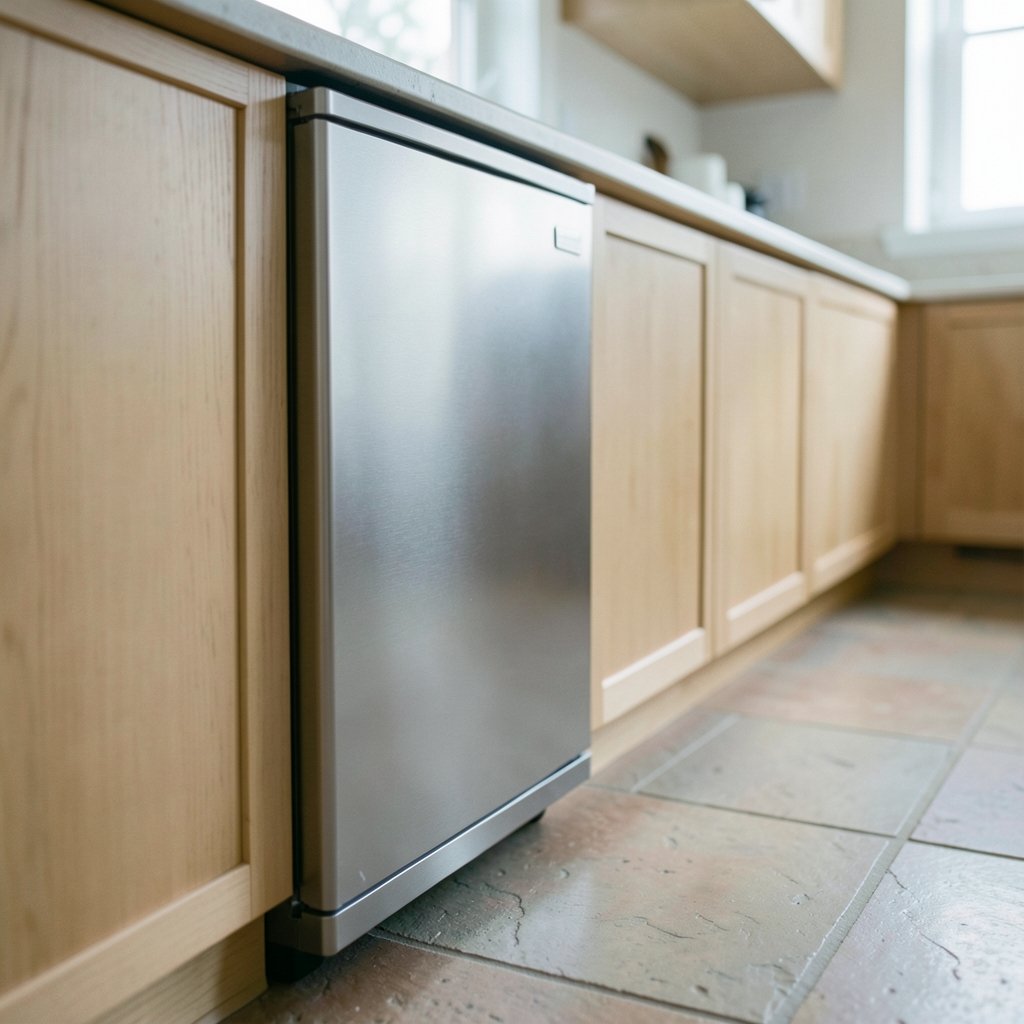
Why do so many people love the look of a counter depth refrigerator right up until the moment they try to fit a Thanksgiving turkey inside one? That gap between expectation and reality is the whole story of this product category, and it is the story most reviews gloss over. Counter depth fridges are a design choice first and a storage appliance second, and buyers who understand that ordering of priorities tend to be much happier than the ones who don’t.
This guide pulls together what reviews consistently get right, what they routinely leave out, and how to read the specs so you don’t end up with a beautiful fridge that fights you every day.
What “Counter Depth” Really Means (and Why Reviews Disagree)
Here is the first thing to know: counter depth is not a regulated standard. It is a marketing label. The idea is simple enough. A counter depth refrigerator is built to sit roughly flush with standard 24-inch base cabinets, so the cabinet box is shallower than a conventional fridge. Standard depth units typically run about 30 to 36 inches deep once you count the handles.
That is where the agreement ends. Depending on the brand, “counter depth” boxes range from roughly 24 to 30 inches deep. So when two reviews say a fridge “sits flush,” they may be describing two very different machines. This is why you should never trust the label alone. Get the tape measure out and check three numbers for any model you’re considering:
- Cabinet depth (the box itself, without doors)
- Door and handle projection (how far it sticks out past the cabinet)
- Door swing clearance (how much side room the hinges need to open fully)
That third number is the one people forget, and it’s the one that causes the most regret. A shallow box can actually mean the door projects further when open, and some models need enough side clearance for hinges. Reviews frequently mention handles clipping adjacent counters and doors that won’t open all the way against a wall.
The Two Trade-Offs Every Review Mentions
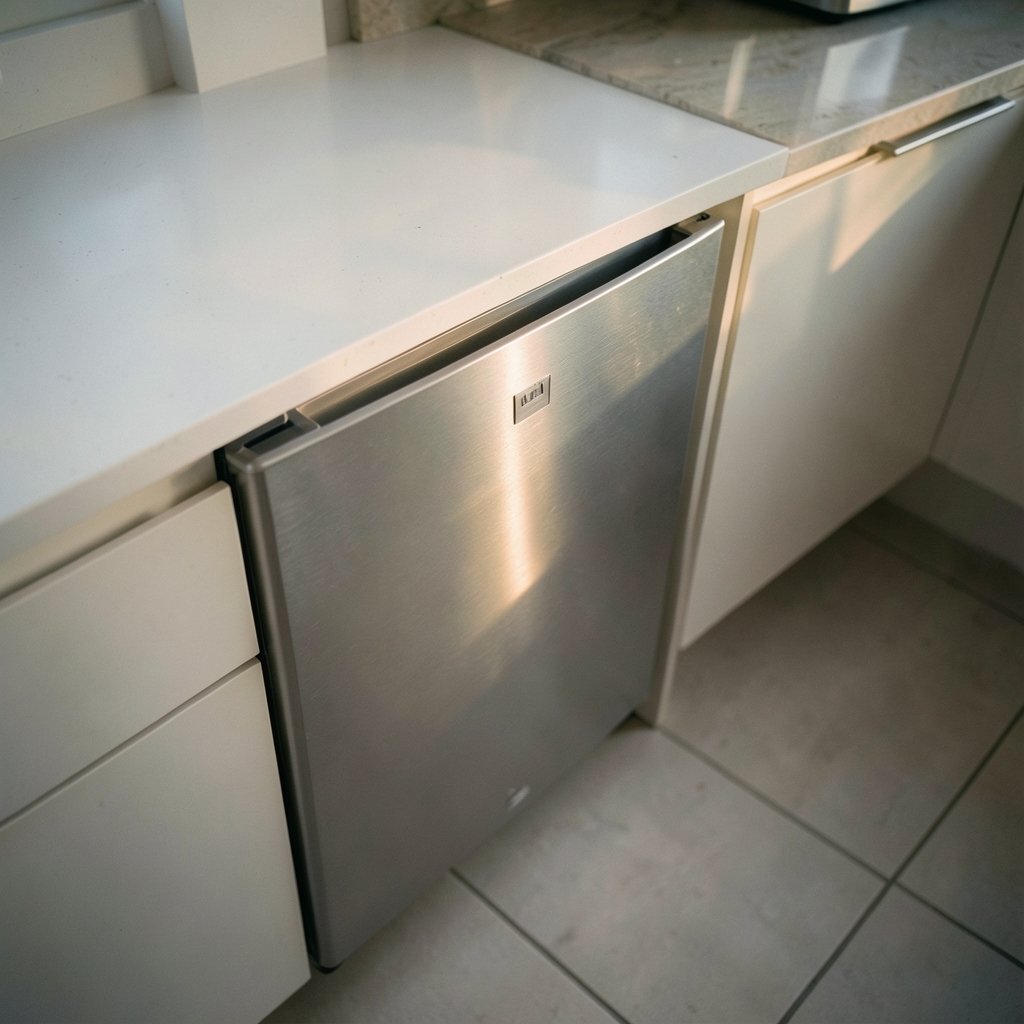
Almost every credible review of counter depth refrigerators lands on the same two points. They’re worth stating plainly because they define the category.
You give up capacity
Because the box is shallower, counter depth models generally hold less food than standard depth fridges of similar width and height. Capacity is reported in cubic feet, and the difference is real, not cosmetic. If you’re moving from a standard depth unit to a counter depth one of the same width, expect to lose considerable interior volume. Families that cook most nights and stock up on bulk purchases feel this the most.
You pay more
Counter depth models typically cost more than comparable standard depth models. The magnitude varies by brand and by year, so treat any fixed dollar figure you see in an old review with suspicion. What holds steady is the direction: you are paying a premium for the form factor, not for better cooling.
| Factor | Counter Depth | Standard Depth |
|---|---|---|
| Depth (with handles) | Roughly 24 to 30 inches | Roughly 30 to 36 inches |
| Look | Sits near flush with cabinets | Projects into the room |
| Capacity | Lower for same width and height | Higher |
| Price | Higher for comparable features | Lower |
| Door swing | Can project further; check clearance | Usually more forgiving |
| Best for | Design-led kitchens, tight walkways | Big households, bulk shoppers |
Reading Reviews Without Getting Fooled
The counter depth review landscape has a specific failure mode: reviewers rate the fridge they bought against their hopes, not against the category. Someone who wanted a flush look and got it will forgive a lot. Someone who assumed “counter depth” meant “same storage, prettier” will punish the same fridge.
A few practical habits make reviews far more useful.
Filter for people with your kitchen layout. A review from someone with a wall on one side of the fridge tells you more about clearance than a review from someone with open space on both sides. Search reviews for words like “wall,” “counter,” “handle,” and “swing.”
Discount the first-week reviews. The honeymoon period tells you about the delivery experience. The twelve-month update tells you about the appliance.
Look for capacity complaints phrased as specifics. “Couldn’t fit a sheet pan standing up” is data. “Too small” is a mood.
Check whether the reviewer installed an ice maker or water line. Ice makers and water lines complicate installation, and a surprising share of negative reviews are really installation reviews wearing a disguise. If your plumbing situation is awkward, that’s worth knowing before delivery day, and some of the same practical troubleshooting logic applies here as with any cooling appliance, as this guide to fixing a refrigerator that stopped cooling lays out in useful detail.
Energy, Efficiency, and the Numbers That Actually Matter
Counter depth fridges are usually smaller in volume, which can help energy use. But efficiency depends on the compressor and insulation of the specific model, not on depth alone. A poorly insulated shallow fridge can easily use more power than a well-built deeper one.
In the United States, refrigerator energy testing and labeling fall under federal appliance standards and the EnergyGuide program, with efficiency criteria handled through ENERGY STAR. The yellow EnergyGuide label gives you an estimated yearly operating cost, which is the single most useful efficiency number on the showroom floor. Compare that figure across models rather than assuming a smaller box automatically wins.
One caution: efficiency labels and model lineups change often. A review from three years ago may describe a compressor or configuration the brand no longer sells under that name. Always confirm the current spec sheet before you commit.
Fit and Installation: Where Good Reviews Go Bad
This is the section that saves people the most grief. Reviews of counter depth refrigerators are full of fit problems that had nothing to do with the fridge’s quality and everything to do with the kitchen.
Measure the delivery path. Doorways, stair turns, and tight hallways reject more refrigerators than bad reviews ever will. Measure the narrowest point between the truck and the final spot.
Check the door swing against real obstacles. A fridge can be perfectly flush and still be unusable if the door hits a kitchen island or can’t open past 90 degrees. Some models need more than a right angle to pull crisper drawers out fully.
Plan for the water line. If you want an ice maker or water dispenser, the line needs to be run before the unit goes in, not after. Retrofitting is possible but annoying.
Leave room for the handles. Handles are the sneaky variable. A fridge that fits the cavity perfectly may still have handles that graze a countertop or a wall.
If your installation goes sideways and the unit stops cooling properly afterward, don’t panic-diagnose. There’s a methodical way to work through it, and the same approach that helps with any cooling failure applies here. The bigger point is that a lot of “this fridge is broken” reviews are actually “this fridge was installed badly” reviews.
Reliability: What the Surveys Can and Can’t Tell You
Independent testing organizations and consumer publications run brand reliability and owner satisfaction surveys for refrigerators, and these are the best systematic sources available. Their methodology and sample sizes vary by year, so check the most recent survey before drawing conclusions.
What those surveys generally support: brand matters more than form factor for reliability. A well-regarded brand’s counter depth model tends to track with that brand’s standard depth models. Buying counter depth doesn’t inherently make a fridge less reliable; it makes it more expensive and smaller.
What surveys can’t tell you is how a specific model will behave in your specific kitchen. For that, you need the fit measurements, the current spec sheet, and a realistic sense of how much food your household actually stores.
It’s also worth applying the same skepticism you’d use on any product review ecosystem. Paid or incentivized reviews distort ratings across every category, and appliances are no exception. The dynamics described in this piece on how paid Amazon reviews backfire on buyers and sellers apply directly to big-ticket appliance shopping, where a single boosted rating can move real money. (Free vpns safe use honest answer most reviews skip)
Who Should Actually Buy One
Counter depth refrigerators make excellent sense for some households and poor sense for others. Being honest about which one you are saves everyone time.
Good fit:
- Kitchens where the fridge sits on a visible run of cabinets and the projecting box would break the line
- Narrow galley kitchens where a deep fridge would crowd the walkway
- Households of one to three people who shop fresh rather than in bulk
- Anyone remodeling and choosing appliances before the cabinets go in
Poor fit:
- Large families or anyone who freezes in bulk
- Kitchens where the fridge is tucked in a corner with walls on both sides
- Budget-driven buyers who care more about cubic feet per dollar than sightlines
- Anyone who regularly stores party platters, sheet pans, or full stockpots
There’s no shame in the second list. A standard depth fridge that holds everything you need is a better appliance than a beautiful one that doesn’t.
Common Mistakes Buyers Make
A short list, drawn from the patterns that show up again and again in reviews and owner complaints:
- Trusting the label instead of the tape measure. “Counter depth” spans roughly six inches of variation across brands.
- Forgetting the handles. They add projection and they hit things.
- Assuming capacity parity. It isn’t there, and it isn’t close.
- Ignoring the door swing arc. Measure it against walls, islands, and counters.
- Skipping the EnergyGuide comparison. Yearly operating cost varies more than people expect.
- Buying on first-week reviews. Look for long-term updates.
- Not checking the delivery path. The narrowest doorway decides whether the fridge arrives at all.
Conclusion
Counter depth refrigerators are a design solution, and they’re a good one when the design problem is real. They sit near flush with your cabinets, they free up walkway space, and they look intentional in a way that a projecting box never quite does. What they don’t do is give you more room for food or save you money, and reviews that pretend otherwise are setting buyers up for disappointment.
The buyers who end up happiest are the ones who measured first, checked the door swing against their actual kitchen, compared the EnergyGuide numbers, and walked in knowing they were trading capacity for sightlines. Do that, read the long-term reviews rather than the honeymoon ones, and the fridge you get will be the one you actually wanted.
FAQ
Is counter depth worth the extra cost?
It depends entirely on why you’re buying. If the fridge sits on a visible cabinet run and a projecting box would bother you every day, the premium buys something real. If you mainly need storage per dollar, a standard depth model is the better value. The cost gap varies by brand and year, so compare current prices rather than relying on older reviews.
How much capacity do you lose with a counter depth refrigerator?
You lose considerable volume compared with a standard depth fridge of the same width and height, because the cabinet box is shallower. The exact difference varies by model. If capacity is your priority, compare cubic feet figures directly on the spec sheets rather than assuming the two form factors are close.
Do counter depth refrigerators stick out past the cabinets?
Usually a little, and sometimes more than buyers expect. The cabinet box is shallower, but doors and handles add projection, and some models need side clearance for hinges. Measure the cabinet depth, the door and handle projection, and the door swing clearance for your specific model before you buy.
Why do reviews disagree about what counts as counter depth?
Because there is no regulated definition. Depths range roughly from 24 to 30 inches depending on the brand, so two reviewers describing a “flush fit” may be describing very different machines. Always check the actual depth specification for the model you’re considering.
Are counter depth refrigerators more energy efficient?
Not automatically. They’re usually smaller in volume, which can help, but efficiency depends on the compressor and insulation of the specific model. Use the EnergyGuide label’s estimated yearly operating cost to compare models directly, and confirm current efficiency criteria rather than trusting older reviews.
What should I check before ordering a counter depth refrigerator?
Four things: the narrowest point on the delivery path, the door swing clearance against walls and islands, whether handles will hit adjacent counters, and whether a water line needs to be run before installation. Most negative reviews about fit trace back to one of these four, not to the appliance itself.



