
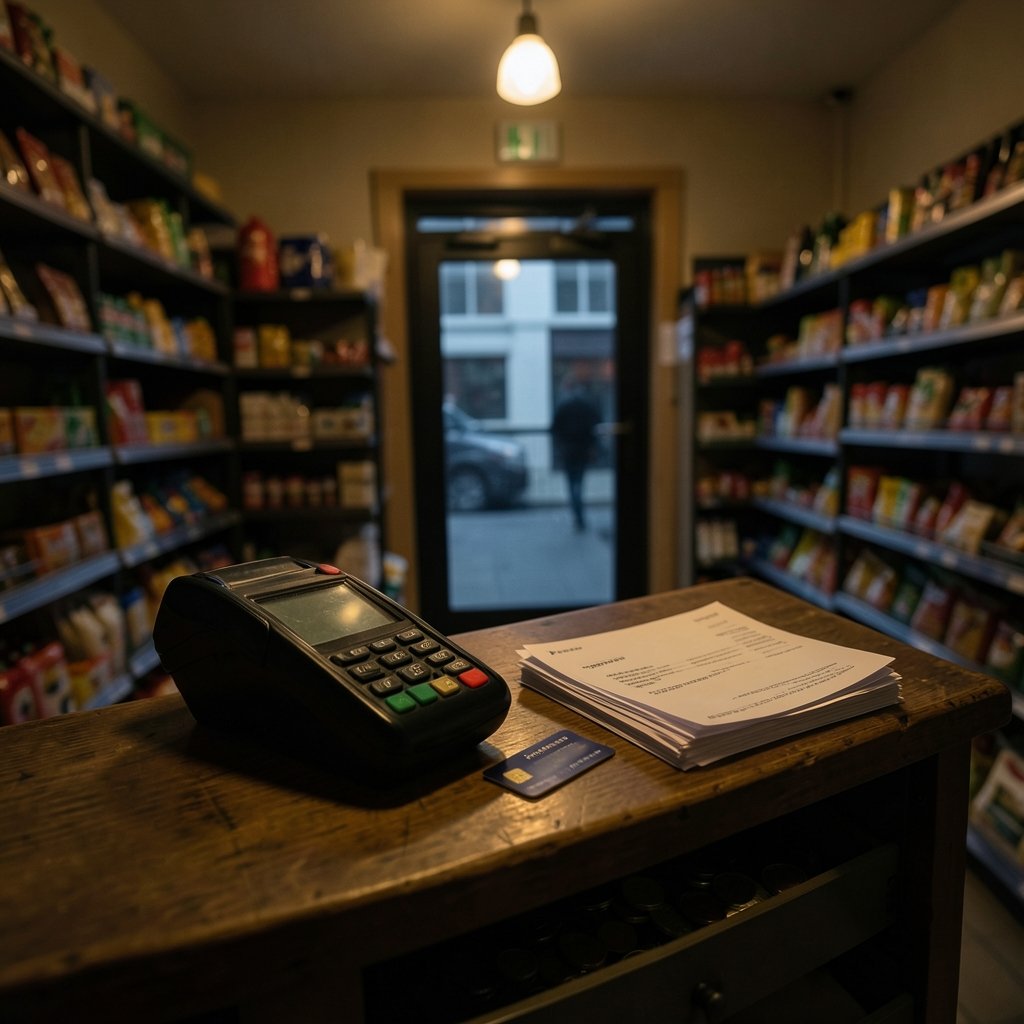
Quick Answer: What are at least two ways credit card companies make money?
Credit card companies make money in at least two main ways: they collect interchange fees from merchants every time a card is swiped, tapped, or entered online, and they charge interest on balances that cardholders carry from month to month. Those two streams form the backbone of most card issuer revenue.
Beyond them sit annual fees, late and penalty fees, foreign transaction fees, cash advance charges, and balance transfer fees. Each one works differently: some hit merchants, some hit cardholders, and some only appear when a specific behavior happens.
Before signing up for any card, compare the annual fee, the purchase APR, the foreign transaction fee, the late fee, the rewards rate, and the grace period. Those six numbers tell you more about who pays for the card than any marketing page will.
Why the Free Card in Your Wallet Is Never Actually Free

Have you ever wondered who pays for the cashback, the airport lounge access, and the zero-dollar annual fee on your favorite card? It is not charity. Every time a card gets used, a small slice of money moves behind the scenes, and that slice adds up to billions.
The card business is a toll booth business dressed up as a convenience product. Cardholders see rewards and fraud protection. Merchants see slightly smaller deposits. Banks see a spread between what they collect and what they pay out. Understanding that flow changes how you read every card offer that lands in your mailbox.
Interchange Fees: The Cut Taken on Every Purchase
Every card transaction involves several parties: the customer, the merchant, the merchant’s bank (the acquirer), the card network (Visa, Mastercard, American Express, Discover), and the cardholder’s bank (the issuer). The interchange fee is the portion of each sale that the merchant’s bank passes to the issuing bank.
Interchange typically runs a small percentage of the purchase plus a flat cent amount, and the exact rate depends on card type, network, and merchant category. Premium rewards cards often carry higher interchange than basic cards, which is one reason issuers push them so hard. A card that earns 2% cashback is partly funded by a higher merchant fee on the other side of the transaction. (Credit cards)
The plain-language definition of an interchange fee and how it flows between banks is worth reading once, because it explains why a coffee shop receives less than the sticker price on your receipt.
Debit interchange works differently in the United States. Under the Durbin Amendment to the Dodd-Frank Act, large banks had their debit interchange capped, while credit interchange was left alone. The Federal Reserve’s explanation of Regulation II and the debit interchange cap covers the history and the rules. This is a big reason credit cards remain far more lucrative for issuers than debit cards. (Interchange fee)
The practical takeaway for a small business owner: interchange is a real cost line, and it is negotiable only at the margins. For a cardholder, interchange is invisible, but it is the reason rewards exist at all.
Interest: The Engine That Runs on Unpaid Balances
Interest is the simplest revenue line to explain and the hardest one to escape. When a cardholder pays the full statement balance by the due date, no interest is charged. When they carry part of the balance, the issuer applies the APR to that amount, usually compounding daily.
A typical purchase APR sits in the low-to-mid twenties, though it varies by credit profile and by the prime rate. That is a high cost of borrowing compared with most other consumer loans. It is also the reason a card can be a great payment tool and a terrible credit facility at the same time.
The Consumer Financial Protection Bureau’s credit card market report tracks how issuer revenue splits between interest and fees, and it shows interest becoming a larger share as more accounts revolve. In plain terms, the industry’s economics tilt toward balances more than toward spending alone.
Here is where people get caught. A grace period usually applies only if the previous statement was paid in full. Carry a balance once, and new purchases can start accruing interest immediately. That single rule is the most common surprise in personal finance.
Annual Fees and Premium Cards: Paying for Access
An annual fee is the most transparent revenue line a card issuer has. It arrives once a year, it does not depend on spending, and it is easy to forecast. Premium travel cards often charge several hundred dollars a year and justify it with lounge access, credits, and insurance products.
The math only works if the cardholder actually uses the benefits. A $550 annual fee with $300 in travel credits and a $200 hotel credit is roughly break-even for a traveler who uses both. For someone who forgets the credits exist, the fee is pure revenue.
This is one of the clearest examples of a card company earning money from a cardholder rather than a merchant. It is also why issuers design credits in monthly increments: unused credits are free margin.
Late Fees, Penalty APRs, and Other Charges
Issuers also earn from late payment fees, returned payment fees, and penalty interest rates that kick in after missed payments. These are smaller revenue lines than interest, but they are highly visible and heavily regulated.
The CFPB finalized a rule in March 2024 that would have capped typical late fees at $8 for large issuers, and the rule was later vacated by a federal court in April 2025. The CFPB’s page on the credit card penalty fees rule explains the proposal and its status. Because the legal picture has moved, readers should check the current state before assuming a cap applies.
Other charges worth knowing:
| Fee type | Typical trigger | Who pays |
|---|---|---|
| Late fee | Payment after due date | Cardholder |
| Foreign transaction fee | Purchase processed abroad | Cardholder |
| Cash advance fee | ATM or bank withdrawal on credit | Cardholder |
| Balance transfer fee | Moving a balance to a promo offer | Cardholder |
| Returned payment fee | Bounced payment | Cardholder |
Foreign transaction fees commonly run around 3% of the purchase, and cash advances usually carry a fee plus a higher APR with no grace period. Balance transfers often charge 3% to 5% up front even when the promotional rate is 0%. Each of these is optional from the issuer’s view and avoidable from the cardholder’s view, which is exactly why they are profitable.
Securitization and Funding: The Spread Nobody Talks About
There is a quieter revenue engine underneath all of this. Issuers bundle card receivables into asset-backed securities and sell them to investors, then earn a spread between the yield on card balances and their cost of funding. The SEC’s investor bulletin on asset-backed securities explains how these pools work and what backs them.
In practice, this means a bank does not need to hold every dollar of card debt on its own balance sheet. It can recycle capital and keep lending. The spread looks small in percentage terms, but on a multi-billion-dollar portfolio it is a serious number.
For a cardholder, this matters mostly as context. It explains why issuers can afford generous sign-up bonuses and why they are so focused on growing balances rather than just transaction volume.
Rewards Are a Cost, Not a Revenue Stream
It is easy to assume rewards are free money for the bank. They are not. Cashback, points, and miles are a marketing expense funded largely from interchange and, indirectly, from interest. Issuers spend on rewards to win wallets, because a card at the top of the wallet captures more transactions.
That framing explains a lot of card design. A no-fee card with 1.5% cashback is a volume play. A premium card with a big fee and bigger credits is a loyalty play. A store card with deferred interest is a financing play. The same company can run all three at once.
The same logic applies across the tech economy, where free products are funded by another revenue line. If that pattern interests you, this explainer on how AI companies make money shows the same trade-off between free access and hidden monetization.
What This Means for Your Wallet
Knowing the revenue model changes behavior. A cardholder who pays in full every month flips the economics: the issuer still earns interchange, but the interest line drops to zero. That is the single best move available.
Practical habits that actually work:
- Set autopay for the full statement balance, not the minimum.
- Check the foreign transaction fee before any trip abroad.
- Treat cash advances as a last resort, because the APR and fee stack.
- Read the balance transfer terms, especially the fee and the promo end date.
- Use annual fee cards only when the credits are already part of your routine.
Common mistakes are predictable. People cancel a card right after earning the bonus and dent their credit history. People carry a balance on a 0% promo card and forget the retroactive interest clause. People assume rewards are free and spend more to earn them, which is the whole point of the design.
Fraud is another cost that issuers absorb, and it shapes card security features. The cost of identity-related fraud is larger than most people assume, and this breakdown of where identity threat detection money actually goes shows how those losses get priced back into the system.
Scams also target cardholders directly, and the recovery rate is poor. This piece on how a gift card scam works and why victims rarely get their money back is a useful reminder that the safest card behavior is often the simplest.
Conclusion
Credit card companies make money through at least two core channels: interchange fees paid by merchants on every transaction, and interest charged on carried balances. Around those two engines sit annual fees, penalty fees, foreign transaction fees, cash advance charges, balance transfer fees, and the funding spread from securitization.
The model is not sinister, but it is deliberate. Issuers profit most when cards are used often and balances linger. Cardholders who pay in full, avoid fee triggers, and treat rewards as a small bonus rather than a goal keep most of the value on their side of the ledger.
Frequently Asked Questions
Do credit card companies make money if I pay my balance in full every month?
Yes. Interchange fees still flow from the merchant on every purchase, and the issuer keeps its share even when no interest is charged. Annual fees, if the card has one, also apply. The issuer earns less from you than from a revolver, but the account is rarely unprofitable.
Which is bigger for issuers, interest or fees?
Interest on revolving balances is generally the larger revenue line for major issuers, though the mix shifts with the economy and with how many accounts carry debt. Fee income, including annual fees and penalty fees, is meaningful but secondary for most large card portfolios.
Are interchange fees paid by me or by the merchant?
They are paid by the merchant’s bank, which recovers the cost through the merchant discount rate. Merchants often price that cost into their goods and services, so customers pay indirectly. Cardholders never see an interchange line on a statement.
Why do some cards charge an annual fee while others do not?
Annual fees fund richer benefits like lounge access, insurance, and higher earn rates. No-fee cards rely on interchange and interest instead. The right choice depends on whether you already use the benefits, not on which card looks more premium.
Can a credit card company raise my interest rate?
Yes, within the terms of the agreement and applicable law. Penalty APRs can apply after missed payments, and variable rates move with the benchmark index. Issuers must generally give advance notice of rate increases, and consumers can usually reject a increase by closing the account, though that affects credit history.
What happens to the fees if I never carry a balance and never pay late?
Most fee lines disappear. You would still generate interchange for the issuer, and any annual fee would still apply. Avoiding interest, late fees, cash advance fees, and foreign transaction fees is entirely within a cardholder’s control with a bit of attention.



