
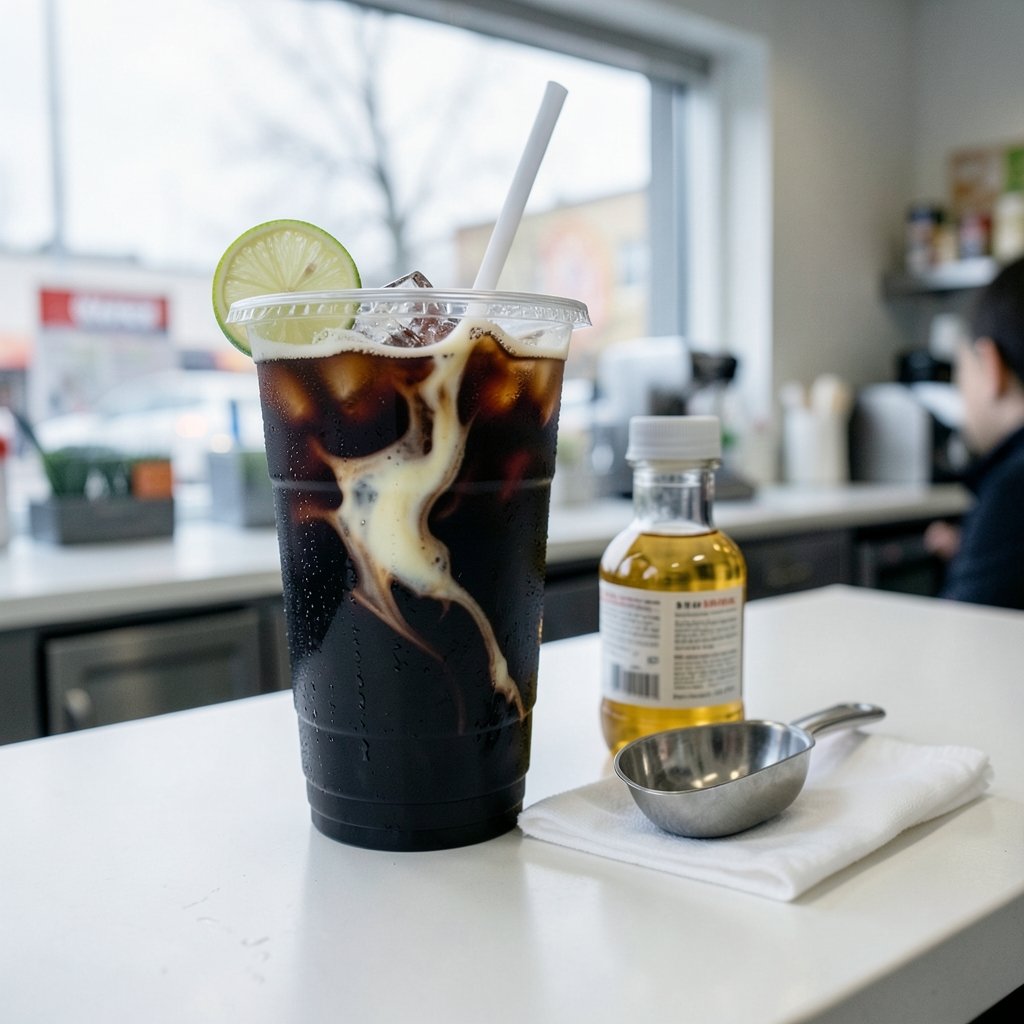
What happens when you mix a fountain cola with a splash of cream, a shot of coconut syrup, and a squeeze of fresh lime? You get a dirty soda — a drink that sounds like a mistake and tastes like a dessert. It has gone from a regional curiosity in the Mountain West to a nationwide menu item in just a few years, and it has picked up plenty of opinions along the way. (Soft drink)
This guide breaks down what a dirty soda actually is, why it took off in Utah, how to build one that tastes good instead of cloying, and what the nutrition label really says about it.
What Is a Dirty Soda, Exactly?
A dirty soda is a cold, carbonated drink made by combining soda with cream or half-and-half and one or more flavored syrups. It is served over ice, usually in a large cup, and it is almost always customized to the drinker’s taste.
The word “dirty” here does not mean anything scandalous. In soda-shop slang, it simply means the drink has been “dirtied” with cream and flavor shots. A plain Coke is clean. A Coke with coconut syrup, lime, and heavy cream is dirty. (Dirty hands clean money phrase really means finance ethics)
The basic formula looks like this:
| Component | Typical Options | Job It Does |
|---|---|---|
| Base soda | Cola, root beer, lemon-lime, Dr Pepper-style | Provides fizz and backbone |
| Cream | Half-and-half, heavy cream, coconut cream | Adds body and richness |
| Flavor | Coconut, vanilla, raspberry, peach, lime | Adds the signature twist |
| Garnish | Lime wedge, coconut flakes, cherry | Cuts sweetness, adds aroma |
Most shops build these drinks in 20- to 44-ounce cups, which is a lot of liquid. That size is part of the appeal — it is a treat meant to last an afternoon, not a quick shot of caffeine.
Where Dirty Soda Came From
The drink is closely tied to Utah and the surrounding Mountain West. The most commonly repeated explanation is cultural: the state has a large Latter-day Saint population, and the faith’s health code, known as the Word of Wisdom, discourages alcohol and “hot drinks” but does not explicitly ban cold, caffeinated soda. That left a wide opening for a fun, non-alcoholic indulgence, and soda shops filled it.
It is worth being careful here. The religious explanation is widely reported and makes intuitive sense, but it is a cultural account rather than a formally documented origin story. The Word of Wisdom itself is a real, published text, and readers who want the primary source can read the full text of the Word of Wisdom and judge the caffeine question for themselves. The short version: the text names alcohol, tobacco, and hot drinks, and it does not mention caffeine by name.
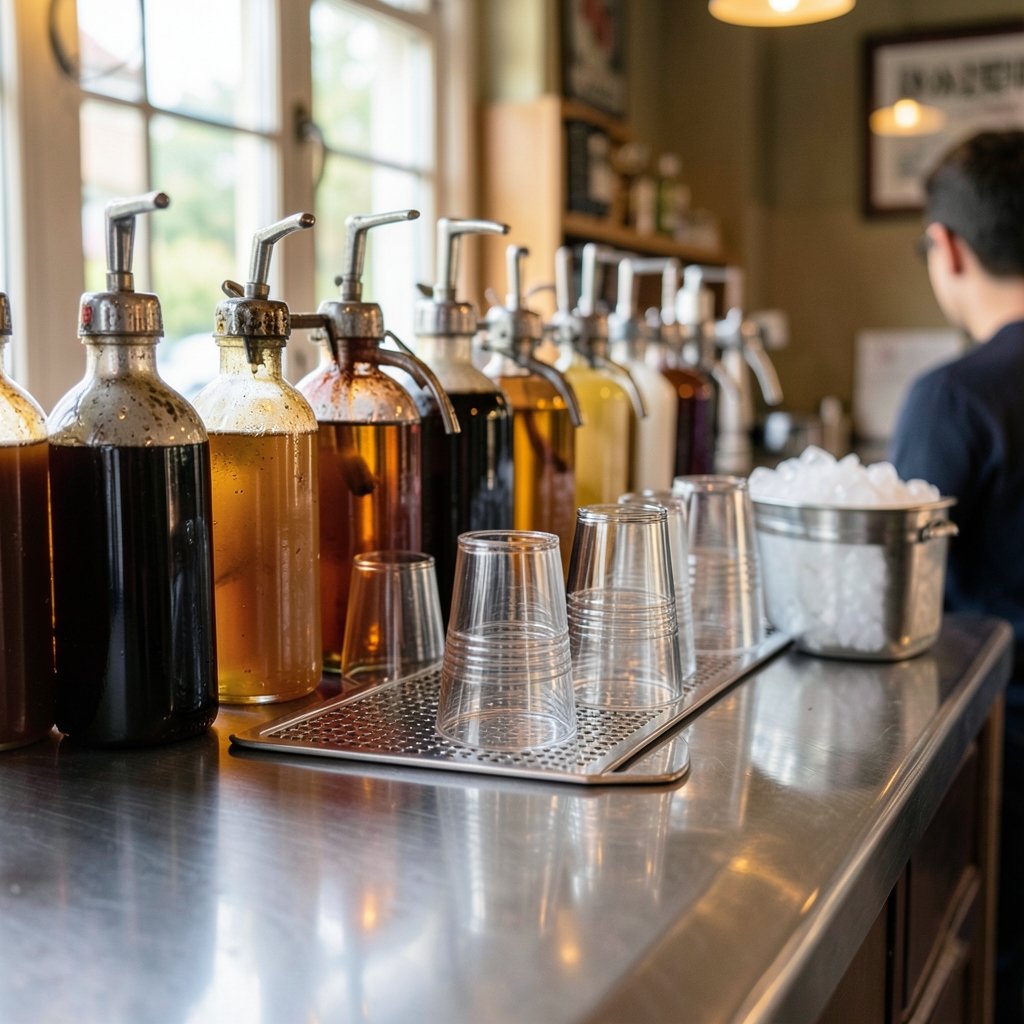
The modern business side of dirty soda is easier to trace. Drive-through soda shops began appearing in Utah towns and grew into a recognizable format: a small kiosk, a long menu of flavor combinations, and a drive-thru lane that stays busy from morning to night. Swig, founded in St. George, Utah, in 2010, is often credited with popularizing that drive-through model, and other Utah-based chains built similar businesses around customized sodas.
National media coverage picked up around 2022 and 2023, with outlets profiling the Utah soda-shop phenomenon as a curiosity. Social media did the rest. Short videos of cream swirling into a bright pink soda traveled far beyond the state, and by the mid-2020s the drink had spread through chain expansion and copycat menus across the country.
How to Order a Dirty Soda Without Regretting It
The biggest mistake people make is ordering a drink with too many sweet elements. Coconut syrup plus vanilla plus cream plus cola is a lot of sugar in one cup, and the flavors start to blur. The drinks that work best tend to follow a simple rule: one sweet flavor, one acidic or bitter element, and cream.
Practical tips that actually help:
- Start with a half portion of syrup. Most shops will do “light” flavor. You can always add more, but you cannot take it out.
- Add something tart. Lime, lemon, or a splash of grapefruit cuts through the cream and keeps the drink from tasting flat.
- Choose your cream deliberately. Half-and-half gives a lighter, more drinkable texture. Heavy cream is richer and closer to a milkshake. Coconut cream adds flavor but also sweetness.
- Watch the ice. A cup packed with ice dilutes fast. If you are sipping for an hour, ask for light ice so the drink does not turn watery.
- Skip the extra sweetener. Many menus offer added simple syrup on top of flavored syrups. It is rarely needed.
A reliable starter combination is a cola base with coconut syrup, a squeeze of fresh lime, and a splash of half-and-half. It is the closest thing the drink has to a standard, and it shows why the format works: the lime keeps the coconut from becoming cloying, and the cream softens the carbonation.
If you are the type who likes to understand the machinery behind a trend, the economics of these shops are worth a look. The margins on flavored soda are high, and the business model depends on volume and drive-thru speed. That dynamic is part of a broader pattern in which flashy ventures can look successful on the surface while the underlying numbers tell a different story, a theme explored in an analysis of how dirty ways make money schemes look like they fail.
Dirty Soda vs. Other Creamy Drinks
People often confuse dirty soda with other cream-based fountain drinks. They are related but not the same.
| Drink | Base | Cream? | Typical Setting |
|---|---|---|---|
| Dirty soda | Cola or other soda | Yes, plus syrup | Drive-through soda shop |
| Ice cream float | Cola or root beer | Ice cream scoop | Diner, home |
| Cream soda | Carbonated vanilla soda | No dairy | Grocery store |
| Italian soda | Club soda | Cream optional | Cafe |
The key difference is that a dirty soda uses liquid cream and flavored syrup rather than a scoop of ice cream. That makes it drinkable through a straw and easier to customize, which is exactly why the format scaled so well.
The Health Side of the Conversation
There is no way around it: a dirty soda is a dessert in a cup. It combines sugar-sweetened soda with cream, which adds saturated fat on top of the sugar already in the base drink. A large serving can carry a substantial share of a person’s daily added-sugar allowance in a single stop. (Sugar-Sweetened Beverage Intake)
Public-health guidance is consistent on this point. The World Health Organization’s guideline on sugars intake for adults and children recommends keeping free sugars below 10 percent of total energy intake, with additional health benefits suggested below 5 percent. For most adults, that works out to roughly 25 to 50 grams of sugar a day, and a single large dirty soda can approach or exceed the lower end of that range depending on the syrups used.
That does not make the drink forbidden. It makes it a treat. The practical approach most nutrition professionals suggest is the same one that applies to milkshakes and fancy coffee drinks: treat it as dessert, not as hydration, and not as a daily habit. Ordering a smaller size, asking for light syrup, or splitting one with a friend are all easy ways to keep it in the “sometimes” category.
There is also a practical angle that has nothing to do with nutrition. Sugary, creamy drinks are sticky, and spills happen in cars constantly. If you are dealing with the aftermath on upholstery or a screen, the same residue logic applies — cleanup gets harder the longer you wait, a point that comes up in guidance on the TV dirty screen effect test and why uniformity problems are easier to spot before they set in.
Why the Trend Stuck
Plenty of food trends burn out in a year. Dirty soda has lasted because it fits several needs at once.
It is customizable, which makes it social. Everyone in a car can order something different from the same menu, and the combinations become a conversation. It is non-alcoholic, which makes it work for people who do not drink, including teens and people in recovery. It is fast, which fits the drive-through culture of the Mountain West. And it is photogenic, which is what pushed it onto social feeds in the first place.
There is a less flattering reason too. The drink is cheap to make and sells at a premium, which means the format attracts operators looking for high-margin concepts. When money moves quickly through any industry, ethics questions tend to follow, and the tension between clean profits and questionable practices is an old one — the phrase dirty hands clean money captures the idea that money earned through dubious means does not become clean just because it changes hands. (Dirty money members tainted cash gets into politics business)
For consumers, the takeaway is simple: enjoy the drink, but pay attention to what you are actually buying. A $6 cup of soda and cream is a treat, not a value proposition.
Making a Dirty Soda at Home
You do not need a drive-through to get one. The home version is straightforward and lets you control the sweetness.
Start with a tall glass of ice. Add one to two tablespoons of flavored syrup — coconut, vanilla, or raspberry all work. Pour in your soda of choice, leaving a little room at the top. Add a squeeze of fresh lime. Then float one to two tablespoons of half-and-half over the back of a spoon so it swirls instead of curdling. Stir gently and taste.
The most common home mistake is adding too much cream. Cream is heavy, and a little goes a long way. If the drink tastes like melted ice cream, you have overshot. The goal is a soda that feels richer, not a soda that has become a dessert soup.
Conclusion
Dirty soda is a simple idea with a strong cultural tailwind behind it. It is soda, cream, and flavor, built in a drive-through and popularized by a state where a cold caffeinated drink was one of the few indulgences left on the table. It spread because it is fun, customizable, and easy to photograph, and it stuck because it fits the way people actually buy drinks.
The balanced view is the useful one. Enjoy it as an occasional treat, order it with less syrup than the menu suggests, and add something tart to keep it from turning into syrup with a straw. Do that, and the drink lives up to the hype. Skip those steps, and you have a very expensive cup of sugar.
Frequently Asked Questions
What does “dirty” mean in a dirty soda?
It refers to the drink being “dirtied” with cream and flavored syrup. A plain soda is clean; adding cream and flavor shots makes it dirty. The term comes from soda-shop slang and has nothing to do with alcohol.
Is dirty soda the same as a float?
No. A float uses a scoop of ice cream, while a dirty soda uses liquid cream or half-and-half plus flavored syrup. That difference makes a dirty soda easier to drink through a straw and much easier to customize.
Why is dirty soda associated with Utah?
Utah has a large Latter-day Saint population, and the faith’s health code discourages alcohol and hot drinks but does not explicitly ban cold caffeinated soda. That created a strong market for non-alcoholic indulgences, and drive-through soda shops grew up around it. The religious explanation is widely reported but is a cultural account rather than a documented origin.
How much sugar is in a dirty soda?
It varies widely by size and syrup count, but a large drink can carry a significant share of a person’s daily added-sugar limit. Public-health guidance recommends keeping free sugars below 10 percent of total energy intake, which is roughly 25 to 50 grams a day for most adults.
Can I make a dirty soda without dairy?
Yes. Coconut cream or a plant-based creamer can replace half-and-half, though both add sweetness, so reduce the flavored syrup to compensate. The texture will be slightly thinner but still rich.
What is the best flavor combination for a first dirty soda?
A cola base with coconut syrup, a squeeze of fresh lime, and a splash of half-and-half is the closest thing to a standard. The lime cuts the sweetness and the cream softens the carbonation, which makes it a good benchmark before you start experimenting.



