

Quick Answer: How does goodrx make money?
GoodRx makes most of its money by charging pharmacy benefit managers (PBMs) a fee each time a shopper uses a GoodRx discount code at the pharmacy counter. It does not sell drugs, and it is not an insurer. It is a matchmaker that shows cash prices and takes a cut when a transaction happens.
Smaller revenue streams come from GoodRx Gold, a paid membership with lower prices, and from advertising and pharmaceutical partnerships, such as sponsored health content. The mix matters because the PBM fees dwarf everything else.
Before trusting any price-comparison tool, check the quoted price, the pharmacy, the drug strength and quantity, the membership fee if one applies, and whether your insurance copay is actually lower.
The Business Model in Plain English
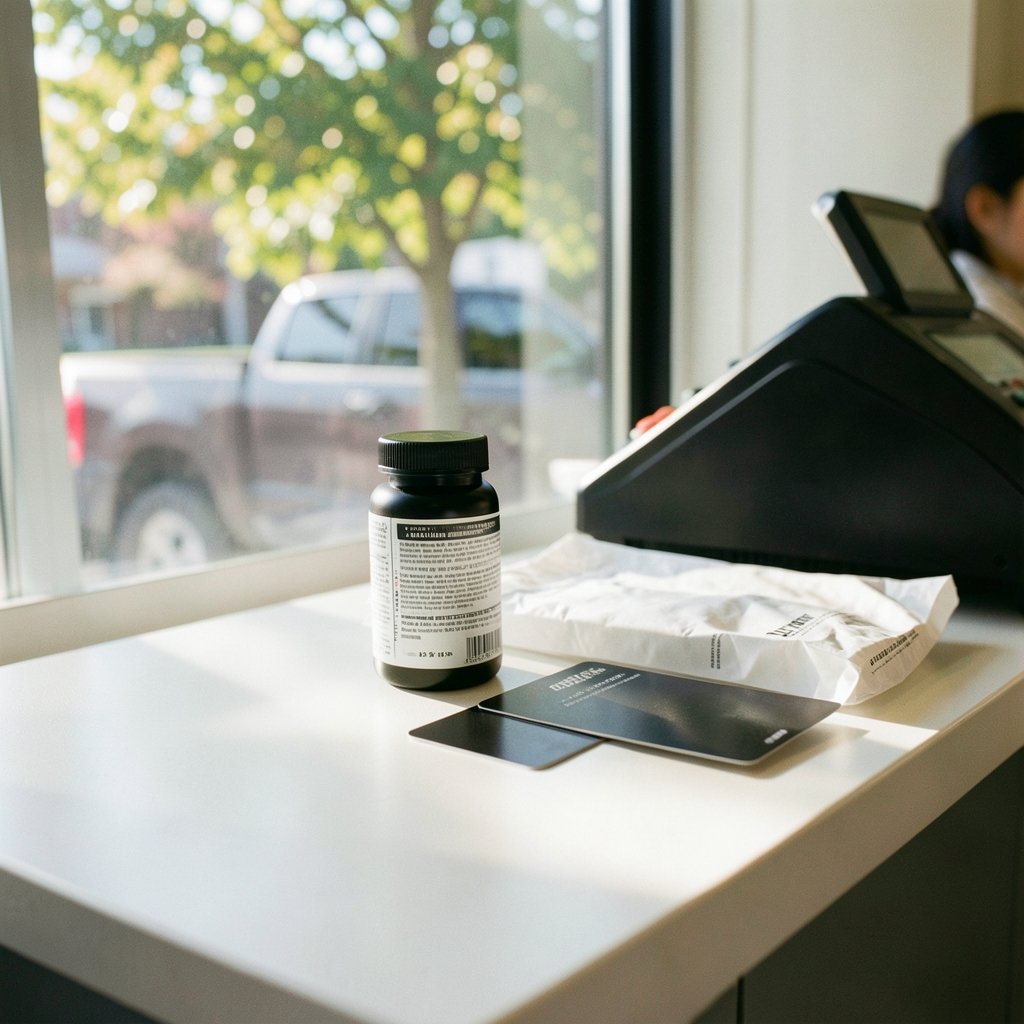
Ever stood at a pharmacy counter, watched the cashier ring up a prescription, and heard a number that made you blink? That moment of sticker shock is the doorway into GoodRx’s entire business. The company built a bridge between confused patients and wildly varying drug prices, and it collects a toll every time someone crosses that bridge. (Medicare Part D prescription drug coverage overview (CMS))
Here is the short version. GoodRx gathers cash prices for prescription drugs from pharmacy benefit managers and pharmacies, then displays a discount card price that is usually lower than the pharmacy’s standard cash price. When a consumer hands that code to the pharmacist, the PBM pays GoodRx a fee. GoodRx has described this model in its public filings since it listed on Nasdaq in September 2020. The company is a public company, so its 10-K annual reports are the primary place to check revenue breakdowns rather than trusting a blog post from three years ago.
The important distinction: GoodRx is not insurance. It does not pay claims, does not manage a network in the insurance sense, and does not cover your care. It is a price transparency and discount tool that sits on top of the existing pharmacy supply chain.
The Main Engine: Prescription Transaction Revenue
This is the heart of the machine. In recent annual filings, the large majority of GoodRx revenue came from prescription transactions revenue, the fees paid by PBMs when a consumer fills a prescription using a GoodRx code.
Think about who pays whom. The PBM negotiates drug prices with pharmacies. GoodRx brings the PBM a customer who would otherwise pay full cash price or walk away. The PBM keeps a share, GoodRx keeps a share, and the patient pays less than the shelf price. Everyone in the chain has a reason to keep the transaction flowing.
That structure explains both the strength and the fragility of the model. The strength is scale: millions of prescription fills generate small fees that add up. The fragility is dependency: if PBM contracts change, if pharmacy reimbursement rules shift, or if transparency regulation alters the spread, the fee stream can move.
Practical tip: the price you see is not a promise. Pharmacy staff occasionally ring up a different amount because of a drug shortage, a different manufacturer, or a quantity mismatch. Always confirm the price at the counter before the bottle is opened.
GoodRx Gold and Subscription Revenue
The second revenue line is GoodRx Gold, a paid membership. Members pay a monthly fee in exchange for lower prices on prescriptions and extra perks. It is a smaller slice of total revenue than the transaction fees, but subscriptions are attractive to any company because they are predictable.
For consumers, the math is simple but easy to get wrong. A membership only pays off if the monthly savings exceed the monthly fee across the prescriptions you actually fill. Someone with one inexpensive generic might lose money on a membership. Someone managing three chronic-condition medications might come out ahead.
Common mistake: people sign up for a membership, use it once, and forget about it. Subscription revenue depends on exactly that forgetfulness. Set a calendar reminder to review whether the membership still earns its keep after two or three months.
If you want to understand how recurring-fee businesses stack up against transaction-fee businesses, the same logic shows up in how AI companies make money — subscription versus usage-based pricing changes who carries the risk.
Advertising and Pharmaceutical Partnerships
The third stream is advertising and other revenue. Pharmaceutical manufacturers and health advertisers pay GoodRx for sponsored content, patient-awareness campaigns, and placement in front of people researching specific conditions.
This line is smaller and has historically been more volatile than transaction revenue. It also raises an obvious question for readers: when a site earns money from drugmakers, how neutral is the information? GoodRx has said it maintains editorial separation, but a savvy reader should always notice who is paying for the page they are reading.
The broader lesson applies to any “free” health tool. If you are not paying, ask who is. That question is worth carrying into other corners of personal finance too, including the world of digital currency and central bank money going digital, where the cost of a “free” service is often paid in data.
Why PBMs Sit at the Center
To understand GoodRx, you have to understand the pharmacy benefit manager. PBMs are middlemen that negotiate drug prices and process claims for insurers and employers. They also administer the discount-card programs that GoodRx plugs into.
The economics work like a spread. The cash price at the counter and the negotiated price a PBM has arranged are often different numbers. GoodRx’s fee comes out of that gap. If the gap narrows, the fee has less room to exist.
This is why analysts watching the company focus so hard on PBM relationships, pharmacy reimbursement pressure, and any rule that forces more price transparency. A discount card is only valuable when prices are opaque enough that a shopper cannot easily find the best number alone.
| Revenue Stream | Who Pays | Roughly How It Works |
|---|---|---|
| Prescription transactions | Pharmacy benefit managers | Fee paid when a shopper uses a GoodRx code at the pharmacy |
| GoodRx Gold membership | Consumers | Monthly subscription fee for lower prices and perks |
| Advertising and partnerships | Drugmakers, health advertisers | Sponsored content and patient-awareness campaigns |
The Regulatory Cloud and Data Privacy
No honest explanation of this business model skips the risk section. GoodRx has faced scrutiny over how it handles user data and how it works with PBMs and pharmacies.
In February 2023, the Federal Trade Commission announced an enforcement action against GoodRx over allegations that it shared consumers’ sensitive health information with advertisers, along with a related civil penalty. The FTC’s announcement of its enforcement action against GoodRx for sharing health information with advertisers lays out the agency’s position in detail. GoodRx has addressed the matter in its own filings.
Why does this matter to a reader trying to understand revenue? Because free price-comparison tools are often funded by advertising and data-adjacent partnerships. Privacy is not a side issue in this model; it is part of the economics. Anyone using a health app should read the privacy policy at least once and check whether the tool sells or shares data with third parties.
The cost of identity and data exposure is also easy to underestimate. Our breakdown of where identity threat detection money actually goes shows how quickly the downstream bill for a data problem can outgrow the original savings.
What This Means for Your Wallet
Understanding the model changes how you use the tool. A few practical habits separate people who save real money from people who just feel like they did.
First, compare three numbers before you fill anything: your insurance copay, the pharmacy’s cash price, and the discount-card price. Insurance is not automatically cheaper, especially on generics.
Second, check the exact drug, strength, and quantity on the quote. A price for 30 tablets of one strength does not transfer to 90 tablets of another.
Third, verify at the counter. Ask the pharmacist to confirm the total before the prescription is processed.
Fourth, watch for membership creep. A subscription that saved money in January may be dead weight by April.
Fifth, be careful with anything that asks for more personal information than the transaction requires. A discount code needs very little.
There is a broader financial literacy point here. Learning how a middleman earns a fee is a transferable skill. It helps you read a gift card scam that leaves victims rarely getting their money back and spot the same fee-driven incentives at work. It also sharpens your eye when evaluating where threat intelligence spending actually goes in 2025, because the company collecting the fee is rarely the one carrying the risk.
The Competitive Picture
GoodRx is not alone. Pharmacies run their own discount programs, insurers offer price tools, and other aggregators compete for the same shopper. The company has listed competition as a risk factor in its filings, which is standard but also accurate.
Competition matters for the model in a specific way. If every pharmacy advertises its own low cash price, the value of an aggregator shrinks. If insurers make their copay tools easier to use, the discount card becomes a backup rather than a first stop. The long-run question is whether price transparency, the very thing GoodRx profits from, eventually erodes its edge.
For consumers, competition is good news. More tools mean more chances to find a lower number, and it costs nothing to check two or three before filling a prescription.
Conclusion
GoodRx makes money by being the bridge between confused patients and complicated drug pricing. The bulk of its revenue comes from PBM fees paid when someone uses a discount code, with smaller contributions from the GoodRx Gold membership and from advertising partnerships. It is a fee business built on a spread, and spreads depend on relationships, contracts, and rules that can change.
That is not a scandal. It is just how the plumbing works, and knowing where the money flows makes you a sharper shopper. Compare the copay, the cash price, and the card price. Confirm the number at the counter. Review any subscription before it renews. And when a health tool is free, ask who is paying and what they get in return. The answers will save you more than any single coupon ever will.
FAQ
Is GoodRx an insurance company?
No. GoodRx does not sell insurance, pay claims, or cover medical care. It is a discount and price-comparison service that shows cash prices and discount-card prices for prescriptions. Your insurance plan and a GoodRx code are two separate ways to pay, and you can compare them at the counter.
Who actually pays GoodRx when I use a discount code?
The pharmacy benefit manager pays GoodRx a fee when a prescription is filled using a GoodRx code. You do not pay GoodRx directly for using a basic discount card. The fee comes out of the pricing arrangement between the PBM and the pharmacy, which is why PBM contracts matter so much to the company’s revenue.
Is GoodRx Gold worth the monthly fee?
It depends entirely on your prescriptions. Add up what you would save each month across the drugs you actually fill, then compare that to the membership fee. If the savings are larger and consistent, it can pay off. If you fill one cheap generic occasionally, the membership will probably cost more than it saves.
Why do prescription prices vary so much between pharmacies?
Pharmacies negotiate different arrangements with PBMs and buy drugs at different times and quantities. Cash prices also reflect markup decisions that vary by chain and location. That variation is exactly what makes a comparison tool useful, and it is also why a quoted price can shift when the pharmacist actually processes the order.
Does GoodRx sell my health data?
The company has faced regulatory scrutiny over data-sharing practices, including a 2023 FTC enforcement action concerning allegations that it shared sensitive health information with advertisers. Anyone using a health or price tool should read the current privacy policy directly and check what the tool says about sharing data with third parties.
Can I use a discount card and my insurance at the same time?
Generally no, for the same prescription fill. You pick one payment path per transaction. The practical approach is to ask the pharmacist to price the prescription both ways, then choose the lower number. Do this before the medication is processed, because switching after the sale is usually more hassle than it is worth.



