

What if the fastest way to improve your golf game is not another expensive round, but an hour at a practice facility five minutes from home? That is the idea behind the “driving ranges near me” search, and it is a smart one. A bucket of balls costs far less than a green fee, and focused practice builds skills that a crowded course round rarely does. (Man trapped self driving car robotaxi incidents 2026)
But finding a good range is not as simple as typing the phrase into a map app and picking the closest pin. Facilities vary wildly in quality, pricing, surface type, and even how far the balls actually fly. This guide covers how to search well, what to check before driving over, and how to get real value from a practice session.
What “Driving Range” Actually Means
Before anything else, one clarification matters. In everyday English, driving range usually means a golf practice facility where you hit balls from a tee line. But the same phrase also describes how far a vehicle can travel on a charge or a tank of fuel, which is why EV articles lean on it constantly. The two topics share nothing except a name.
This article focuses on the golf sense. If a search result feels off-topic, that ambiguity is usually the reason. Worth knowing: a driving range is a practice area, not a golf course, so the sport’s formal rulebook does not govern play there. The R&A publishes the Rules of Golf, and those rules apply to the course, not to a bucket of practice balls.
How to Search for a Range Near You
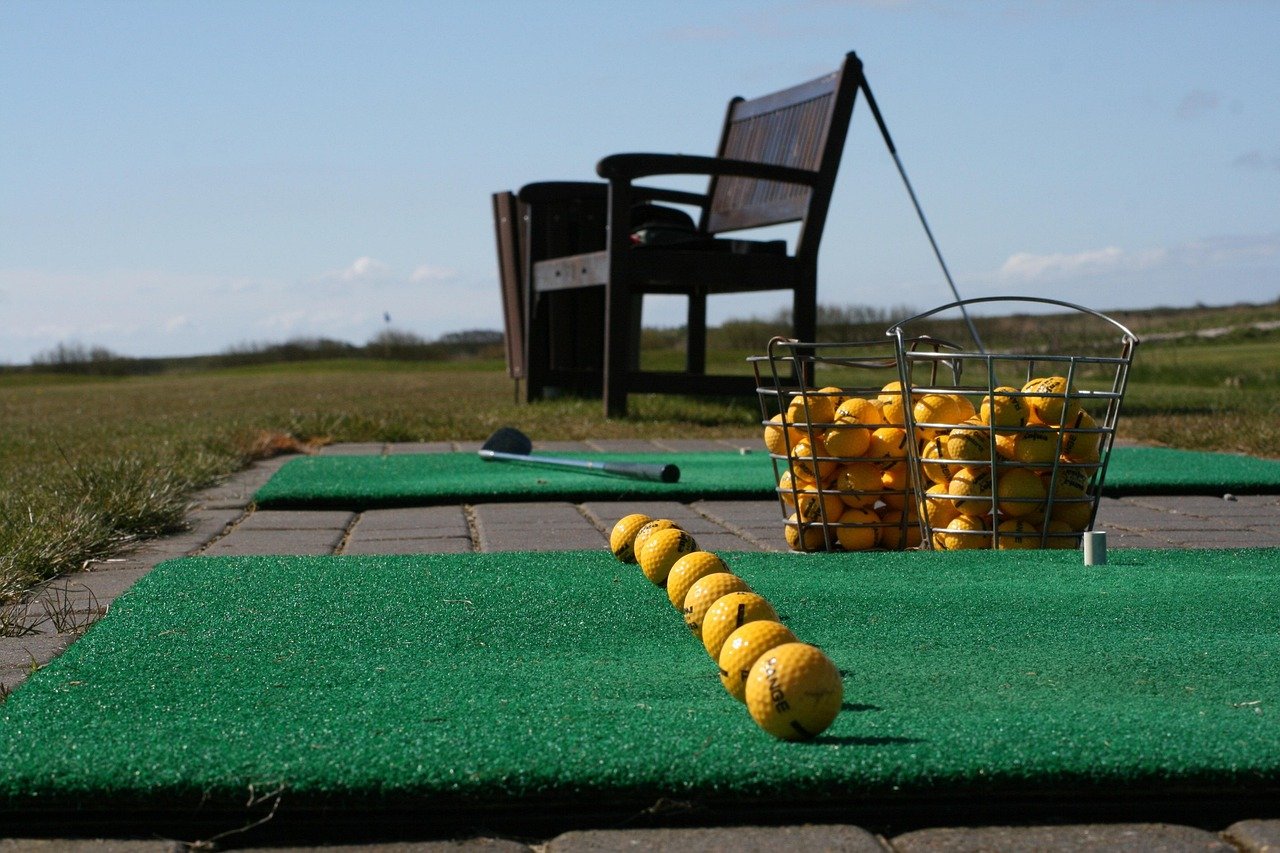
The search itself is easy. The filtering is where people go wrong. A few habits make the results far more useful:
- Search by neighborhood or suburb rather than only “near me.” Maps apps weigh your exact location, so a search from home and a search from work can produce totally different lists.
- Add a qualifier to the query. “Heated driving range near me,” “covered range near me,” or “range with lights near me” narrows results quickly.
- Open the venue’s own website before trusting a map listing. Hours, prices, and whether the range is open to the public change with the season.
- Read recent reviews specifically for ball quality and mat condition. Regulars mention these things, and they matter more than photos of the clubhouse.
- Call ahead if you are traveling a distance. A 30-minute drive to a range that closed for a tournament or a private event is a wasted trip.
One practical warning: directory sites and map pins go stale. A range listed as open may have been converted to a short-game area or closed entirely. The venue’s own site or a phone call is the only reliable check.
What to Look For Once You Have a Shortlist
Not all ranges are built the same, and the differences show up in your practice quality. Here is what separates a good facility from a mediocre one.
Surface: Grass Versus Mats
Grass tees give honest feedback. A fat shot digs into turf and feels bad, which is exactly the lesson you want. Mats forgive those mistakes, so a swing that works on a mat can fall apart on the course. Many ranges offer both, with grass reserved for certain days or an upcharge. If you are working on contact, grass is worth the extra cost.
Ball Quality
Range balls are designed to be durable, not to match premium tour balls. Some facilities use limited-flight balls that travel shorter distances on purpose, which keeps balls inside the property. That is fine for practice, but it means the numbers you see are not course numbers. Ask what kind of balls the range uses if you plan to track distances.
Distance Markers and Technology
Simple painted signs at 50, 100, 150, and 200 yards still work. Increasingly, ranges also offer launch monitors that measure ball speed, launch angle, and carry distance. These tools are genuinely useful, but they estimate ball flight using models that assume standard conditions. Altitude, temperature, humidity, and wind all change real ball flight, so a range reading is a reference point, not a promise. TrackMan publishes detailed ball-flight explanations if you want to understand how those models work.
Amenities That Change the Experience
| Feature | Why it matters | Who benefits most |
|---|---|---|
| Covered or heated bays | Keeps practice going in rain or cold | Year-round players in cold climates |
| Floodlights | Allows evening sessions after work | Anyone with a day job |
| Grass tee area | Honest feedback on strike | Players fixing contact issues |
| Launch monitors | Data on carry and dispersion | Players working on gapping |
| Short-game area | Putting and chipping practice | Anyone scoring near the green |
| Lessons on site | Professional eyes on your swing | Beginners and slumping regulars |
The Cost Question: What You Will Actually Pay
Range pricing is not standardized anywhere. It swings with region, season, and whether the facility is a standalone business, part of a municipal course, or attached to a private club. Expect meaningful differences between a basic municipal range and a high-tech entertainment venue with tracked bays and food service.
The practical move is to compare cost per ball, not cost per bucket. A large bucket at one facility may hold more balls than a “large” at another. Divide the price by the ball count and the real value becomes obvious. Many ranges also sell loyalty cards or monthly plans, which pay off quickly if you practice twice a week.
One more money tip: off-peak hours are often cheaper, and weekday mornings tend to be the quietest. If your schedule allows it, you get better prices and more space.
Common Mistakes People Make at the Range
Years of watching golfers practice have made one pattern clear. Most people hit balls; far fewer actually practice. The difference shows up in results.
- Hitting driver after driver. Bombing 50 drivers in a row builds fatigue, not skill. Mix clubs and take breaks.
- Ignoring alignment. Mats and tee lines make it easy to aim badly without noticing. Use an alignment stick or a club on the ground.
- Rushing through a bucket. Rapid-fire hitting is exercise, not practice. Step back, rehearse, then swing.
- Never aiming at a target. A ball that flies straight but goes nowhere useful is a wasted rep. Pick a flag on every shot.
- Skipping the short game. If the facility has a putting green or chipping area, spend real time there. Half of your strokes happen near the hole.
There is also a safety side. Ranges are shared spaces, and wandering past the tee line or retrieving balls is genuinely dangerous. Follow the facility’s posted rules, and if the range uses automated ball dispensers or tracked bays, listen to the staff briefing.
Range Practice and Your Health
Golf counts as moderate-intensity physical activity, especially when you walk rather than ride. The World Health Organization’s 2020 guidelines on physical activity recommend 150 to 300 minutes of moderate activity per week for adults, and a practice session contributes to that total. A range visit is not a workout in the gym sense, but an hour of swinging, walking, and carrying clubs adds up. Warm up first, swing smoothly rather than violently, and treat the range as a place to build a repeatable motion, not to test how hard you can swing.
When the Search Gets Weird
Occasionally a “driving range near me” search pulls in results that have nothing to do with golf. That happens because the phrase collides with vehicle range content, and because local listings sometimes mix categories. If you land on something unexpected, tighten the query with a word like golf, practice, or bucket. If you are searching for something else entirely and keep getting golf results, try a more specific phrase, the same way you would search for a specific dish rather than a general category, such as looking up the best empanada de jamon y queso near me instead of a vague food query.
Range searches also reward a little local knowledge. If you are new to an area and building a list of useful nearby spots, the same approach works for many everyday needs, from finding the best salads near me for a quick lunch to tracking down a garage door repair near me when something breaks. Local search is a skill, and the practice carries over.
A Simple Routine That Works
If you want one plan to take to your next session, try this. It fits a standard bucket and covers the whole game. (PGA of America overview)
- Warm up with a wedge for ten balls, focusing on smooth tempo.
- Hit five shots with an alignment aid in place, checking your aim.
- Work through mid-irons, picking a specific target for each shot.
- Hit no more than ten drivers, with a full rehearsal before each swing.
- Finish with five wedge shots to a close flag, simulating approach play.
- Spend ten minutes on the putting green before you leave.
That routine beats an hour of mindless hitting. It also makes a cheaper bucket go further, which matters if you are practicing often.
Conclusion
Searching for driving ranges near you is the easy part. The real value comes from picking a facility that matches your goals, checking the details before you drive over, and showing up with a plan. Grass tees, decent balls, and a target on every shot will do more for your game than any single piece of equipment. Whether you are chasing distance, fixing a slice, or just looking for a low-cost way to spend an evening outside, a good local range is one of the best deals in golf. Start with a shortlist, make a call, and bring a purpose with your bucket.
Frequently Asked Questions
What is the difference between a driving range and a golf course?
A driving range is a practice facility where players hit balls from a tee line toward distance markers. A golf course is a full 9- or 18-hole layout where you play shots from varied lies and finish each hole. The official Rules of Golf govern play on the course, not practice on the range.
Are driving ranges open to the public?
Most standalone and municipal ranges welcome anyone who buys a bucket, no membership required. Ranges attached to private clubs may restrict access to members or guests, so check the venue’s website or call before making the trip.
How much does a bucket of balls cost?
Prices vary widely by region, season, and facility type, and there is no national standard. The fairest comparison is cost per ball: divide the bucket price by the number of balls it holds. Off-peak and weekday sessions are often cheaper.
Do range balls fly as far as regular golf balls?
Usually not. Range balls are built for durability, and some are deliberately limited-flight so they stay inside the property. That makes them fine for practice but unreliable for judging exact on-course distances. Launch monitors at the range also model standard conditions, so real-world results will differ.
Can beginners use a driving range?
Yes, and it is one of the best places to start. There is no pressure, no pace of play, and no penalty for a bad shot. Beginners should start with short irons, focus on contact rather than power, and consider a single lesson to build sound basics early.
How often should someone practice at a range?
Two or three focused sessions a week beat one long, tired session. Short, purposeful practice with a target for every shot builds skill faster than hitting a large bucket in one rushed sitting. Mix in putting and chipping, since those shots make up a large share of most scores.



