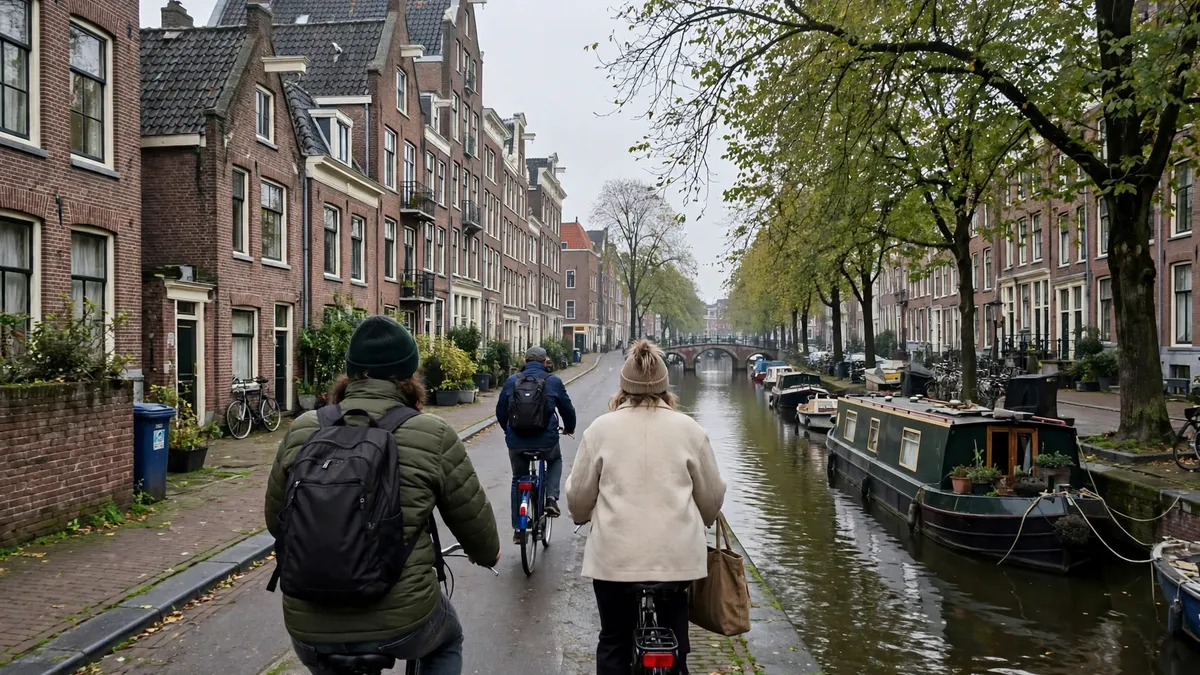
The Dutch have quietly done what workers in most other countries only talk about: they get their work done in about 32 hours a week. Workers in the Netherlands between the ages of 20 and 64 worked an average of 32.1 hours per week in 2024, according to a 2025 analysis from Eurostat, the shortest average working week in the European Union.
The figure is not the result of a single law or a government decree. No Dutch parliament ever voted for a four-day week. Instead, the shorter week grew out of a change that began in the 1980s, when women started entering the workforce in large numbers through part-time roles, and the whole country slowly reorganised itself around the new pattern.
The result is a working culture that looks very different from the 40-hour norm in the United States and much of Europe. Austria, Germany and Denmark, the next shortest in the EU, all report roughly 34-hour weeks. The Dutch average is lower still, and it has stayed low while the economy has stayed strong — a combination that has made the Netherlands a case study for everyone arguing about the future of work.
Key takeaways
- Dutch workers aged 20 to 64 averaged 32.1 hours a week in 2024, the shortest working week in the EU, according to Eurostat.
- The shift was driven by women entering the workforce in part-time roles from the 1980s, creating the so-called one-and-a-half earner model.
- Tax breaks and benefits helped the part-time pattern become the standard for workers of all genders, including fathers of young children.
- Dutch unemployment fell from 7.3 percent in 1991 to 2.1 percent a decade later, and has stayed low since, at 3.7 percent.
- The model has trade-offs: only 27 percent of managers in the Netherlands are women, one of the lowest shares in the OECD.
| Measure | Netherlands | Comparison |
|---|---|---|
| Average weekly hours, 2024 | 32.1 hours (ages 20 to 64) | Austria, Germany and Denmark: about 34 hours; US full-time workers: 42.9 hours |
| Unemployment, 1991 | 7.3 percent | Fell to 2.1 percent by 2001 |
| Unemployment, recent | 3.7 percent | US: 4.3 percent in January |
| Employment rate | 82 percent of working-age people in work at end of 2024 | Higher than Britain, the US or France |
| Women in management | 27 percent of managers | Among the lowest in the OECD |
| Legal limits | No more than 60 hours a week; no required Sunday work | Set by Dutch law |
The 32.1-hour number, explained
The headline figure comes from Eurostat, the European Union’s statistics office, which analysed working hours across member states. For Dutch workers aged 20 to 64, the average working week in 2024 was 32.1 hours. That average covers full-time and part-time workers together, so it reflects how the whole workforce is organised, not just one group of employees.
The comparison with neighbours is striking. Austria, Germany and Denmark, the next shortest in Europe, all report roughly 34-hour weeks. More than a third of employed people across the EU spent nearly 40 to 45 hours on the job weekly in 2024, according to the same Eurostat data. The Netherlands sits well below that band.
The gap with the United States is wider still. Americans employed full-time worked an average of 42.9 hours weekly in 2024, according to a Gallup poll — and that figure is actually an improvement from 2019, when American staffers clocked in 44.1 hours weekly. The Dutch average is more than ten hours a week below the American full-time figure, which adds up to more than 500 hours a year.
How women reshaped the Dutch workweek
There is a major reason why the Dutch have quietly shifted to a shorter week: women. Like many other nations, the Netherlands used to operate on a male-centred working model that placed men as the breadwinners. The days were stretched longer under that standard, more akin to America’s traditional 40-hour workweek. Then women started to join the labour force in part-time roles starting in the 1980s, and things have never been the same.
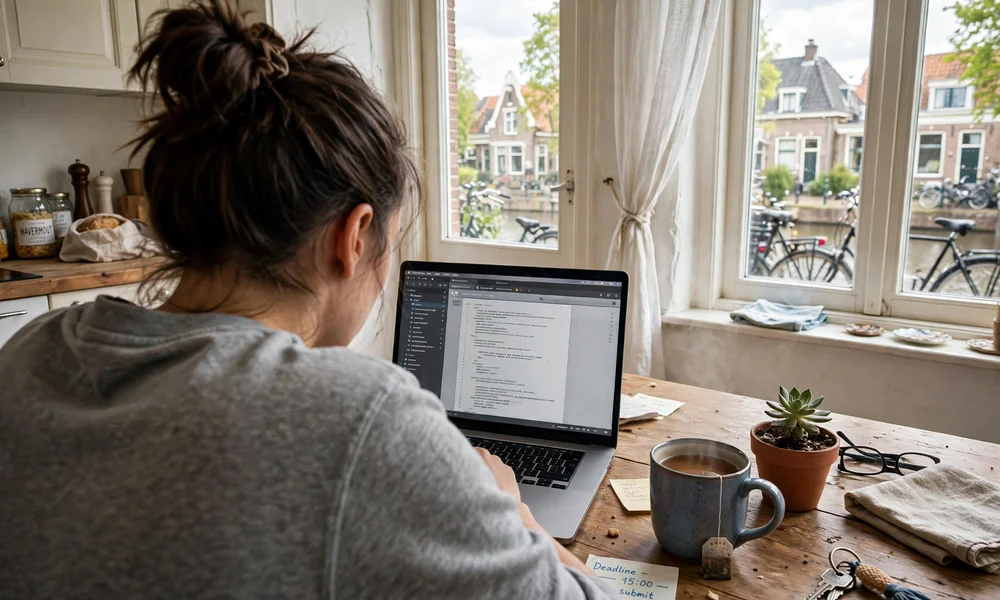
In the 1970s, fewer than 30 percent of Dutch women worked outside the home, one of the lowest participation rates in the developed world. By the 1990s, more than half did. Part-time work made that change possible: it allowed mothers to combine childcare with paid employment, and it allowed households to keep one parent present at home while still gaining a second income.
The change was not only cultural. It was structural. The new labour market unlocked a large pool of educated but underemployed women. Families gained income, children kept parental presence, and the economy avoided wasting half of its talent. Over the following decades, women’s workforce participation shifted the family earning structure and the country’s tax codes, and the shorter week became embedded in how Dutch working life is organised.
The one-and-a-half earner model
Politics adapted to the new reality. In the 1990s and 2000s, the Dutch parliament passed a series of laws to normalise part-time work. The minimum wage was extended to part-timers, employers were obliged to include them in pension schemes, and the 1996 Working Hours Act required managers to consider employees’ care responsibilities. In 2000, the Part-Time Employment Act granted workers the right to request reduced hours, and in 2016 the Flexible Working Act expanded those rights further, giving employees control not only over how much they worked but also over when and where.
By 2023, more than 60 percent of Dutch employees worked part-time, nearly double the OECD average, according to coverage of the Dutch labour market. Men are more likely to go part-time than anywhere else in the developed world, and women’s participation remains among the highest. The average week stands at 32.1 hours because part-time work is not a niche arrangement in the Netherlands. It is the mainstream.
What shorter hours did to unemployment
The numbers tell the story. In 1991, just as more women were taking on part-time roles in the Netherlands, the country’s unemployment rate stood at 7.3 percent, according to data from the World Bank. Only a decade later, that number had fallen sharply: only 2.1 percent of the population was jobless. While there have been fluctuations in the years since, the unemployment rate has remained steadily low since 2018, currently resting at just 3.7 percent.
The trade-offs nobody should skip
The Dutch model is not a recipe for perfect equality, and the people who study it are clear about that. Women are still more likely to work part-time than men, and that affects their professional advancement. Only 27 percent of managers in the Netherlands are women, which is among the lowest shares in the OECD. Part-time work can mean slower promotion, lower lifetime earnings and smaller pensions, even when the hourly pay is fair.
What it means for workers elsewhere
For readers outside the Netherlands, the Dutch story is useful precisely because it was not planned. Nobody passed a grand law declaring that workers should stay home on Fridays. The change came from millions of individual choices — women taking part-time jobs, fathers leaving early to pick up children, unions trading pay for hours — that added up to a new normal over forty years.
The largest Dutch labour union, FNV, is now lobbying the government to make the 32-hour week official. Dutch law already sets limits that support the pattern: employers cannot schedule workers for more than 60 hours a week, and they cannot require work on Sundays. An official 32-hour standard would turn a norm into a right, and other countries will be watching what happens if it passes.
For anyone thinking about their own working week, the Dutch example reframes the question. It is not only how many hours you work, but how those hours fit around the rest of your life, and whether the system lets you stay in work when life gets complicated. Our guide on why hours worked are a poor measure of productivity looks at the measurement problem behind the debate. If you manage people who work remotely or on flexible schedules, our roundup of the best tools for managing remote teams covers the software that makes flexible work practical, and our guide to using AI for remote team communication shows how teams stay in sync when they are not all online at the same time.
Checklist: what to take from the Dutch 32-hour week
- Remember the number is an average: 32.1 hours covers full-time and part-time workers together, and the Netherlands has no official four-day week law.
- Look at who drove the change: women entering the workforce in part-time roles from the 1980s reshaped the whole system.
- Check the foundations: tax breaks, part-time rights and flexible working laws made the shorter week workable.
- Weigh the employment effect: flexible hours helped keep unemployment low and more people in the workforce.
- Do not skip the trade-offs: only 27 percent of Dutch managers are women, and part-time work can slow advancement.
- Apply the lesson, not the template: shorter weeks grow from local laws, pay levels and habits, not from copying one country’s hours.
Frequently asked questions
How many hours do Dutch workers actually work?
Workers in the Netherlands aged 20 to 64 averaged 32.1 hours a week in 2024, according to a 2025 Eurostat analysis. That is the shortest average in the EU, ahead of Austria, Germany and Denmark at roughly 34 hours each.
Does the Netherlands have an official four-day workweek?
No. There is no law setting a four-day week, and many Dutch workers spread their hours across four days by choice rather than by rule. The largest Dutch labour union, FNV, is lobbying the government to make a 32-hour week official.
Why did women drive the change?
From the 1980s, women entered the Dutch workforce in large numbers through part-time roles, which let them combine paid work with childcare. That shift created the one-and-a-half earner model and, with tax breaks and legal protections, made flexible hours the norm for workers of all genders.
Did shorter hours hurt the Dutch economy?
By the measures usually cited, no. The Netherlands is among the richest countries in the EU, its workers are highly productive per hour, and 82 percent of the working-age population was in work at the end of 2024. Unemployment fell from 7.3 percent in 1991 to 3.7 percent recently.
What are the downsides?
Women are still more likely to work part-time than men, which affects advancement: only 27 percent of Dutch managers are women, among the lowest shares in the OECD. Part-time work can also mean lower lifetime earnings and slower promotion, even when hourly pay is fair.
Could other countries copy the Dutch model?
Parts of it, but not by copying the hours alone. The Dutch pattern rests on high hourly productivity, tax and benefits rules that support part-time work, and decades of laws protecting flexible working. Without those foundations, shorter hours alone would not deliver the same results.
Bottom line
The Dutch 32-hour week was not designed in a boardroom or a parliament. It grew, over forty years, from women entering the workforce on part-time terms, from unions trading pay for hours, and from laws that made flexibility a right rather than a favour. The result is a country that works less per week than any of its neighbours and still keeps more of its people in work.
The lesson for everyone else is not to copy the number but to copy the question the Dutch asked: what is work for, and how should it fit around a life? Their answer — shorter weeks, flexible hours, and a system that keeps people in the workforce — is one that more countries are now starting to take seriously.