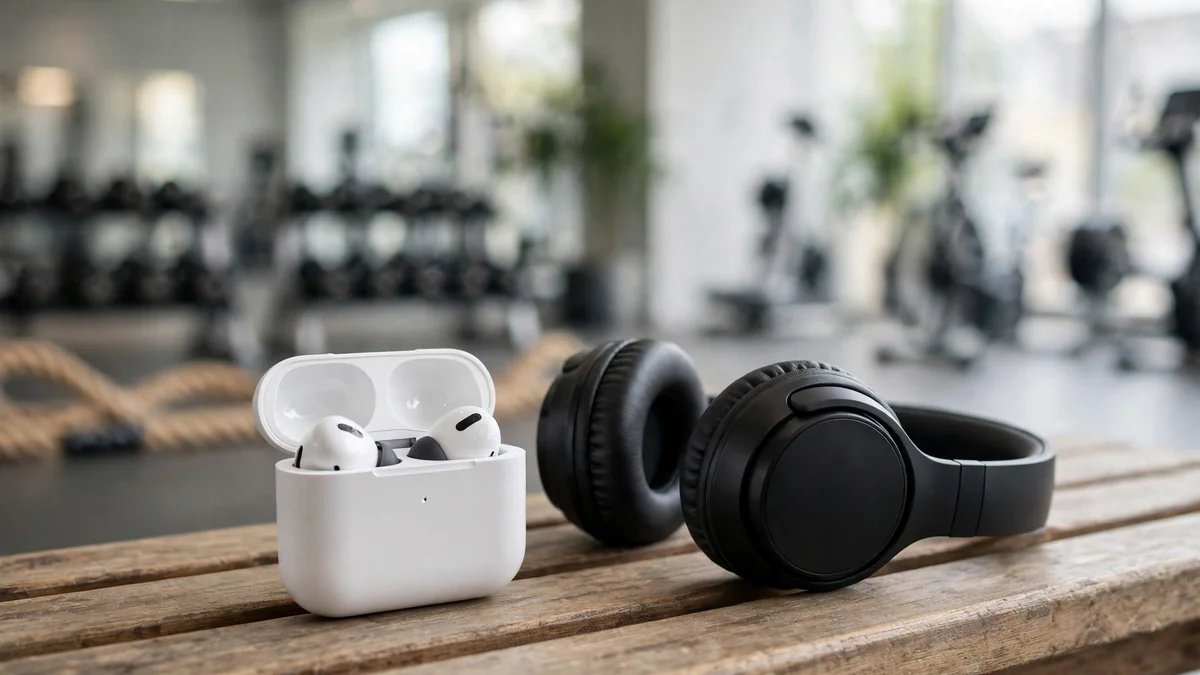
Earbuds vs headphones for workouts is one of the most practical gear choices a regular exerciser makes, because the wrong pick shows up within ten minutes of a run: earbuds that slip out with sweat, or headphones that trap heat and slide around during burpees. Both styles have improved a lot, and in 2027 the gap between them is narrower than it used to be, but they still solve different problems. Earbuds win on weight and freedom of movement, while headphones win on sound quality, battery life, and staying put without anything wedged in your ear canal.
The right answer depends mostly on how you train. Runners and people who do high-intensity interval sessions usually do better with light, secure earbuds that survive sweat and rain. Lifters and people who train mostly indoors often prefer headphones, because the workout is steadier, the sound is fuller, and a bigger battery means fewer charging interruptions. Neither choice is wrong in general; the mistake is buying for the wrong workout.
This comparison puts the two head to head on fit, sound, sweat resistance, battery life, safety, and price. Prices below are approximate starting prices for decent workout-ready models in 2027, so check current pricing before buying, since workout audio goes on sale often.
Key takeaways
- Earbuds are the better pick for running, jumping, and outdoor training, because they weigh almost nothing.
- Headphones are the better pick for lifting and steady gym sessions, with bigger drivers, stronger bass, and 40-hour-plus batteries.
- Sweat resistance matters more than brand: look for IPX5 or higher on earbuds, and avoid using non-rated headphones for sweaty sessions.
- Good workout earbuds start around $50, good workout headphones around $80, and premium models of either type run $200 to $350.
- If you train both outdoors and in the gym, earbuds are the safer single purchase, because they handle every workout type.
At a glance: earbuds vs headphones for workouts
| Factor | Earbuds | Headphones |
|---|---|---|
| Weight | 5 to 8 grams per bud | 180 to 260 grams |
| Best for | Running, HIIT, outdoor training | Lifting, steady gym sessions |
| Sound quality | Good, bass is lighter | Fuller bass, wider soundstage |
| Sweat resistance | IPX5 to IPX7 common | Often IPX4 or unrated |
| Battery life | 6 to 10 hours per charge, 24 to 36 with case | 40 to 60 hours per charge |
| Awareness mode | Transparency mode on most models | Available, but bulkier to wear outside |
| Starting price | Around $50 | Around $80 |
| Main weakness | Can slip out, easy to lose | Heat build-up, bounce during runs |
Earbuds for workouts
Earbuds are built for movement. A pair weighs about the same as a few coins, sits inside or just at the ear, and leaves your head free, which is why almost every serious runner uses them. The best workout models use wing tips or ear hooks that lock into the shape of your ear, and once seated properly they barely move through sprints, jumps, and direction changes. That stability is the single biggest reason earbuds dominate outdoor training.
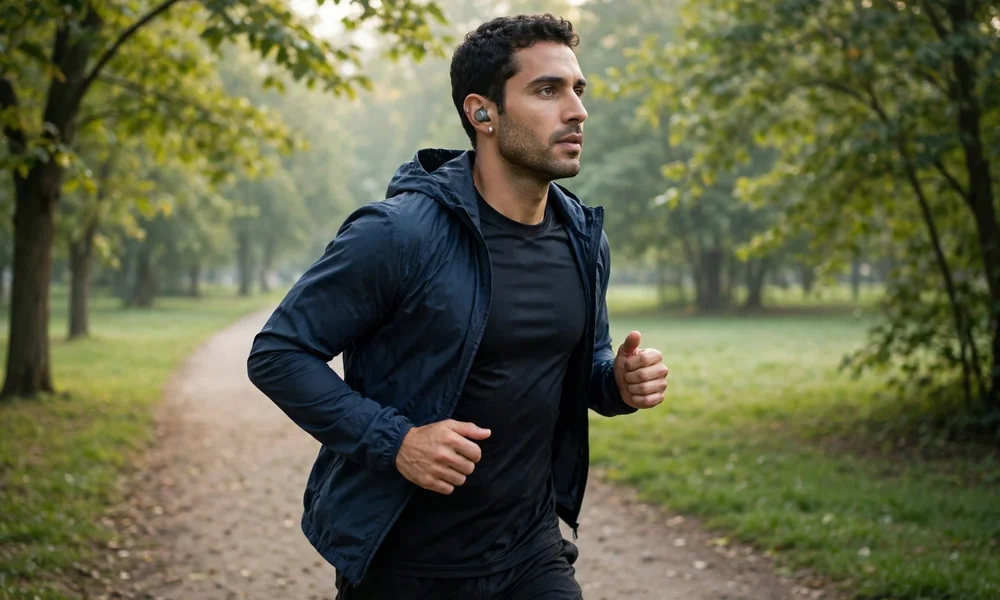
Sound quality has caught up fast. Modern workout earbuds use 10 to 11 mm drivers, and the best ones deliver punchy bass and clear vocals that are more than good enough for a playlist or podcast at training pace. They will not match over-ear headphones for detail, and the soundstage is narrower, but during a hard run that difference is hard to notice. Active noise cancelling is available on mid-range models, and transparency mode is now standard on most models above $80.
Sweat and water resistance is where earbuds clearly lead. Most workout earbuds carry an IPX5, IPX6, or IPX7 rating, which means they handle heavy sweat and rain without damage. The charging case is the weak point: it is not usually water resistant, so a soaked case can corrode the charging pins over time. Wiping the buds dry before putting them back solves most of that problem.
Battery life is the main compromise. A single charge gives 6 to 10 hours on most models, and the case adds another 18 to 30 hours, which covers a week of sessions. But the case needs charging every week or two, and forgetting leaves you with dead buds on run day. Our guide to the best wireless earbuds for running compares the models that hold up best over long runs, including fit, battery, and sweat ratings.
Pros: Extremely light and secure during running and jumping, excellent sweat and rain resistance, transparency mode keeps you aware outdoors, pocket-sized case, easy to carry everywhere.
Cons: Shorter battery life per charge, easier to lose a single bud, bass and soundstage are weaker than headphones, fit depends heavily on ear shape and tip size.
Headphones for workouts
Headphones trade freedom of movement for sound and stamina. A good pair delivers deeper bass, a wider soundstage, and a more immersive listen than any earbud, which matters when music gets you through a long lifting session. The ear cups also block more outside noise passively, so you can train at lower volumes in a busy gym. For steady movements like squats, presses, and machine work, headphones barely move at all.
The problem starts when the workout gets bouncy. Running with over-ear headphones means 200 grams or more bouncing on your head with every stride, and the headband can slide forward as you sweat. On-ear models are lighter but press on the ears, which gets uncomfortable after 30 to 40 minutes. Some sport headphones use a tighter clamp and moisture-resistant cushions, but they still trap heat, and after a hard session the ear pads are soaked. That is why headphones are a gym-first choice rather than a running choice.
Battery life is the clearest headphone advantage. Most wireless over-ear headphones last 40 to 60 hours on a charge, and some reach 80 hours, which means monthly charging for many lifters. A 10-minute charge often adds several hours of playback. That reliability is easy to undervalue until earbuds die halfway through a workout because the case was empty. If you mostly train indoors and want audio you never have to think about, headphones are hard to beat.
Sweat resistance is the weak spot. Many general-purpose headphones are rated IPX4 at best, which covers light splashes but not heavy sweat, and plenty of popular models carry no water rating at all. Sweat damage to the ear cushions and drivers is the most common way workout headphones die early. If you choose headphones for training, pick a model with a stated sweat rating and wipe the ear pads down after every session. Our guide on how to connect Bluetooth headphones to a laptop is also useful if your headphones double as your work-from-home pair between sessions.
Pros: Best sound quality of the two, deep bass and wide soundstage, 40 to 60 hour battery life, strong passive noise blocking, comfortable for long steady sessions.
Cons: Heavy and bouncy during running, heat and sweat build up under the ear cups, weaker sweat ratings on many models, bulky to carry outside the gym.
The verdict
For most people who work out, earbuds win the overall comparison, because they handle every type of training acceptably while headphones only excel at one type. A runner, a HIIT regular, or anyone who trains outdoors will be happier with earbuds almost every time. They are lighter, more secure during movement, and better sealed against sweat.
Headphones win a narrower but real category: the dedicated lifter who trains indoors, values sound quality, and wants to charge once a month. If your sessions are mostly steady strength work, headphones give you a better listening experience and fewer charging chores. The honest split is simple: if running or jumping is a regular part of your training, buy earbuds; if your training is almost entirely lifting, buy headphones.
How to choose
Start with your most common workout, not your favourite one. If you run three times a week and lift twice, earbuds are the right call, because running punishes the wrong choice far more than lifting rewards headphones. If you lift five times a week and never run, headphones make sense. Next, check the fit before the features: earbuds need the right tip size and a secure seal, and headphones need a headband that stays put without squeezing. A store try-on or a retailer with easy returns is worth more than any spec sheet.
Then match the sweat rating to your training. Heavy sweaters and outdoor trainers should treat IPX5 as the minimum for earbuds and look for a stated sweat rating on any headphones. Battery needs are simpler: if you train daily and hate charging, headphones remove the chore, while earbuds suit people who already charge a phone and a watch every night. Budget matters too, since a $50 pair of earbuds with a good fit beats a $200 pair that falls out. If you track your training with a watch, our roundup of the best smartwatches for fitness pairs well with either audio choice, since most fitness watches now control music playback from your wrist.
Checklist: before you buy
- Match the pick to your most common workout.
- Test the fit with movement: jump and shake your head before deciding.
- Check the sweat rating: IPX5 or higher for earbuds, a stated rating for headphones.
- Confirm transparency mode if you train outdoors near traffic.
- Check battery life per charge and how it charges.
- Buy from a retailer with easy returns, so a bad fit is a swap.
Frequently asked questions
Are earbuds or headphones better for running?
Earbuds are better for running. They weigh almost nothing, stay secure with wing tips or ear hooks, and handle sweat and rain far better than most headphones, which bounce and trap heat over longer distances.
Can you use regular headphones for workouts?
You can, but sweat is the risk. Many regular headphones have no water rating, and repeated sweat exposure damages ear cushions and drivers over time. If you use them to train, wipe them down after every session and expect a shorter lifespan than a sweat-rated sport model.
Do workout earbuds fall out easily?
Good ones do not, once fitted properly. The most common cause is the wrong tip size, so try all the sizes in the box and consider foam tips or wing tips if the standard silicone tips slip. Ear-hook models are the most secure option for intense training.
Is noise cancelling safe for outdoor workouts?
Noise cancelling is safe, but it reduces your awareness of traffic and other hazards outdoors. Use transparency mode when running near roads, and save full noise cancelling for the gym or the treadmill, where awareness matters less.
How long do workout earbuds last?
Most good workout earbuds last two to three years with regular use. Battery capacity fades over time, so a pair that once gave 8 hours per charge may give 5 or 6 hours after two years. Sweat damage and lost buds are the other common reasons for replacement.
Are expensive workout headphones worth it?
They are worth it if you train mostly indoors and care about sound quality, because premium headphones offer better drivers, stronger noise cancelling, and longer battery life. For running and outdoor training, mid-range earbuds usually give better value, since fit and sweat resistance matter more than sound detail at pace.
The bottom line
Earbuds are the better all-round workout pick for most people, because they stay secure through running and jumping, resist sweat and rain, and disappear on your head during training. Headphones are the better pick for dedicated lifters who train indoors and want the best sound and the longest battery life. Choose by your most common workout, check the sweat rating, and test the fit with real movement.
Either way, the best workout audio is the pair you forget you are wearing. Get the fit right, keep the sweat rating honest, and check current pricing before buying, since both categories see frequent discounts.