
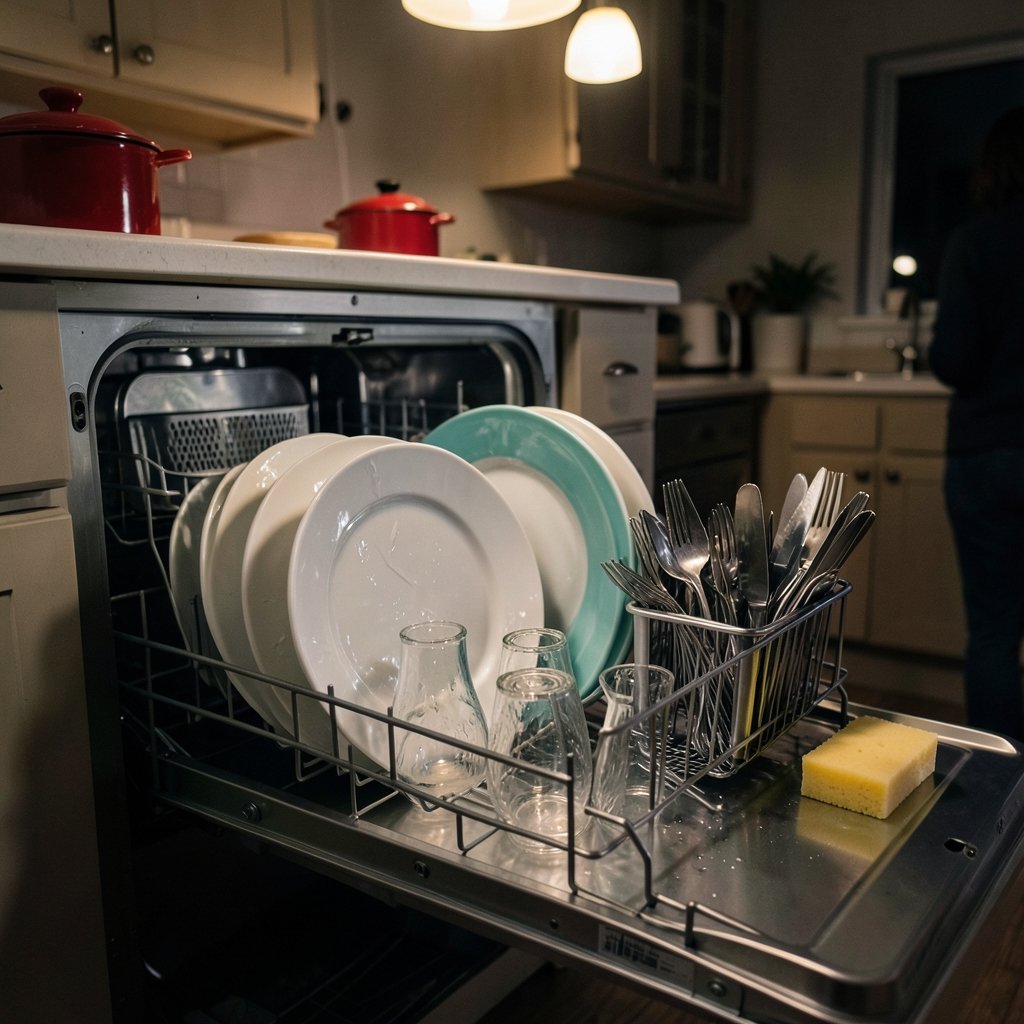
Ever loaded a dishwasher, pressed start, and wondered whether you’d have been faster just washing the plates by hand? You’re not alone. That little box under the counter has become one of the most debated appliances in the home, praised for saving water and blamed for etching glasses and leaving grit on forks. The truth about the electric dishwasher sits somewhere in the middle, and it’s more interesting than the marketing either way.
This guide walks through how the machine actually cleans, where it beats hand-washing and where it doesn’t, what the cycles and symbols mean, and the mistakes that quietly ruin performance. No brand cheerleading, no scare stories, just the mechanics and the practical habits that separate a sparkling load from a smelly one.
What an Electric Dishwasher Actually Does
Strip away the stainless steel and an electric dishwasher is a surprisingly simple machine. It heats water, mixes in low-foam detergent, sprays that mixture at the dishes under pressure, drains the dirty water, rinses, and dries. That’s it. Everything else, from sensors to steam cycles, is refinement on those five steps. (Choose best electric pressure washers real household work)
The first patent for a mechanical dishwashing machine is usually credited to Joel Houghton in 1850, a hand-cranked wooden contraption that splashed water onto dishes. It didn’t work well enough to catch on. The machine that resembles today’s appliance came from Josephine Cochrane, who patented a hand-powered version in 1886 and exhibited it at the 1893 World’s Columbian Exposition in Chicago. Her company eventually became KitchenAid. Electric models only became common in homes after World War II, and by the 1970s most American households had one. (Electric violin it works who its buy)
The modern version works like this:
- Fill and heat. The machine draws a few liters of water and heats it, often to 50 to 70 degrees Celsius depending on the program.
- Wash. A pump pushes water through rotating or fixed spray arms. The water is filtered and recirculated, so a single fill does the whole job.
- Drain and rinse. Dirty water goes out, clean hot water comes in for one or more rinses.
- Dry. Residual heat, a heating element, or a door that pops open at the end finishes the job.
That recirculation is the whole trick. A dishwasher uses the same small volume of water over and over, which is why a full load can clean a day’s dishes with less water than a running tap uses in a few minutes.
Dishwasher vs. Hand-Washing: The Honest Comparison
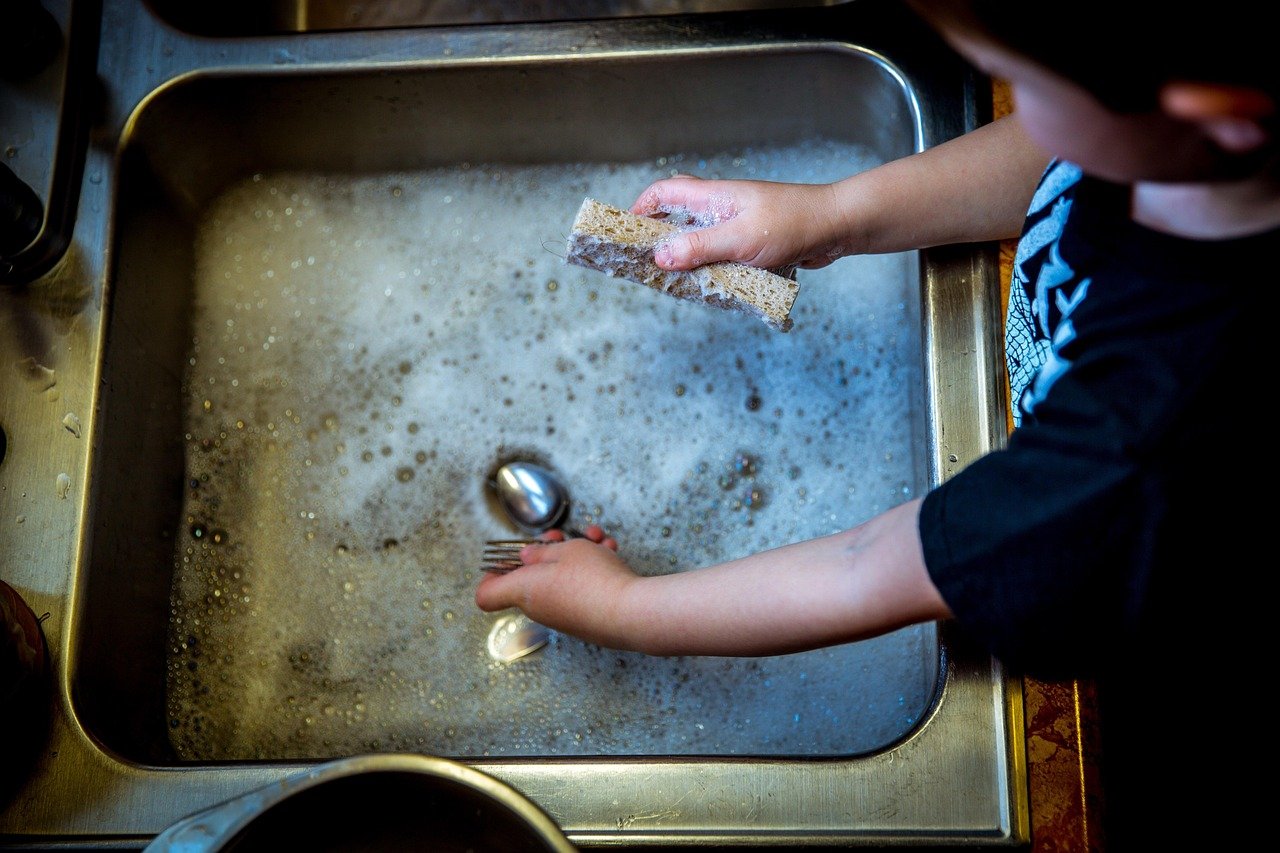
The water argument is the one most people have heard, and it mostly holds up. A full, efficient dishwasher typically uses less energy and water than washing the same load by hand under a running tap. But the word “typical” is doing heavy lifting. Hand-washing methods vary enormously, and a careful person using two basins and not leaving the water running can get close to machine performance.
Where the machine wins clearly:
| Factor | Full Dishwasher Load | Typical Hand-Washing |
|---|---|---|
| Water use | Low, recirculated | High if taps run |
| Water temperature | Consistently hot | Often lukewarm |
| Consistency | Same result every time | Depends on the person |
| Time | Hands-off | Hands-on throughout |
| Drying | Heat or air | Towel or rack |
Where hand-washing wins:
| Factor | Full Dishwasher Load | Typical Hand-Washing |
|---|---|---|
| Delicate items | Risk of heat damage | Full control |
| Small loads | Wasteful | Sensible |
| Wood and cast iron | Generally not suitable | Easy |
| Immediate availability | Takes an hour or more | Done in minutes |
The practical takeaway is simple. Run the dishwasher only when it’s full, and reserve hand-washing for the handful of things that shouldn’t go in. A half-empty machine is the one case where the efficiency story falls apart, because you’re heating a full tank of water for six plates.
Reading the Cycles, Symbols, and Settings
Most people use two buttons on their dishwasher: normal and start. That’s fine, but the other programs exist for reasons.
Eco or energy-save runs longer at a lower temperature. It uses less energy overall because heating water is the biggest energy cost in any cycle. If you have time, this is the setting that actually saves money.
Intensive raises the temperature and extends the wash for baked-on pans. Use it sparingly; it’s the most energy-hungry option on the dial.
Quick or rapid trades cleaning power for speed. It works for lightly soiled glassware and plates, not for a roasting tin.
Pre-rinse or rinse-only is for holding dirty dishes until the machine is full, so smells and dried food don’t set in.
Half load on some models uses less water for a partial load. Useful, though a full load is still more efficient per dish.
Then there are the symbols on the control panel and the detergent drawer. A fork-and-glass icon usually means delicate, a pot icon means intensive, a clock means delay start, and a star or snowflake often marks the eco program. Salt and rinse-aid indicator lights look like a sunburst and a sparkle respectively. If the icons on your machine are a mystery, the same logic that applies to laundry symbols applies here: a small picture is telling you what the manufacturer expects, and ignoring it is how dishes come out cloudy. The guide to clothing wash care symbols is a useful reminder that these little pictograms follow a shared visual language across appliances.
Loading Rules That Actually Matter
Loading is where most dishwasher disappointment begins. The machine can’t clean what the spray can’t reach, and it can’t drain what it can’t filter.
Face dirty surfaces toward the center. Spray arms throw water inward and upward, so a bowl placed face-down on the bottom rack gets a clean outside and a filthy inside. Angle plates and bowls so water can run off.
Don’t nest. Two spoons lying together shield each other. Mix cutlery handles up and down in the basket, or use the slots if you have them.
Keep large items out of the spray arm’s path. A cutting board leaning across the front of the bottom rack blocks water to everything behind it.
Skip the pre-rinse ritual. Scrape food into the bin, but don’t rinse plates under the tap. Modern detergents are designed to latch onto food residue, and a completely rinsed plate gives them nothing to work with. It also wastes the water you were trying to save.
Know what stays out. Cast iron rusts and loses its seasoning. Wooden spoons and boards crack and warp. Knives with wooden handles and good edges suffer. Fine crystal and hand-painted china can lose their finish in hot water. Nonstick pans are usually fine on a gentle cycle but check the manufacturer’s guidance. The same careful-thinking approach applies to textiles: just as you’d follow the right method to wash a wool sweater without shrinking it, delicate dishes deserve a program that matches their tolerance rather than whatever the last load used.
Detergent, Salt, and Rinse Aid: What Each One Does
Dishwasher detergent is not the same as hand-washing liquid. It’s low-foam by design, because foam kills the spray pressure that does the cleaning. It’s also alkaline and often enzyme-based, which is how it breaks down starch and protein at moderate temperatures. Squeezing in washing-up liquid is the single most common way to flood a kitchen floor with suds.
Salt isn’t about seasoning. It regenerates the water softener inside the machine, which matters enormously in hard-water areas. Hard water leaves calcium deposits that show up as a white film on glasses and a chalky scale on heating elements. If your area has hard water and you’ve never filled the salt reservoir, that film is probably why.
Rinse aid changes the surface tension of water so it sheets off rather than forming droplets. Droplets dry into spots. Rinse aid is the difference between glasses that sparkle and glasses that look dusty.
A note on tabs versus powder. All-in-one tablets are convenient and usually include salt function and rinse aid built in, but they give you no control over dosage. Powder and gel let you dial the amount up or down for load size and water hardness. Neither is wrong; tablets are simply a trade of flexibility for simplicity.
Common Mistakes and What Actually Works
A few habits cause most dishwasher problems, and each has a straightforward fix.
Overloading. If dishes touch, water can’t reach the contact points. Leave a finger’s width between items. You’ll fit slightly less and clean considerably more.
Blocking the spray arms. Spin them by hand before closing the door. If they catch on a pan handle, rearrange.
Neglecting the filter. Most machines have a filter at the bottom that needs rinsing every week or two. A clogged filter recirculates food particles, which is how you get grit on glasses and a smell that won’t leave. Pull it out, rinse it under the tap, and put it back.
Ignoring the door seal. Food and grime collect in the gasket. Wipe it monthly to prevent leaks and odors.
Running half loads. As covered above, this is the efficiency killer. Wait for a full machine.
Never cleaning the machine itself. Once a month, run a hot cycle with a dishwasher cleaner or a cup of white vinegar upright in the top rack. It dissolves grease film and scale. If you want a broader sense of how much machine choice matters for long-term durability, the reasoning in this guide to commercial-grade washer durability applies just as well to dishwashers: build quality and a machine matched to your actual use pattern beat features you’ll never touch.
Expecting miracles from a bad cycle choice. Eco mode on a greasy roasting pan will disappoint. Intensive mode on delicate glass will etch it. Match the program to the load.
Buying an Electric Dishwasher: What to Look At
When it’s time to replace a machine, the spec sheet can be overwhelming. A few things genuinely matter.
Size and place settings. Standard models are 60 cm wide and fit around 12 to 14 place settings. Slimline models are 45 cm and fit fewer. Measure your gap before anything else.
Noise level. Measured in decibels, and it matters if your kitchen opens onto a living space. Under 45 dB is quiet; under 40 dB is very quiet.
Energy and water rating. Efficiency classes and per-cycle figures vary widely by model and program, so compare like with like using the label rather than a headline number. Performance testing follows standards such as IEC 60436 internationally and AHAM DW-1 in the US, which define the test load, soil, and measurement method. If two machines quote numbers from different test conditions, they aren’t comparable.
Adjustable racks and third racks. A height-adjustable top rack lets you fit tall items below. A third rack for cutlery frees up the basket and often cleans better than a crowded one.
Drying method. Residual-heat drying is cheapest to run, heating-element drying is faster, and door-pop drying works well in dry climates but poorly in humid ones.
Repair record and parts availability. A cheap machine with no local parts support becomes landfill the moment a pump fails. This is the same logic behind the guidance in choosing the best electric pressure washers for real household work: pick the tool that fits the job and can be serviced, not the one with the longest feature list.
One more practical point. Installation needs a cold water supply, a drain connection, and a power point, and many machines should be on their own circuit. If you’re swapping a unit in place, that’s usually straightforward. If you’re adding one to a kitchen that never had one, budget for a plumber and an electrician.
Safety and End of Life
Dishwashers are safe appliances, but a few risks are worth naming. Hot water and steam can scald when you open the door mid-cycle, so let it finish or wait a minute. Sharp knives should point down in the basket. Detergent tablets look like sweets to small children, so store them high and locked, and use the child lock if your machine has one. Electrical safety for these appliances is covered by standards such as IEC 60335-2-5.
At the end of its life, a dishwasher is a mix of steel, plastic, and electronics. Many countries run appliance or e-waste recycling schemes, and the EU’s WEEE Directive is one example of a framework that requires take-back. Retailers often collect the old unit on delivery. Don’t put one in general waste. (Speed queen washer you get commercial grade durability)
Conclusion
The electric dishwasher earns its place in the kitchen, but not automatically. It saves water and energy when it runs full, on an efficient program, with a clean filter and properly loaded racks. It disappoints when it’s half-empty, overpacked, blocked by a cutting board, or asked to handle cast iron and crystal. Most complaints about dishwashers turn out to be complaints about how they’re used.
Get the basics right and the machine quietly does its job for a decade or more: scrape don’t rinse, load with space, keep the salt topped up, clean the filter, and pick the program that matches the load. That’s the whole secret. The rest is just stainless steel.
FAQ
How much water does an electric dishwasher use per cycle?
Modern machines typically use a small volume of water per cycle, often in the range of 9 to 13 liters for a full load, though figures vary by model and program. Because the water is filtered and recirculated, a full dishwasher usually uses less water than washing the same dishes by hand under a running tap.
Can I put pots and pans in the dishwasher?
Many stainless steel and nonstick pans are dishwasher safe on a gentle cycle, but check the manufacturer’s guidance first. Cast iron should never go in, because it rusts and loses its seasoning. Aluminium can discolour, and pans with wooden handles can crack.
Why do my glasses come out cloudy?
Cloudiness usually comes from hard water leaving mineral deposits, or from too little rinse aid. Fill the salt reservoir if your machine has one, top up the rinse aid, and run a cleaning cycle with a dishwasher cleaner or white vinegar. Permanent etching from repeated hot washes can’t be reversed, so use a gentle program for fine glassware.
Is it cheaper to run the dishwasher at night?
Running it at night doesn’t change the energy the machine uses, but it can matter if your electricity tariff has cheaper off-peak rates. Otherwise, the bigger savings come from running full loads on the eco program rather than from the time of day.
Do I need to pre-rinse dishes before loading?
No. Scrape food scraps into the bin, but skip rinsing under the tap. Modern detergents are formulated to attach to food residue, and rinsing wastes water while giving the detergent less to work with. Just make sure the filter is clean so particles don’t recirculate.
How often should I clean the dishwasher filter?
Rinse the filter every week or two, and give it a deeper clean monthly. A clogged filter recirculates food particles, which causes grit on dishes and lingering odors. Most filters twist out easily and rinse clean under a running tap in under a minute.



