
What if the console you choose says less about the games you love and more about how you want to play them? That is the real question in the Evercade vs Polymega vs Analogue Duo debate. On paper, all three let you revisit classic games on a modern screen. In practice, they ask you to work in three completely different ways. One sells you curated cartridges. One wants you to rip your disc collection into a managed library. One simply recreates the original hardware in silicon and lets you insert the real thing. Pick the wrong workflow and you will fight your own console every session. (Video game console emulator)
Why Workflow Beats Specs in This Comparison
Spec sheets are a trap here. None of these machines wins on raw numbers, because they are not chasing the same buyer. The Evercade is a cartridge ecosystem from Blaze Entertainment that launched in 2020, with the Evercade VS following in 2021 and the Evercade EXP in 2022. The Polymega is Playmaji’s modular “Element” system, announced in 2018 and rolled out slowly through limited shipments from roughly 2021 to 2023. The Analogue Duo is an FPGA console announced in 2020 and shipped in December 2023 that plays PC Engine and TurboGrafx-16 HuCards plus CD-ROM² and Super CD-ROM² discs.
The word that separates them is friction. Every one of these systems has a different place where friction lives: at purchase, at setup, or at the moment you sit down to play. Understanding where that friction sits is the whole game.
The Three Workflows at a Glance
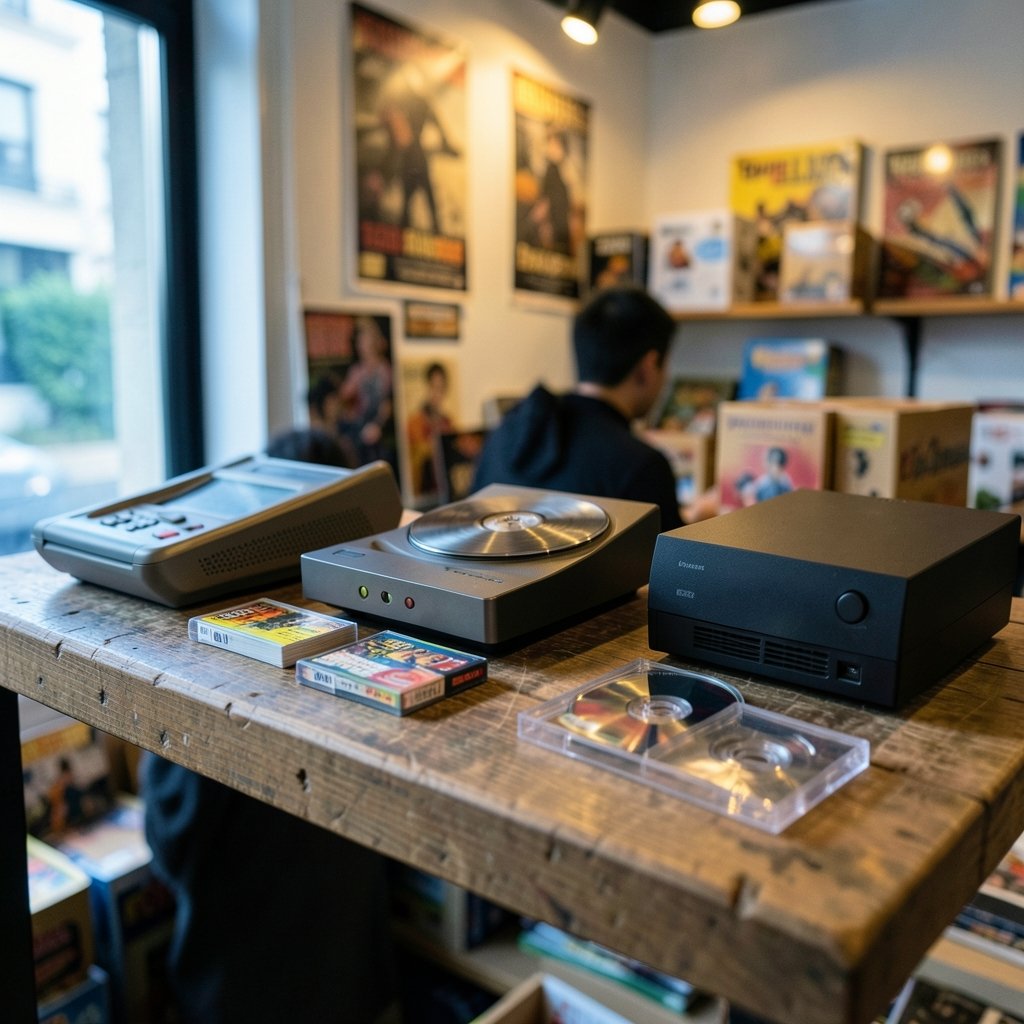
Here is the honest side-by-side before the details.
| Dimension | Evercade | Polymega | Analogue Duo |
|---|---|---|---|
| Core method | Software emulation | Software emulation | FPGA hardware recreation |
| Game source | Curated multi-game cartridges | Your original discs, installed to storage | Your original HuCards and CD-ROM² discs |
| Setup effort | Very low | High | Low to medium |
| Library management | None needed | Central feature | None |
| Ripping discs | No | Yes | No |
| Best for | Plug-and-play collectors | Large disc libraries | Accuracy purists |
That table hides the personality of each system, so let’s unpack the rows that actually change your evenings.
Evercade: Buy a Cartridge, Play in Minutes
The Evercade workflow is the simplest of the three, and that simplicity is the product. You buy a cartridge that bundles a themed set of games, slot it in, and play. There is no ripping, no library to organize, no firmware dance to get a disc recognized. The games are emulated rather than run on recreated hardware, but the packaging does the work of curation for you.
Practical tip: the biggest mistake new Evercade buyers make is assuming the cartridge library works like a digital storefront. It does not. You cannot buy a single game you want; you buy the bundle it lives in. Before committing, check what is actually on each cartridge rather than assuming a favorite title is included. A second common mistake is buying multiple hardware variants expecting cross-compatibility of accessories. The handheld, the VS, and the EXP are related but not identical, so match the hardware to how you actually play: handheld on the couch, or docked to a TV.
The upside is near-zero maintenance. The downside is that you are renting a curator’s taste. If your wish list is narrow and specific, the cartridge model can feel like buying a magazine to read one article.
Polymega: A Library Project, Not a Quick Session
Polymega takes the opposite philosophy. It is built around modules that read original media, and it is designed to install or rip disc-based games to internal storage so you can launch them from a managed library. That is a genuinely different relationship with your collection: you play the games and you archive them.
This is where the workflow gets demanding, and where most frustration lives.
- Confirm the base unit and the specific module you need are actually available, since the rollout has been long and uneven.
- Set aside real time for the initial install of discs, because ripping is a project measured in evenings, not minutes.
- Decide how you will organize the library before you start, not after a hundred titles are sitting in a flat list.
- Keep your original discs accessible, because your library is only as good as the media you feed it.
What actually works in practice: treat the first month as an archiving month, not a gaming month. People who expect to unbox a Polymega and immediately play a favorite disc often end up disappointed by the setup curve. People who enjoy the cataloging itself tend to love the system. The system rewards patience and punishes impulse.
There is a broader lesson here about local-first thinking that applies to any library you build. If you like the idea of owning your data and organizing it yourself, the same instincts show up in note-taking, where the obsidian vs logseq local first notes compared by workflow breakdown covers how tool philosophy shapes daily use. The pattern is identical: the tool that fits is the one whose workflow matches your habits, not the one with the longest feature list.
Analogue Duo: Insert the Real Thing, Get Real Hardware
The Analogue Duo takes a third path. It uses an FPGA, a field-programmable gate array, to recreate the original hardware rather than emulating it in software. You insert actual HuCards or CD-ROM² discs. There is no online store and no library management layer. The console does one thing and tries to do it faithfully.
The workflow is almost nostalgic in its simplicity: put in media, turn on, play. But “simple” is not the same as “effortless.” Disc-based original media is aging. Laser assemblies and scratched discs are real variables, and a console that reads original discs inherits every quirk of that media. Common mistake: buying an Analogue Duo expecting a curated experience or a digital storefront. There is none. You are responsible for sourcing the physical games, and that sourcing is the real cost, both in money and in time spent hunting.
For people who already own a stack of PC Engine or TurboGrafx-16 media, this is close to ideal. For people who do not, the Duo is a commitment to a collecting hobby disguised as a console purchase.
Accuracy, Latency, and the Emulation Question
The FPGA-versus-software split matters more than marketing suggests, but less than purists claim. FPGA recreation aims to reproduce hardware behavior at the circuit level, which can affect timing, latency, and edge-case compatibility. Software emulation, used by both Evercade and Polymega, is more flexible and easier to update, but compatibility can vary title by title.
For most players, the practical difference shows up in three places: how quickly inputs register, whether obscure games behave correctly, and how often the manufacturer ships fixes. None of these is a clean win for one system. A well-tuned emulator can feel excellent, and a faithful FPGA still depends on the media you feed it.
If you also care about how hardware choices ripple into daily use, the same logic applies to phones. The iphone 17 vs iphone 16 upgrade differences that matter daily piece makes the point that the spec that matters is the one you touch every day, not the one on the box. Retro consoles deserve the same scrutiny.
Matching the Console to Your Collection
The fastest way to choose is to be honest about what you already own and how much setup you will tolerate.
| If you… | Choose | Because |
|---|---|---|
| Want to play tonight with zero setup | Evercade | Cartridge in, game on |
| Own shelves of disc games and enjoy cataloging | Polymega | Built for ripping and managing |
| Own HuCards or CD-ROM² discs and want accuracy | Analogue Duo | FPGA with original media |
| Have no physical games at all | Evercade | Cheapest path to a working library |
| Hate maintenance and updates | Evercade | Least moving parts |
Notice that “which is most powerful” never enters the decision. That is the point. These are three answers to three different questions.
Setup Mistakes That Cost the Most Time
Across all three systems, a few errors repeat.
- Buying hardware before checking media availability. A console is useless without games you can actually obtain. Confirm the cartridge, module, or disc supply before you spend.
- Underestimating the archiving phase on Polymega. Budget weeks, not an afternoon.
- Assuming digital stores exist where they do not. Neither the Analogue Duo nor the Evercade works like a modern console storefront in the way newcomers expect.
- Ignoring accessory compatibility. Variants within a single brand are not always interchangeable.
- Skipping firmware checks. Verify current support status on each manufacturer’s official pages before buying, because all three have changed availability and features over time.
That last point deserves emphasis. Any claim about a specific year’s roadmap, price change, or discontinuation should be checked against primary sources rather than taken from a forum post. Product timelines for all three have shifted repeatedly, and the safest habit is to confirm current status directly.
The Storage and Organization Angle
One overlooked workflow difference is where your games live. Evercade keeps them on cartridges you can hold. Analogue Duo keeps them on the original discs. Polymega moves them onto internal storage. That third option creates a new responsibility: backup and organization.
If you are already managing files across services, the same principles apply. The dropbox alternatives by use case actually fits your workflow guide is a useful reminder that storage choices should follow your habits rather than the other way around. A retro library is no different: decide how you will find and protect your games before the collection grows.
Conclusion
The Evercade, Polymega, and Analogue Duo are not really competitors. They are three workflows wearing console costumes. Evercade sells convenience and curation. Polymega sells control and a project. Analogue Duo sells fidelity to original hardware and media. The right choice is the one whose friction you are willing to accept every single session.
Before you buy anything, answer one question honestly: do you want to play tonight, or do you want to build something? Play tonight points to Evercade. Build a library points to Polymega. Play the real thing points to Analogue Duo. Get that answer right and the spec sheet stops mattering.
Frequently Asked Questions
Does the Evercade play original game cartridges?
No. Evercade cartridges are new, curated multi-game bundles sold by Blaze Entertainment. The games on them are emulated, not original media. You are buying a themed collection rather than individual titles, so check the contents of each cartridge before purchasing.
Can the Analogue Duo play downloaded game files?
No. The Analogue Duo is built around original HuCards and CD-ROM² or Super CD-ROM² discs. It uses an FPGA to recreate the hardware and does not include an online store or a library management layer. You supply the physical media.
Is Polymega worth it if I only have a few discs?
Usually not. Polymega’s strength is managing and installing a large disc collection. If you own only a handful of games, the setup effort outweighs the benefit, and a simpler option will likely serve you better.
Which system has the least maintenance?
The Evercade. Cartridges require no ripping, no library organization, and no disc drive to maintain. Polymega needs ongoing library management, and the Analogue Duo depends on the condition of aging original media.
Do these consoles use emulation or real hardware?
The Evercade and Polymega use software emulation. The Analogue Duo uses an FPGA to recreate original hardware behavior. That difference can affect latency and edge-case compatibility, though most players will notice it mainly in how often fixes arrive.
Should I trust claims about 2027 roadmaps?
Be careful. Availability, firmware features, and module lineups for all three systems have changed repeatedly since launch. Verify any forward-looking claim against the manufacturer’s official support pages rather than forum speculation before you spend money.



