
Have you ever unlocked your phone with your face and assumed you just used “face recognition”? You did, in a broad sense. But the technology that opened your phone is not the same technology an airport uses to scan a crowd for a wanted person. Those are two different jobs, with different math, different failure modes, and very different rules attached to them.
The confusion is everywhere. Media reports, product pages, and even some vendors blur the line between face verification and face identification (often just called recognition). That blur matters. It changes how accurate a system really is, what “false positive” means, and whether a deployment is legal in the first place. This article separates the two clearly, explains why the distinction drives engineering and policy, and shows where people get it wrong in practice. (Facial recognition system)
The core difference in one sentence
Face verification asks a yes-or-no question about a claimed identity: “Is this person who they say they are?” Face identification asks an open question: “Who is this person, if anyone we know?” The first is a 1:1 comparison. The second is a 1:N search against a gallery of many faces.
That single structural difference explains almost everything else. A verification system compares one live image to one stored template. An identification system compares one live image to thousands, millions, or in some watchlist scenarios, tens of millions of templates. The first scales easily. The second gets harder and more error-prone as the gallery grows.
Why the umbrella term “face recognition” causes trouble
Technically, “face recognition” is the broad category that contains both verification and identification. Standards bodies and testing programs use it that way. But in everyday language and in much journalism, “face recognition” has become shorthand for identification, especially surveillance-style identification in public spaces.
This is not a small semantic quibble. A city council debating a “face recognition ban” may be debating a ban on 1:N police searches while residents hear a blanket rejection of the face unlock on their phones. A vendor selling 1:1 authentication for banking apps may market it as “face recognition” and inherit the reputational baggage of mass surveillance. Anyone writing policy, buying software, or evaluating privacy risk needs to pin down which task is actually in scope before the conversation goes anywhere.
How each task is measured
The metrics tell the story better than any definition. Verification performance is usually reported as a tradeoff between two error rates: the false match rate (FMR), where two different people are wrongly declared a match, and the false non-match rate (FNMR), where the same person is wrongly rejected. Because you can slide the decision threshold to trade one error for the other, results are plotted as detection error tradeoff curves rather than a single number.
Identification is scored differently. The key metrics are the false negative identification rate (FNIR), where a person who is in the gallery is not found, and the false positive identification rate (FPIR), where a search returns a wrong candidate. Rank-based measures also appear, such as how often the correct identity lands in the top few results.
| Feature | Face verification (1:1) | Face identification (1:N) |
|---|---|---|
| Question asked | “Are you who you claim to be?” | “Who is this, if anyone?” |
| Comparison | One image vs. one template | One image vs. many templates |
| Typical use | Phone unlock, bank login, border e-gates | Watchlists, deduplication, investigations |
| Core metrics | FMR vs. FNMR, DET curves | FNIR, FPIR, rank-based accuracy |
| Error behavior | Stable as database grows | Worsens as gallery grows |
| User role | Actively claims an identity | Usually unaware of the search |
NIST runs these as separate evaluation tracks, one for 1:1 and one for 1:N, precisely because the two tasks cannot be scored on the same scale. The NIST Face Recognition Vendor Test program publishes separate reports for each, and the split is a useful reminder that “accuracy” is meaningless without naming the task.
Where each one shows up in the real world
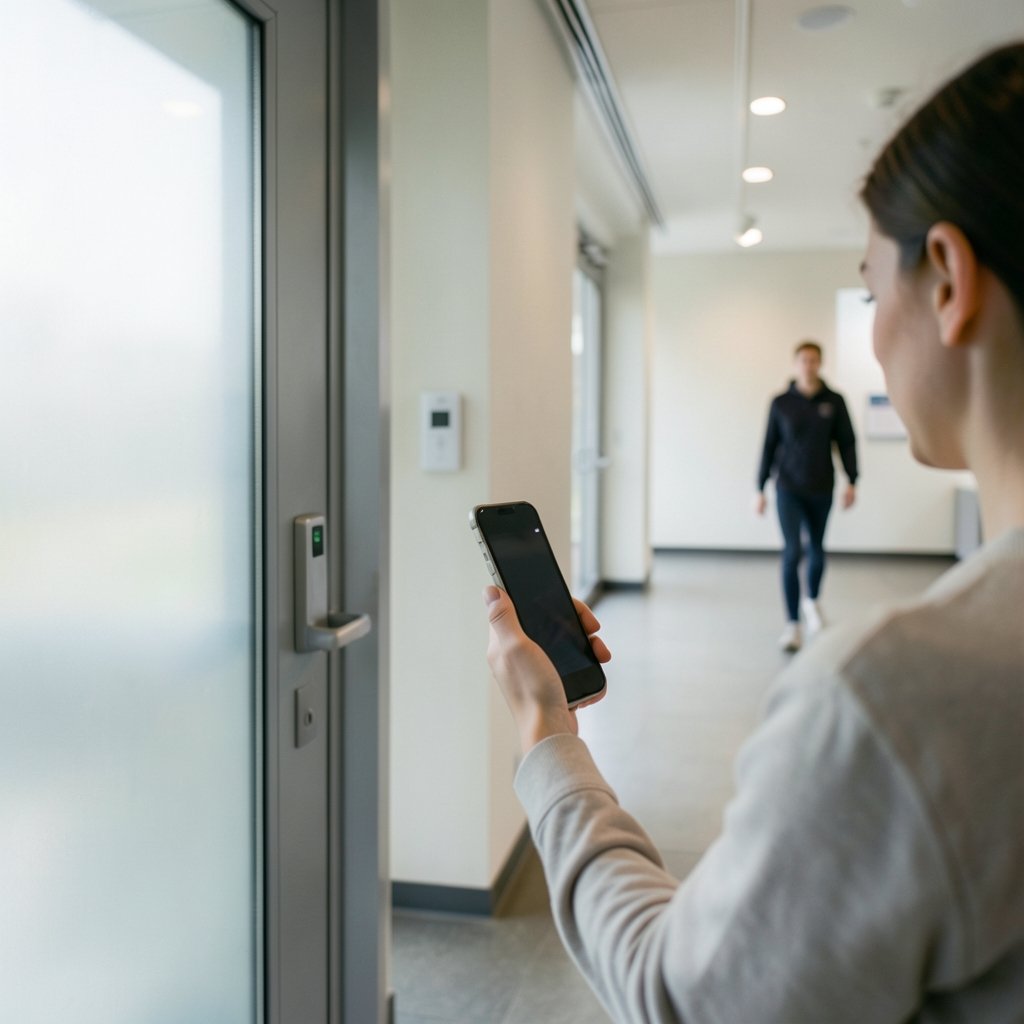
Verification lives in places where a person wants to prove something. Unlocking a phone, approving a payment, clearing an automated border gate with an e-passport, or confirming identity during a remote account opening. The user is a willing participant, often holding still and cooperating with the camera. Errors are annoying but usually recoverable through a PIN fallback.
Identification lives in places where an organization wants to find something out. Matching a traveler against a watchlist, spotting a person of interest in footage, or checking whether one person has already registered under a second name (deduplication). Here the subject may not know a search is happening, may not be cooperating, and has no way to appeal an error in real time.
That asymmetry is why the same underlying neural network can feel benign in one context and alarming in another. The algorithm may be similar. The power relationship is not.
The accuracy trap: why “99% accurate” means little
A vendor claiming “99% accuracy” is telling you almost nothing until you know three things: which task, which error rate, and which population.
In verification, 99% could describe a false match rate at one operating threshold, with a corresponding false non-match rate hidden in a footnote. In identification, a 99% figure might apply to a small gallery and collapse when the gallery grows tenfold. Identification error compounds with database size, so a system that performs beautifully on 10,000 faces can behave very differently on 10 million.
Then there is the demographic question. NIST’s December 2019 demographic study, published as NISTIR 8280, examined one-to-many and one-to-many-style searches and found higher false positive rates for many demographic groups in some algorithms, with the highest rates reported for West and East African and East Asian faces and the lowest for Eastern European faces. The finding does not mean every system fails equally. It means aggregate accuracy claims hide variation that matters, and buyers should demand subgroup results, not a single headline number.
The spoofing problem applies to both
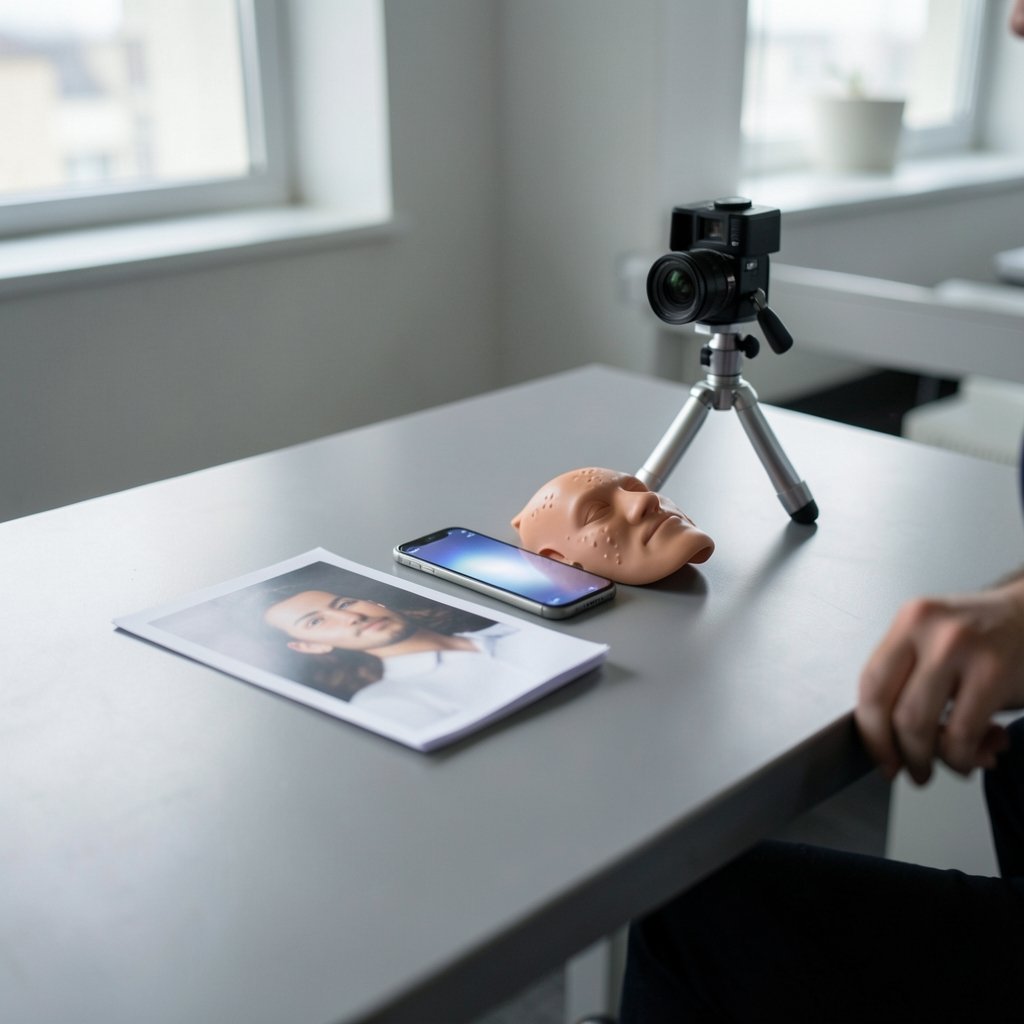
A camera can be fooled. A printed photo, a phone screen replaying a video, or a silicone mask can sometimes pass as a live face. Presentation attack detection, sometimes called liveness detection, is the defense, and the international standard covering it is ISO/IEC 30107, whose Part 3 addresses testing.
Here is a practical point many teams learn the hard way: verification systems face a more motivated attacker. Someone trying to unlock an account has a direct incentive to spoof. An identification system scanning a crowd is usually dealing with unaware subjects, so the threat model shifts toward image quality, angle, and occlusion rather than deliberate masks. Both need liveness checks, but the urgency and design differ. For a broader look at how these attack surfaces fit into organizational risk, see this analysis of the biggest cybersecurity threats businesses face today.
What the law sees, and why the distinction matters
Regulators have started drawing the line explicitly. The EU AI Act, Regulation (EU) 2024/1689, treats real-time remote biometric identification in publicly accessible spaces for law enforcement as prohibited except in narrow listed cases, while classifying many other biometric identification uses as high-risk. Verification for authentication, such as unlocking a device, sits in a different category.
The pattern is consistent across jurisdictions: identification in public, without consent, attracts the heaviest scrutiny. Verification, where the user opts in, attracts lighter treatment but still demands data protection compliance. A team that lumps both under “face recognition” and applies one compliance playbook will either over-restrict a benign login feature or under-restrict a watchlist deployment. Neither mistake is cheap.
Common mistakes practitioners make
Several errors show up again and again when teams deploy this technology.
Testing on the wrong task. A team validates a 1:1 matcher, then repurposes the model for a 1:N search without re-benchmarking. The accuracy numbers do not transfer.
Ignoring gallery growth. Identification pilots run on small datasets and look excellent. Production adds millions of records and the false positive rate climbs. Plan for scale from day one.
Skipping threshold calibration. Verification systems need a decision threshold tuned to the risk of the application. A bank login and a photo-sharing app should not share a default.
Forgetting the fallback. Every verification flow needs a recovery path for the legitimate user who gets rejected. Locking someone out of their account because the lighting was bad is a support ticket, and sometimes a lawsuit.
Treating liveness as optional. Spoofing is not an edge case. It is the first thing a motivated attacker tries.
Assuming one demographic result covers everyone. Demand subgroup performance data and test on your actual user population.
How to choose the right approach
Start with the question, not the technology. If a user is asserting an identity and you need to confirm it, you want verification. If you need to discover whether a person matches anyone in a dataset, you want identification. If you need both, build them as separate pipelines with separate benchmarks.
For verification, prioritize a smooth user experience, robust liveness detection, and a clear fallback. Measure FMR and FNMR at your chosen threshold and monitor drift over time.
For identification, prioritize gallery quality, human review of candidate lists, and a documented policy for what happens when the system returns a match. Never let a 1:N result trigger an automated action with serious consequences. The rank-based nature of the output means a human should confirm before anything irreversible happens.
It also helps to keep the broader tooling landscape in view. Teams building camera-based products increasingly combine biometric pipelines with synthetic media tools, and understanding what is possible on the generation side informs your threat model. A look at the best AI tools for creating faceless videos shows how quickly realistic synthetic faces are becoming, which raises the stakes for liveness detection on both verification and identification systems.
Conclusion
Face verification and face identification share DNA but solve opposite problems. One confirms a claim. The other searches for an answer. One scales gracefully. The other gets riskier with every record added. One is usually consensual. The other often is not.
Getting the distinction right is not academic. It determines which metrics you trust, which regulations apply, how you test for bias, and whether your deployment survives contact with real users and real auditors. The next time someone says “face recognition,” ask the clarifying question: verification or identification? The answer changes everything that follows.
FAQ
What is the difference between face verification and face identification?
Face verification is a 1:1 comparison that confirms whether a person matches a claimed identity, like unlocking a phone. Face identification is a 1:N search that asks which identity in a database, if any, matches a given face, like checking a crowd against a watchlist. The first confirms a claim. The second searches for an answer.
Is face verification the same as face recognition?
No. Face recognition is the umbrella term covering both verification and identification. Verification is one specific task within it. Media and policy debates often use “face recognition” to mean identification only, which creates confusion when the same phrase is applied to phone unlock or bank login features.
Why does identification get harder as the database grows?
Because every additional template is another chance for a false match. In a 1:N search, the system compares one face against many, so the probability of returning a wrong candidate rises with gallery size. Verification does not have this problem because it only ever compares one image to one stored template.
Which is more accurate, verification or identification?
They cannot be compared directly because they are scored with different metrics. Verification uses false match and false non-match rates. Identification uses false negative and false positive identification rates plus rank-based measures. A system can be excellent at one task and mediocre at the other, so accuracy claims must always name the task.
What is a presentation attack, and does it affect both?
A presentation attack is an attempt to fool a system with a fake face, such as a photo, video replay, or mask. It affects both verification and identification, though verification systems usually face more motivated attackers because there is a direct incentive to spoof. Liveness detection, standardized under ISO/IEC 30107, is the defense for both.
Does the EU AI Act treat these two uses differently?
Yes. Regulation (EU) 2024/1689 bans real-time remote biometric identification in publicly accessible spaces for law enforcement except in narrow listed cases, and classifies many other biometric identification uses as high-risk. Verification for authentication, such as device unlock, falls into a different and generally lighter category.



