
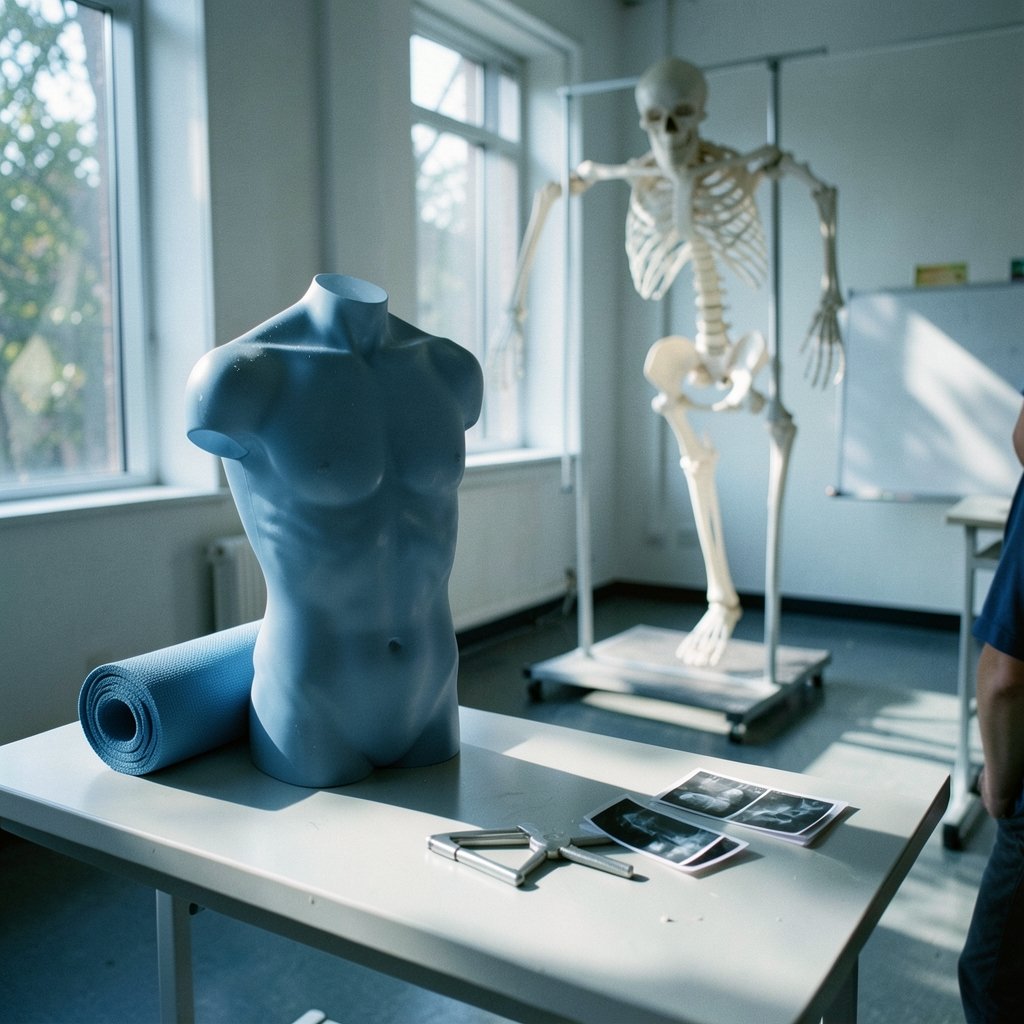
Have you ever watched someone do a jumping jack and wondered why the arms and legs move sideways instead of forward? That simple motion holds the answer to one of the most useful organizing ideas in anatomy. The frontal plane is the invisible sheet that slices the body into front and back halves, and it quietly governs how we describe, measure, and train sideways movement. It shows up in gym coaching cues, physical therapy notes, surgery planning, and the reformatted images a radiologist scrolls through on a Monday morning.
This article breaks down what the frontal plane is, how it differs from the other anatomical planes, where it matters in real work, and the mistakes people make when they try to apply it. No jargon walls, no fluff. Just a clear working map.
What Is the Frontal Plane, Exactly?
The frontal plane, also called the coronal plane, is one of three standard anatomical planes used to describe the human body in space. It divides the body into an anterior (front) portion and a posterior (back) portion. Imagine standing facing a mirror and a giant sheet of glass passing straight through your body from left to right, top to bottom. That glass is the frontal plane.
The plane is vertical, but it runs side to side rather than front to back. That orientation is what makes it so practical. Any time you describe motion or structure in terms of “toward the front” or “toward the back,” you are working within frontal-plane logic.
A quick terminology note that trips people up: “frontal” and “coronal” are usually treated as synonyms, and in most clinical and coaching settings they are. Some texts reserve “coronal” for the plane associated with the skull’s coronal suture, but that is a minor usage variation rather than a real conflict. If a textbook or a surgeon uses one term and you expected the other, they almost certainly mean the same slice.
How the Frontal Plane Fits With the Other Anatomical Planes

You cannot really understand one plane without the other two. The three standard planes work as a set, and each answers a different question about position and movement.
| Plane | Also Called | Divides Body Into | Typical Motion |
|---|---|---|---|
| Frontal | Coronal | Front and back (anterior/posterior) | Abduction, adduction, lateral flexion, side-to-side steps |
| Sagittal | Median or lateral (depending on position) | Left and right | Flexion, extension, forward and backward motion |
| Transverse | Axial or horizontal | Top and bottom (superior/inferior) | Rotation, twisting, turning |
The mental shortcut that works for most people: sagittal is the forward-back plane (think walking, squatting, biceps curls), frontal is the side-to-side plane (think jumping jacks, side lunges, raising an arm out wide), and transverse is the rotational plane (think swinging a bat or turning your head).
Here is where beginners go wrong. They memorize the definitions, then freeze when a real movement combines all three. Almost no athletic or daily movement lives in a single plane. A walking stride is mostly sagittal, but the pelvis drops slightly in the frontal plane and rotates in the transverse plane. A golf swing is a rotational movement with heavy frontal-plane involvement in the hips and trunk. The planes are descriptive tools, not boxes that movements must fit inside. (Gitops explained git became control plane modern)
Frontal-Plane Movement: The Vocabulary That Actually Gets Used
If you have spent any time in a gym or a clinic, you have heard these terms. They all describe motion that happens within or parallel to the frontal plane.
- Abduction: moving a limb away from the body’s midline. Raising your arm out to the side is shoulder abduction.
- Adduction: moving a limb toward the midline. Bringing that arm back down to your side is adduction.
- Lateral flexion: bending the spine or neck sideways, as when you tilt your head toward your shoulder.
- Elevation and depression: shrugging the shoulders up and pulling them back down, often grouped with frontal-plane motion of the shoulder girdle.
- Inversion and eversion: tilting the sole of the foot inward or outward at the ankle.
Notice the pattern. Every one of these movements changes the body’s shape as seen from the front. That is the practical test. If you can see the change while standing directly in front of someone, you are probably watching frontal-plane motion.
Why the Frontal Plane Matters in Gait and Injury Risk
Walk into any sports medicine clinic and you will hear the frontal plane discussed in the context of running and landing mechanics. Two examples come up constantly.
The first is pelvic drop, sometimes called the Trendelenburg pattern. When a runner stands on one leg during a stride, the pelvis on the unsupported side should stay roughly level. If it drops noticeably, the hip abductors on the standing side are not doing their job. That drop is a frontal-plane event, and it can set off a chain of compensation up and down the leg.
The second is knee valgus, where the knee collapses inward toward the midline during a squat or a landing. This is also frontal-plane motion, and excessive frontal-plane knee movement is widely studied as a risk factor in sports injury research. The exact effect sizes and the strength of the evidence vary by study and population, so treat any single number with caution. The general principle, though, is well accepted: controlling frontal-plane motion at the hip and knee is a core goal of injury-prevention programs, especially for athletes who jump, cut, and change direction.
This is also where a lot of coaching goes sideways. A trainer sees a knee caving in and yells “knees out” without checking the hip. In practice, the knee is often following the pelvis. Fixing the frontal-plane control at the hip frequently resolves what looked like a knee problem. That is a small example of why understanding the plane as a system, not a single joint, pays off.
Frontal Plane in Medical Imaging
In radiology, the word “coronal” shows up on every workstation. CT and MRI software routinely generate coronal, sagittal, and axial views from the same scan data, and the coronal view is the one that displays the body roughly as you would see it from the front. For a patient, that is often the easiest image to interpret, because it matches their mental picture of their own body.
Surgeons lean on coronal reformats constantly. Planning a spinal procedure, assessing a fracture line, or checking whether a tumor crosses the midline all benefit from seeing the anatomy in the frontal plane. The coronal view makes left-right relationships obvious in a way that axial slices, which show the body as if sliced like a loaf of bread, do not.
One practical tip for anyone reviewing their own imaging reports: the orientation labels matter. A coronal image is not automatically “the front view” in every system, and left-right markers can flip depending on how the scan was acquired and displayed. Radiologists and technologists check orientation carefully for exactly this reason. If you are looking at images and something seems mirrored, it may be a display convention rather than a finding.
How to Apply Frontal-Plane Thinking in Practice
Knowing the definition is easy. Using it is where the value sits. Here is a practical sequence that works for coaches, therapists, and curious athletes alike.
- Name the plane before you name the fix. When you spot a movement problem, ask which plane it lives in. A knee that drifts inward is a frontal-plane issue. A knee that cannot bend far enough is a sagittal-plane issue. The answer changes the exercise selection.
- Film from the front. Sagittal-plane problems are easiest to see from the side. Frontal-plane problems are easiest to see from directly in front or behind. Most people only ever film from the side, which is why hip drop and knee valgus go unnoticed for years. A phone propped against a water bottle is enough.
- Train the plane you are missing. If someone’s program is all squats, deadlifts, and running, they are living in the sagittal plane. Adding lateral band walks, side planks, single-leg balances, and lateral lunges fills the frontal-plane gap.
- Check the foot. Ankle inversion and eversion feed directly into knee and hip position. A stiff, supinating ankle can push the whole chain into a frontal-plane compensation. Look low before you blame the knee.
- Re-test, do not assume. After four to six weeks of targeted work, re-film the same movement from the same angle. Progress in frontal-plane control is often visible before it is felt.
The most common mistake is treating the frontal plane as an advanced topic reserved for elite athletes. In reality, it is the plane most people neglect, and the one where small improvements produce outsized returns in balance, stability, and joint health. Older adults especially benefit, because frontal-plane control is closely tied to fall risk and sideways stability during walking.
There is a broader lesson here that echoes across technical fields. When a system has multiple layers, understanding which layer you are actually looking at changes everything. The same discipline shows up in infrastructure work, where teams separate the Kubernetes architecture of control plane and worker nodes so they can reason about each layer without confusing one for another. Anatomy rewards the same habit. Separate the planes, and the body stops looking like a tangle of joints and starts looking like a system with clear axes. (Gitops architecture git becomes control plane kubernetes)
Frontal Plane vs. Coronal Plane: Same Thing?
For nearly all practical purposes, yes. The two terms describe the same division of the body into front and back portions, and clinicians, anatomists, and imaging software use them interchangeably. The distinction that occasionally appears in older texts, tying “coronal” specifically to the skull’s coronal suture, is a narrow usage point rather than a meaningful difference in how the plane is applied.
If you are writing a report, a paper, or patient education material, pick one term and stay consistent within the document. Mixing them in the same paragraph reads as sloppy even when both are technically correct. In imaging contexts, “coronal” is the more common choice. In movement and biomechanics contexts, “frontal” tends to dominate.
Common Misconceptions Worth Clearing Up
A few myths cling to this topic, and they cause real confusion in practice.
The first is that the frontal plane only applies to the arms. It applies to the whole body, including the spine, pelvis, and feet. Lateral flexion of the trunk and inversion of the ankle are both frontal-plane motions.
The second is that movements belong to exactly one plane. They do not. Planes describe components of motion, and most real movement blends all three. A single-leg squat is a sagittal-plane exercise with a substantial frontal-plane stability demand.
The third is that frontal-plane training requires special equipment. It does not. Bodyweight lateral lunges, side planks, and single-leg stands cover most of the ground. Bands help, but they are optional.
The fourth, and the one that causes the most trouble, is assuming that a frontal-plane problem is a frontal-plane fix at the same joint. As noted earlier, the knee often follows the hip. Diagnose the plane, then trace the chain.
Conclusion
The frontal plane is a simple idea with a surprisingly wide reach. It divides the body into front and back, it gives us the vocabulary for sideways movement, it shapes how radiologists read scans, and it sits at the center of injury-prevention work for anyone who runs, jumps, or changes direction. The concept costs nothing to learn and pays off every time you watch a movement and can say, with confidence, which plane it lives in and what that means for the person doing it. Whether you are a coach reviewing film, a student preparing for an anatomy exam, or someone trying to understand a physical therapy plan, the frontal plane is one of the most useful lenses you can carry.
Frequently Asked Questions
What is the frontal plane in simple terms?
It is an imaginary flat surface that passes through the body from side to side, dividing it into a front half and a back half. Any movement that changes your shape as seen from directly in front, like raising an arm out to the side, happens in or parallel to this plane.
Is the frontal plane the same as the coronal plane?
In almost all practical settings, yes. Both terms describe the division of the body into anterior and posterior portions. A small number of older texts use “coronal” more narrowly for the plane of the skull’s coronal suture, but clinicians and imaging software treat the two as synonyms.
Which movements happen in the frontal plane?
The main ones are abduction and adduction of the limbs, lateral flexion of the spine and neck, elevation and depression of the shoulder girdle, and inversion and eversion of the foot. Side-to-side steps and lateral lunges are also frontal-plane movements.
Why does the frontal plane matter for injury risk?
Because poor control of sideways motion at the hip and knee, such as pelvic drop or knee valgus, is widely studied as a contributor to lower-limb injury, particularly in athletes who jump and cut. Training frontal-plane stability is a standard part of injury-prevention programs.
How is the frontal plane used in medical imaging?
CT and MRI software generates coronal views alongside sagittal and axial ones, and the coronal view displays the body roughly as seen from the front. Surgeons and radiologists use these views to assess left-right relationships in fractures, spinal alignment, and soft-tissue structures.
Can you train the frontal plane without equipment?
Yes. Lateral lunges, side planks, single-leg balances, and side-lying leg raises all challenge frontal-plane control using only body weight. Adding a resistance band increases the challenge, but it is not required to get started.



