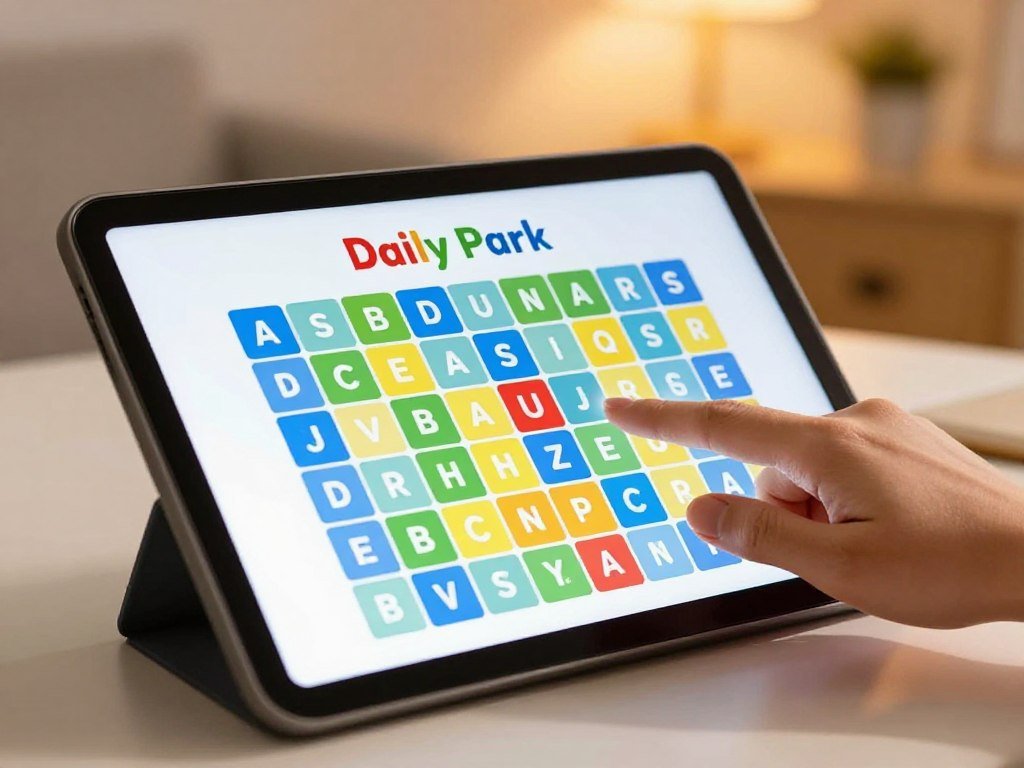
A daily word puzzle can be a satisfying small challenge, but the same format is not the only way to play with words. A quick round can fit before breakfast or during a break, yet a familiar routine may leave you wanting a new challenge. Wordle’s short daily format and color feedback have inspired many kinds of alternatives, from multi-grid guessing to word-building and clue-based play.
Color feedback means the green, yellow, and gray clues that show whether a letter is correctly placed, misplaced, or absent. Some choices here offer a fresh puzzle every day; others are unlimited-play games you can replay on demand. A few also move beyond word guessing, using maps, math, or visual memory instead.
You can pick a game by how much time you have, how much guidance you want, and whether you prefer one shared answer or several targets. Some puzzles reward careful spelling, while others ask you to spot patterns or connect ideas. The best next puzzle is the one whose clues and pace make you want to come back.
Key Takeaways
- Try Quordle for four word grids that share each guess.
- Choose Waffle if you would rather move letters than guess an answer.
- Look for meaning clues if spelling feedback is not your style.
- Check whether a game offers daily puzzles, replay, or both.
- Pair one word puzzle with a different kind of daily challenge.
How Do You Choose the Right Games Like Wordle?
If you enjoy narrowing down letters, start with a familiar color-clue format; if you prefer lateral thinking, choose clues based on meaning or connections. The feedback style often matters more than the theme, because it shapes what you do after every guess. A daily word game can feel calm or demanding, depending on how much each clue tells you.
Wordle asks you to guess a five-letter word in six tries. Green, yellow, and gray tiles show whether a letter sits in the right place, appears elsewhere, or is absent. That clear pattern makes a familiar guessing format an easy starting point. The official Wordle rules and tile clues explain how each color marks a letter.
Pick the feedback that helps you think
Color clues suit players who like testing letter placement and ruling out options. You can compare each guess with the next, then adjust one or more letters. A semantic score works differently: it measures how close a guess is in meaning, rather than spelling.
Category clues ask you to find a shared link between several words. That can feel more like sorting a messy desk than solving a spelling test. For a low-friction start, choose a familiar five-letter format; choose meaning or category clues for a clear change of pace.
Match the game to your available time
A one-puzzle-a-day routine gives you a natural stopping point. Unlimited-play games let you start another round, while timed runs set a firm limit on the session. A short break may suit one daily puzzle, but a longer stretch can make replayable rounds more appealing.
Think about whether you want to stop when the puzzle ends or keep trying a new one. Choose the feedback style first, then decide whether a daily limit or replayable rounds fit your routine.
Pick clues that match how you like to solve, then choose a pace you can enjoy without feeling rushed.
One good test is to play a single round and notice what holds your attention: letter positions, word meanings, or quick decisions. If the clues feel useful, the challenge is easier to return to. If they leave you guessing at random, try another style.
Which Multi-Grid and Shuffle Games Raise the Stakes?
Quordle multiplies the familiar challenge across four grids, while Smartle makes letter placement a rearrangement problem. Shared guesses add pressure because one move can help several answers or leave you short on useful clues. These word game options change how you use letters, not just how many you must find.
Quordle gives you eight attempts to solve four five-letter words at once. Each guess applies to all four grids, and each grid marks correct, misplaced, and absent letters separately. One guess can inform four targets, so a useful letter may matter in different ways across the boards.
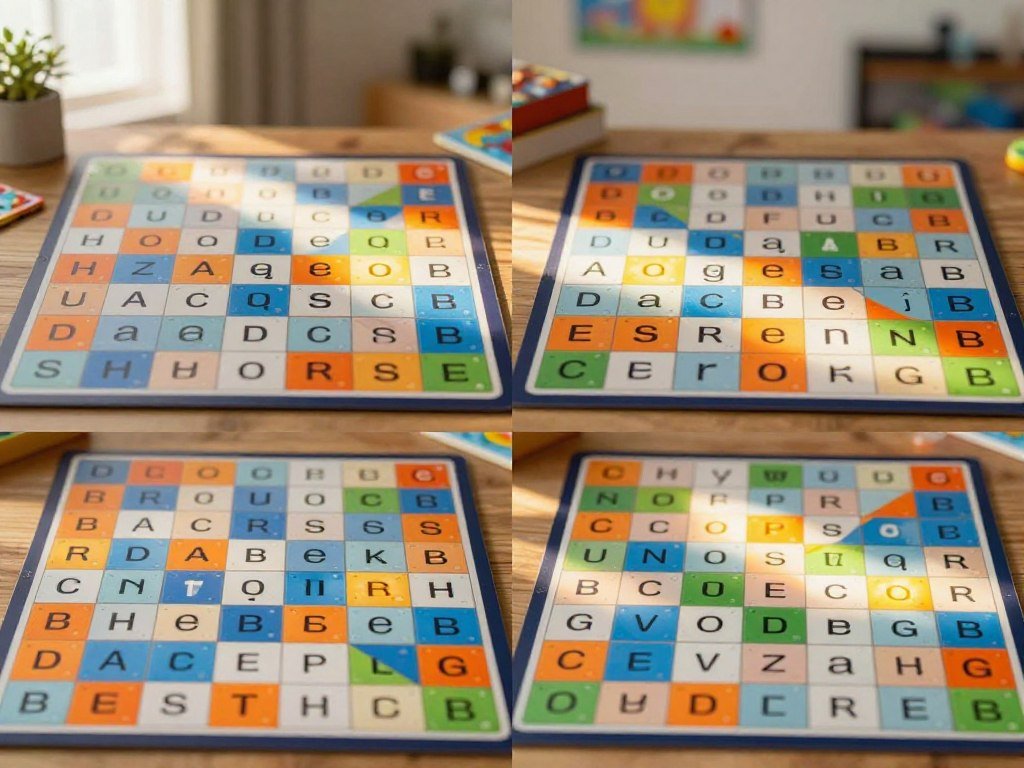
- Quordle puts four five-letter targets on screen together, with eight guesses for all four. You must balance letters that help one grid against letters that test several.
- Smartle gives you 25 letters in a five-by-five grid. Swap letters between any positions until each horizontal row forms a valid five-letter word; multiple solutions can work.
- Wordle Unlimited keeps the familiar six-guess, five-letter format. Its twist is the chance to start another puzzle right after finishing the current one.
- Waffle gives you a grid of letters to rearrange into words through swaps. You have 15 swaps, so each move should improve more than one crossing line when possible.
- Sedecordle presents 16 Wordle-inspired puzzles and 21 guesses. The larger set makes it harder to track which letters help each target.
- Antiwordle reverses the goal: you try to avoid guessing the hidden word. That changes your choices from chasing a solution to keeping it out of reach.
Grid puzzles reward a different kind of attention from a single-answer guessing game. Quordle asks you to track several sets of clues at once, while Smartle gives you direct control over letter positions. Waffle adds a limit on swaps, which makes a careless move harder to undo.
For another look at multi-board formats and related word puzzles, browse these daily word puzzle alternatives. The useful question is not just how many grids you see, but how each move affects the whole board.
A moderate jump in complexity comes from solving four grids before moving to puzzles that multiply the targets further. If you enjoy comparing clues side by side, the added boards can make each guess feel more active. If you prefer one clear target, start with a shuffle game instead.
For a moderate jump in complexity, start with four grids before moving to puzzles that multiply the targets further.
Which Word-Building Games Make You Reshape Letters?
If you enjoy making words from constrained pieces, Squeezy and Pair Down turn adding or removing letters into the central move. Building rather than guessing gives you a more hands-on puzzle, since each change can affect the shape of a word. Some formats reward vocabulary; grid puzzles can call for more spatial planning.
Word-building games give you a set of letters, a structure, or a starting word and ask you to change it. The main skill may be editing letters, linking words, or planning a grid. A familiar word can still be hard to spot when you must fit it into a narrow pattern.
- Crosswordle uses color-coded clues to fill a crossword grid instead of guessing one five-letter word. You need to read how letters fit across and down, then use the clues to place them.
- Squeezy asks you to insert letters between existing letters to rebuild a hidden word or word pair. Three difficulty modes let you choose how much of a stretch you want.
- Pair Down asks you to remove letters from rows while forming valid words. Easy and Hard modes change the challenge, but both depend on seeing what can disappear without breaking the remaining words.
- Weaver takes you from one word to another by changing one letter at a time. Each step must create a real word, so a short path can call for careful choices.
- Trilogy asks you to find a middle word that forms two real compound words. It offers three daily puzzles at increasing difficulty, giving you a fresh bridge to build each day.
- Slideword uses a five-by-five grid. Slide whole rows and columns until all five rows spell words, which rewards spatial planning as much as vocabulary.
Weaver can help you ease into word changes because you focus on one letter at each step. Trilogy shifts your attention to word pairs, while Squeezy and Pair Down make editing the core action. These games offer different routes to a valid answer, even when the words are short.
Crosswordle and Slideword require you to think about how a letter affects more than one line. That makes them feel more spatial than a simple word ladder. If you like moving pieces around, the grid may be part of the fun rather than a barrier.
Try a one-letter ladder before a sliding grid if you want to ease into more spatial wordplay.
Can Clues and Meaning Replace Letter Feedback?
Concepto shifts attention from spelling to meaning by scoring how semantically close each guess is to the target. A near match in meaning can guide your next try even when the letters look nothing alike. Other puzzle game formats ask you to find links or categories across a group of words.
Meaning-based play rewards broad thinking, while category puzzles reward spotting a relationship among several terms. Look for a similar idea when the game scores meaning; look for a shared link when it groups words. That difference can help you choose a daily word challenge that suits your style.
- Concepto gives a semantic similarity score and a Bridge Word clue for the day’s secret theme word. A close score points toward related meaning, not matching spelling.
- Connections asks you to group words that share a common thread. The tricky part is often deciding which link is intended when several terms seem to fit together.
- Vennections sorts similar words into three sections of a Venn diagram before you guess the connecting word. Overlapping groups make the relationships visible, but you still need to name the link.
- Bridge Words asks you to match five clues on the left with five clues on the right. You solve pairs by finding which answers connect across the two sides.
- Fourbe presents four challenging clues for one hidden answer in each round. The clues converge on a single word, so each one can narrow the field.
- Dartwords gives clues to help you guess a secret word. Read each clue for its meaning, then use the details to make a more focused guess.
A semantic score tells you whether your guess is close in meaning to the target. A category puzzle asks you to spot a relationship between several words, such as a shared topic or role. Those are different tasks, even when both rely on ideas rather than spelling.
Clue-led games can make vocabulary feel less like a spelling test. Fourbe gives several clues for one answer, while Bridge Words asks you to match clues in pairs. Connections and Vennections instead put the relationships between groups at the center.
Choose category grouping when relationships between several words interest you more than a single target word.
Which Daily Word Games Add Unusual Rules?
Canuckle keeps a familiar six-guess structure but makes the hidden answer Canada-centric. A themed answer can change what knowledge helps, while other daily word games change the clues, board, or scoring. The rules below add a new kind of constraint to the usual puzzle routine.
Some games keep word guessing but change the subject or the feedback. Others give you tiles, a network, or rare words to find. Check what each puzzle asks you to notice before you choose your first guess.
- Canuckle gives you six guesses to solve a Canada-centric word. It also offers six- and seven-letter modes, so the answer length can change the feel of a round.
- Mathler is a free daily math puzzle with Wordle-style color feedback and multiple modes at varying difficulty. You solve with arithmetic instead of spelling, but colors still guide your next try.
- Minute Cryptic uses hidden meanings in word riddles and offers progressive hints. You can ask for more help as needed, rather than relying on repeated guesses alone.
- Spelt gives you five incomplete words and exactly enough tiles to finish them. Only one set uses every tile, so you must fit the whole supply, not just complete one word.
- Constellate asks you to fill all words in a network. The connected layout makes each answer part of a wider pattern, rather than a separate target.
- Outlier uses a new five-by-five grid each day to find rare words and climb a worldwide leaderboard. Scramble Daily offers another compact twist: six letters, Scrabble-style points, and green or orange placement feedback.
A national theme can make background knowledge useful, while cryptic clues reward careful reading. Tile puzzles ask you to use every piece, and networks tie words together. Outlier shifts the aim toward rare words, which can favor players who enjoy unusual vocabulary.
Mathler shows how color clues can work outside a word grid. Its feedback still helps you narrow choices, but the target is a math answer. Minute Cryptic takes the opposite route by giving you hints that explain the wordplay in stages.
If hints are important to you, choose a clue-based puzzle that offers progressive help instead of relying only on trial and error.
What Other Puzzles Suit Word Fans?
Word Collect suits players who want a level-based progression rather than a single answer to solve each day. Short rounds may suit a quick break, while a growing set of levels can give you a longer run. These options include arithmetic, guessing, crosswords, and word finding.
Pick a format that fits the kind of session you want. Some games give you one compact challenge; others let you move through many levels. Access and play options differ by game, so do not assume every title works the same way.
- Mathler is a word-game crossover with arithmetic. You use number clues and math rather than spelling, making it a fit if you enjoy both types of puzzle.
- Word Collect is a level-based choice with more than 900 levels and a daily challenge. It supports offline or online single-player play, and its Google Play listing describes it as free.
- Hurdle offers short word-guessing rounds. MindGames lists it among games where you guess four-, five-, or six-letter words in as few attempts as possible.
- Word Guess uses the same compact goal of finding a short hidden word in as few attempts as possible. MindGames lists four-, five-, and six-letter options.
- Mini Crossword is a daily five-by-five crossword solved against the clock. Its small grid gives you a clear, timed target rather than a long crossword.
- Word Wipe is a browser-based word-finding choice from Arkadium. Look for words in a letter grid when you want to scan rather than guess one hidden answer.
The formats reward different habits. Hurdle and Word Guess keep the focus on short guesses, while Mini Crossword asks you to work across and down. Word Wipe shifts the task to finding words within a grid.
Word Collect’s many levels offer a different rhythm from one daily puzzle. Its offline and online single-player options can suit different settings, though the access details of other games may not match. A browser puzzle can be easier to start when you do not want another app.
For a short timed session, choose a small crossword or a compact guessing round rather than a long level run.
Where Can Adults Play Free Word Puzzles?
Smartle and Arkadium are straightforward browser starting points, while Word Collect offers single-player play online or offline. Free options can include browser puzzles and mobile single-player games, with access depending on each game. The right fit may depend on whether you want a daily round, many levels, or a game that works offline.
Arkadium offers free browser-based word games without downloads or subscriptions. Its choices include daily crosswords, word searches, Word Wipe, Spellbound, and Outspell. Smartle, Arkadium, and Word Collect each offer a different way to start playing without assuming the same setup.
Free browser and offline choices
Smartle runs in a browser, needs no account to start, and offers one daily puzzle plus Sprint and Archive modes. That setup makes it easy to try a puzzle without installing an app. Word Collect is a mobile single-player option with online or offline play.
If you want more browser choices, explore browser game options and think about which device you plan to use. Browser access can be handy on a computer, while offline play may help when you have no internet connection.
Check the access terms before starting
Free access does not always mean every mode or feature is free. A game may advertise a subscription or limit some play, and its access screen can explain what is included. Check that screen before you count on a daily mode, archive, or extra feature.
| Game or service | Access detail | What you can play |
|---|---|---|
| Smartle | Free browser play; no account to start | One daily puzzle, Sprint, and Archive modes |
| Arkadium | Free browser play; no download or subscription | Daily crosswords, word searches, Word Wipe, Spellbound, and Outspell |
| Word Collect | Free listing; offline or online play | More than 900 levels and a daily challenge |
Word Collect can work when you want a mobile game that does not depend on an internet connection. Smartle and Arkadium keep play in a browser, with their own mix of daily and other modes. Confirm whether a game’s daily mode, archive, or extra features are included before counting on a particular play option.
Which Games Let You Play Beyond One Daily Puzzle?
Wordle Unlimited lets players start another five-letter puzzle immediately after finishing one. Immediate replay is different from an archive, which lets you return to past daily puzzles. Games like Wordle online may offer one or both, depending on the title.
Wordle Unlimited accepts valid five-letter guesses and gives you six tries, then lets you begin another game. Its site says it is not affiliated with the original Wordle game. It is an unofficial Wordle-style game, not the original daily puzzle.
Concepto offers unlimited puzzles in its browser Unlimited Mode. Its apps also provide access to more than 365 past daily puzzles, which is a separate way to play. A daily game can have a new round and a replay option without making every mode identical.
Unlimited-play games suit you when you want another round as soon as one ends. A daily puzzle gives you a fresh target on a schedule, while an archive can bring back older targets. Check which option you are opening so you know whether you are starting new or replaying.
If a daily streak matters more than endless rounds, check whether a game’s archive is separate from its current daily puzzle.
How Do Daily Puzzles Fit Into a Short Routine?
Smartle Sprint sets a clear time boundary with five word searches to finish in 10 minutes. A fixed end point can make a timed run easier to fit into a break than a game with endless rounds. Other daily games keep their sessions short but use different subjects.
Farflung gives you five daily map prompts, while Krillion presents seven daily trivia questions. Those examples are not all word puzzles, but each offers a defined set to finish. Choose a small daily set for a quick routine, or a timed sprint when you want a firm session limit.
A map prompt asks for a different kind of attention than a word search. Trivia tests what you know, while a sprint adds the pressure of a clock. You might enjoy switching subjects if word clues start to feel repetitive.
Short, clear sessions can help you keep a daily game in its place. If you already have a busy morning, five prompts may feel easier to finish than an open-ended challenge. Choose a single activity with a length you can picture before you start.
For more ideas that suit different time limits and moods, browse these games for a short break. A quick session works best when the stopping point feels natural, not like another task on your list.
Pick one daily game with a length you can comfortably finish, rather than stacking several streaks you feel obliged to maintain.
What Should You Try If You Want Different Feedback?
A visual clue game can replace letter-position feedback with shapes, maps, or color matching. Different signals can make a familiar guessing loop feel new, even when you still enter one answer at a time. Check what each color means before relying on it.
Worldle uses a mystery country’s shape, plus distance or direction clues. Flagle gives you six tries and reveals overlapping flag colors, while Globle highlights countries according to their closeness to the hidden country. Color can show correctness, geographic proximity, or a pattern to copy, depending on the game.
| Game | What you enter or recall | Feedback |
|---|---|---|
| Worldle | Country guesses | Country shape, distance, and direction clues |
| Flagle | Flag guesses | Overlapping flag colors; six tries |
| Globle | Country guesses | Geographic color proximity to the hidden country |
| Color | Recall and recreate five colors | How closely your colors match the target |
| Mathler | Math guesses | Wordle-style color feedback |
Color asks you to recall five colors and recreate them. That makes memory the main task, rather than geography or letter placement. Mathler uses color feedback for math guesses, so its colored clues do not mark letter positions.
Before your first guess, identify whether the colors mark correctness, proximity, or a pattern to reproduce.
Are Word Puzzle Subscriptions Worth Exploring?
A NYT Games subscription makes most sense if you want its broader game lineup and large crossword archive. Frequent players may value access to several games in one place, while players who mainly want free options may not need a subscription. The choice depends on what you will actually play.
A subscription that includes Games provides access to Wordle, Connections, Connections: Sports Edition, Spelling Bee, Strands, Sudoku, and other games. It also includes an archive of over 10,000 crosswords. Readers who mainly want the listed free games may not need a subscription.
| Access level | Included games | Crossword access |
|---|---|---|
| Games subscription | Wordle, Connections, Connections: Sports Edition, Spelling Bee, Strands, Sudoku, and other games | Archive of over 10,000 crosswords |
| Free without Games subscription | Wordle, Connections, Connections: Sports Edition, Crossplay, Pips, Strands, and Sudoku | No subscription-based archive access promised |
| Spelling Bee | Limited free access; subscription access through Games | Crossword access is not its main feature |
| Other NYT Games | Subscription access varies by included Games plan | Check plan details for access |
Several named games remain free without a subscription that includes Games. Spelling Bee has limited free access, while plan details determine access to other games. You can compare the free choices with the wider lineup before choosing a plan.
The free games and subscription features are separate questions. A game may be available without a subscription, while an archive or broader access comes with a plan. Compare the games you will actually play with the subscription features before deciding to pay.
Which Non-Word Puzzles Still Feel Like Wordle?
Nerdle keeps the answer-and-feedback rhythm but swaps a hidden word for a mathematical equation. The subject changes, but you still make a guess, get information, and narrow down an answer. Worldle and Mini Murdle offer similar compact loops with geography and deduction.
Worldle asks you to identify a mystery country from its shape. Mini Murdle is a daily deduction puzzle about identifying a killer, weapon, and time. These games share a narrowing-down process, not the same subject or clue logic.
Nerdle makes arithmetic the target, so your guesses test equations rather than vocabulary. Worldle relies on map clues, which can reward knowledge of country shapes and locations. Mini Murdle asks you to compare clues and rule out details until the mystery fits.
The appeal comes from making a guess, receiving information, and adjusting your next choice. That loop can work across subjects, but you may need a different kind of knowledge for each one. A familiar format can still feel fresh when the clues change.
Choose geography for map clues or a daily mystery if you want the same narrowing-down feeling without spelling words.
Can You Replay Puzzles You Missed?
Smartle Archive lets you return to past daily puzzles and play them under the usual daily-game rules. An archive brings back an earlier round; it does not automatically mean a game offers endless new puzzles. Some titles keep old daily challenges available, while others do not.
Framed offers a new daily movie puzzle and an archive for missed days. Its archive shows that replay options can appear in games beyond word puzzles. An archive may not be available in every title or mode.
Returning to an old round can help when you missed a day or want to try a puzzle again. The rules may stay the same even though the answer comes from an earlier date. That differs from starting a fresh unlimited round.
Do not assume an archive covers every missed puzzle. A game can have an archive for one mode and a separate daily challenge for another. Look for the dates or rounds it includes before you rely on it.
Check whether the archive includes the specific missed dates you want before relying on it to keep a streak going.
How Can You Build a Varied Daily Game Rotation?
A balanced rotation pairs one word challenge with a different kind of thinking, such as trivia, visual estimation, or timing. Changing the task can make a daily routine feel less repetitive without adding several similar puzzles. Pick activities that use different skills and have clear stopping points.
Daily Orbs presents four different trivia puzzles each day and counts collecting six orbs as a daily win. FilmLink asks you to connect two movies through actors, in as few steps as possible or in the fastest time. One word game plus one different activity can add variety without filling your day with streaks.
| What you want to practice | Game example | How the round works |
|---|---|---|
| Several quick trivia formats | Daily Orbs | Four puzzles daily; six orbs count as a win |
| Connecting familiar facts | FilmLink | Link two movies through actors |
| Judging visual scale | Size It Up | Resize one object against a real-scale reference |
| Estimating duration | Timed | Hold and release without a visible clock |
Size It Up asks you to resize one object to match its real-world scale against another. Timed asks you to estimate an interval without a visible clock. Those activities use visual judgment and timing, not word recall.
Daily Orbs and FilmLink offer two different kinds of trivia or connection work. You could pair one with a word puzzle, then stop when both rounds end. A rotation does not need a new game for every part of the day.
Keep only the games that fit naturally into your day, even if that means choosing one instead of several.
Which Free Word Game Should You Try First?
Start with Wordle for familiar color clues, Waffle for letter rearrangement, or Concepto if meaning-based hints sound more appealing. Your preferred feedback is the quickest way to choose a first round. The best free word games for adults depend on whether you want familiar guesses, letter movement, or meaning-based feedback.
Wordle offers the familiar five-letter answer and color-clue loop. Waffle gives you a different task by asking you to rearrange letters, while Concepto guides guesses through semantic clues. Choose one format that sounds fun, then check its access details before you begin.
If you like testing where a letter belongs, a familiar guessing game may feel easy to pick up. If moving pieces sounds more satisfying, try a shuffle puzzle. Players who enjoy ideas and word links may prefer semantic clues over spelling clues.
Start with the kind of feedback you enjoy most, not the game that seems hardest or most popular.
A first choice does not have to become a daily habit. Try one round and notice whether the clues keep you interested. You can switch formats if the puzzle feels more like work than play.
Pick one option and play a round today before adding another game to your routine.
Conclusion
A satisfying alternative can keep Wordle’s short-puzzle appeal while changing the way you solve. The right fit depends on the feedback and pace you enjoy, not on finding one universal replacement. A puzzle may click because it gives clear clues, a manageable stopping point, or a fresh way to use words.
Start with one game that matches how you like to think. Give it a fair try, then keep it only if the next round sounds inviting. Choose one game from the list, try its next puzzle, and keep it only if you look forward to playing again.
FAQ
Can one guess in Quordle affect all four answers?
Yes, each Quordle guess applies to all four grids, so one word can reveal clues for several targets. The same letter may sit in a different place, or be absent, on each board. Choose guesses that test useful letters across multiple answers when possible. Then read each grid’s feedback on its own before planning your next move.
Does unlimited play mean a game has an archive?
No, unlimited play usually means you can start another round, while an archive gives you access to earlier daily puzzles. A game may offer one feature, both, or neither. Check the mode name before you begin if you want a missed daily round rather than a new puzzle. The two options serve different purposes.
Do free word games always work without an account?
No, account rules vary by game. Smartle requires no account to start, but another free game may ask you to sign in or limit certain features. Free access also does not promise that every mode is included. Check the game’s start screen for account steps and any limits before you settle into a routine.
Are daily word games always limited to one puzzle?
No, some daily word games offer extra modes alongside the new daily puzzle. A title may include a sprint, an archive of past challenges, or unlimited-play rounds. Those modes can follow different rules from the daily game. Check the mode menu to see whether you can replay old puzzles or start fresh rounds.
Can I play free NYT Games without a subscription?
Yes, several named NYT Games remain free without a subscription that includes Games. Those include Wordle, Connections, Connections: Sports Edition, Crossplay, Pips, Strands, and Sudoku. Spelling Bee has limited free access. A subscription adds broader game access and a large crossword archive, so the free lineup may be enough if you play only a few titles.
Is a word puzzle with color feedback always a Wordle clone?
No, color feedback can guide puzzles that have nothing to do with spelling. Mathler uses color clues for math guesses, while map and flag games use colors to show geographic closeness or reveal flag patterns. Color can also help you recreate a target image. Read the game’s instructions so you know what each color means.
Which game is a good first choice if I want to rearrange letters instead of guess them?
Waffle is a clear choice if you want to rearrange letters, with a 15-swap limit for forming words. Each swap can affect more than one part of the grid, so take a moment to see what a move changes. Smartle offers another rearrangement format, using a five-by-five grid and rows of five-letter words.



