
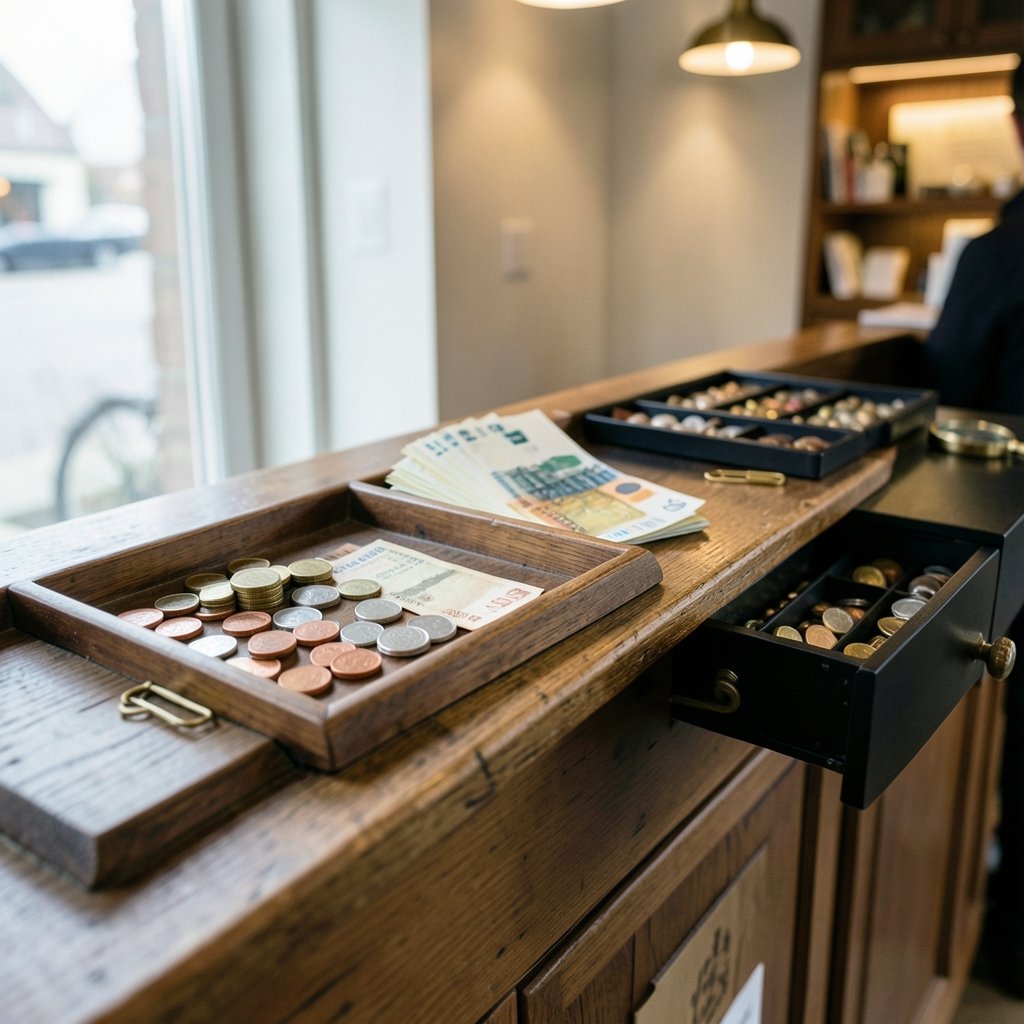
What do you picture when someone says “German money”? A wallet full of euro notes? The legendary Deutsche Mark that older Germans still talk about with a wistful look? Or a country so obsessed with stability that its central bank once made inflation-fighting a national identity?
All three answers are right, and that is what makes German money a subject worth studying. Germany did not simply swap one currency for another in 2002. It traded a symbol of postwar rebirth for a shared European project, and it did so with more reluctance than almost any other member. Understanding German money means understanding a country’s relationship with thrift, trust, and control. Whether you are a traveler counting coins in Berlin, a student of economics, or someone curious about why Germans still love cash, this guide walks through the whole story.
From Marks to Euros: A Short History of German Currency
Germany’s modern money story starts in 1948 with the Deutsche Mark (DM). Introduced during the postwar occupation, the DM replaced the badly inflated Reichsmark and gave West Germans something rare at the time: a currency they could believe in. It became a quiet engine of the Wirtschaftswunder, the economic miracle that rebuilt West Germany through the 1950s and 1960s.
For five decades, the DM was more than a payment tool. It was a national symbol, roughly on par with the flag. When the euro arrived, first as accounting money in 1999 and then as physical cash on 1 January 2002, many Germans felt genuine loss. Polls at the time showed deep skepticism, and the phrase “Teuro” (a pun blending “euro” with “teuer,” meaning expensive) captured the fear that prices would quietly rise.
The transition itself was remarkably smooth in logistics. Notes and coins were exchanged, ATMs were converted, and dual pricing ended. But the emotional transition took years, and some argue it never fully finished.
The Institutions Behind German Money

Money does not manage itself. Two institutions shape German monetary life, and their division of labor matters.
The Deutsche Bundesbank
Founded in 1957, the Deutsche Bundesbank served as West Germany’s central bank and, after reunification, the whole country’s. It earned a reputation for independence and a near-allergic reaction to inflation. Its approach influenced the design of the institution that came next.
The European Central Bank
Headquartered in Frankfurt, the European Central Bank (ECB) took over monetary policy for the euro area in 1999. Germany gave up its own interest-rate decisions, a major sacrifice for a country that prized monetary sovereignty. In exchange, it gained a seat at the table of a currency used by roughly 20 countries.
| Institution | Role | Key Detail |
|---|---|---|
| Deutsche Bundesbank | National central bank | Founded 1957; still supervises German banks and manages reserves |
| European Central Bank | Euro-area monetary policy | Based in Frankfurt; sets interest rates for all euro members |
| German government | Fiscal policy and coin issuance | Decides spending and taxes; issues national coin designs |
The split creates a common confusion. Germans often blame “the ECB” for low savings rates and “Berlin” for taxes, when the two are separate systems. If you follow financial news, this distinction is worth internalizing. It also explains why German officials so often push for strict rules on government borrowing, a habit rooted in the same stability culture that produced the Bundesbank.
Why Germans Still Love Cash
Walk into a small bakery in Munich and you may see a handwritten sign: “Nur Barzahlung” (cash only). This is not nostalgia. It is a real preference, and it shows up in the data year after year.
The Bundesbank regularly surveys how people pay, and cash has consistently held a large share of transactions in Germany, higher than in many neighboring countries. Several forces keep it that way:
- Privacy concerns. Cash leaves no digital trail, and many Germans value that.
- Habit and trust. Older generations grew up with the DM and see physical money as reliable.
- Small-merchant economics. Card terminals cost money, and small shops resist the fees.
- Cultural caution. Thrift and control are admired traits, and cash makes spending visible.
Practical tip for visitors: carry at least 50 to 100 euros in notes, especially outside big cities. Many restaurants, kiosks, and market stalls will not accept cards, and some card machines only take German-issued cards or require a PIN. A common mistake is assuming Berlin or Frankfurt is card-friendly everywhere; central districts are, but residential neighborhoods often are not.
There is a flip side worth knowing. Cash-heavy economies attract fraud, and scams that rely on irreversible payments are a global problem. The mechanics of one common scheme are explained in this look at how the gift card scam works and why victims rarely get their money back, a reminder that payment habits carry risk on both the digital and physical side.
Coins, Notes, and National Pride
Euro notes look identical across the euro area, but coins carry national designs. Germany’s one- and two-euro coins show the federal eagle, a deliberate nod to continuity with the old DM coins. The smaller cent coins feature the Brandenburg Gate and the oak twig, another DM holdover.
Germany also issues a two-euro commemorative coin each year honoring one of its federal states, a series that began in 2006. Collectors chase these, and a complete set tells a compact story of German federalism. If you receive one in change, check the design before spending it; some are worth more than face value to collectors.
How Germans Save and Spend
German money habits are shaped by more than currency. Households here save at higher rates than many peers, hold less stock-market wealth, and favor bank deposits and insurance products. This caution has deep roots: two currency collapses in the twentieth century, in 1923 and 1948, taught families that paper wealth can vanish. (Cbdc digital currency central bank money going digital)
The result is a financial culture that prizes security over speculation. Real estate is popular where affordable, and renting is common and socially accepted in major cities. When interest rates rise, savings accounts and bonds regain appeal quickly. When they fall, Germans complain loudly rather than shifting into riskier assets.
This mindset has real trade-offs. Critics argue that heavy saving and low investment returns have left German households with less wealth than their incomes would suggest. Defenders say the caution protected families through crises and keeps the country’s finances stable.
Digital Money and the Future of German Payments
Change is arriving, slowly. Contactless cards, mobile wallets, and instant bank transfers have grown quickly, especially among younger Germans and in cities. The pandemic nudged many small merchants to finally install card readers.
Still, Germany remains a country where the debit card often functions as a delayed cash card, and where “EC-Karte” remains the everyday term long after the system was rebranded. The next wave may come from central bank digital currencies. If you want to understand what a state-issued digital euro would actually change, this explainer on CBDC digital currency and central bank money going digital covers the design questions, including privacy and whether it would replace cash or merely sit alongside it. (Identity threat detection really costs where money goes)
For most people, the practical question is simpler: will cash survive? The likely answer is yes, at least for a long time. German law and public opinion both lean toward keeping cash available, and any proposal to restrict it triggers immediate political backlash.
Common Mistakes People Make With German Money
A few practical missteps come up again and again, and each is easy to avoid once you know it.
- Assuming cards work everywhere. Carry cash for small purchases, markets, and rural areas.
- Confusing the Bundesbank with the ECB. They are separate institutions with different jobs.
- Expecting to haggle. Prices are generally fixed, and bargaining is uncommon outside flea markets.
- Forgetting the deposit on bottles and carts. The Pfand system returns money when you bring bottles back, and shopping carts often need a coin.
- Ignoring bank fees. Many accounts charge for withdrawals at other banks’ ATMs, so check before you tap.
- Underestimating tipping norms. Rounding up or adding five to ten percent is normal in restaurants, and it is often done in cash.
Small habits like these matter more in a cash-based economy than in a fully digital one.
The Bigger Picture: Money as Culture
German money is really a story about trust. A currency that collapsed in the 1920s, a reform that restored faith in 1948, a central bank built to protect that faith, and a generation that still keeps a few notes in a drawer. The euro changed the symbols, but not the instincts.
That has consequences beyond Germany. The country’s insistence on fiscal rules, its caution about shared European debt, and its resistance to rapid digitalization of payments all trace back to the same source. Understanding German money means understanding why Europe’s largest economy often sounds like the most cautious voice in the room.
For readers thinking about their own financial habits, the German example offers a useful mirror. Thrift and caution build resilience, but they can also leave money sitting idle. The balance is personal. What matters is knowing why you hold, save, or spend the way you do, and being deliberate about it rather than simply following habit.
Conclusion
German money has traveled a long road, from the Deutsche Mark’s postwar rescue to the euro’s shared experiment and the stubborn persistence of cash in daily life. The through-line is a national preference for stability, privacy, and control, expressed in institutions, savings behavior, and the small signs in shop windows that say cash only. Whether you are visiting, studying, or just curious, that context turns a simple question about currency into a window on how a country thinks. The euro may be the money in German pockets, but the DM mindset is still very much in circulation.
Frequently Asked Questions
What currency does Germany use today?
Germany uses the euro (€). It replaced the Deutsche Mark as accounting money in 1999 and as physical cash on 1 January 2002. The euro is issued by the European Central Bank and used across the euro area.
Can I still exchange Deutsche Marks for euros?
Yes, but only through the Deutsche Bundesbank. Unlike many countries that set a deadline, Germany kept a permanent exchange option for DM banknotes and coins at the official fixed rate. Branches handle this, and postal exchanges are not available for the old currency.
Is cash still widely used in Germany?
Yes. Cash remains a major payment method, especially for small purchases, in bakeries, markets, and rural areas. Card and mobile payments are growing, but many businesses still prefer or only accept cash, so carrying notes is sensible.
Why are Germans so cautious about inflation?
The country experienced severe currency collapses in the twentieth century, most famously the hyperinflation of 1923. Those memories shaped a stability culture that prizes low inflation, independent central banking, and cautious saving over speculation.
What is the Pfand system?
Pfand is a deposit added to the price of bottles and some containers. You pay it at purchase and get it back when you return the empty container to a reverse vending machine or shop. It is a routine part of everyday money handling in Germany.
Are German euro coins different from other countries’ coins?
Yes. While the common side is identical across the euro area, the national side of German coins shows symbols like the federal eagle, the Brandenburg Gate, and the oak twig. Germany also releases an annual two-euro commemorative coin honoring a federal state.



