
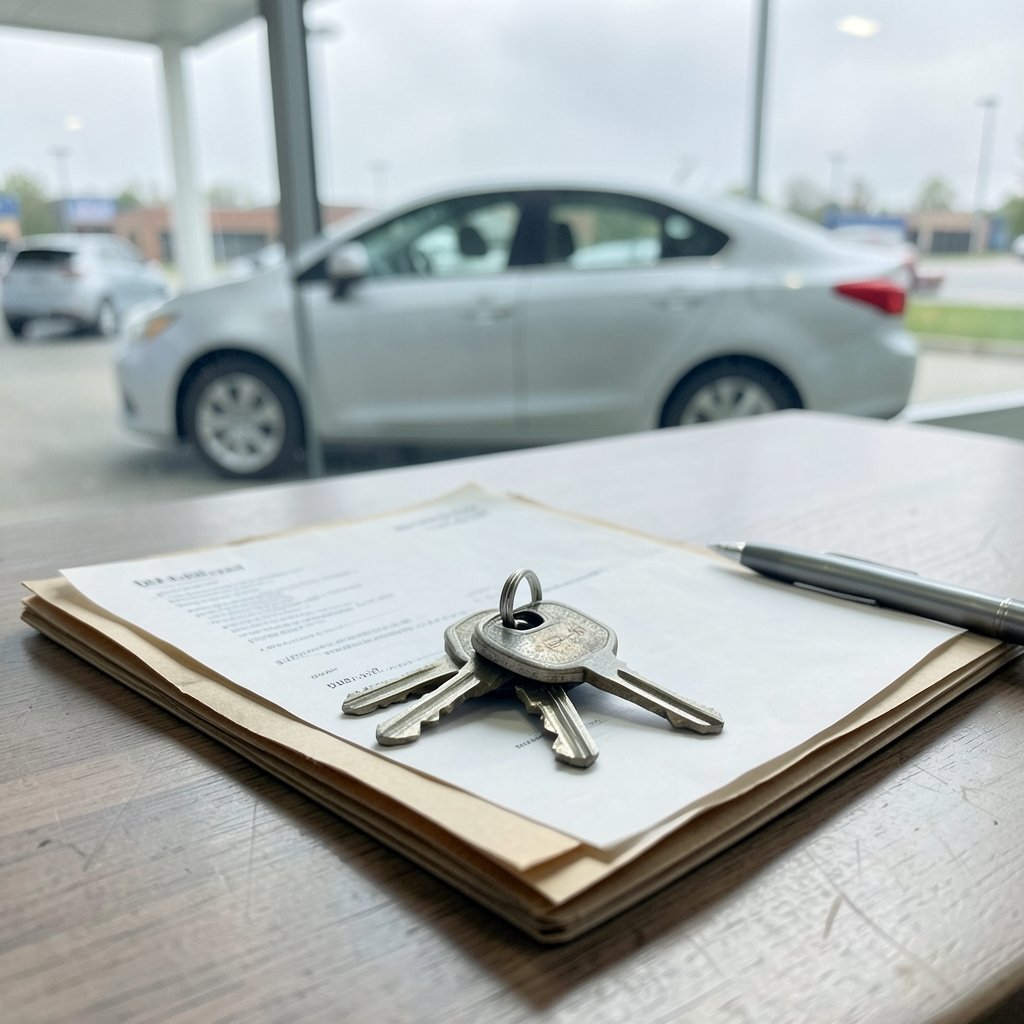
Can someone with a bruised credit score and an empty savings account really drive off a lot in a car they can afford? The honest answer is yes, but the path is narrower than the ads suggest, and the cost is higher than most buyers expect. What follows is a practical map of the real options, the traps that catch people, and the moves that actually work. (Identity threat detection really costs where money goes)
What “Bad Credit and No Money” Really Means at a Dealership
Two separate problems get mashed into one phrase, and lenders treat them differently. Bad credit is a risk problem. No money is a cash problem. A dealer can sometimes work around the first. The second is harder to hide.
FICO scores run from 300 to 850, and the lowest band is generally described as poor, with subprime auto lending often pegged at roughly below 620. Lenders use those bands to set your interest rate, and the gap between a prime rate and a subprime rate on the same car can add thousands of dollars over a five-year loan. The Consumer Financial Protection Bureau has documented that subprime and deep-subprime auto borrowers pay substantially more in finance charges than prime borrowers.
No cash down is its own hurdle. A down payment does two jobs: it shrinks the amount financed and it proves you have some cushion. When a buyer has neither, lenders see a person one paycheck away from a missed payment. That is why true zero-down approvals usually go to strong credit or to buyers with trade-in equity, not to the people the ads target.
Fix the Cheap Problem First: Your Credit Report

Before shopping, spend a week on the free stuff. Errors on credit reports are a common and fixable cause of low scores, and federal law gives you the right to a free report from each of the three nationwide bureaus and the right to dispute mistakes. A collections account that isn’t yours, a paid-off loan still showing a balance, or a duplicate late payment can all be challenged.
Practical tip that saves real money: pull all three reports, list every negative item, and dispute in writing with documents attached. People often skip this because it feels slow. It is slow, but a single removed collection can move a score enough to change your rate tier.
The other cheap lever is a secured credit card or a credit-builder loan. Both put a small deposit or installment on your record and report on-time payments. Six months of clean history rarely turns bad credit into good credit, but it can move you out of the worst pricing tier. (Credit score)
The Realistic Options, Ranked by Cost
Here is how the main routes compare. Every one of them has a catch, and the catch matters more than the headline.
| Option | Cash needed | Typical cost | Main risk |
|---|---|---|---|
| Buy-here-pay-here dealer | Often low or none | High APR, add-on fees | GPS shutoff devices, aggressive repossession |
| Subprime lender via franchise dealer | Usually some down | High APR | Smaller inventory, stiff terms |
| Cosigner on a conventional loan | Low | Much lower APR | Cosigner fully liable for the debt |
| Save a down payment, then buy | A few thousand dollars | Normal rates | Delays the purchase |
| Title loan or “tote the note” | None | Triple-digit APR possible | Losing the car and still owing money |
Buy-here-pay-here dealers
These dealers finance in-house, often with no credit check at all. That sounds like the answer to the exact question being asked, and sometimes it is the only door open. But buy-here-pay-here contracts frequently carry very high annual percentage rates, and many install GPS or starter-interrupt devices that can disable the car after a missed payment. The FTC’s guidance on dealership financing warns buyers about these arrangements, and the agency has brought enforcement actions against abusive practices in the space.
If this is the route, read the contract line by line for the total of payments, not the monthly figure. Ask whether the vehicle has a device installed and what triggers it. Ask what happens if a payment is three days late.
Subprime lenders through a regular dealer
Many franchise dealers work with lenders that specialize in lower credit tiers. Approval odds improve with a down payment, a steady income record, and a trade-in. The rate will still sting, but the car is usually newer and the contract is more standard.
A cosigner
A creditworthy cosigner can lower the rate or make approval possible on its own. The catch is blunt: the cosigner takes on full legal liability for the debt. The CFPB’s explanation of cosigner liability makes clear that if the primary borrower stops paying, the cosigner owes the money and their own credit takes the hit. Ask a parent or relative only after explaining that risk plainly.
Save first, even a little
This is the least exciting option and usually the cheapest. A few thousand dollars down changes which lenders will talk to you, and it shrinks the amount that gets charged interest. If the car can wait three months, saving while disputing credit errors often beats signing a 24 percent loan today.
Where People Get Hurt: The Traps to Avoid
Most bad outcomes in this market come from three products. Knowing them by name is half the defense.
Title loans use the car itself as collateral and can carry triple-digit APRs. Miss a payment and you can lose the vehicle while still owing the balance. The CFPB’s auto loans resource flags these as high-risk products for exactly this reason.
Payment packing is when add-ons like extended warranties, gap insurance, and paint protection get folded into the financed amount without clear consent. Each one raises the total you pay interest on. Decline everything you did not walk in wanting, then reconsider later if you still want it.
Repossession math is the quiet killer. Missing payments can lead to repossession, and in many states the lender can repossess without prior notice if the contract allows it. After the car is sold at auction, a deficiency balance often remains, meaning you owe the difference between the loan and the sale price. A car that gets taken can leave you with no vehicle and a bigger debt than you started with.
One more warning for anyone shopping online: if a “guaranteed approval” offer asks for payment in gift cards, it is a scam. The gift card scam works because victims rarely get their money back, and no legitimate dealer or lender will ever request gift card codes.
Steps That Actually Work, in Order
This sequence is unglamorous, but it is the one that produces a car and a survivable loan.
- Pull all three credit reports and dispute errors. Do this before any application, because every application pulls your credit and too many inquiries in a short window looks worse.
- Set a total budget, not a monthly payment. Include insurance, fuel, and maintenance. A cheap car with a high rate plus full-coverage insurance can cost more per month than a modest new-car lease.
- Get pre-approved at a credit union or bank first. A pre-approval tells you your real rate and keeps the dealer negotiating against a number instead of against you.
- Shop the car, not the payment. Compare total of payments across at least three vehicles.
- Bring a down payment if you possibly can. Even $1,000 changes the conversation.
- Read the contract for the APR, the total of payments, and the add-ons. If a number is blank, do not sign.
- Set up automatic payments on payday. Payment history is the single biggest scoring factor, and automation protects it.
A note on timing: promotional events can genuinely help. Dealers clear inventory during sales periods, and watching black friday car deals is a legitimate way to find a lower price on the same car, though financing terms rarely improve for subprime buyers. The same logic applies to used inventory, where used car deals often beat new-car pricing once the interest is counted. If you are weighing whether to borrow against your home instead, understand the difference between a home equity loan vs line of credit before using your house to buy a depreciating asset.
What to Expect to Pay
Nobody can quote a rate without a credit pull, and any site that promises one is selling something. What can be said with confidence is the shape of the market: lower scores get higher APRs, and the spread is large enough that a buyer should always compare at least two offers.
Two protections are worth knowing. The Equal Credit Opportunity Act bars creditors from discriminating on protected bases including race, color, religion, national origin, sex, marital status, age, or receipt of public assistance, and it applies to auto lending. If a dealer quotes different terms to two similarly situated buyers, that is worth reporting. Separately, the FTC’s page on free credit reports explains how to get your reports and dispute errors under the Fair Credit Reporting Act, which is the foundation of any credit repair plan.
One emerging cost that surprises people: newer cars with advanced driver-assist systems can be expensive to insure and repair. Reports of a man trapped in a self-driving car during robotaxi incidents in 2026 show how complicated these systems can get, and insurers are still pricing that complexity. For a subprime buyer stretching to afford a car, a simpler vehicle with cheaper parts is often the smarter financial choice.
Mistakes That Cost the Most
The pattern is consistent. Buyers focus on the monthly payment and ignore the total. They accept the dealer’s financing without a competing offer. They skip the insurance quote until after signing. They buy the first car they test drive because the approval felt like a victory.
The fix is procedural, not heroic. Get the insurance quote before signing. Get one outside financing offer. Write down the total of payments on paper and stare at it. If the number makes your stomach drop, the car is wrong, no matter how good the approval email felt.
Conclusion
Getting a car with bad credit and no money is possible, but the honest version looks different from the advertisement. The cheapest route is almost always to spend a few weeks disputing credit errors, saving what you can, and getting pre-approved before walking onto a lot. The fastest route runs through buy-here-pay-here or subprime financing, and it works only if you read the total of payments, decline the add-ons, and protect the payment history that got you approved. Either way, driving off the lot is only part of the goal. The larger goal is to still be driving the car a year from now, with a loan you can actually carry.
FAQ
Can I get a car loan with a 500 credit score?
Yes, but expect a high interest rate and likely a down payment requirement. Lenders that work with subprime borrowers focus on income stability and payment history as much as the score. Getting pre-approved at a credit union first gives you a real number to compare against whatever the dealer offers.
Is buy-here-pay-here a bad idea?
Not automatically, but it is the highest-risk option on the list. These dealers finance in-house, often without a credit check, and frequently charge very high APRs. Some install GPS or starter-interrupt devices. If it is the only door open, read the contract for the total of payments and ask exactly what triggers a shutdown.
Do I need a down payment?
Most subprime approvals involve some cash down, and a larger down payment usually lowers the rate. True zero-down deals typically go to buyers with strong credit or trade-in equity. Even a modest down payment improves approval odds and reduces how much interest you pay.
Will applying for a car loan hurt my credit?
Each application usually triggers a hard inquiry, which can ding your score slightly. Multiple auto loan inquiries within a short shopping window are often treated as a single inquiry by scoring models, so it pays to cluster your applications rather than spread them over months.
What happens if I miss a payment?
Consequences range from late fees to repossession, depending on your contract and state law. In many states a lender can repossess without prior notice if the contract allows it. After the car is sold, a deficiency balance can remain, so a missed payment can cost far more than the payment itself.
Can a cosigner help me get approved?
Often yes. A cosigner with good credit can lower your rate or make approval possible on its own. The tradeoff is serious: the cosigner takes on full legal liability for the debt, and their credit is damaged if you stop paying. Have that conversation honestly before asking.



