
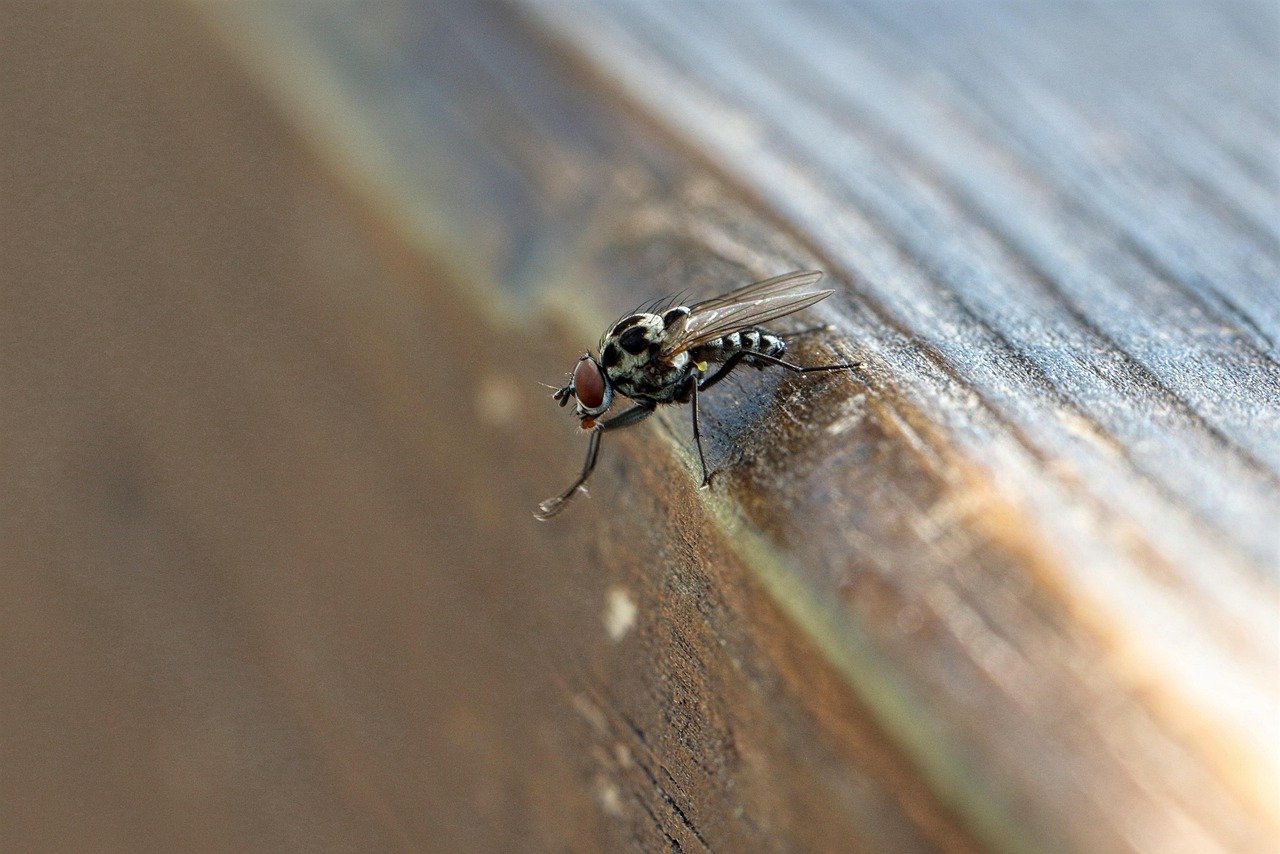
Why does swatting the same fly three times never seem to solve the problem? Because the fly you see is rarely the fly you have. For every one buzzing against the kitchen window, there are eggs, maggots, and pupae developing somewhere nearby, plus a steady stream of adults arriving from outside. Killing adults feels productive and changes almost nothing. Getting rid of flies for good means working backwards: find where they breed, remove that material, and then block the routes they use to get back in. (Fly)
This guide covers the methods that actually work, the ones that waste money, and how to tell which fly you’re dealing with, because a fruit fly in the kitchen and a cluster fly on the bedroom ceiling need completely different plans.
Identify the Fly Before You Buy Anything
The single most common mistake is treating every small flying insect as a house fly. Fly treatments are not interchangeable, and a trap baited for one species will sit empty while another species multiplies.
| Fly type | Where it breeds | Where you notice it | What actually works |
|---|---|---|---|
| House fly | Garbage, manure, rotting organic matter | All over the home, especially kitchens | Source removal, screens, baits |
| Fruit fly | Overripe produce, fermenting liquids, recycling bins | Kitchen counters, fruit bowls, drains | Remove produce, clean residues, traps |
| Drain fly | Organic film inside drains and pipes | Bathroom and kitchen sinks, showers | Drain cleaning and biofilm removal |
| Cluster fly | Soil outdoors; enters buildings to overwinter | Sunny walls and windows in autumn and winter | Sealing entry points, not spraying |
| Blow fly | Meat, animal waste, dead animals | Near bins, pet areas, outbuildings | Removing the breeding material fast |
House flies develop from egg to adult in roughly seven to ten days in warm weather, which is why an infestation appears to explode overnight. The full house fly life cycle and biology is worth understanding, because it explains why larvae matter more than adults. If you find maggots, you have found the problem. Killing the adults on the ceiling is just cleaning up the symptom.
For fruit flies, the University of Minnesota Extension’s guidance on fruit fly control explains why a bowl of vinegar attracts them but doesn’t stop them breeding in the bag of onions under the sink.
Step One: Find and Remove the Breeding Site
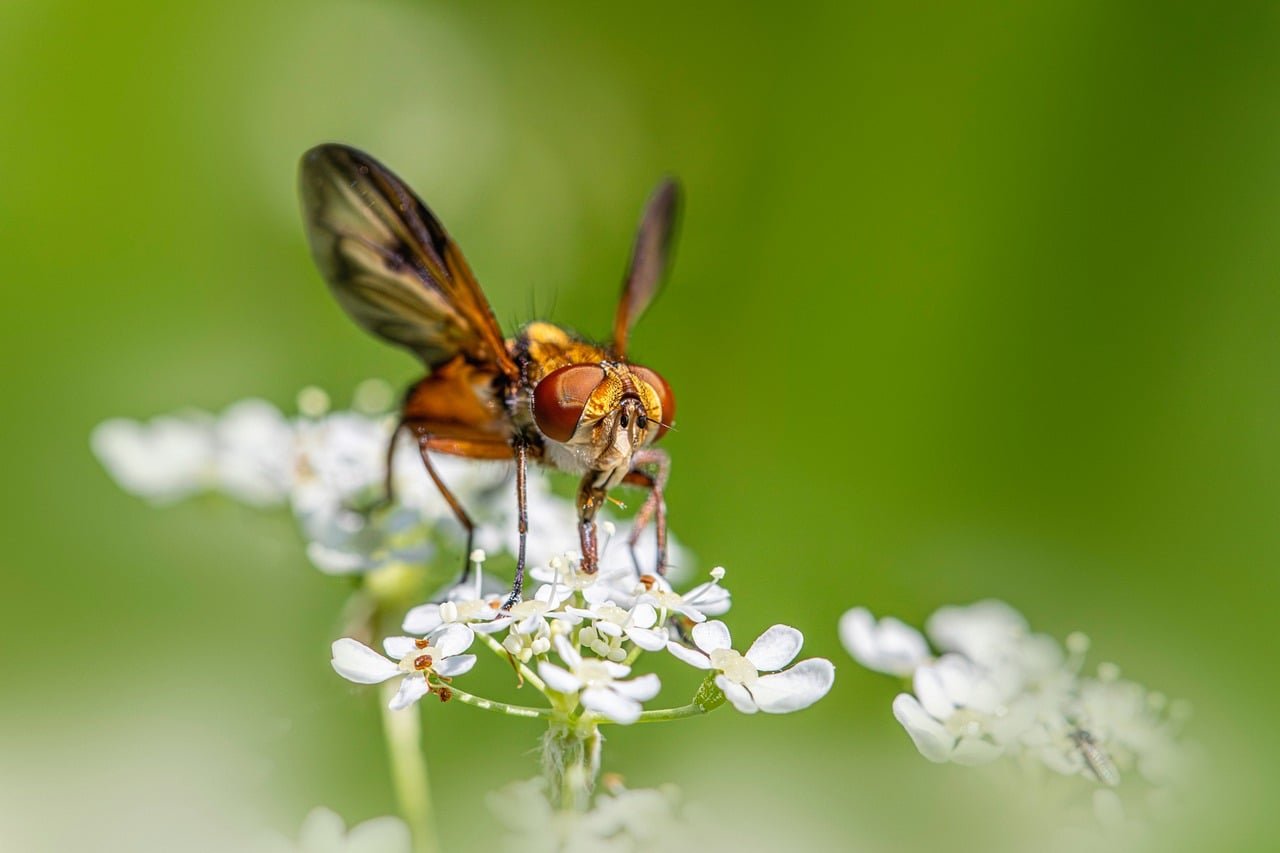
Sanitation is not a chore you do alongside fly control. It is fly control. Public health agencies consistently list waste removal as the first-line measure, and the CDC’s vector control guidance frames fly management this way: eliminate the habitat, and the population collapses on its own. (CDC: Ticks and Tickborne Diseases)
Walk through your property with a specific question in mind: where is there warm, moist, rotting material? Check these places, because they are where the flies are actually coming from:
- Outdoor bins. Look under and behind them. Lids that don’t seal, bags that leak, and the puddle beneath the wheelie bin are all breeding sites.
- Pet waste and animal bedding. Dog runs, cat litter areas, chicken coops, and rabbit hutches are prime fly habitat.
- Compost. A well-run compost heap is fine; a soggy, uncovered one is a fly factory. Bury food scraps in the middle and turn regularly.
- Fallen fruit and garden waste. Windfall apples under a tree can produce thousands of flies.
- Recycling. Rinsing jars and cans before they go in the bin removes the sugar and liquid film that fruit flies feed on.
- Drains. Scrape and clean the biofilm inside sink and shower drains, especially if you see small, moth-like flies.
- Indoor bins. Line them, empty them daily in summer, and wash them weekly. A bin that smells is a bin that’s breeding.
The practical rule that works: if you can smell it, flies can find it, and something is probably developing in it. Once the material is gone, clean the area with detergent and water. Bleach alone doesn’t remove the organic film that larvae feed on.
Step Two: Block the Entry Routes
Exclusion is unglamorous and highly effective. Flies follow air currents and warmth into buildings, so the goal is to remove the openings and the drafts that lead them in.
Screens and doors do most of the work. Repair torn mesh, fit self-closing mechanisms on external doors, and keep doors shut during warm hours rather than propped open. Gaps under doors are worth sealing with a brush strip, because a house fly will happily walk through a gap it can’t fly through.
Air curtains above commercial doorways and busy kitchen entrances create a downward barrier that flies won’t cross. They’re standard in food premises for good reason.
Windows and vents need mesh that fits tightly. Check attic vents and weep holes too, since cluster flies exploit small gaps in autumn to find overwintering shelter.
Outside the building, move bins away from doors and windows, keep lids closed, and clear vegetation that traps moisture against walls. If you keep livestock or pets, manage manure and bedding on a schedule rather than when it becomes a problem.
Step Three: Trap and Kill Adults Strategically
Traps reduce adult numbers and, importantly, interrupt the breeding cycle before it restarts. But they are a support measure, not a solution, and placement matters more than brand.
Sticky traps and fly ribbons work best near windows and light sources where flies gather. Replace them when full rather than letting them become a display piece.
UV light traps attract flies and are useful in kitchens and food areas, but place them away from food preparation surfaces and doors, or you’ll pull flies in from outside and risk contaminating nearby surfaces with fragments.
Bait stations work well for house flies and are easy to place out of reach of children and pets. Follow the label exactly.
Bottle traps made with vinegar and a drop of dish soap catch fruit flies effectively. Change the liquid every few days, because a full trap stops working and starts smelling.
Fly swatters and sprays are for the last few stragglers. Aerosol sprays knock down adults but do nothing about larvae, and routine spraying around a kitchen is a poor trade: it exposes food surfaces to residue and accelerates resistance.
What About Insecticides and Resistance?
Insecticides have a place, but they are the most overused and least effective tool in most homes. House flies develop resistance to insecticides quickly when the same active ingredient is applied repeatedly, which is why rotating products and using them sparingly is standard advice rather than a marketing line. The EPA’s explanation of pesticide resistance sets out how repeated exposure selects for survivors and why rotation and integrated pest management matter.
If you do use an insecticide, treat it as a targeted application: crack and crevice treatment around entry points, or a labeled bait, rather than a broad spray across surfaces. Read the label, follow the dose, and never spray where food is prepared or stored. For anyone managing a serious infestation, the EPA’s safe pest control guidance covers choosing and using products without creating a bigger problem.
Match the Method to the Season and the Species
Timing changes the plan more than most people expect.
Summer is house fly and fruit fly season. Focus on waste, compost, and produce. Empty bins daily, keep fruit in the fridge, and clean drains.
Autumn brings cluster flies and blow flies seeking shelter. Spraying indoors achieves little because the flies are resting, not breeding. Seal gaps around windows, soffits, and pipework, and remove any that get inside with a vacuum rather than a spray.
Winter is when cluster flies reappear on sunny days, warmed out of wall voids. The fix is the same: seal the building envelope before autumn.
Spring is the moment to fix compost management, repair screens, and clean drains before the first generation gets established. A little work in April saves a lot of swatting in July.
When to Call a Professional
Most household fly problems are solvable with sanitation and exclusion. Professional help is warranted when:
- The infestation keeps returning despite removing every obvious source.
- Flies are breeding in a structure you can’t access, such as a wall void, ceiling space, or crawl space.
- You run a food business, care home, or property with livestock, where pest control is a legal and public health requirement.
- You’re dealing with large numbers near food preparation areas and need documented treatment.
Food premises have specific obligations. The FDA Food Code, which many jurisdictions adopt as the basis for local food safety rules, sets out requirements for pest control and keeping premises free of insects. If you manage a commercial kitchen, your pest control plan needs to be written down, not improvised.
Common Mistakes That Keep Flies Coming Back
Most failed fly control comes down to a handful of predictable errors.
Swatting instead of sourcing. Adults are the visible 10 percent. Until the breeding material is gone, more will arrive.
Using the wrong trap. A UV light trap won’t fix drain flies, and a fruit fly bottle won’t touch a cluster fly problem.
Spraying routinely. Repeated spraying of the same product breeds resistance and leaves residue. Use it deliberately or not at all.
Forgetting outdoor bins. People clean the kitchen obsessively and ignore the bin store, which is where the flies are hatching.
Leaving pet waste. Dog waste in a warm garden is one of the most reliable fly breeding sites there is.
Ignoring drains. The slime inside a drain is a living biofilm. If you haven’t cleaned it, you haven’t solved the problem.
Stopping too early. Clean everything, then keep it clean for two to three weeks. That’s roughly two fly generations, and it’s the window in which you’ll know whether the source is truly gone.
A Realistic Weekly Routine
Fly control isn’t a one-off task; it’s a short maintenance habit that takes ten minutes a week in warm months.
- Empty indoor bins and wipe the inside.
- Check outdoor bin lids and clean up any spills beneath them.
- Rinse recycling before it goes out.
- Store fruit in the fridge or a sealed container.
- Check drains for film and pour hot water plus a drain cleaner down any that smell.
- Look at window screens and door seals for new gaps.
- Replace sticky traps that are full.
Do this consistently and you’ll notice the difference within a fortnight. Skip it for a month in July and you’ll be back to swatting.
Conclusion
Getting rid of flies is less about killing and more about interrupting. Find the moist, rotting material where larvae are developing, remove it, clean the residue, and seal the building so new adults can’t stroll in. Traps and sprays then become small supporting actors rather than the whole plan. It’s a less dramatic approach than chasing a fly around the living room with a rolled-up magazine, but it’s the only one that ends with an empty windowsill.
Frequently Asked Questions
How long does it take to get rid of a fly infestation?
Expect two to three weeks if you’ve found and removed the breeding source. Adults already present live for a few weeks, so you’ll keep seeing flies for a while after the source is gone. If flies are still appearing in large numbers after three weeks, you haven’t found the source yet, or there’s a second one.
Why are there suddenly so many flies in my house?
A sudden surge usually means one thing: something is breeding nearby. Warm weather speeds up the life cycle, so a bin, compost heap, or piece of fallen fruit can produce a new generation in about a week. Check for maggots, because finding them confirms the source instantly.
Does vinegar really get rid of flies?
Apple cider vinegar with a drop of dish soap makes an effective trap for fruit flies, because they’re attracted to fermenting liquid and the soap breaks the surface tension so they sink. It won’t help with house flies, cluster flies, or drain flies, which need source removal and exclusion instead.
Are fly sprays safe to use in a kitchen?
Only if the product is labeled for that use and you follow the directions exactly. In practice, the safer approach in food areas is to remove the source, seal entry points, and use physical traps. Never spray directly onto food, food-contact surfaces, or preparation areas.
Why do flies keep coming back after I spray?
Because spraying kills adults, not eggs, larvae, or pupae. The next generation emerges within days and the cycle continues. Repeated spraying of the same active ingredient also encourages resistance, which is why rotation and non-chemical measures are recommended.
Do I need an exterminator for flies?
Usually not for a household problem. Most infestations resolve with sanitation and exclusion. Call a professional if the source is inside a wall void or crawl space, if the problem keeps returning despite thorough cleaning, or if you manage a food business or property with livestock where pest control is a regulated requirement.
