
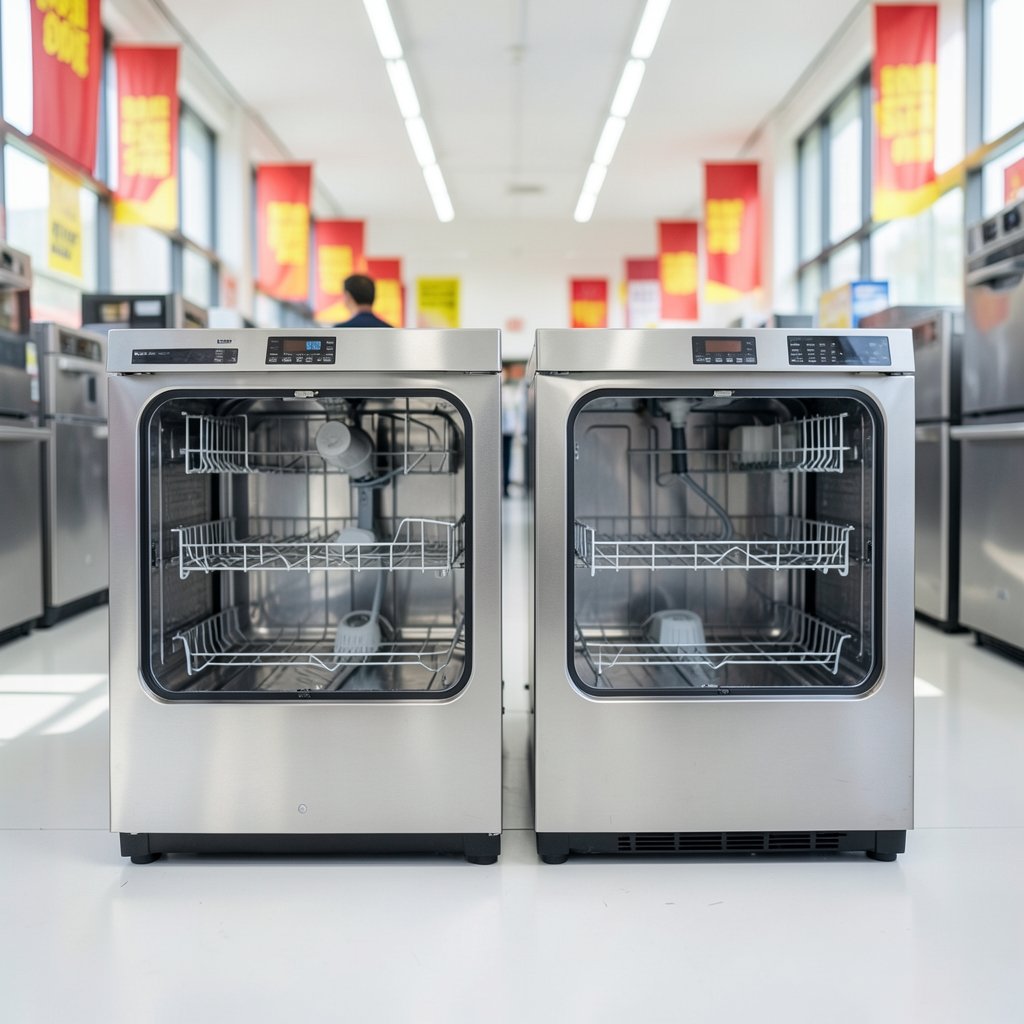
What if the most important thing about a dishwasher brand isn’t the logo on the door, but who actually owns that logo and who fixes the machine when it fails? That question sounds odd until you start shopping. Two dishwashers sitting side by side on a showroom floor can share the same factory, the same pump, and the same parent company while wearing completely different badges and price tags. Understanding how brands really work is the difference between paying for engineering and paying for a sticker.
This guide walks through what makes a dishwasher brand genuinely good, which names dominate different markets, and where shoppers most often go wrong. The short version: there is no single best brand worldwide. There are brands that fit your market, your budget, and your tolerance for repairs. Finding yours takes about twenty minutes of honest thinking.
What Actually Makes a Dishwasher Brand Good
A brand is not good because it advertises well. It is good because it does three unglamorous things consistently: it cleans dishes reliably across cycles, it stays out of the repair shop, and it stands behind the machine when something breaks.
Independent lab testing is the closest thing to an objective measure. Consumer Reports has tested dishwashers for decades, scoring cleaning performance, energy use, noise, and cycle time. Those scores matter more than any spec sheet because a dishwasher that scores poorly on cleaning has failed at its only real job. The catch is that rankings shift with every test cycle, so a brand that topped the list three years ago may have slipped.
Repair reliability is the other half of the picture. Member surveys from Consumer Reports in the US and Which? in the UK track how often appliances actually break, which is far more useful than marketing claims. A brand with average cleaning scores and excellent reliability usually beats a brand with spectacular lab scores and a repair-prone pump.
One more factor deserves attention: market specificity. A brand that is a household name in the US may barely register in Europe, and vice versa. Rankings are only meaningful when you know which country they describe. A “best dishwasher brands” list written for American readers can mislead a shopper in Germany, and the reverse is equally true.
The Brand Ownership Map Nobody Shows You

Here is where most buyers get surprised. The name on the door often has little to do with who builds the machine.
| Parent company | Brands under its roof | Common market |
|---|---|---|
| BSH Hausgeräte | Bosch, Siemens | Global, strong in Europe |
| Whirlpool Corporation | Whirlpool, KitchenAid, Maytag, Amana | Mainly US |
| Electrolux | Electrolux, AEG, Frigidaire | Global, strong in Europe and US |
Corporate ownership changes over time, so it is worth confirming the current structure before you buy. But the practical takeaway holds: two brands under one parent frequently share platforms, components, and service networks. That means paying a premium for a badge is sometimes justified by better internals and sometimes is not. The only way to know is to compare the specific models, not the brand names.
This is the single most common mistake shoppers make. They pick a brand first and a model second. The better approach is to pick two or three models that fit your kitchen, then check which brand backs them and how that brand scores on reliability in your country.
How to Compare Brands Without Getting Fooled
Once you have a shortlist of models, a handful of standardized numbers let you compare across brands fairly.
Noise in decibels (dB). Lower is quieter. A dishwasher in the low 40s is quiet enough for an open-plan kitchen; anything in the high 30s is genuinely hushed. Brands compete hard on this number, and it is one of the few specs that translates directly into daily quality of life.
Capacity in place settings. European models state capacity in place settings; US models often describe rack configuration instead. Compare like with like, and think about your actual dishes. A 14-place-setting machine with awkward tines can hold less than a well-designed 12-place-setting model.
Energy use and the labels that disclose it. In the US, the yellow EnergyGuide label is required under the FTC’s Energy Labeling Rule and shows estimated annual energy cost, which makes cross-brand comparison straightforward. ENERGY STAR certification goes further, marking models that meet EPA and DOE efficiency criteria. In the EU, dishwashers carry an A to G energy label under the EU’s appliance labeling framework, with the current product-specific rules applying since March 2021. These labels are the most honest numbers on the showroom floor because manufacturers cannot fudge them.
Warranty length. Terms vary by brand, country, and model, commonly one to two years in the US, with some brands offering longer limited coverage on parts or the tub. Read the fine print rather than trusting a badge on the box.
A useful practical tip: ignore the “quietest dishwasher” claims on packaging and look for the dB rating on the spec sheet. If a brand will not publish it clearly, that tells you something too.
Regional Brand Landscapes: US vs Europe
Because “good” depends on where you live, it helps to split the map.
In the United States, Whirlpool and GE are the volume players, with KitchenAid and Maytag occupying the premium and value ends of the same corporate family. Bosch has built a strong reputation for quiet operation and cleaning performance. Consumer Reports testing and member surveys are the most accessible independent benchmarks for American shoppers.
In Europe, Bosch and Siemens (both BSH) compete with Miele at the premium end, while Beko and Electrolux-owned brands like AEG and Frigidaire cover the mid-market. Which? reviews and reliability surveys serve as the UK equivalent of Consumer Reports. European shoppers also benefit from the A to G energy label, which makes efficiency comparison across brands unusually clean.
The lesson is not that one region has better brands. It is that a brand’s reputation is built market by market, through local service networks, parts availability, and warranty handling. A brand with a great reputation in one country may have thin service coverage in another. Before committing, check whether authorized repairers exist near you. That single check prevents more frustration than any spec comparison.
If you are the type who researches purchases deeply, the same principle applies to other big buys. Picking an e-bike, for instance, works the same way: best e bike brands pick one that fits your life walks through matching a brand to your actual routine rather than to a spec sheet. Dishwashers reward the same discipline.
Features That Separate Good Brands From Great Ones
Beyond the headline numbers, a few design details reveal whether a brand sweats the small stuff.
Third racks and adjustable tines. A well-designed third rack for cutlery and utensils is a genuine quality signal. So are adjustable tines that fold down for pots. Brands that engineer these well tend to engineer their pumps well too.
Filtration systems. Self-cleaning filters reduce maintenance, but they are not magic. Even the best filter needs occasional inspection. A brand that makes the filter easy to remove and rinse has considered the owner as well as the lab test.
Drying technology. Condensation drying is standard; some brands use zeolite or fan-assisted drying for better results on plastics. This is where premium brands often earn their price, especially if you wash a lot of plastic containers.
Cycle flexibility. Half-load options, quick cycles, and delay start are table stakes now. What matters is whether the quick cycle actually cleans. Lab testing is the only reliable guide here, which is why independent ratings beat feature lists.
Smart features. App connectivity is increasingly common, and some brands execute it well. But be honest about whether you will use it. A dishwasher that connects to your phone but cleans poorly is still a bad dishwasher. The same skepticism applies across connected products; if you want a grounded view of what smart features actually deliver, these AI chatbot case studies on 2027 ROI numbers show how often the marketing outruns the measurable benefit.
Common Mistakes That Lead to Regret
Most dishwasher disappointment traces back to a handful of avoidable errors.
- Buying the brand, not the model. Brand reputation is an average. Individual models within a brand vary widely. Always compare specific model numbers.
- Skipping the noise rating. If your kitchen opens into living space, a loud machine becomes a daily irritation. Check the dB figure before anything else.
- Ignoring local service coverage. A premium brand with no authorized repairer within an hour’s drive is a liability. Call the brand’s service line before you buy and ask how long a repair typically takes in your area.
- Overpaying for features you will never use. Wine glass holders and app control are nice. Cleaning performance is not optional.
- Forgetting installation realities. Measure your cabinet opening, check whether the model needs a specific water connection, and confirm delivery includes installation if you need it.
- Assuming a longer warranty means better build quality. It sometimes means the brand expects more claims. Read what the warranty actually covers.
There is a parallel here with other appliance and home-tech purchases. A humidifier that fights your hard water will coat your kitchen in white dust no matter how good the brand is, which is why guides like humidifier hard water stop white dust focus on matching the product to your actual conditions. Dishwashers are no different: your water hardness, your dish mix, and your kitchen layout all shape which brand performs best for you.
What Actually Works in Practice
After all the research, a few practical habits separate happy dishwasher owners from frustrated ones.
First, run a rinse-aid trial. Many “poor drying” complaints are actually rinse-aid problems, not brand problems. Second, load properly. Even a top-rated machine struggles with nested bowls and overcrowded racks. Third, clean the filter monthly and run a hot maintenance cycle occasionally. Fourth, use the right detergent for your water hardness. These habits cost almost nothing and routinely rescue machines that owners were ready to replace.
Choosing shows a consistent pattern: shoppers who compare two or three specific models across brands, check independent reliability data for their own country, and confirm local service coverage end up satisfied far more often than shoppers who buy on brand name alone. The brand matters, but it matters as a tiebreaker, not as the starting point.
Conclusion
So which dishwasher brands are good? The honest answer is that the good ones are the brands with strong independent cleaning scores, solid repair records in your market, transparent efficiency labels, and service networks you can actually reach. In the US, that conversation usually involves Whirlpool, Bosch, KitchenAid, GE, and Maytag. In Europe, it centers on Bosch, Siemens, Miele, Beko, and the Electrolux family. Neither list is universal, and both shift as testing cycles and corporate structures change.
The winning strategy is unglamorous but reliable: shortlist models by fit and budget, compare them on dB, capacity, and energy labels, check reliability surveys for your country, and confirm that someone nearby can repair the machine. Do that, and the logo on the door becomes what it should be, a useful signal rather than the whole decision.
Frequently Asked Questions
Which dishwasher brand is the most reliable?
There is no single global answer. Reliability is tracked by independent member surveys, such as Consumer Reports in the US and Which? in the UK, and rankings shift year to year. Check the most recent survey for your country and look at the specific model, since reliability varies within brands as much as between them.
Is Bosch really better than Whirlpool?
They compete in different ways and in different markets. Bosch has a strong reputation for quiet operation and cleaning performance, especially in Europe, while Whirlpool’s family of brands covers a wide US price range. Compare specific models on noise, capacity, energy use, and local service rather than choosing between the brand names.
Do expensive dishwasher brands last longer?
Not automatically. Price buys quieter operation, better drying, sturdier racks, and sometimes longer warranties, but longevity depends heavily on how the machine is used and maintained. Independent reliability data is a better guide than price alone. A mid-priced model from a brand with a strong repair record often outlasts a premium model with a weak one.
How many decibels should a quiet dishwasher have?
Look for a rating in the low 40s or below for an open-plan kitchen. Anything in the high 30s is very quiet. The dB figure is published on spec sheets and is one of the few numbers that translates directly into daily comfort, so check it before comparing anything else.
What do the energy labels actually tell me?
In the US, the yellow EnergyGuide label shows estimated annual energy cost, and ENERGY STAR certification marks models meeting federal efficiency criteria. In the EU, dishwashers carry an A to G label under rules applying since March 2021. Both systems are standardized, which makes them the most trustworthy cross-brand comparison available.
Does brand ownership matter when buying a dishwasher?
It can. Several well-known brands share a parent company and often share platforms, components, and service networks. Two badges on similar machines may hide identical internals, or genuinely different ones. Confirm the current corporate structure and compare the specific models before assuming a premium badge means premium parts.



