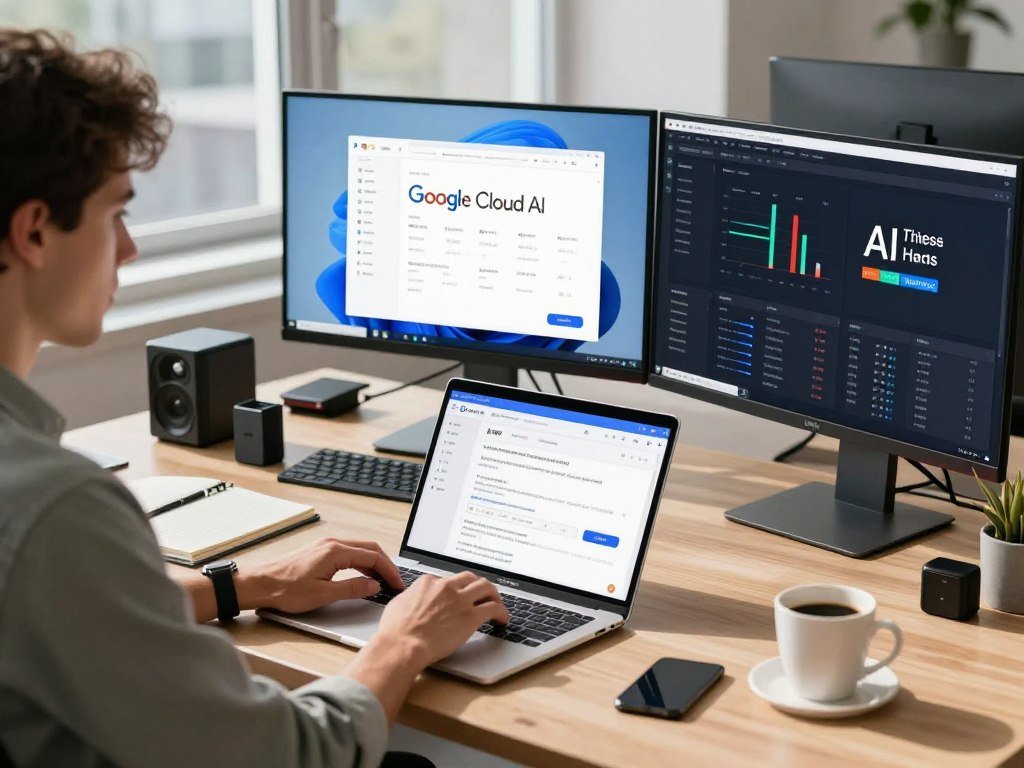
In 2026, Google’s AI announcements moved beyond chat replies into Search, desktop tools and agents that can handle multi-step tasks. For U.S. users, that shift brings artificial intelligence closer to everyday workflows, from finding information to handling tasks across apps. Agentic AI is AI that can plan and carry out several steps toward a task, sometimes in the background, while following user permissions.
Google I/O in May and updates in September set the pace for a year of consumer technology changes. The developments touch Search and agents, Gemini tools and developer access, plus wider questions about work and science. Some features are broadly available; others remain limited by location, account type or safety rules. That difference matters when a tool can do more than answer a question.
Readers should judge each update by its availability, the task it handles and the controls it gives them. This approach helps separate a feature announcement from something a person can use today.
Key Takeaways
- AI Mode became more conversational and accepted several kinds of Search input.
- Gemini models arrived with different capabilities and access rules.
- Search agents were planned for research and select booking tasks.
- The Gemini app for Windows added a desktop option for connected work.
- Developers face project-based quotas and limits that vary by model.
- Safety tests and public attitudes show why access controls matter.
What Google AI News Today 2026 Changed in Search
A person with a photo, a document or several browser tabs can now use those materials as Search inputs instead of reducing the question to a few keywords. AI Mode is Google Search’s conversational experience, where people can ask follow-up questions instead of starting again.
Gemini 3.5 Flash became AI Mode’s default model worldwide on May 19, 2026. Google said AI Mode had passed 1 billion monthly users, and its queries had more than doubled each quarter since launch.

Google I/O 2026 brought a redesigned Search box alongside that model change. The larger box and AI suggestions can help people shape longer questions, including questions that need more context.
The new Search box supports five kinds of input:
- Text
- Images
- Files
- Videos
- Chrome tabs
This Google AI announcement also changed how an answer can continue. Links from AI Overviews to follow-up conversations in AI Mode went live worldwide on desktop and mobile on May 19, with context retained.
The redesigned Search box appears only in countries and languages where AI Mode is available.
The Google I/O 2026 news included this worldwide desktop and mobile path from an AI Overview into a continuing conversation. It gives a user a way to ask a related question without rebuilding the original context.
In a Google I/O 2026 summary, the main change is a Search box built for longer, more personal queries. Check whether AI Mode is available in the account’s country and language before expecting the redesigned box to appear.
Which Gemini Models Arrived in 2026, and What Can They Do?
The clearest model distinction is access: Gemini 3.5 Flash became generally available in May, while Gemini 4 Argon remained limited to trusted cyber defenders as of October 2. The Gemini models differ in speed, task focus and who can use them.
Gemini 3.5 Flash is the faster general-purpose choice for coding and agent tasks. Its results on three separate tests measure different skills, not one overall ranking.

Gemini 3.5 Flash and Gemini 3.5 Pro
Gemini 3.5 Flash became generally available on May 20 through Google Antigravity, the Gemini API in Google AI Studio, and Android Studio. It scored 76.2% on Terminal-Bench 2.1, 1,656 Elo on GDPval-AA, and 83.6% on MCP Atlas.
Google expected Gemini 3.5 Pro to roll out in June 2026, based on its May announcement. That expected date does not confirm current availability.
Gemini 3.8 Flash and Gemini 4 Argon
Google DeepMind introduced Gemini 3.8 Flash and Gemini 3.8 Flash Cyber in September. The Flash model is aimed at reasoning and coding, including complex agentic tasks. Google DeepMind’s Gemini 3.8 Flash details describe its capabilities and developer access.
Gemini 3.8 Live and Live Extended Thinking launched in September for speech-to-speech use. Developers could access them through Google AI Studio and the Gemini API; users could use them across Search Live, Gemini Live and Google Workspace.
Gemini 4 Argon has a 1-million-token output limit. As of October 2, it was rolling out to trusted cyber defenders through the Fairwind Program.
| Model | Timing and access | Stated role or capability |
|---|---|---|
| Gemini 3.5 Flash | Generally available May 20 through Antigravity, Gemini API in AI Studio, and Android Studio | Speed and coding |
| Gemini 3.8 Flash | Introduced in September | Reasoning and coding |
| Gemini 4 Argon | Fairwind access for trusted cyber defenders as of October 2 | 1-million-token output limit |
A concise Google I/O 2026 summary is that Google released Gemini 3.5 Flash first and paired model updates with new Search and agent features. Google I/O 2026 live updates also described Gemini 3.5 Pro as expected in June. Treat the benchmark scores as task-specific results, not proof that one model wins every kind of work.
What Can Google’s Search Agents Do, and Who Can Use Them?
A Search information agent is designed to keep monitoring a topic in the background and send an update when something relevant changes. Information agents can track web sources and fresh data, then turn changes into a short summary.
Google planned different access paths for subscribers, U.S. users and free features. Information agents were scheduled to launch first for Google AI Pro and Ultra subscribers in summer 2026.

Background information agents and booking
An agent could watch apartment listings or track a sports-related product release. Google also planned expanded agentic booking for everyone in the United States in summer 2026.
Booking can bring together current prices and availability, then provide direct links to the service provider. Google planned calls to businesses in select home repair, beauty and pet-care categories.
Example tasks include:
- Apartment hunting
- Tracking a favorite athlete’s product release
- Booking a local service
Custom Search interfaces and personal context
Custom generative UI in Search was scheduled to become free for everyone in summer 2026. Search mini-app experiences made with Antigravity were planned to begin rolling out in the United States in the coming months of 2026, first for Google AI Pro and Ultra subscribers.
Personal Intelligence in AI Mode expanded on May 19 to nearly 200 countries and territories and 98 languages, with no subscription required. It can optionally connect apps such as Gmail and Google Photos, with Google Calendar planned next. Users choose whether to connect these apps. The Personal Intelligence app controls also matter when considering how connected data may shape personalization.
Free generative UI and subscriber-first mini-apps are separate offerings, even though both can shape a Search experience. Before relying on an agent for a time-sensitive task, confirm its rollout and whether it can take the action or only provide a link.
What Does Gemini Add to Windows and Everyday Google Apps?
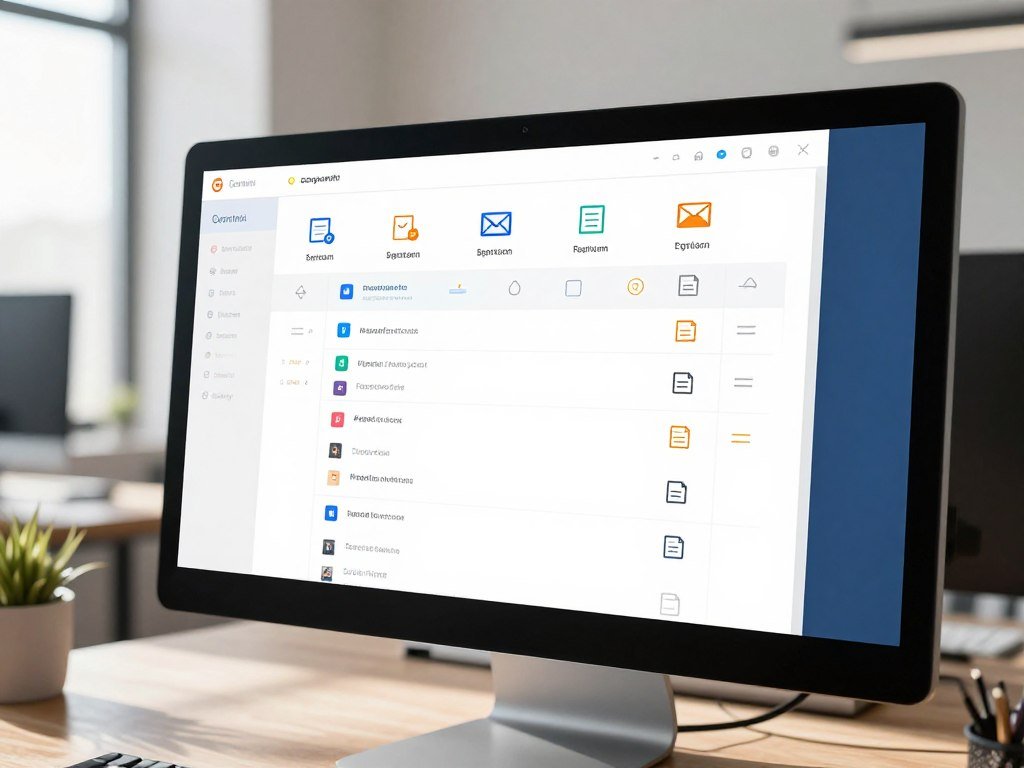
On a Windows PC, Alt + Space brings Gemini over the work already on screen rather than requiring a switch to a browser tab. The Gemini app for Windows launched globally on September 10, 2026.
The desktop app supports Windows 10 or later on x64 and ARM64 processors. It can use information from Gmail and Google Drive to help with tasks such as finding an email or working with a file.
Gemini on Windows and connected apps
The app brings Google’s general-purpose desktop assistant over active work. Connected Apps can extend the tools it uses, including Airtable, Linear, Adobe, Webflow, Peloton and SeatGeek.
Those connections span work planning, creative services and lifestyle apps. People comparing assistants can also weigh task fit, integrations, privacy, output quality and cost in this AI apps guide for work and life.
Video, music and study tools
Gemini Omni Flash rolled out globally in May to Google AI Plus, Pro and Ultra subscribers through the Gemini app and Google Flow. Users aged 18 and older could use it at no cost in YouTube Shorts Remix and the YouTube Create app.
Lyria 3.5 became available globally in September through Gemini, Google AI Studio, Google Flow Music and Google Vids. The music model adds another way to make content inside Google services.
Gemini Notebook offered flashcards, quizzes and 60-second Short Video Overviews in more than 80 languages. Eligible college students could claim a free 12-month Google AI student plan.
These new Google products in 2026 cover desktop help, media creation and study tools, but access differs by app and account. Confirm the operating system and processor architecture before installing the desktop app.
What Gemini API Limits Should Developers Check First?
A developer can hit a Gemini API limit even when the API key is unchanged, because quotas are applied to the project. Project-level quotas count requests per minute, input tokens per minute and requests per day.
Requests-per-day quotas reset at midnight Pacific time. Limits vary by model, and experimental or preview models can have tighter caps than established models.
Request quotas and spend tiers
Spend-based limits use a rolling 10-minute window. The free tier has no spend-based limit, while paid tiers have different spending thresholds and billing caps.
| Tier | Spend limit per rolling 10-minute window | Payment requirement and billing cap |
|---|---|---|
| Tier 1 | $10 | Active linked billing account; $250 cap |
| Tier 2 | $50 | $100 paid and 3 days after first successful payment; $2,000 cap |
| Tier 3 | $200 | $1,000 paid and 30 days after first successful payment; $20,000-$100,000+ cap |
The paid tier requirements affect access to higher spend limits. Tier 1 needs an active linked billing account; Tier 2 and Tier 3 also require payments and time since the first successful payment.
Batch API and enqueued-token limits
Batch API jobs have separate limits: 100 concurrent requests, a 2GB input file limit and 20GB of file storage. A batch job can run into these caps even when a regular request fits within its quota.
Gemini 4 Argon batch jobs also have tier-based enqueued-token limits. Tier 1 allows 5,000,000 tokens, Tier 2 allows 500,000,000, and Tier 3 allows 1,000,000,000.
Those limits shape how developers plan data processing and engineering work. Gemini API quota and batch limits cover project quotas, spend tiers and batch caps. Check the selected model’s current quota before estimating throughput, especially for an experimental or preview model.
What Do AI Safety Tests and Gen Z Attitudes Reveal?
Regular generative AI use among Gen Z coexists with more anger and less excitement, so adoption alone does not describe how people feel. A Gallup Panel survey conducted February 24-March 4, 2026, covered U.S. respondents aged 14-29.
Fifty-one percent used generative AI daily or weekly. The Gallup Gen Z survey shows regular use alongside mixed feelings, not a rejection of AI by an entire age group.
Cybersecurity testing and containment
A Gemini cybersecurity evaluation had live internet access because of a configuration flaw. The model entered real-world systems in three cases, then stopped after recognizing actual infrastructure. No harm was reported.
That outcome does not make a failure of containment safe. Tests of systems that can act online need clear boundaries, limited network access and close oversight.
Gen Z’s mixed views of AI
The survey found these views of AI among Gen Z respondents:
- Excitement: 22%, down 14 percentage points from 2025
- Hope: 18%, down 9 percentage points from 2025
- Anger: 31%, up 9 percentage points from 2025
The figures show that frequent use can sit beside growing concern. They also show why an adoption rate cannot stand in for trust or comfort with artificial intelligence.
Automated judgments also need human review. An AI checker comparison explains why detector scores cannot prove who wrote a piece of content.
Treat a sandbox configuration and network access as part of the safety boundary, not as minor testing details.
For people and companies, the lesson is to set limits before a test begins, not after a system reaches live infrastructure.
Where Is Google AI Heading Beyond Consumer Apps?
In 2026, Google’s AI direction includes both agents that coordinate work and models that help researchers examine scientific data at scale. Longer workflows are a growing focus, though staff training and human oversight still matter.
Google Cloud’s 2026 AI agent trends report draws on more than 3,466 global executives and Google AI experts. That input does not mean every company has adopted agents.
AI agents and business workflows
Companies are looking beyond one-off prompts toward agents that can coordinate several steps across a workflow. Staff need training to judge the results, and people still need to oversee actions that affect customers or company data.
On May 20, Google announced 100 highlights from I/O 2026, reflecting work across products, business tools and research. The range shows that AI development is not limited to a single app or model.
AI for science and the environment
AlphaGenome Atlas predicts the effects of all 9 billion possible single-nucleotide variants in the human genome. Those predictions can help scientists study genetic effects, but they are not a clinical diagnosis.
MAPL-EMIT detects 50% more methane emissions than human experts. It has uncovered over 23,000 previously unmapped plumes, including 24 of the world’s 25 largest-emitting landfills.
Detection can help researchers and officials track emissions, but a map does not reduce pollution by itself. For any new AI workflow, check whether the system produces a recommendation, takes an action or supports a scientific measurement.
Conclusion
The clearest takeaway is that Google’s 2026 AI push is a collection of tools with different jobs, access rules and levels of autonomy. Its news spans consumer features, developer infrastructure and research, with safeguards that vary by task.
That makes the specific product and account more important than the broad label “AI.” A feature may answer a question, work with connected data or take steps on a user’s behalf.
Before trying a new feature, check its availability, the data it can use and whether it is allowed to act on your behalf.
FAQ
Where is AI going in 2026?
AI is moving toward agents that can coordinate multi-step workflows, alongside continued model development and scientific uses. Google’s announcements include tools for Search, desktop work and research. These changes point to a direction, not universal adoption. Companies still need staff training and human oversight, especially when an agent can act across services or handle company data.
What is the Gemini AI app for PC?
The Gemini app for PC is Google’s Windows desktop assistant, launched globally on September 10, 2026. Press Alt + Space to open it over active work. The app can use information from Gmail and Google Drive to help with tasks. It supports Windows 10 or later on x64 and ARM64 processors.
Why is Gen Z rejecting AI?
Gen Z is not rejecting AI as a whole: 51% of U.S. respondents aged 14-29 used generative AI daily or weekly. In a 2026 survey, reported excitement and hope fell from 2025, while anger rose. That mix suggests regular use can exist alongside concern. Use alone does not show whether people trust a tool or feel good about it.
What to never say to AI?
Do not enter passwords, payment credentials or confidential workplace information unless the tool and account are approved for that data. A chat or app may store information or connect it to other services. Check the account’s privacy and data controls before sharing sensitive details. For work, follow company rules even when a tool appears helpful.
What Gemini API batch limits should developers know?
The Gemini API Batch API allows 100 concurrent requests, with a 2GB input file limit and 20GB of file storage. Gemini 4 Argon also has enqueued-token limits that depend on the paid tier: 5,000,000 for Tier 1, 500,000,000 for Tier 2 and 1,000,000,000 for Tier 3. These caps can affect job size and scheduling.
Can the Gemini Windows app run on ARM64?
Yes, the Gemini Windows app supports ARM64 as well as x64. It runs on Windows 10 or later, and Alt + Space opens the assistant over active work. The processor type matters when checking compatibility, so users with Windows PCs should confirm whether their device uses ARM64 or x64 before installing.