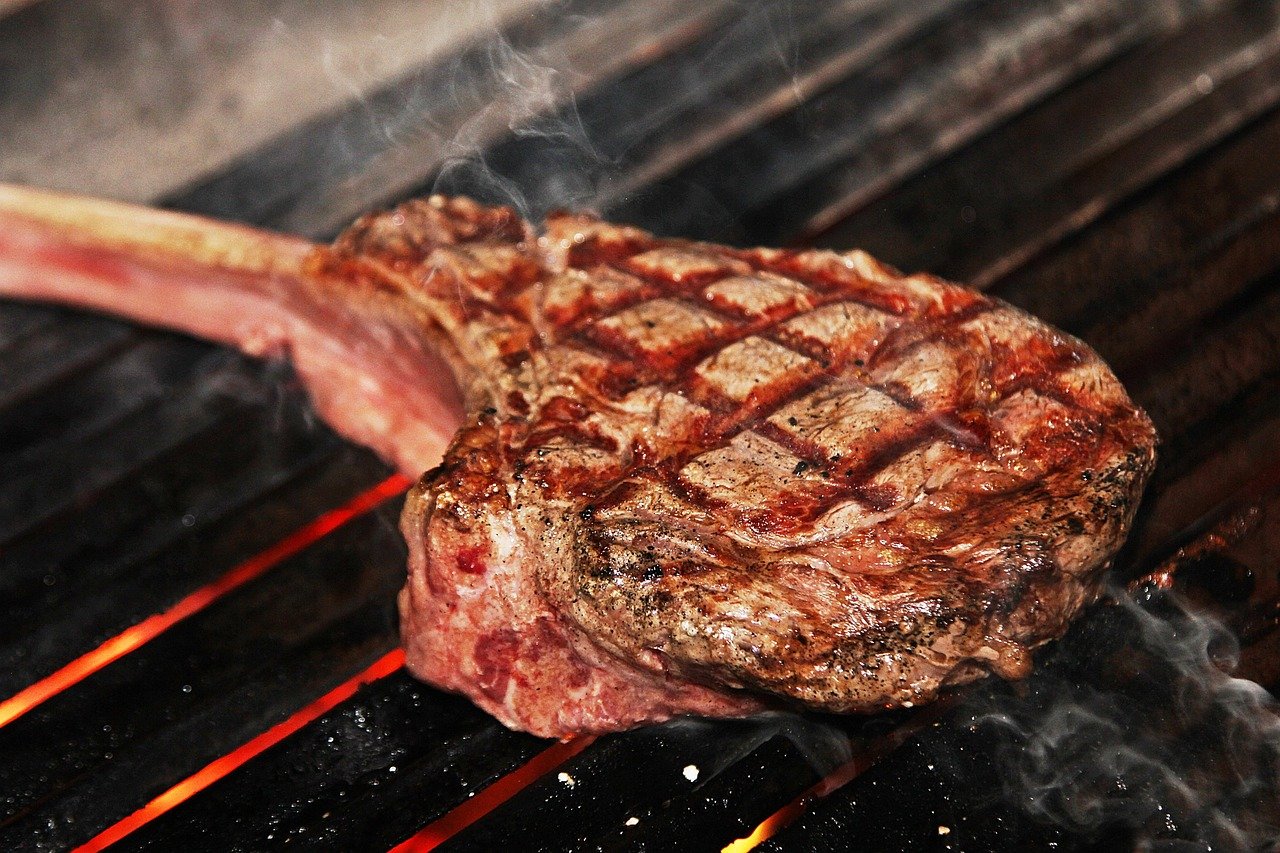
What separates a steak that tastes like a restaurant plate from one that ends up gray, dry, and disappointing? It almost never comes down to the price of the meat. It comes down to heat, timing, and a handful of small decisions made before the steak ever touches the grate. Get those right and even a modest supermarket sirloin will outperform a badly handled premium cut.
This guide walks through the whole process in order: choosing the cut, setting up the grill, managing the fire, flipping and resting, and knowing when the steak is actually done. It also covers the food-safety line you should never cross, the myths worth ignoring, and the mistakes that trip up even experienced cooks.
Start With the Right Cut and Thickness
Grilling rewards thickness. A steak under about 2.5 cm (1 inch) thick cooks through before its surface has time to brown properly, which leaves you choosing between a raw center and a burnt crust. Look for steaks at least 2.5 cm thick, and closer to 4 cm if you like yours rare.
The cut matters less than you might think, but its fat and texture do change the approach:
| Cut | Texture and fat | Grilling note |
|---|---|---|
| Ribeye | Rich marbling, tender | Forgiving; handles high heat well |
| Strip loin | Firm, moderate fat | Good balance of chew and flavor |
| Tenderloin (filet) | Very lean, tender | Dries out fast; watch the fire closely |
| Flank or skirt | Lean, coarse grain | Needs a hot, fast cook and slicing across the grain |
| Sirloin | Leaner, firmer | Best marinated or kept to medium-rare |
Two practical points that cooks often skip. First, take the steak out of the fridge 30 to 45 minutes before grilling. A cold center forces you to leave the meat over the fire longer, which overcooks the outer layers. Second, pat the surface completely dry with paper towels. Surface moisture has to boil off before browning can begin, and that steaming phase is exactly what produces gray meat.
Salt early if you can. Salting 40 minutes to a full day ahead and leaving the steak uncovered in the fridge improves seasoning and dries the surface. If you are grilling in the next ten minutes, salt right before it hits the fire.
Set Up a Two-Zone Fire
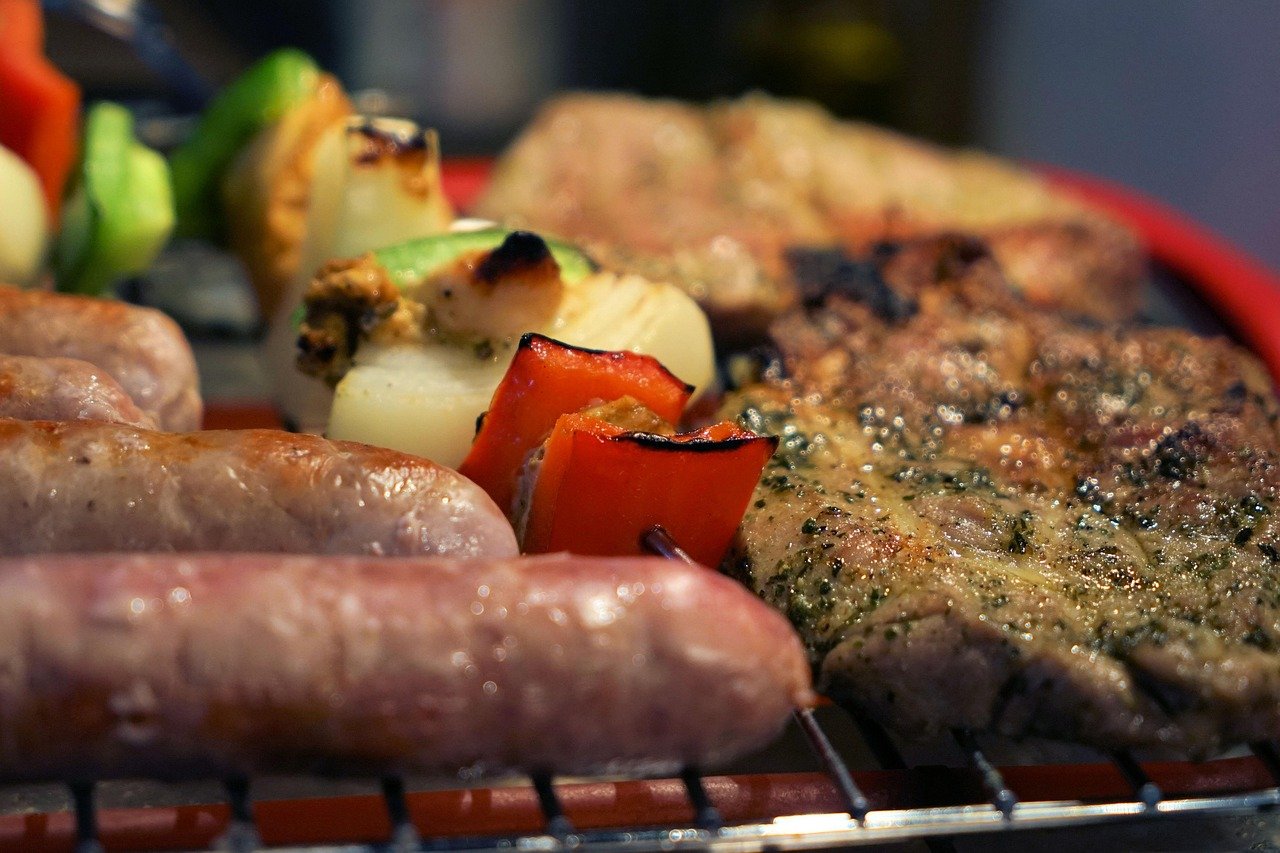
A two-zone setup is the single most useful grilling habit. Build your coals or light your burners on one side only, leaving the other side empty. That gives you a hot zone for browning and a cooler zone for finishing thicker steaks without burning the outside.
For charcoal, a chimney starter full of lit coals piled on one half of the grate is plenty for two to four steaks. For gas, run one burner on high and leave the others off, then close the lid to build ambient heat on the empty side. Aim for a hot zone that is genuinely hot: you should be able to hold your hand above the grate for only two or three seconds.
Clean and oil the grate while it heats. A clean grate releases meat; a dirty one glues to it. Scrub with a brush, then wipe a folded paper towel dipped in a neutral oil across the bars using tongs.
Understand What Browning Actually Does
The dark crust on a grilled steak is the product of the Maillard reaction, a set of chemical reactions between amino acids and sugars that begins in earnest somewhere around 140 to 165 °C (280 to 330 °F). It is responsible for the roasted, savory flavors that make grilled meat taste grilled rather than boiled. The reaction is named after French chemist Louis-Camille Maillard, who described it in 1912, and you can read more about the chemistry behind the Maillard reaction if you want the full scientific picture.
The practical takeaway is simple: browning needs a hot, dry surface. Wet meat, a lukewarm fire, or a crowded grate all block it. This is also why a pale, gray steak is a texture problem as much as a flavor problem.
One related myth deserves retiring. Searing does not “seal in the juices.” It browns and flavors the surface, but it does not meaningfully reduce moisture loss during cooking, as Harold McGee explains in his food-science reference On Food and Cooking. Sear for flavor, not for sealing.
Grill the Steak: A Step-by-Step Method
Here is a reliable sequence that works on both charcoal and gas.
- Heat the grill with a two-zone fire and let it run for at least 10 to 15 minutes so the grate is fully hot.
- Dry and season the steak, then rub it lightly with oil so it does not stick.
- Sear over the hot zone for 2 to 3 minutes per side, leaving it alone until it releases from the grate on its own.
- Move to the cool zone, close the lid, and let it finish to your target temperature. This is where thick steaks cook evenly through.
- Flip as needed rather than obsessing over a single flip. Modern cooking guidance is clear that frequent flipping produces a more even result than one dramatic turn.
- Pull the steak early, about 3 to 5 °C below your target, because carryover heat will push it up during resting.
- Rest for 5 to 10 minutes on a warm plate before slicing.
For thinner steaks, skip the cool zone and stay over direct heat the whole time, flipping every minute or so. For very thick cuts, some cooks reverse the order and cook gently first, then finish with a hard sear. Both routes work; the two-zone fire is what makes either one controllable.
If you end up with leftovers, the same care applies afterward. Steak reheats best gently and briefly, and there is a right and wrong way to bring back a slice without turning it to shoe leather, which is covered in this guide to the best way to reheat steak.
Know Your Doneness Temperatures
Doneness is a matter of preference, not safety, but you still need a reliable way to measure it. An instant-read thermometer inserted into the thickest part, avoiding bone and fat, is the only method that actually works. Color and firmness are unreliable, especially under outdoor lighting.
| Doneness | Pull at (approx.) | Final after rest |
|---|---|---|
| Rare | 49–52 °C (120–125 °F) | 52–55 °C (125–130 °F) |
| Medium-rare | 54–57 °C (130–135 °F) | 57–60 °C (135–140 °F) |
| Medium | 60–63 °C (140–145 °F) | 63–65 °C (145–150 °F) |
| Medium-well | 65–68 °C (150–155 °F) | 68–70 °C (155–158 °F) |
These numbers are cooking conventions drawn from common teaching, and different sources shift them by a few degrees. Treat them as a starting point and adjust to your own grill and taste.
The one number that is not a preference is the safety minimum. For whole-muscle beef such as steaks, roasts, and chops, the official guidance is 63 °C (145 °F) followed by a three-minute rest, as set out in the USDA Food Safety and Inspection Service safe minimum internal temperature chart. Ground beef is different and requires 71 °C (160 °F), which matters if you are grilling burgers alongside.
That creates an honest tension: many people prefer steak below 63 °C. Whole cuts are generally considered lower risk than ground meat because contamination sits mostly on the surface, which the grill heat kills. Still, if you are cooking for anyone pregnant, elderly, very young, or immunocompromised, cook to the safe minimum. It is a judgment call worth making deliberately rather than by accident.
Avoid These Common Grilling Mistakes
Most failed steaks trace back to a short list of avoidable errors.
Cold meat on a cold grate. Both problems compound. Let the steak temper and let the grill heat fully.
Crowding the fire. Steaks need space for air and moisture to escape. Overloading drops the temperature and steams the meat.
Poking and pressing. Pressing a steak with a spatula pushes juice onto the coals. Leave it alone.
Saucing too early. Sugar-based sauces burn over high heat. Brush them on in the last minute or two, or serve them at the table.
Skipping the rest. Cutting immediately spills the juices onto the board instead of letting them redistribute through the meat.
Reusing the raw plate. Raw meat juices carry bacteria, so this is a safety issue as well as a cleanliness one. Use separate plates and tongs for raw and cooked steak. Never reuse a marinade that touched raw meat unless you boil it first. The USDA FSIS food safety guidance covers cross-contamination basics.
Manage Char and Smoke
A little char is part of the appeal, but heavy blackening is worth avoiding. Grilling meat at high temperatures can form heterocyclic amines (HCAs) and polycyclic aromatic hydrocarbons (PAHs), compounds that public-health bodies recommend limiting. The National Cancer Institute’s explanation of chemicals in meat cooked at high temperatures sets out how these form and what reduces exposure.
In practice, that means trimming visible fat to limit flare-ups, keeping the steak out of direct flame, and pulling it before it turns to charcoal. A little browning is fine; a crust of black carbon is not. If flare-ups are constant, your fire is too hot or too fatty, so move the steak to the cool zone and let the flames die down.
Conclusion
Great grilled steak is not complicated, but it is specific. Buy a thick cut, dry the surface, salt it ahead if you can, and build a two-zone fire so you have both a searing zone and a gentler one. Sear for flavor, finish over indirect heat, pull the steak a few degrees early, and let it rest. Use a thermometer rather than guesswork, keep raw and cooked meat apart, and do not chase a blackened crust. Do those things consistently and the results stop being a gamble.
Frequently Asked Questions
How long should you grill a steak?
For a 2.5 cm steak over a hot two-zone fire, plan on roughly 2 to 3 minutes per side for the sear, then a few more minutes on the cool side to reach medium-rare. Total time usually lands between 8 and 12 minutes, but thickness, starting temperature, and fire intensity change it a lot. A thermometer beats any clock.
Should you flip a steak only once?
No. The one-flip rule is a tradition rather than a requirement. Flipping every minute or so tends to cook the steak more evenly and build a better crust, and it reduces the risk of one side charring while the other stays pale. Flip as often as you like, as long as you keep the meat moving over the right zone.
Does searing seal in the juices?
It does not. Searing browns the surface and creates flavor through the Maillard reaction, but it does not create a moisture-proof seal. Moisture loss during cooking is governed mainly by temperature and time, not by whether the outside was browned. Sear for taste, and rest the steak to keep juices in the meat rather than on the cutting board.
What temperature is steak safe to eat?
For whole cuts like steaks, official guidance is 63 °C (145 °F) with a three-minute rest. Ground beef needs 71 °C (160 °F). Many people prefer steak rarer than that, which is a personal choice; anyone in a higher-risk group should stick to the safe minimum. Always measure with an instant-read thermometer in the thickest part.
Can you grill a frozen steak?
Yes, though it takes patience. Frozen steaks need a gentler fire and more time on the cool side so the center thaws before the outside burns. Expect a less even result and a narrower margin for error than with a thawed steak. Thawing overnight in the fridge remains the more reliable option.
How do you keep steak from sticking to the grate?
Heat the grate thoroughly, scrub it clean, and oil it lightly just before the steak goes on. Oil the meat as well, and resist moving it until it releases naturally. Sticking is usually a sign the grate is not hot enough or not clean, rather than a problem with the steak itself.