
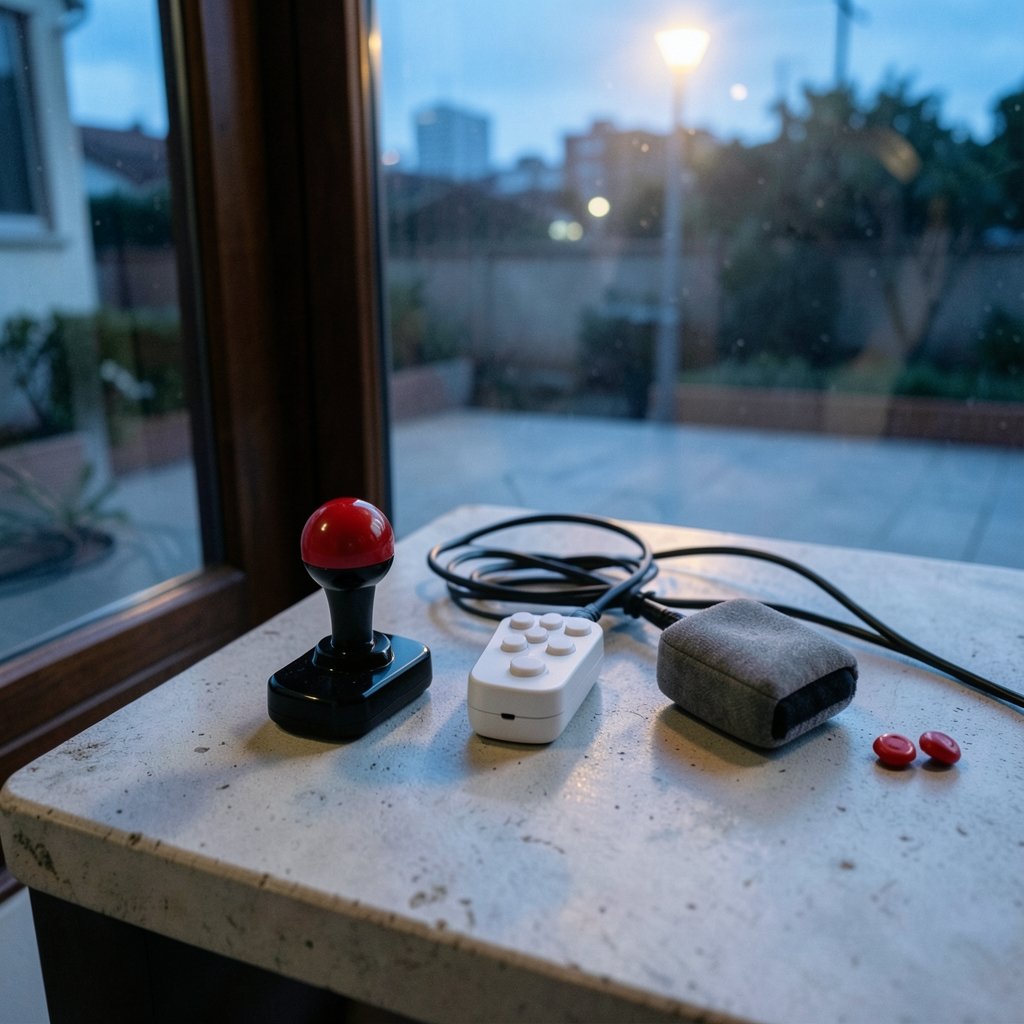
What actually makes a fight stick feel good on a random Tuesday night, months after the unboxing excitement has worn off? That is the question worth asking when you line up Hori, Qanba, and 8BitDo against each other. The spec sheets shout about switches and artwork, but the everyday experience comes down to a handful of things you only notice after dozens of hours: how your wrists feel, whether the buttons still register cleanly, and whether the thing works on the platform you actually play on.
This comparison is built as an evaluation framework rather than a product verdict. No 2027 models have been announced, so anyone claiming a definitive winner for that year is guessing. What follows is how to judge each brand’s approach so you can assess whatever they release when it lands.
Why the Brand Name Matters Less Than You Think
Here is the uncomfortable truth that veteran players learn the hard way: the logo on the box predicts less about your daily enjoyment than the parts inside and the layout you chose. Hori and Qanba have long track records as arcade-stick specialists, and 8BitDo has built its reputation on affordable, broadly compatible controllers. Those are real differences in philosophy. But a great lever-based stick from any of them will feel closer to another great lever-based stick than to a leverless controller from the same brand. (Arcade stick)
The arcade controller category itself splits into two design families before brand loyalty even enters the picture. Lever sticks use a joystick for direction; leverless or “hitbox-style” controllers replace the stick with buttons. That single choice changes hand ergonomics and input timing more than switching brands ever will. If you are unsure which family suits you, that decision deserves more research time than the brand comparison.
Latency and Polling: The Numbers That Actually Shape Feel

Input latency is the core everyday metric for fighting games, and it is measurable rather than mystical. Community testing has reported differences of roughly 5 to 15 milliseconds between lever-based and leverless controllers, though exact figures swing wildly with firmware, polling rate, and test method. Treat any single number you see quoted online as method-dependent.
Polling rate often matters more than brand. USB controllers commonly poll at 1000 Hz, or once per millisecond, on PC when the firmware supports it. The underlying reporting behavior comes from the USB human interface device standard, and the USB Implementers Forum’s HID documentation explains how that polling and reporting works if you want the technical grounding.
Console polling is a different story. It is often lower and controlled by the platform rather than the stick maker, and console-side rates are rarely published officially. This is why a stick that feels instant on PC can feel slightly softer on a console. It is also why “latency” claims in marketing deserve skepticism unless the test conditions are stated.
A practical habit: test your own setup rather than trusting a spec sheet. Plug in, run a few rounds of a training mode with input display, and watch whether your inputs land when you expect. If something feels off, check firmware before blaming the hardware.
Parts Compatibility: The Long-Term Value Question
Sticks live or die by their parts, and the practical axis here is compatibility. Many quality sticks use standard 30 mm buttons and Sanwa or Seimitsu-compatible mounts, which lets you swap in fresh parts years later instead of replacing the whole unit. Some budget sticks use soldered or proprietary components, which turns a worn button into a much bigger problem.
The Sanwa Denshi button and lever standard is long established, and understanding that parts ecosystem tells you whether a stick is repairable or disposable. Before buying anything, check three things:
- Whether the buttons are standard 30 mm and easily replaced.
- Whether the lever mount accepts common aftermarket levers.
- Whether the case opens without voiding anything you care about.
A stick with swappable parts is a ten-year purchase. A stick with proprietary parts is a three-year one. That difference matters far more for everyday value than a few milliseconds of claimed latency.
Platform Certification and Firmware Support
Officially licensed sticks carry platform certification, such as PlayStation, Switch, or Xbox licensing. Unlicensed devices may need adapters and can run into firmware or blocking issues down the line. Certification status changes per model and region, so verify it for the exact unit you are considering rather than assuming a brand-wide rule.
Firmware and software support is where brands genuinely differentiate. Configurable dead zones, remapping, and SOCD handling (simultaneous opposite cardinal direction, meaning what happens when you press left and right at once) vary by brand and firmware version. SOCD rules also differ by game and community, and those policy debates were active in the fighting-game scene through 2023 and 2024. Tournament rulesets evolve, so check the current rules for any event you plan to enter.
For everyday play at home, SOCD behavior mostly matters if a game or habit depends on it. For competitive play, it can decide whether your controller is even legal. Either way, a brand that ships clear firmware notes and update tools is easier to live with than one that goes quiet after launch.
Ergonomics and Weight: The Under-Measured Daily Factor
Stick weight, wrist angle, and button travel affect fatigue in long sessions, and these almost never appear in spec sheets. A heavier stick stays planted on your lap or desk, which many players prefer. A lighter one travels well but can slide during intense moments. Button travel and actuation force decide whether your fingers ache after an hour.
This is where first-hand testing beats reading. If you can try a stick before buying, do it. If not, look for community reports about weight and wrist comfort for the specific model, and be honest about your session length. Someone playing twenty minutes a day has very different needs from someone grinding ranked matches for three hours.
The same logic applies across gaming gear. A monitor that looks fine in a showroom can fatigue your eyes over an evening, which is why it helps to know whether a gaming monitor is worth buying for beginners and everyday use before you commit. Peripherals are long-term relationships, not impulse buys.
How the Three Brands Tend to Position Themselves
With the caveat that specific 2027 lineups are unknown, the historical positioning is useful for framing expectations.
| Brand | Historical positioning | Typical strength | What to verify per model |
|---|---|---|---|
| Hori | Established Japanese arcade-stick specialist | Long track record, licensed sticks | Parts compatibility, firmware updates |
| Qanba | Competitive-play focus | Build quality, tournament presence | Certification, SOCD options |
| 8BitDo | Budget and retro-friendly, multi-platform | Affordability, broad compatibility | Polling rate, part replaceability |
The table is a starting map, not a scorecard. A budget 8BitDo stick with standard parts and solid firmware can beat a premium stick with proprietary components for everyday use. And a specialist brand’s entry model is not automatically better than a generalist’s flagship.
Budget Reality: Where the Money Should Go
Fight sticks are not cheap, and the everyday experience suffers when you overspend on the wrong thing. The smarter approach is to decide your layout first, then your platform, then your budget ceiling, and only then compare models. Spending extra on a licensed stick you will actually use on your console beats saving money on one that needs an adapter you will resent.
If money is tight across your whole setup, it helps to have a stop spending money plan that sticks so the peripheral budget does not quietly blow up. A fight stick is a tool, and tools bought in panic tend to gather dust.
The same discipline applies to related purchases. If a new laptop is also on your list, know what best gaming laptops under 1000 actually fits budget means in practice before the two purchases compete for the same cash.
Common Mistakes That Ruin the Everyday Experience
A few predictable errors show up again and again among new stick owners.
- Buying for artwork instead of parts. A pretty case with soldered buttons is a dead end.
- Skipping the layout decision. Lever versus leverless is the biggest variable, and it is hard to unlearn.
- Ignoring firmware. Many “laggy” sticks are simply running old firmware.
- Forgetting the platform. Certification and adapters decide whether the stick works at all on your console.
- Never testing the feel. Ten minutes with a friend’s stick teaches more than ten reviews.
There is a parallel in software habits: a tool is only as good as the setup around it, which is why an honest look at whether Bitwarden is safe and private for everyday use follows the same logic of checking the details rather than the marketing.
Setting Up for Consistent Performance
Once you own a stick, the everyday experience depends heavily on setup. A few practical steps make a real difference:
- Update the firmware before your first serious session.
- Confirm the polling rate and connection mode on your platform.
- Test inputs in a training mode with an input display.
- Adjust dead zones and remapping to your habits.
- Check the current tournament ruleset if you plan to compete.
The same principle applies to displays. Knowing how to set up a gaming monitor for best performance settings makes the whole setup feel more responsive, and a fight stick deserves the same attention. If you are weighing a display upgrade, consider whether a tablet is worth buying for beginners and everyday use as a secondary screen, since not every purchase needs to be a big one.
Conclusion
Hori, Qanba, and 8BitDo each bring something real to the table, but the everyday gaming experience in 2027 will be decided by factors that outlast any single model: layout, parts compatibility, firmware support, platform certification, and how the thing feels in your hands after an hour. Judge brands by how well they handle those fundamentals, verify the specifics for the exact unit you are considering, and test before you commit when you can. The best fight stick is not the one with the loudest reputation. It is the one you forget about while you are playing, because everything just works.
Frequently Asked Questions
Is a leverless controller better than a lever stick for everyday play?
Neither is universally better. Leverless layouts change hand ergonomics and input timing, and community testing has reported latency differences of roughly 5 to 15 milliseconds between the two families, though results vary by firmware and test method. The right choice depends on your hands and the games you play.
Does polling rate matter more than the brand of fight stick?
Often, yes. USB controllers commonly poll at 1000 Hz on PC when firmware supports it, while console polling is usually lower and platform-controlled. A well-configured budget stick can feel more responsive than a premium one running old firmware.
How do I know if a fight stick has replaceable parts?
Check whether it uses standard 30 mm buttons and Sanwa or Seimitsu-compatible mounts. Those standards are long established and make repairs easy. Soldered or proprietary parts mean a worn button can sideline the whole unit.
Do I need a licensed fight stick for my console?
Not always, but certification reduces risk. Officially licensed sticks carry platform certification, while unlicensed devices may need adapters and can face firmware or blocking issues. Verify certification for the exact model and region before buying.
What is SOCD, and why does it matter?
SOCD stands for simultaneous opposite cardinal direction, meaning what the controller does when you press left and right at the same time. Handling varies by brand and firmware, and tournament rules differ by game and community, so check the current ruleset if you compete.
Should I wait for 2027 fight stick models?
Only if you can wait comfortably. No 2027 lineups have been announced, so any claims about them are speculation. If you need a stick now, judge current models on parts, firmware, certification, and feel rather than waiting for a rumored release.



