For IT teams, the striking change in HPE’s self-driving network push is that AI is moving from diagnosing problems toward taking corrective action. Rami Rahim, HPE’s networking president and general manager, formerly led Juniper Networks as its CEO. He is guiding the company’s move from campus and branch network automation into data center operations. That shift matters to administrators who spend time sorting tickets and fixing faults across growing networks. Closed-loop automation means a system detects a problem, takes a corrective action, and checks the result without waiting for a person to intervene. The technology may reduce routine work, but its role depends on what each business allows it to do. Rahim said teams can shape that role as they gain trust in the system. The practical test for network teams is whether the system can solve routine faults while keeping people in control of higher-risk actions.
Key Takeaways
- HPE is extending network automation from campus and branch settings into data centers.
- Marvis can take corrective actions as part of a closed-loop process.
- Rahim’s forecast for broader autonomy is not a guarantee.
- Teams can grant automation more authority in stages.
- Hardware replacement may still need a person on site.
HPE Self Driving Network 70 80 Percent Rahim 2026: What Does the Forecast Mean?
Marvis currently addresses 70-80 percent of network issues through closed-loop automation, while HPE’s goal of reaching 100 percent remains a forecast. At HPE Discover 2026, Rahim said Marvis handles 70-80 percent of network issues this way. That figure describes current handling, not a promise of total autonomy.
The figure matters because many trouble tickets concern routine faults that do not need a person to intervene. Rahim said about 70-80 percent of network trouble tickets do not require human intervention. For teams, that could mean fewer repetitive fixes and more time for harder problems.
HPE’s 100 percent goal is a future expectation tied to agentic AI, not a current result.
Rahim said HPE expects network issues to require no human intervention within two to three years. He also said agentic AI could bring Marvis’ automated handling of network issues to 100 percent within a few years. Those are forecasts, not guarantees. The timing depends on how well the system can act across different network problems.
Physical work remains a clear exception. Rahim suggested a system could order a replacement part automatically when a device fails. A person might still need to install that part. The self-driving network can reduce the steps around a repair without making every repair hands-free.
The distinction helps operators weigh the forecast against their own needs. Network tickets can involve software faults, a broken connection, or a failed device. Automated diagnosis may help with each, but a physical fix still calls for hands-on work. Treat the two-to-three-year timeline as Rahim’s expectation, not a promise that every physical repair will become hands-free.
How Much Control Do Network Teams Keep Over Automation?
Network teams do not have to switch every automated action on at once because Rahim said controls can be enabled capability by capability. Gradual control lets operators begin with small actions and widen automation as they build confidence. Teams can choose which actions Marvis may take and when it needs approval.
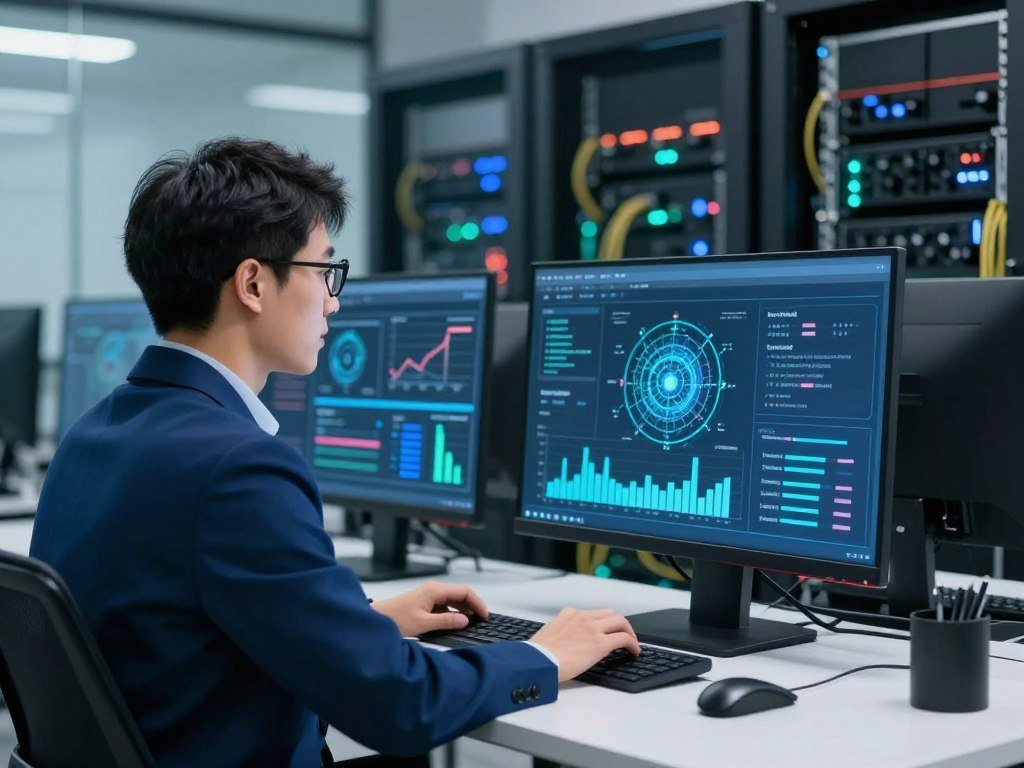
Rahim said enterprises are shifting from approval before every fix toward letting Marvis resolve some issues without prior notification. That change need not happen in a single step. A practical rollout can begin with:
- Enable automated actions feature by feature.
- Start with a low-impact action, such as rebooting a switch port.
- Move from approval-first fixes to action without prior notice as confidence grows.
The right action depends on what caused the alert. A Wi-Fi complaint can be the first sign of an application, WAN, or cloud-provider problem. Rebooting an access point in that case may not address the fault, so diagnosis needs to trace the symptom to its source.
That makes review rules important, especially when a change could affect many users. Teams can test a narrow set of actions, then review how the system handled them before expanding access. Operators should also know which actions change a device setting and which may interrupt service. For ideas on testing agent workflows while keeping people involved in consequential steps, teams can review this guide to AI browser agents. Before removing approval for an action, make sure the team knows what the action changes and how it can be reversed.
How Is HPE Applying AI to Data Center Operations?
HPE is extending its self-driving network approach into the data center with AI that can investigate active problems and flag possible faults before they cause an outage. The two jobs differ: one explains a live problem, while the other looks for signs of a future fault. Both rely on network and equipment data, but they serve different moments in operations.
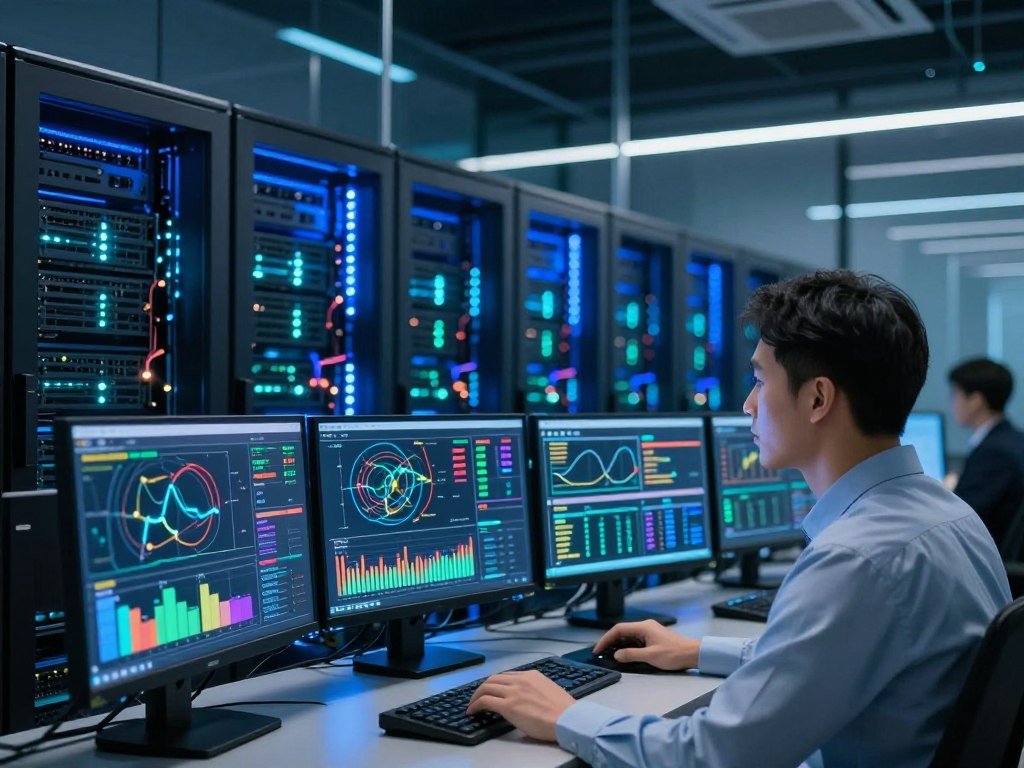
Data center networking also involves more than a single device. A slow application may reflect traffic flow, a system setting, or a fault elsewhere. HPE’s approach uses AI to connect those clues for operators.
Root-cause analysis for network problems
For live problems, HPE combines telemetry, application flows, operating context, and historical knowledge. Telemetry is data gathered from network devices and systems. The mix can help AI identify a likely cause and recommend a next step instead of treating every alert as an isolated fault.
HPE Networking Data Center Director uses a contextual graph database to link network details with their relationships. HPE says its AI reasoning can also draw on millions of technical-assistance tickets. Rahim said problems that once took hours or days to diagnose could be resolved in minutes or found proactively. That is a stated capability, not proof that every fault will be fixed at that speed.
Predictive analytics for infrastructure health
Predictive analytics watches power, temperature, optics, and system health for signs of possible trouble. A change in those signals can prompt a team to inspect equipment before an outage. Telemetry monitoring, by contrast, collects live readings that help teams see current network conditions.
| Capability | Inputs | Main job | Timing |
|---|---|---|---|
| Root-cause analysis | Flows, context, history | Find a likely cause | During a problem |
| Predictive analytics | Power, temperature, optics, health | Flag a potential fault | Before an outage |
| Telemetry monitoring | Live device and network readings | Show current conditions | As data arrives |
The difference affects what operators should do with an alert. A prediction may call for an inspection, while root-cause analysis may point to an application or cloud service. A diagnosis that points to an application or cloud problem should not automatically trigger a network hardware change.
What Changed After HPE Bought Juniper Networks?
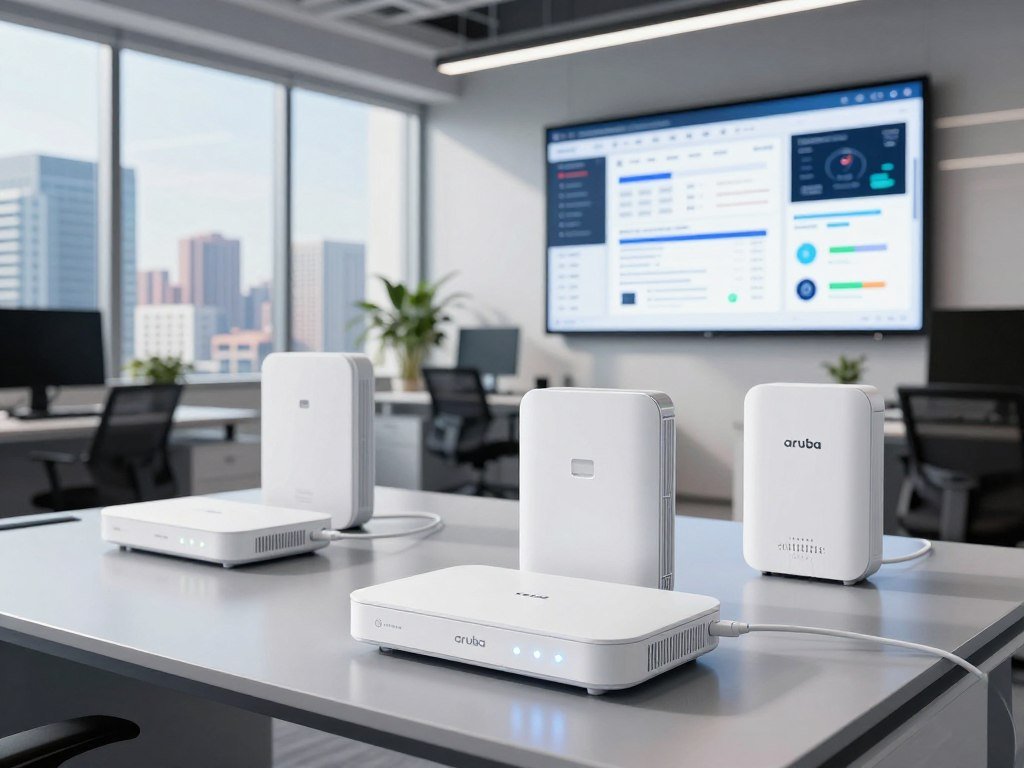
HPE closed its Juniper Networks acquisition in July 2025, and one visible integration milestone is shared management of Aruba and Juniper access points. HPE described its combined networking plans in its acquisition closing transcript. Customers can manage access points from either portfolio with either vendor’s management tools.
Shared access point management
The cross-vendor access point management became possible within 18 months of the acquisition closing. In practice, customers with a mixed fleet can use Aruba tools for Juniper-origin access points, or Juniper tools for Aruba-origin devices. That gives teams more choice when managing Wi-Fi hardware across sites.
Still, a shared management option is a specific integration milestone, not proof that all products and workflows are unified. A console may support a device without offering every feature that appears for its original brand. The experience can also differ across software versions and equipment types.
Network fabric and hybrid cloud operations
HPE has also integrated network fabric management capabilities with OpsRamp, its hybrid-cloud observability software. A network fabric is the set of connected switches that carries data through a data center. OpsRamp tracks technology across hybrid cloud environments, so joining these views can help operators see network and cloud activity together.
That wider view can help teams connect a network event with other parts of the business technology stack. It does not mean a single vendor has replaced every tool or support path. HPE said existing product support would continue during integration. For a mixed fleet, confirm which management console supports each device and feature before standardizing workflows.
Why Does Networking Matter So Much in AI Data Centers?
Networking is a material part of AI data center investment because GPUs need fast, reliable connections to work as a system. It accounts for about 10-15 percent of a typical AI data center’s total investment, while costs can approach $50-$100 billion per gigawatt. Those connections matter because delays or congestion can limit how well GPUs work together.
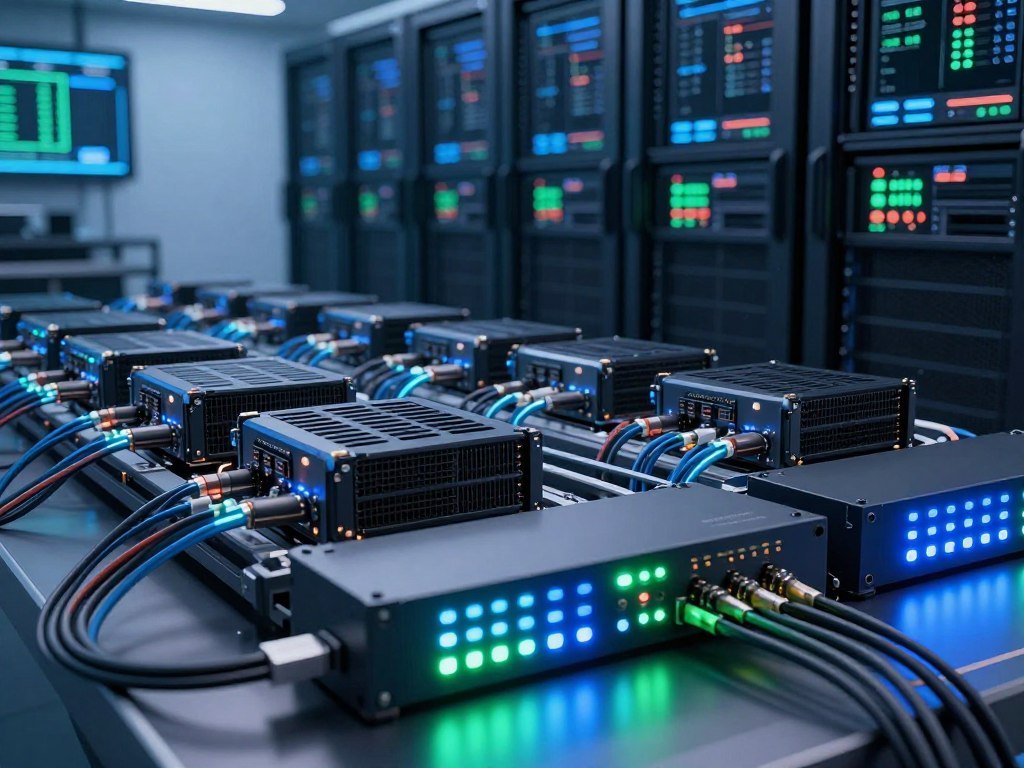
HPE Helios is an open Ethernet fabric for scale-up GPU connectivity. Scale-up networking links GPUs within a system so they can work together on large AI tasks. HPE’s approach uses Ethernet, a common network technology, to carry that traffic.
HPE’s validated AI Factory designs include Juniper networking switches for these environments. The listed models are:
- QFX 5230
- QFX 5240
- QFX 5250
These are AI Factory switch options, while the QFX5140 has a different stated profile. HPE describes it as a 1RU switch with 16 terabits per second of capacity, built on Broadcom Trident 5. It supports AI load balancing, congestion control, and speeds from 25 to 800 gigabits per second.
Those specifications make the QFX5140 relevant to edge inferencing clusters, where AI systems process data closer to where it is created. An Oracle and HPE partnership report describes the bandwidth, latency, and fault-recovery demands of AI data centers. Treat the switch model and fabric choice as workload decisions, since scale-up GPU connectivity and edge inferencing are different deployment needs.
Where Is HPE Extending Automation and Security?
HPE’s integration work now reaches beyond access points, bringing network operations together with data center, compute, and security management. The common thread is a broader management experience across wired, wireless, and cloud-linked systems. Shared management does not mean every product has identical capabilities.
HPE is extending its operating tools across Aruba Central, Mist, GreenLake, and Compute Ops Management. Each link between platforms covers a defined part of networking or infrastructure, rather than replacing all the tools an IT team uses.
Marvis across Aruba Central and Mist
HPE is bringing Marvis capabilities to Aruba Central across wired, wireless, and SD-WAN environments. SD-WAN manages network traffic across wide-area links, such as connections between offices. HPE is also bringing Aruba CX switching capabilities into Mist.
These steps connect parts of HPE Aruba Central and Mist HPE Aruba operations. They give teams a broader way to manage network services across the former portfolios. A shared management experience still may not offer the same controls for every switch, access point, or software feature.
Cross-domain management and security
Juniper data center networking is integrated with GreenLake, HPE’s cloud platform. Mist Networking Data Center Assurance is integrated with Compute Ops Management. HPE says its networking security integration spans firewall, SD-WAN, network access control, and cloud security.
HPE SASE Orchestrator combines secure access service edge, or SASE, and SD-WAN in one management console. That can give operators a single place to manage those two areas. It does not mean every security tool has moved into that console.
| Platform or capability | Integration | Network or security scope | Operations effect |
|---|---|---|---|
| Aruba Central | Marvis capabilities | Wired, wireless, SD-WAN | Network operations in one platform |
| Mist | Aruba CX switching | Campus switching | Support for Aruba CX in Mist |
| GreenLake | Juniper data center networking | Data center network | Networking within cloud platform |
| Compute Ops Management | Mist Data Center Assurance | Data center assurance | Network view with compute operations |
For teams tracking changes across networking software and AI, HPE’s broader work sits within a fast-moving technology field. Readers can choose topics such as AI and industry news in the site’s technology newsletter. Check which security and management functions are available in the specific platform before treating it as a single control plane.
A shared management experience does not make every security and network function identical across platforms.
Conclusion
HPE’s direction is clear: automate routine network work while extending AI operations across more of the infrastructure stack. The practical measure is not how many actions a platform can claim, but whether its actions fit the team’s risk rules.
Physical hardware replacement remains a notable exception, even when software can spot a fault and start the parts process. IT leaders can inventory recurring issues, mark low-risk actions, and set approval rules before granting broader authority.
Choose one recurring, low-risk issue, define the action and rollback rules, and review the results before expanding the system’s authority.
FAQ
What does Marvis do when it detects a network issue?
Marvis can diagnose and resolve network issues through closed-loop automation. HPE says it currently addresses 70-80 percent of issues this way, while its 100 percent goal remains a future forecast. The system can take an action and check whether it worked, rather than stopping at an alert. The result depends on the kind of issue and the actions an organization allows.
Can an IT team turn on Marvis actions gradually?
Yes, an IT team can enable Marvis actions capability by capability. Rahim gave rebooting a switch port as an example of a possible starting action. Teams can begin with approval before remediation, then allow selected actions without prior notice as they gain confidence. This approach lets operators limit the system’s authority to actions they understand and can reverse.
Will self-driving networks eliminate every hands-on repair?
No, self-driving networks will not eliminate every hands-on repair. A system may detect a failed device and order a replacement part, as Rahim suggested, but a person may still need to install it. Automation can handle diagnosis and parts ordering without removing the physical work. Hardware failures remain different from software or configuration problems that a system can fix remotely.
How does AI distinguish a Wi-Fi complaint from a network fault?
AI must trace the cause of a Wi-Fi complaint rather than assume the access point failed. A Wi-Fi symptom can come from an application, a WAN connection, or a cloud provider. Looking across those layers can help operators find the actual source. Rebooting the access point may not help when the fault sits elsewhere in the service path.
What does HPE Helios connect in an AI data center?
HPE Helios is an open Ethernet fabric for scale-up GPU connectivity. It connects GPUs so they can exchange data as part of a larger system. That role differs from networking designed for edge inferencing, where systems process data closer to its source. The fabric and switch choice should match the workload’s connection needs.
Can customers manage Aruba and Juniper access points with either vendor’s tools?
Yes, customers can manage Aruba- and Juniper-origin access points with either vendor’s management tools. HPE made cross-vendor management possible within 18 months of closing its acquisition in July 2025. This gives mixed-fleet teams more flexibility in choosing a console. Support for a device does not mean every feature or workflow works identically across both product lines.