
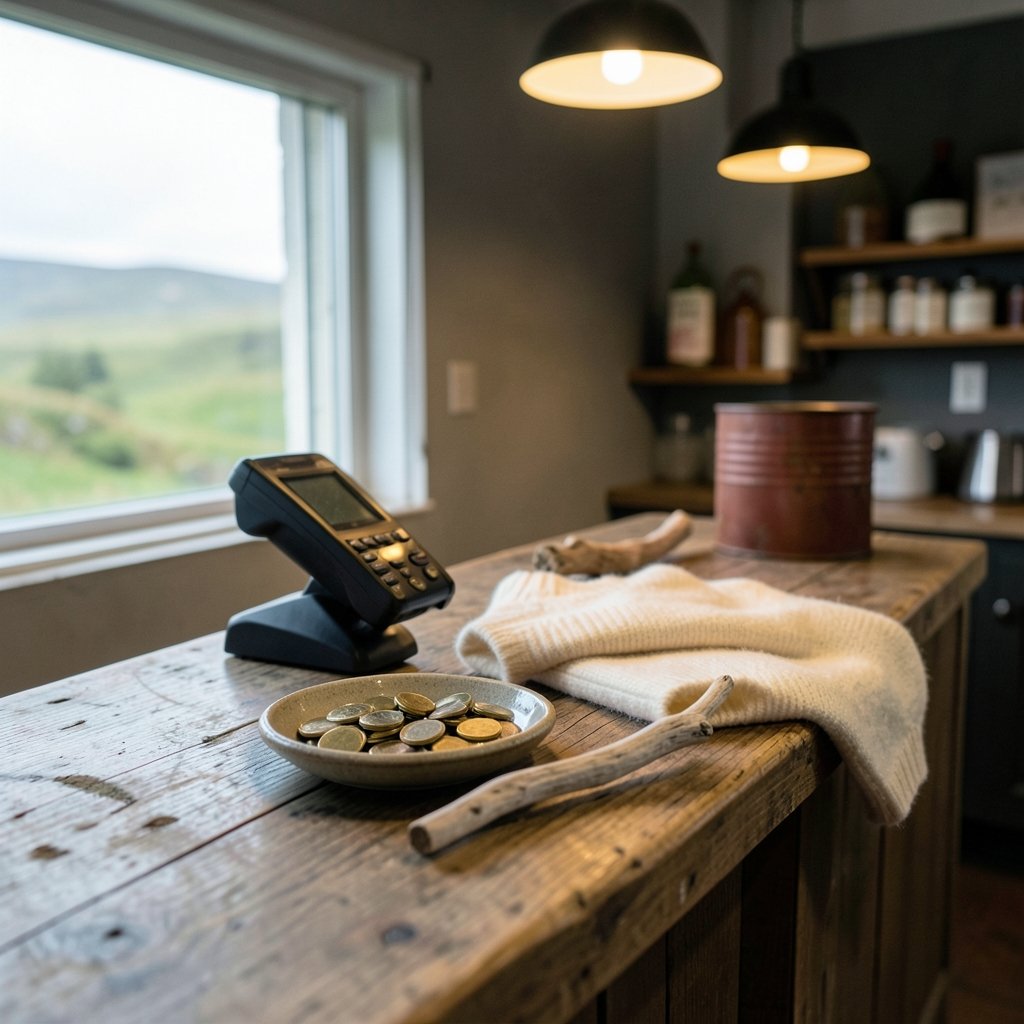
What happens when a country of fewer than 400,000 people keeps its own currency while almost everyone around it uses the euro? Iceland has answered that question for decades, and the answer is the króna (plural krónur), ISO code ISK. It is a small currency with an outsized story: a banking collapse, years of capital controls, a stubborn inflation problem, and one of the most cash-light economies in Europe. For travelers, the practical questions are simple. How much cash do you actually need? Can you pay by card everywhere? Why does the exchange rate move so much? For anyone curious about how the currency works, the story behind the numbers is worth understanding before you land at Keflavík.
What Is the Icelandic Króna?
The króna is Iceland’s national currency, issued by the Central Bank of Iceland (Seðlabanki Íslands). The name means “crown,” a naming pattern shared with the Danish, Norwegian and Swedish currencies. The ISO code ISK is assigned under the international standard that defines currency codes, which is worth a look if you want to understand how three-letter codes like ISK get set: the ISO 4217 currency code standard.
One quirk surprises many visitors. The króna is not subdivided in practice. The eyrir, its 1/100 subunit, was abolished as a unit in 2003, so prices are quoted in whole krónur and the smallest coin in circulation is 1 króna. Coins of 1, 5, 10, 50 and 100 krónur circulate, with the 10 krónur coin being the most common in daily use. Banknotes come in 500, 1,000, 2,000, 5,000 and 10,000 krónur, and the 10,000 krónur note is the newest, introduced in 2013. (Icelandic króna)
A Short History of a Small Currency
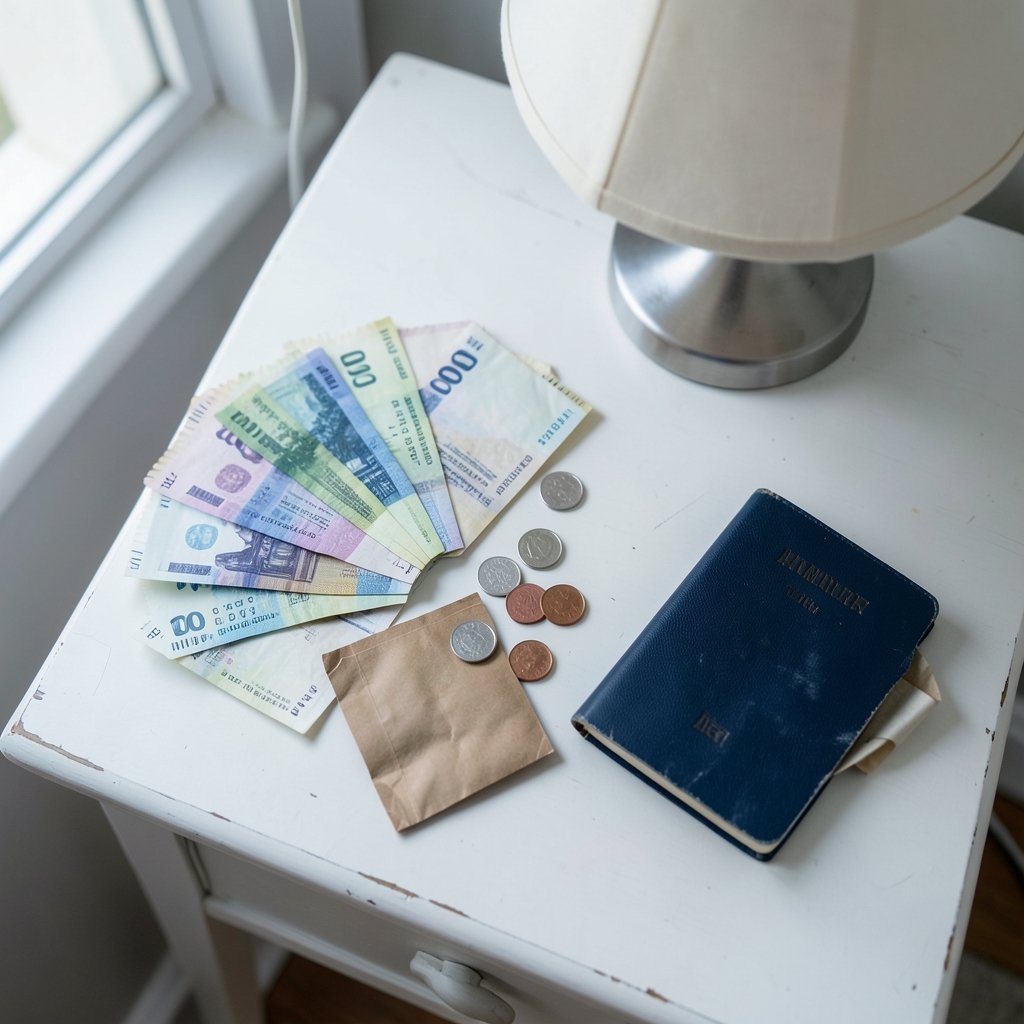
Iceland’s currency has never had an easy ride. The króna has been tied to other currencies, floated, pegged and floated again. The defining moment came in October 2008, when the country’s three main banks, Glitnir, Landsbanki and Kaupthing, collapsed within days of each other. The króna lost roughly half its value against the euro in the months that followed. In response, the government imposed capital controls in October 2008, restricting the movement of money across borders to stop the currency from collapsing further.
Those controls stayed in place far longer than most economists expected. They were lifted in stages, with the last major steps taken in March 2017. The episode left a lasting mark on how Icelanders and outsiders think about the króna: as a currency that can swing sharply and that the state is willing to manage actively. It also explains why the exchange rate you see on a given day can look very different from the one in a guidebook printed a few years ago.
Who Runs Monetary Policy?
The Central Bank of Iceland sets monetary policy. Its Monetary Policy Committee meets on a scheduled basis to set the policy interest rate, which is the seven-day term deposit rate. Iceland adopted an inflation-targeting framework in 2001. The target is 2.5% inflation, with a tolerance band of plus or minus 1.5 percentage points, meaning the bank aims to keep inflation between 1% and 4%.
In practice, hitting that target has been hard. Iceland is a small, open economy with a concentrated export base, and its inflation has often run above target, pushed by wages, housing, tourism cycles and imported prices. That is one reason Icelandic interest rates have often been high by European standards. High rates attract carry-trade investors, which in turn makes the exchange rate more volatile. If you want the official explanation of the framework and how the committee thinks, the Central Bank of Iceland’s monetary policy pages lay it out in plain terms.
The Exchange Rate and Why It Moves
The króna floats, meaning its value is set in the market rather than fixed to the euro or dollar. But it is a thin currency. Fewer krónur trade on any given day than almost any major currency, so relatively small flows of money can move it noticeably. Tourism receipts, fish exports, aluminum prices and global risk appetite all feed into the rate.
For visitors, this has a practical consequence: the ISK/EUR or ISK/USD rate can shift several percent in a week. That is not a reason to panic, but it is a reason to check the rate close to your trip rather than months ahead. The Central Bank of Iceland publishes official exchange rates, and Statistics Iceland tracks the consumer price index that drives inflation. Both are worth a glance if you want current figures rather than a number from an old blog post.
| Feature | Detail |
|---|---|
| Currency name | Króna (plural krónur) |
| ISO code | ISK |
| Subunit | Eyrir, abolished as a unit in 2003 |
| Smallest coin | 1 króna |
| Banknotes | 500, 1,000, 2,000, 5,000, 10,000 krónur |
| Inflation target | 2.5% (band 1%–4%) |
| Central bank | Central Bank of Iceland |
| Exchange-rate regime | Floating, with a history of capital controls |
Cash or Card? What Actually Works in Iceland
Here is the short answer: cards work almost everywhere, and cash is optional for most travelers. Iceland is one of the most cash-light countries in Europe. Card and mobile payments dominate, even for small purchases like a coffee or a bus ticket. Many Icelanders rarely carry notes at all.
That said, “almost everywhere” is not “everywhere.” A few situations still favor having some cash on hand:
- Some remote guesthouses, farm stays and small rural businesses may prefer cash or have unreliable card terminals.
- A handful of hot springs, campsites and honesty-box situations still run on coins or small notes.
- Tipping is not expected in Iceland, but a small cash tip is never refused in tourism-heavy settings.
A sensible approach is to carry a modest amount, perhaps the equivalent of 5,000 to 10,000 krónur, and rely on a card for everything else. Do not exchange a large sum at the airport. Rates at arrival halls are rarely the best, and you may end up converting unused krónur back at a loss.
Common Mistakes Visitors Make With Icelandic Money
A few money mistakes come up again and again among visitors.
Exchanging too much cash. Because cards are so widely accepted, many travelers finish their trip with unused krónur. Buyback spreads are unkind, so you lose money twice.
Assuming the króna is pegged to the euro. It is not. Iceland is not an EU member and does not use the euro, even though it belongs to the European Economic Area and the Schengen area. Prices are in krónur, full stop.
Ignoring card fees. Many cards add a foreign transaction fee of 1% to 3%. A card with no foreign fee can save real money over a week-long trip.
Paying in your home currency when offered. Some terminals offer to charge you in USD or EUR instead of ISK. This dynamic currency conversion usually comes with a poor rate. Always choose to pay in krónur.
Forgetting that prices are high. Iceland is expensive. A casual lunch can easily run 2,500 to 4,000 krónur. Budget accordingly rather than being shocked at the till.
How Icelanders Themselves Handle Money
Inside Iceland, the króna is simply the currency, and daily life runs on digital payments and bank transfers. The Central Bank has periodically reviewed the future of cash, reflecting a broader debate in many countries about how much physical money an economy still needs. That debate connects to a wider global conversation about digital currencies and central bank money, which you can follow in this explainer on CBDCs and central bank money going digital.
For households, the bigger financial story has been inflation and housing costs. Icelandic wages are relatively high, but so are prices, and mortgage rates have swung with the policy rate. That combination shapes how people save and borrow. If you are interested in how ordinary people build income in a high-cost economy, this piece on how to make money with AI is a different topic entirely, but it reflects the same question: how do you stretch earnings when the cost of living is steep?
Iceland’s Currency in a Wider Context
Iceland is a useful case study because it is small enough to see the whole picture. A country can keep its own currency, float it, target inflation and still struggle to hit the target. It can impose capital controls in a crisis and lift them a decade later. It can go nearly cashless while still minting coins.
That last point matters for anyone thinking about money more broadly. Cash use is falling in many rich countries, and the infrastructure that supports it, from note printing to coin distribution, is expensive to maintain. Iceland’s experience shows that a small economy can adapt quickly, but also that the shift away from cash raises questions about access for people who rely on physical money. The same tension shows up in debates about digital payments and financial inclusion elsewhere. If fraud and financial crime interest you, this analysis of where identity threat detection money really goes offers a useful parallel on how security spending is allocated.
Practical Tips Before You Travel
A short checklist helps. First, check the current exchange rate close to departure using an official source rather than a cached search result. Second, confirm whether your card charges foreign transaction fees and carries a PIN, since some Icelandic terminals prefer chip-and-PIN. Third, plan to use a card for the vast majority of spending and keep a small cash reserve for rural stops. Fourth, always pay in ISK when a terminal offers a choice. Fifth, keep receipts if you plan to claim anything back, and remember that Iceland’s tax-free shopping scheme for visitors works through dedicated refund points rather than at every shop. (Gift card scam works victims rarely get their money back)
One more tip: prices in Iceland are quoted with tax included, so the number on the tag is what you pay. That removes a common source of confusion for visitors used to sales tax being added at the register.
Conclusion
Iceland’s money is a small currency with a large backstory. The króna floats, targets 2.5% inflation, and has survived a banking collapse, years of capital controls and a dramatic shift toward digital payments. For travelers, the practical rules are simple: rely on cards, carry a little cash, always pay in ISK, and check the rate near your trip. For anyone interested in economics, Iceland remains a compact laboratory for questions about small open economies, currency management and the slow retreat from cash. Understanding the króna helps with spending and shows how a modern economy manages money under pressure.
Frequently Asked Questions
What currency does Iceland use?
Iceland uses the króna, with the ISO code ISK. It is issued by the Central Bank of Iceland and is not subdivided in practice, since the eyrir was abolished as a unit in 2003.
Can I use euros or US dollars in Iceland?
Generally no. Prices are in krónur, and while some tourist businesses may accept foreign cash at poor rates, cards charged in ISK are the norm. Iceland is not a euro member and does not use the euro.
Do I need cash in Iceland?
Mostly no. Cards and mobile payments are accepted almost everywhere, even for small purchases. A small cash reserve of a few thousand krónur is useful for remote guesthouses, campsites and honesty boxes.
Why is the Icelandic króna so volatile?
The króna floats and trades in relatively small volumes, so modest flows of money can move it. Tourism, exports and global risk appetite all affect it, and Iceland’s history of capital controls and high interest rates adds to the swings.
What is Iceland’s inflation target?
The Central Bank of Iceland targets 2.5% inflation, with a tolerance band of plus or minus 1.5 percentage points, so between 1% and 4%. The framework has been in place since 2001.
Should I exchange money before I arrive in Iceland?
It is usually better to arrive with a card and withdraw or exchange only a small amount if needed. Airport exchange rates are rarely the best, and unused krónur can be costly to convert back.



