
India has spent years assembling the world’s smartphones without making the chips inside them. That is starting to change. By September 2026, the government had approved 12 semiconductor manufacturing units, five of which had started commercial production, according to Convergence Now, spanning fabrication, packaging, testing and chip design.
The question for shoppers is simpler than the industrial policy behind it: will a phone, laptop or television assembled with Indian-made chips actually cost less? The honest answer is that it might, eventually, but not quickly and not across the board. A chip is only one part of a gadget’s cost, and India is starting with selected chip types rather than the full range a modern device needs.
What is genuinely new is the scale of the attempt: India is moving from assembling other countries’ components to building fabs, packaging plants and a design ecosystem of its own. For buyers, that shift matters less as an overnight price cut and more as a slow change in where gadgets come from.
Key takeaways
- By September 2026, India had approved 12 semiconductor manufacturing units, with five in commercial production, Convergence Now reports.
- India still imports around 90-95% of its semiconductor and component requirements, according to a NITI Aayog analysis cited by Convergence Now.
- The Tata Electronics fab in Dholera, Gujarat, carries an approved investment of about ₹91,000 crore.
- Local chip production could cut some sourcing and logistics costs over time, but retail prices also depend on other components, taxes and margins.
- Do not expect cheaper gadgets soon: global memory prices are rising sharply, and analysts expect premium phone prices to climb further before local supply can offset them.
What India is actually building
Semiconductor manufacturing runs in stages: design, wafer fabrication, then assembly, testing and packaging. India already has a strong chip-design workforce, but designing a chip here has not meant manufacturing it here. The current programme is trying to close that gap.
The India Semiconductor Mission, approved in December 2021 with an initial outlay of ₹76,000 crore, was designed to attract investment in semiconductor and display manufacturing. In July 2026, the government approved the next phase, Semicon 2.0, with an outlay of ₹1,27,500 crore, expanding support beyond factories into chip design, research and development, equipment, materials, skilled workers and manufacturing capability.
The headline projects show how broad the push is. Tata Electronics is building a commercial fab in Dholera, Gujarat, with Taiwan’s Powerchip Semiconductor Manufacturing Corporation: about ₹91,000 crore, a planned 50,000 wafer starts a month, chips for automotive, computing, communications and AI, with commercial operations still to come. Micron is setting up a Gujarat assembly and testing facility, about ₹22,516 crore, focused on DRAM and NAND, and Tata Electronics is also building a packaging facility in Assam for about ₹27,120 crore. Other approved projects involve CG Power, Kaynes Technology, HCL-Foxconn and SiCSem. The technology behind these plants is advancing fast, and our report on 3D chip stacking explains how vertical silicon is changing what a single chip can do.
How a chip becomes a gadget price
A smartphone may contain several types of chips working together: the main processor handles computing, memory stores information temporarily, storage chips retain data, and power-management chips regulate electricity. Laptops add CPUs and graphics processors, televisions add display drivers and image processors, and wearables add sensors and wireless chips. If manufacturers cannot obtain these components at the right price or in sufficient quantities, production becomes more expensive or faces delays.
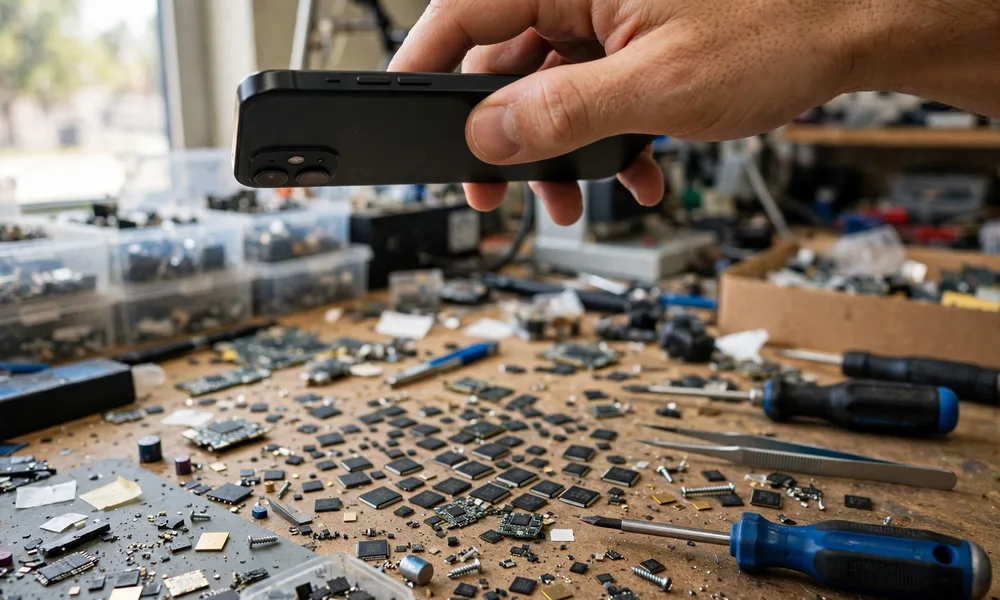
Domestic production could change that maths in four ways: another supply source, cutting dependence on imports and the shipping costs, currency movements and disruptions that come with them; steadier production when global supply tightens; lower logistics and inventory costs from sourcing closer to factories; and more competition as a wider ecosystem attracts suppliers.
None of those effects is automatic: domestic production will not automatically be cheaper than imports, since manufacturing costs, equipment, materials, energy, financing and production volumes all influence the final price. And reducing the cost of one component does not necessarily translate into an equivalent reduction in the retail price, because the final price also depends on the display, memory, software, taxes and the manufacturer’s margin. A manufacturer that saves money on chips may use the saving to improve specifications, increase margins, or absorb other rising costs rather than cut the retail price.
Which gadgets could feel it first
The impact will not be the same across all products, because different devices use different semiconductors and India’s capabilities are developing across specific chip categories. Smartphones are among the most visible beneficiaries, since they use application processors, memory, power-management chips, radio-frequency components and display controllers, and India’s expanding packaging capabilities could support local sourcing of some of these. But the most advanced processors in premium devices need highly sophisticated manufacturing, and India is still developing its commercial fabrication capabilities, so domestic production of a wider range of mobile processors will take time.
Laptops and personal computers depend on processors, graphics chips, memory and power-management components, and domestic manufacturing of selected components could support local production and improve supply-chain resilience. Advanced CPUs and GPUs, however, depend on specialised global ecosystems, and India’s emerging fabs will not immediately replace the international suppliers of these chips. That matters for buyers weighing a new machine now: the next flagship phone or laptop you consider will still be shaped mainly by global supply, as our look at the Galaxy S27 release shows, with its pricing driven by the same global component market.
The caveats that matter
The biggest caveat is timing. Building a chip factory takes years: fabs need large investments, specialised equipment and highly controlled environments, and even after construction, facilities must qualify their processes, achieve consistent yields and build customer relationships before reaching stable production. India is also starting with selected chip technologies, so a facility producing power-management or automotive chips cannot automatically manufacture the advanced processor used in a premium smartphone.
Imported components will remain important even as local production grows. Manufacturers will still need components not yet made locally, including advanced processors, high-end memory, display panels and camera sensors, and a complete supply chain will take time to build. Global chip prices still influence costs too: rising demand for memory chips from AI data centres can affect the availability and price of memory used in consumer electronics, and domestic production can improve supply options without fully insulating Indian manufacturers from global market movements.
That global pressure is visible right now, and it cuts against the hope of cheaper gadgets in the near term. Counterpoint Research expects memory to account for 43% of a premium phone’s bill of materials by December 2026, against 13% in early 2025, and premium flagship prices to rise more than 30% by the end of 2026 against 2025, according to Financial News. IDC puts India smartphone shipments in the September quarter at 36.8 million units, down 23.3% year on year, while the average selling price reached a record $371, up 26.1%.
| Detail | What is known |
|---|---|
| Units approved | 12 semiconductor manufacturing units by September 2026; five in commercial production (Convergence Now) |
| Import dependence | Around 90-95% of semiconductor and component needs met through imports (NITI Aayog analysis) |
| India Semiconductor Mission | Approved December 2021, initial outlay ₹76,000 crore |
| Semicon 2.0 | Approved July 2026, outlay ₹1,27,500 crore; covers design, R&D, equipment, materials and skills |
| Tata Dholera fab | About ₹91,000 crore with PSMC; planned 50,000 wafer starts a month; commercial operations still to come |
| Micron Gujarat | About ₹22,516 crore assembly and testing facility for DRAM and NAND |
| Tata Assam | About ₹27,120 crore packaging facility using indigenous technologies |
| Near-term price pressure | Memory at 43% of a premium phone’s build cost by December 2026 (Counterpoint); India average selling price $371, a record (IDC) |
The honest picture is two forces pulling in opposite directions: local manufacturing should gradually improve supply resilience and widen sourcing options, while global memory costs push gadget prices up now and the fabs that could offset that pressure are still scaling up. Anyone promising cheaper phones next month is selling a forecast, not a fact.
What it means if you are buying a gadget in 2027
For buyers, the practical takeaway is to judge each purchase on its own merits rather than waiting for a chip-driven price drop with no date attached. If you need a phone or laptop now, buy on the specifications, battery life and support you need, and check current pricing first, since memory-driven price rises are already moving the market. The squeeze is sharpest in budget and mid-range devices: CyberMedia Research data cited by Financial News shows shipments below ₹7,000 falling 94% and the ₹7,000 to ₹24,999 band falling 42%, so compare a wider set of brands, including Indian brands gaining share as the entry level tightens.
Checklist: reading India’s chip boom honestly
Use these checks before repeating a claim about cheaper gadgets.
- Check whether the claim names a specific factory, chip type and production date.
- Separate assembly from fabrication: a phone assembled in India may still contain imported chips.
- Ask which chip the factory makes, since a power-management fab cannot build a flagship processor.
- Remember the chip is one cost among many: other parts, taxes and margins shape the retail price too.
- Compare the claim with current memory prices, which are pushing premium phone costs up now.
- Treat any price forecast as a forecast, and check current pricing first.
Frequently asked questions
Will smartphones become cheaper because India is manufacturing chips?
Possibly over time, but not necessarily and not soon. Domestic chip manufacturing could reduce certain sourcing and supply-chain costs, but smartphone prices depend on many components and business costs, so lower chip costs do not guarantee an immediate price reduction.
Does India currently manufacture semiconductor chips?
Yes. Several manufacturing and packaging facilities have started commercial production, with 12 units approved by September 2026, but domestic capabilities do not yet cover the full range of chips the industry requires.
What is the difference between a semiconductor fab and a chip packaging plant?
A fab manufactures integrated circuits on silicon wafers. A packaging facility separates, tests and packages the chips so they can be used in electronic products. Both are important stages of semiconductor manufacturing.
Why does India import so many semiconductor chips?
Semiconductor manufacturing requires specialised technology, expensive equipment, skilled workers and a developed supplier ecosystem. India is still building these capabilities, so it still meets around 90-95% of its needs through imports, according to NITI Aayog.
When will consumers start seeing the impact of India’s chip manufacturing boom?
It depends on when new facilities reach commercial production, achieve consistent output and supply manufacturers at competitive prices. Some benefits may emerge as production expands, but a broad effect on retail prices is likely to take longer, and no firm date has been confirmed.
Which gadgets are most likely to benefit first?
Televisions, home appliances and automotive electronics are plausible early beneficiaries, since they use the mature and specialised chip types India is building first. Premium smartphones and laptops, which need the most advanced processors, are likely to benefit later.
Chip supply is only part of the gadget story: the accelerators and processors themselves keep changing, and our roundup of AI accelerator launches separates the products that actually shipped from the ones still promised.
The bottom line
India’s chip manufacturing boom is real, large and well funded, from the ₹91,000 crore Tata fab in Dholera to Micron’s Gujarat facility and the ₹1,27,500 crore Semicon 2.0 programme. It should gradually strengthen supply resilience and support a deeper domestic electronics industry. What it will not do, on any evidence available now, is make your next phone or laptop cheaper in the near term.
The price story for 2027 will be decided first by global memory costs, which are rising fast, and only later by how quickly Indian fabs reach stable commercial production. Watch the factories, not the slogans: stable output, real customer orders and locally sourced components are the signals that the boom is reaching the shop shelf.