
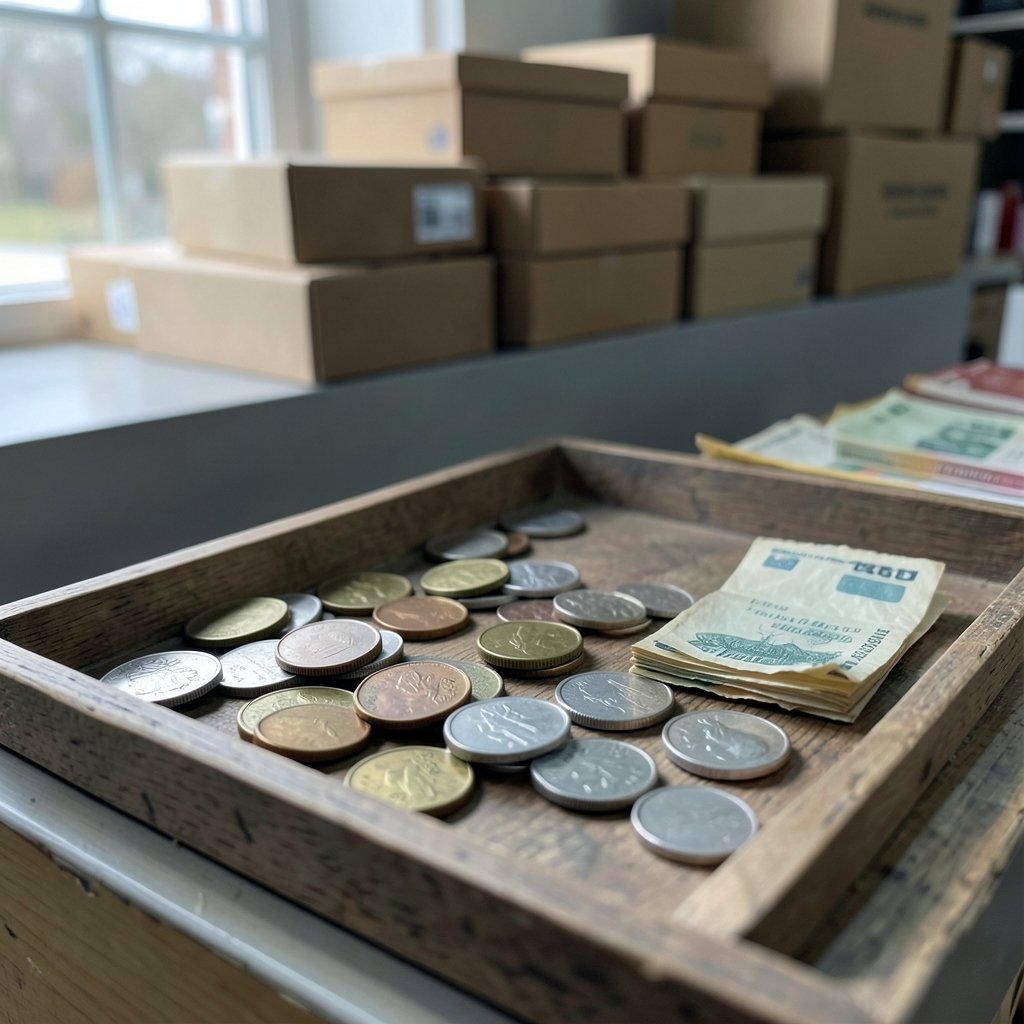
What do you picture when you hear the phrase “Irish money”? A handful of harp-stamped euro coins? A faded pound note from a grandmother’s drawer? A Northern Irish banknote that looks like sterling but isn’t quite the same thing? All three answers are correct, and that overlap is exactly why the topic confuses so many visitors, expats, and curious readers.
Ireland’s money story is unusually layered. The Republic of Ireland swapped its own currency for the euro more than two decades ago, Northern Ireland still uses sterling, and the island’s shared history left behind a vocabulary, a set of coin designs, and a few practical traps that catch people out. This guide untangles all of it, from the decimalisation of 1971 to what actually happens when you hand a Belfast-issued banknote to a cashier in Dublin.
Irish Money Means Three Different Things
Before anything else, it helps to separate the three meanings that get bundled together under one phrase. Mixing them up is the single most common source of confusion.
The first meaning is the Irish pound, known in Irish as the punt Éireannach and carrying the ISO code IEP. This was the Republic’s own currency until the euro took over. The second meaning is Ireland’s euro coinage, the coins minted by the Central Bank of Ireland with the harp on one side. The third meaning is Northern Irish sterling, the pound notes issued by local banks in Belfast and Derry.
| Meaning | Where it applies | Status today |
|---|---|---|
| Irish pound (IEP) | Republic of Ireland | Withdrawn, replaced by the euro |
| Irish euro coins | Republic of Ireland | In active circulation |
| Northern Irish sterling notes | Northern Ireland | In active circulation locally |
A tourist in Dublin who says “Irish money” almost certainly means euros. A collector in Boston probably means the old punt. A shopper in Belfast means sterling notes with a local design. Keeping these apart makes everything else easier to follow.
From Pounds, Shillings and Pence to the Punt
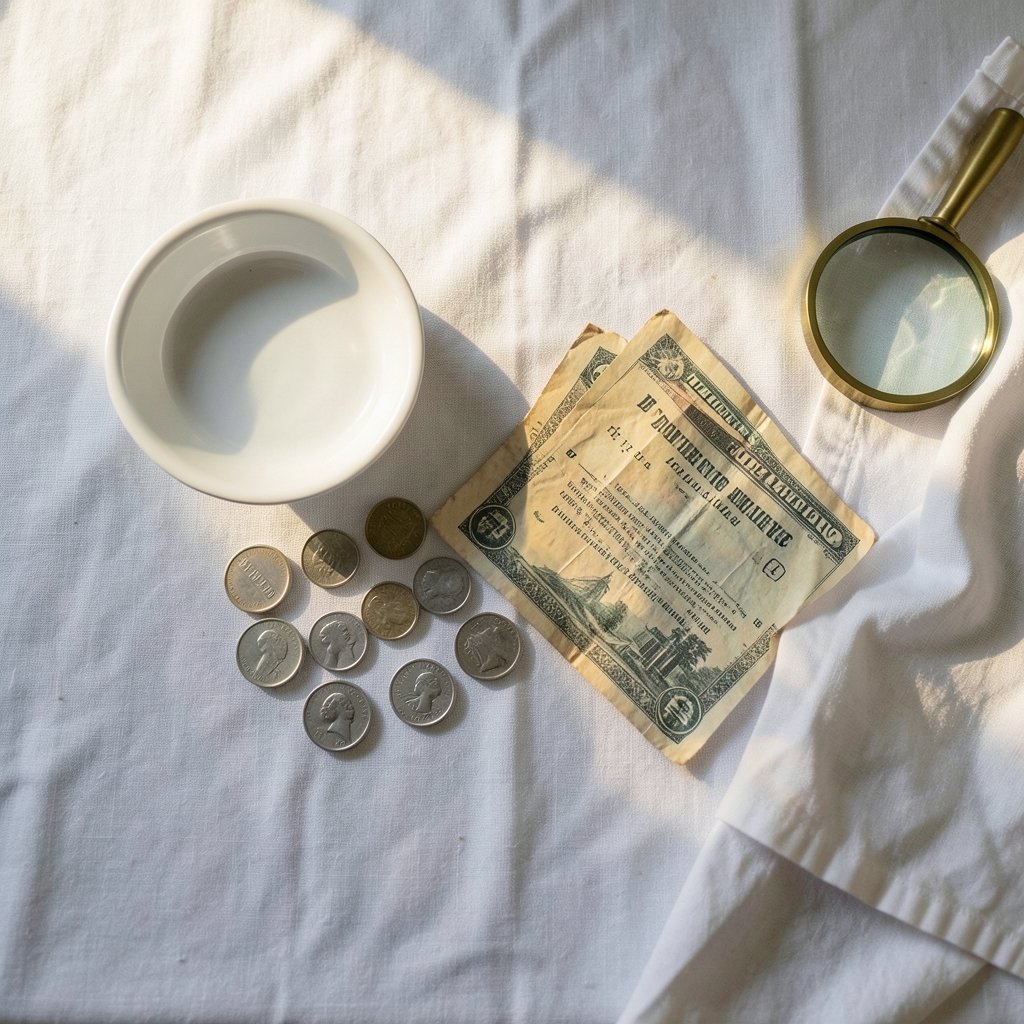
For most of the twentieth century, Irish money followed the old British system of pounds, shillings and pence, with 12 pence to a shilling and 20 shillings to a pound. That arithmetic was a daily headache for anyone handling cash, and it made cross-border trade and tourism more awkward than it needed to be.
Everything changed on 15 February 1971, when the Republic decimalised. The new pound was divided into 100 pence, and the coins and notes were redesigned to match. This was not a uniquely Irish event; the United Kingdom decimalised on the same day, and the two currencies stayed closely tied in value for years afterward. The full history of the Irish pound, including its decimalisation and eventual retirement, is well documented in the reference entry on the Irish pound.
What surprised many people at the time was how attached they had become to the old notes. Banknotes carrying portraits and symbols of Irish cultural life became keepsakes almost immediately. Today, unused Irish pound notes and coins are collector’s items rather than spending money, and banks in the Republic stopped exchanging them for euros years ago.
The Euro Arrives and the Punt Retires
Ireland joined the first wave of euro countries. The euro began life as an accounting currency on 1 January 1999, which meant prices could be quoted in euros while physical cash was still the punt. Then, on 1 January 2002, euro notes and coins entered circulation and Irish pound cash began its short farewell.
The fixed conversion rate was locked in at IEP 1 = €1.26973882, which works out to roughly €1 = IEP 0.787564. That rate was irrevocable, so there was no haggling and no market fluctuation. If you are curious about how the single currency was rolled out across member states, the European Central Bank’s overview of the euro’s introduction explains the process and the fixed rates.
In practice, the changeover in Ireland went smoothly by most accounts. Retailers displayed dual prices for a while, cash registers were swapped, and the short period of dual circulation gave people time to spend their remaining punt. Anyone who has lived through a currency change will recognise the pattern of small frictions: confusion at tills, mental arithmetic at the deli counter, and a sudden appreciation for round numbers.
What Irish Euro Coins Actually Look Like
Irish euro coins are not the same as euro coins from Germany, France or Greece. Each eurozone country designs its own national side, and Ireland’s choice was deliberate and restrained.
The harp, the national emblem, appears on every Irish coin. The €1 and €2 coins carry the harp alongside the word “Éire,” while the smaller denominations from 1 cent to 50 cents show the harp with the year of issue. The design was selected through a public competition, and the winning entry kept things simple rather than cramming in landmarks or portraits. The reference entry on Irish euro coins sets out the designs and how they were chosen.
Two practical points follow from this. First, Irish euro coins circulate freely across the eurozone, so a coin minted in Dublin can turn up in a Berlin bakery and nobody blinks. Second, collectors pay attention to the national side, which means an Irish 2 cent coin is a different collectible from a Portuguese one even though both spend identically.
Banknotes Are Shared, Not Irish
Here is a detail that surprises people: Ireland does not issue its own euro banknotes. Since 2002, notes used in the Republic have been standard Eurosystem notes, first the original series and then the Europa series from 2013 onward, which added improved security features. The European Central Bank’s page on euro banknotes covers the design and security elements.
So if you are looking for “Irish euro notes,” they do not exist as a distinct item. The Irishness lives in the coins and in the Central Bank of Ireland’s role as the national issuer within the Eurosystem.
Northern Ireland Uses Sterling, Not Euros
Cross the border and the money changes completely. Northern Ireland uses the pound sterling, and the euro is not the local currency there. This catches visitors who assume that “Ireland” means one currency across the whole island.
There is a further wrinkle. Several local banks in Northern Ireland issue their own sterling banknotes, including Bank of Ireland, Ulster Bank and Danske Bank. These notes are widely accepted in Northern Ireland but are not legal tender in the strict technical sense, a nuance that trips up even seasoned travellers. The reference entry on the banknotes of Northern Ireland explains who issues them and why the legal-tender question is more complicated than it sounds.
Practically speaking, here is what works and what does not:
- Northern Irish notes are usually accepted without comment in Northern Ireland.
- In Great Britain, some shops accept them and some refuse, especially outside major cities.
- In the Republic of Ireland, they are foreign currency and must be exchanged.
- Scottish and Northern Irish notes are often confused, so check the issuer name before accepting one.
The safest approach for visitors is to spend local notes locally and exchange leftovers before leaving. Carrying a stack of unfamiliar banknotes home is how people end up with paper that no one will take.
The Cashless Shift and What It Means for Irish Money
Ireland has moved quickly toward card and mobile payments, particularly in cities. Contactless taps are routine for coffee, groceries and transport, and some small businesses now prefer cards outright. Cash has not disappeared, though. Rural shops, market stalls, tips and small transactions still run on notes and coins, and many people keep a few euro notes on hand out of habit.
This shift has a side effect that matters for anyone interested in money as a subject: the physical experience of currency is fading. Fewer people handle coins daily, which makes the harp design less familiar than it was a decade ago. It also means the practical skills of spotting a counterfeit note or checking an unfamiliar banknote are less widely practised.
Currency fraud is not a trivial concern. Scams that rely on getting someone to hand over real money for something worthless are old and persistent, and the gift card scam is a good example of how victims rarely get their money back once funds are transferred. Understanding how money changes hands, whether physical or digital, is basic financial hygiene.
Digital money is evolving too. Central banks around the world, including in the euro area, have been studying digital versions of their currencies, and the debate over CBDCs and how central bank money is going digital is worth following because it could reshape what “cash” means within a decade.
Common Mistakes People Make With Irish Money
A few errors come up again and again. Knowing them in advance saves both money and embarrassment.
The biggest is assuming the whole island shares one currency. It does not. The second is trying to spend old Irish pound notes, which have no spending power. The third is accepting a Northern Irish note in Great Britain without checking whether the shop will take it. The fourth is relying entirely on cards in rural areas where signal and terminals are unreliable.
A fifth mistake is subtler: treating exchange rates as trivial. When you cross the border with cash, you lose a little on every conversion. Doing one larger exchange rather than several small ones usually costs less, and paying by card in the local currency is often cleaner than letting a terminal convert for you.
For readers thinking about money more broadly, whether that means earning it, protecting it or understanding where it goes, the same principle applies: know the local rules before you act. That holds whether you are handling a foreign currency for the first time or weighing up how to make money with AI in a market you do not fully understand. (Identity threat detection really costs where money goes)
Conclusion
Irish money is a story of layered identities. The Republic of Ireland spent three decades with its own punt, decimalised it in 1971, and then traded it for the euro at a fixed rate in 1999 and 2002. Today the Republic uses euro coins stamped with the harp and shared Eurosystem banknotes, while Northern Ireland runs on sterling with a set of local banknotes that are accepted but not quite legal tender.
For visitors, the practical rules are simple. Carry euros in the Republic, sterling in Northern Ireland, and never assume the two mix. Spend local notes before you leave. Keep a little cash for the places cards do not reach. And if you find an old punt in a drawer, treat it as a piece of history rather than spending money, because that is exactly what it has become.
Frequently Asked Questions
What currency does Ireland use today?
The Republic of Ireland uses the euro. Northern Ireland, which is part of the United Kingdom, uses pound sterling. The two currencies are separate, and euro cash is not accepted as local currency in Northern Ireland.
When did Ireland stop using the Irish pound?
The Irish pound was replaced by the euro. The euro became the accounting currency on 1 January 1999, and euro cash entered circulation on 1 January 2002, after which Irish pound notes and coins were withdrawn following a short period of dual circulation.
What was the exchange rate between the Irish pound and the euro?
The rate was fixed irrevocably at IEP 1 = €1.26973882, equivalent to about €1 = IEP 0.787564. Because the rate was locked, there was no market variation once it took effect.
Are Northern Irish banknotes legal tender?
Not in the strict technical sense. Notes issued by Northern Irish banks are widely accepted in Northern Ireland but are not legal tender, and acceptance in Great Britain varies. In the Republic of Ireland they are foreign currency and must be exchanged.
Can I still exchange old Irish pound notes for euros?
Generally no. The Central Bank of Ireland stopped exchanging Irish pound banknotes and coins for euros years ago, so old punts are now collector’s items rather than convertible cash. Their value today is mainly historical or numismatic.
Why do Irish euro coins all show a harp?
The harp is the national emblem of Ireland, and the design chosen through a public competition kept the national side simple and consistent. The €1 and €2 coins add the word “Éire,” while the smaller coins show the harp with the year.



