
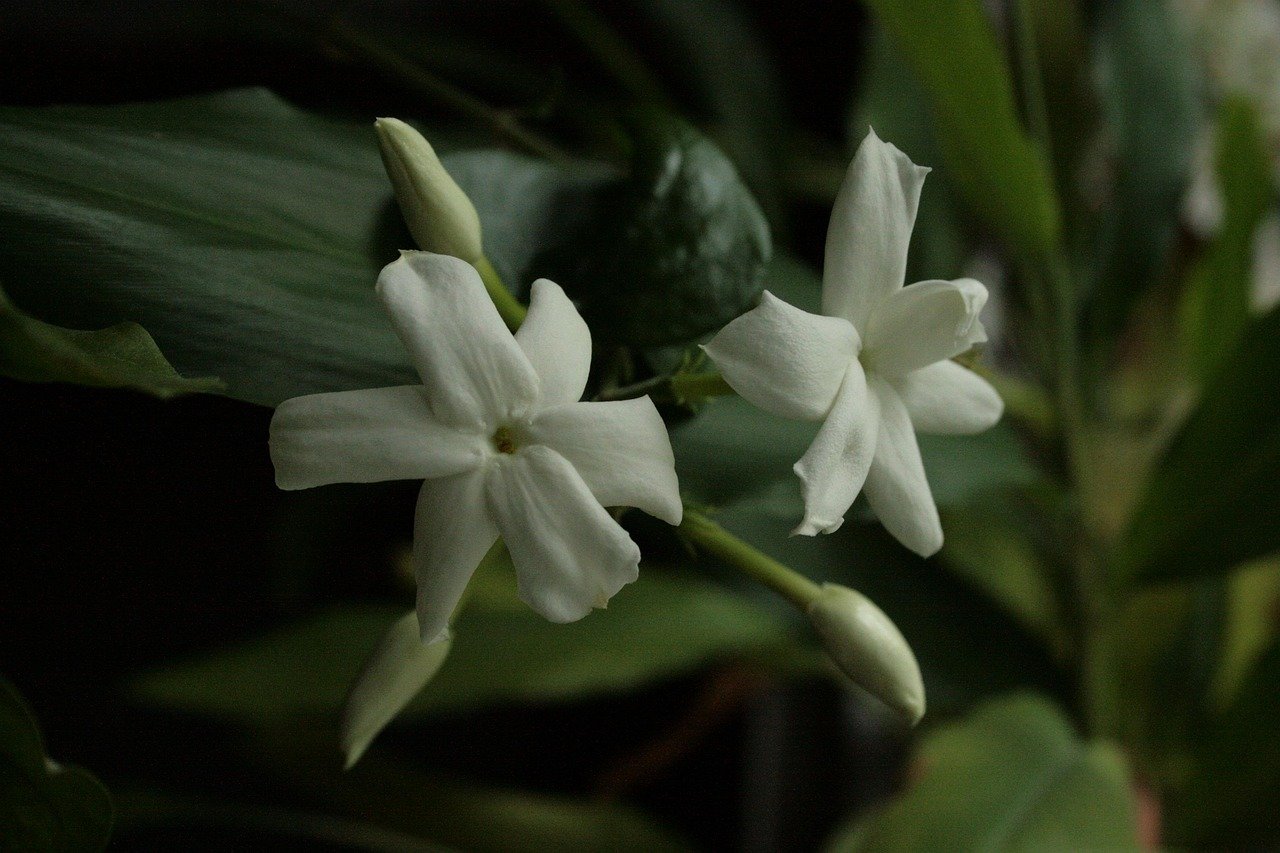
What makes a single white flower worth naming as a national symbol, steeping into tea, and stringing into garlands across half of Asia? For Jasminum sambac, the answer comes down to three things: a scent that carries for meters, a habit of blooming generously in warm climates, and centuries of human use that turned a modest shrub into a cultural icon.
This plant is Arabian jasmine in English, sampaguita in the Philippines, melati putih in Indonesia, and pikake in Hawaii. It differs from common jasmine (Jasminum officinale) and is not the source of the oil usually sold as “jasmine absolute.” Those distinctions matter: online advice often mixes the species and gives gardeners bad guidance.
What Exactly Is Jasminum Sambac?
Jasminum sambac is an evergreen shrub or scrambling vine in the olive family, Oleaceae. It was formally described by William Aiton in Hortus Kewensis in 1789, and the species name has stuck ever since. Plants typically grow somewhere between 0.5 and 3 meters tall depending on climate, pruning, and whether they are trained against a support.
The leaves sit opposite each other or nearly so, and the flowers arrive in small clusters. In cultivation, most forms produce double flowers, which is one reason the plant is grown for ornament rather than for fruit. Wild or single-flowered types exist, but the double forms dominate gardens and the cut-flower trade.
One point that trips people up: the native range is genuinely disputed. Sources variously place the species in India, in South Asia more broadly, or across tropical Asia. Nobody has settled it cleanly, so treat any confident claim about a single country of origin with a raised eyebrow.
The Scent Chemistry That Explains the Hype
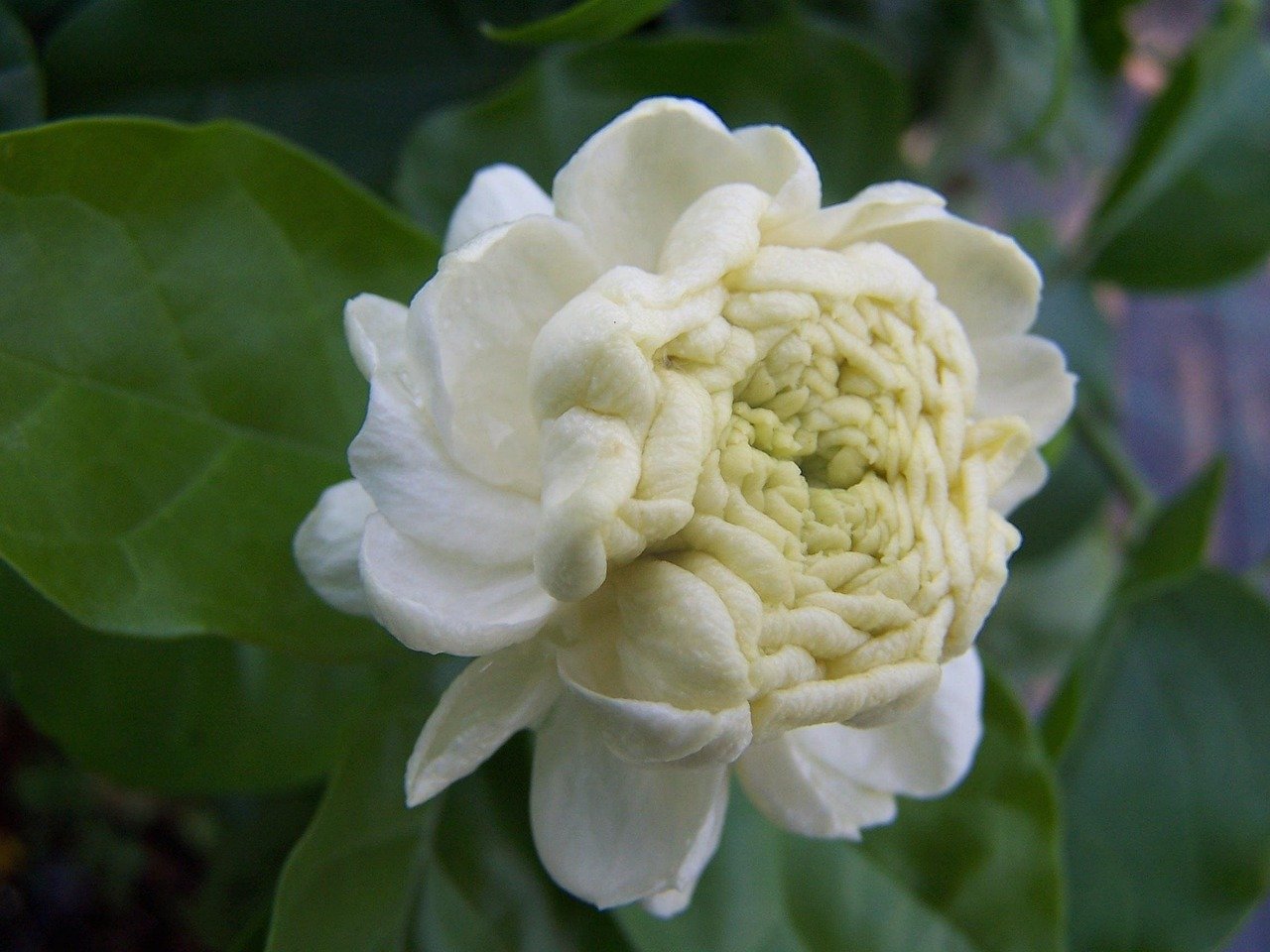
The fragrance is not one compound but a blend. Benzyl acetate, linalool, and indole are among the dominant players, though the exact profile shifts with cultivar, harvest time, and the study doing the measuring. Indole is the interesting one. On its own it smells faintly animalic, even unpleasant. Blended into a flower’s volatile mix, it reads as depth and warmth rather than stink.
For practical purposes, this chemistry explains two things growers notice. First, scent is strongest in the evening and early morning, when the flowers are freshest. Second, different cultivars really do smell different, so a plant bought for its label alone may disappoint. Smelling a flowering specimen before buying is the only reliable test.
Where the Flower Became a National Symbol
Jasminum sambac holds official status in two countries, and both designations are well documented.
In the Philippines, the flower is called sampaguita and serves as the national flower. Proclamation No. 652, signed on 1 February 1934 by Governor-General Frank Murphy, gave it that designation. Sampaguita garlands are still sold at roadside stalls and strung around the necks of visitors, graduation photos, and religious statues.
In Indonesia, the species is melati putih, one of three national flowers alongside the moon orchid and the giant padma. Presidential Decree No. 4 of 1993 named all three. Melati appears in wedding ceremonies, where it is threaded into hair and garlands, and it carries associations with purity and sincerity that run deep in Javanese tradition.
The plant also traveled. In Hawaii it is one of several species called pikake, a name that became attached to the flower through the islands’ long history of lei-making. In India, the blooms go into garlands and temple offerings. None of these uses has a single tidy start date, which is part of why the plant feels less like a garden specimen and more like a piece of living heritage.
Jasminum Sambac vs. Other “Jasmines”
Because the word jasmine gets applied to dozens of unrelated plants, a quick comparison saves a lot of confusion.
| Feature | Jasminum sambac | Jasminum officinale | Star jasmine (Trachelospermum jasminoides) |
|---|---|---|---|
| Family | Oleaceae | Oleaceae | Apocynaceae |
| Growth habit | Shrub or scrambling vine | Vigorous climbing vine | Woody evergreen climber |
| Flower shape | Often double, clustered | Usually single, five-petaled | Star-shaped, pinwheel |
| Scent timing | Strongest evening and morning | Strong, especially at night | Sweet, daytime |
| Cold tolerance | Tender, roughly USDA zones 9 to 11 | More cold-hardy | Hardy in many zone 8 areas |
| Common use | Garlands, tea scenting, containers | Garden climber, perfume | Fences and walls |
Star jasmine is not a true jasmine at all, despite the common name. If someone recommends “jasmine” for a cold-climate fence and you plant Jasminum sambac instead, you will end up with a dead shrub by the first hard frost.
How Jasmine Tea Actually Gets Its Flavor
Here is where a lot of people hold a wrong assumption. Jasmine tea is not made by adding flowers to a teabag. The traditional method, practiced especially in China’s Fujian province, layers fresh Jasminum sambac blossoms over green or white tea leaves and lets the dry tea absorb the volatiles. The flowers are then removed or replaced, and the process may repeat several times to build intensity.
That is why good jasmine tea tastes of the flower without looking like a flower garden. The petals you sometimes see in budget blends are often there for appearance, not for flavor. The scenting already happened in the factory.
A practical note for anyone trying this at home: fresh flowers must be picked at the right moment, usually early morning before the heat opens them fully. Leaves left in contact with damp blossoms too long go sour. It is a timing craft, not a dump-and-wait process.
Growing Jasminum Sambac Without Killing It
The plant is not difficult, but it is specific about a few things, and most failures come from ignoring them.
Light and warmth
Full sun to partial shade suits it. In hot climates, some afternoon shade protects leaves from scorch. It is hardy in roughly USDA zones 9 to 11, which means most temperate gardeners must grow it in a container and bring it indoors for winter.
Soil and water
Well-drained soil is non-negotiable. Jasminum sambac tolerates a lot, but soggy roots kill it faster than anything else. Water when the top layer of soil dries, and reduce watering in cooler months when growth slows.
Propagation
Cuttings are the main method. Take semi-ripe stem cuttings in warm weather, strip the lower leaves, and root them in a light mix kept consistently moist but not wet. Seed is rarely used, partly because double-flowered cultivars do not come true from seed.
Common mistakes that actually happen
- Overwatering in winter. Indoor plants in cool rooms need far less water than summer garden plants. Root rot is the number one killer.
- Buying an unlabeled “jasmine.” Always confirm the species name on the tag. A plant sold only as “jasmine” could be any of a dozen species.
- Pruning at the wrong time. Heavy pruning right before the flowering season removes the wood that would have carried buds. Prune after a flush of bloom instead.
- Expecting scent from a young plant. Flowering and fragrance intensity both improve as plants mature and receive enough sun.
- Keeping it in deep shade. The plant survives shade but flowers poorly, and a jasmine that does not bloom is just a green shrub.
Pests and problems
Spider mites and whiteflies show up indoors, especially in dry heated rooms. A regular rinse of the foliage and decent airflow handle most cases. Yellowing leaves usually point to waterlogged roots or a nutrient imbalance rather than disease.
What the Flower Is Used For Today
Beyond gardens, the species shows up in several industries. Perfumery uses jasmine materials widely, though much commercial “jasmine oil” comes from other species or from synthetic reconstruction. The cosmetic and fragrance trade values Jasminum sambac for its fresh, slightly green character. In parts of Asia, the flowers are also dried for herbal infusions and used in traditional preparations, though anyone considering medicinal use should check with a qualified professional rather than rely on garden folklore.
Cut-flower growers prize it because the blossoms hold up reasonably well after picking, and the garland trade depends on that durability. A sampaguita garland that wilted within an hour would not have survived as a street-corner staple for nearly a century.
Design Ideas for Gardeners
Because the plant stays manageable in a container, it fits into small spaces well. A few approaches that work in practice:
- Train a single stem up a small obelisk or trellis to save floor space on a patio.
- Group it near a doorway or seating area, where evening fragrance gets noticed.
- Pair it with lower-growing herbs in a large pot so the base does not look bare.
- Move containers indoors before night temperatures drop below about 10°C, rather than waiting for a cold snap.
For anyone building a fragrant garden around warm-climate plants, more planting and care guidance is available at OCCCY, which covers practical cultivation topics for gardeners working in mild climates.
A Realistic View of the Plant’s Limits
Jasminum sambac is not a cold-hardy climber, not the easiest houseplant for a dark apartment, and not the species behind most commercial jasmine oil. Common names do not identify it reliably: “Arabian jasmine,” “sampaguita,” and “pikake” all point to the same plant, while “star jasmine” points somewhere else entirely.
What it is: a tender, generous bloomer with cultural weight in at least two nations, a genuine role in tea production, and a fragrance that has earned its reputation compound by compound. Grow it for the flowers, keep it for the scent, and check the label before you buy.
Conclusion
Jasminum sambac sits at a rare intersection of botany, culture, and craft. It was formally named in 1789, became the Philippine national flower through a 1934 proclamation, joined Indonesia’s trio of national flowers by decree in 1993, and still scents tea in Fujian the way it has for generations. Its fragrance comes from a blend led by benzyl acetate, linalool, and indole, and its garden needs are simple but firm: sun, warmth, and drainage. Get those right, and the plant rewards you with flowers that justify every garland, every cup of tea, and every evening spent sitting near the pot.
Frequently Asked Questions
Is Jasminum sambac the same as common jasmine?
No. Common jasmine is Jasminum officinale, a hardier climbing species. Jasminum sambac is a tender shrub or scrambling vine with typically double flowers and a different cold tolerance. Both are in the olive family, but they are distinct species with different garden requirements.
Is Jasminum sambac the national flower of the Philippines?
Yes. It is called sampaguita there, and Proclamation No. 652, signed on 1 February 1934 by Governor-General Frank Murphy, designated it the national flower. It remains a common sight in garlands sold on streets and used in ceremonies.
Can I grow Jasminum sambac indoors?
Yes, with conditions. It needs bright light, ideally several hours of direct sun, and well-drained soil. Indoor plants are most vulnerable to root rot from overwatering in winter and to spider mites in dry air. A sunny window and careful watering make it workable in most homes.
Does jasmine tea contain the actual flowers?
Usually not in meaningful amounts. Traditional jasmine tea is made by layering fresh Jasminum sambac blossoms over green or white tea so the leaves absorb the fragrance, then removing the flowers. Petals visible in some blends are often decorative rather than the source of the flavor.
What climate does Jasminum sambac need?
It is hardy in roughly USDA zones 9 to 11 and prefers full sun to partial shade with well-drained soil. In cooler regions it grows well in containers that move indoors before temperatures fall below about 10°C. Frost will damage or kill outdoor plants.
Is star jasmine the same plant?
No. Star jasmine is Trachelospermum jasminoides, which belongs to a different plant family entirely, Apocynaceae. It is a woody evergreen climber with pinwheel-shaped flowers. The shared common name causes constant confusion, so always check the botanical name on the label.



