

Have you ever typed `(^_^)` into a chat and watched it land exactly as intended, while a friend’s `¯_(ツ)_/¯` turned into a row of question marks on their screen? That small moment of confusion is a good doorway into kaomoji, the Japanese art of building faces out of text characters. These little constructions are everywhere once you notice them, and they carry a surprising amount of culture, technical history, and practical nuance inside a few keystrokes.
What Kaomoji Actually Are
The word kaomoji (顔文字) joins two Japanese terms: kao, meaning “face,” and moji, meaning “character.” Put together, it describes text-based emoticons assembled mainly from full-width Japanese characters, punctuation, and assorted symbols. The label is generally tied to Japanese personal-computer and network culture from the late 1980s through the 1990s, though pinning down the very first use of the term is difficult. Treat any precise origin date with caution.
What separates kaomoji from the smileys most English speakers grew up with is orientation. A Western emoticon like `:-)` is read sideways, and the mouth does most of the emotional work. A kaomoji like `(^_^)` or `(T_T)` is read upright, the way you would read a face in real life, and the eyes carry the expression. That eye-centered, upright convention is a common way of describing the difference, though it is a generalization rather than a measured research finding. (Emoticon)
This matters more than it might seem. When the eyes do the talking, a whole vocabulary of emotion opens up. Squinting eyes suggest suspicion. Wide eyes suggest shock. Closed, curved eyes suggest contentment. The mouth becomes a supporting actor rather than the star.
A Short History of Faces Made of Type
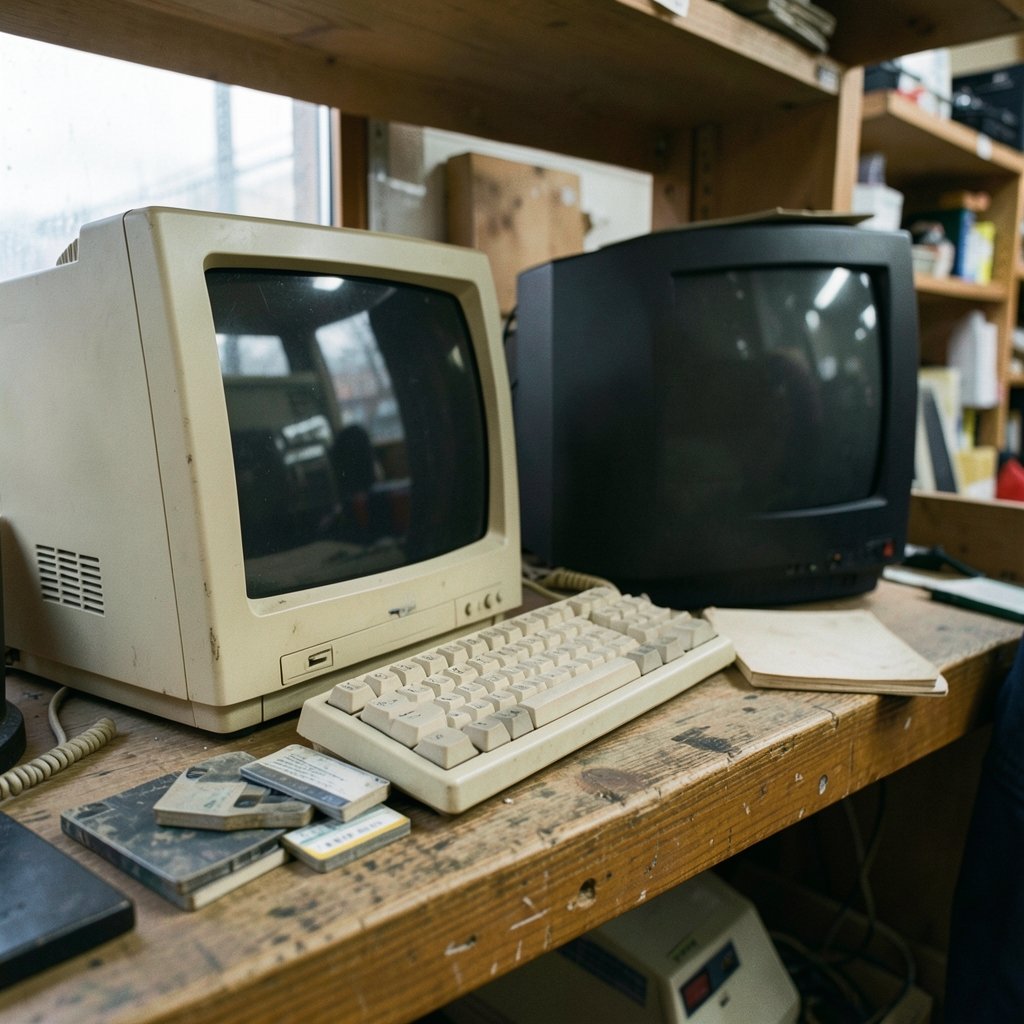
Kaomoji did not appear in a vacuum. They grew out of Japanese network culture, spreading across ASCII-art and early online boards before finding a massive audience on later forums. The related text-art tradition known as AA (アスキーアート, ASCII art) built entire figures and scenes from characters, and the famous orz figure, a person bowing or collapsing in despair, is often grouped with this broader text-art world. Exact first appearances of specific kaomoji are contested and poorly documented, so it is wiser to describe the movement than to date individual faces.
For a broader view of how text faces evolved across cultures, the general history of the emoticon is a useful starting point. It situates kaomoji within a longer story that runs from early typewriter experiments to today’s messaging apps, and it explains the sideways-versus-upright split in plain terms.
The Technical Side Nobody Warns You About
Here is where practical experience saves people a lot of frustration. Kaomoji depend heavily on full-width characters (zenkaku), katakana, and symbols such as ゚, ノ, ヽ, _, and  ̄. Those characters do not exist in the same form in every encoding or font. A face that looks perfect on one device can collapse into boxes, question marks, or a jumbled line on another.
The root cause is usually encoding. Older Japanese systems used Shift_JIS, while modern software overwhelmingly uses Unicode. A kaomoji built from characters that Shift_JIS handles comfortably may render differently, or not at all, when passed through a system that expects something else. Font support adds a second layer: even when the characters are technically present, the font on the reader’s device has to actually contain glyphs for them.
The Unicode Consortium maintains the Unicode character code charts that define which characters are standardized and where they live. That reference is the primary source for anyone who wants to know whether a particular symbol is officially supported or is a font-specific quirk. If you plan to use kaomoji in a product, a username field, or a database, checking the charts beats guessing.
Practical tips that actually work
- Test your favorite kaomoji on more than one device and more than one app before relying on them.
- Prefer simpler constructions when the audience is unknown. `(^_^)` travels better than an elaborate face packed with rare symbols.
- Avoid kaomoji in fields that enforce strict validation, such as some payment forms or government portals.
- If you run a website or app, decide deliberately whether to accept or strip these characters rather than letting them break silently.
Common mistakes people make
The biggest one is assuming a kaomoji that renders on a phone will render identically in an email client, a spreadsheet, or a printed document. The second is copying a face from a website without checking whether the source used unusual combining characters. The third is overusing elaborate faces in professional settings, where a single simple one lands better than a wall of decoration.
Kaomoji vs. Emoji vs. Western Emoticons
People often use these three terms interchangeably, but they are genuinely different things. The distinction is worth knowing because it affects how your message travels across platforms.
| Feature | Kaomoji | Emoji | Western emoticon | |
|---|---|---|---|---|
| Built from | Existing text characters | Dedicated pictographic code points | Basic punctuation and letters | |
| Orientation | Upright | N/A (images) | Sideways | |
| Emphasis | Eyes | Whole picture | Mouth | |
| Rendering risk | High (font and encoding dependent) | Low (standardized) | Low | |
| Typical example | `( ̄ー ̄)` | 😑 | `:- | ` |
The key line is the one between kaomoji and emoji. Kaomoji are composed of characters that already existed for other purposes, while emoji are their own standardized pictographic code points. The Unicode Consortium’s official emoji documentation explains how that standardization works and why emoji render consistently across platforms in a way kaomoji generally do not. For background on the emoji system itself, the overview of emoji covers its origins and its path into Unicode.
This is also why kaomoji feel more handmade. There is no central authority approving a new face. Anyone can invent one, and if it spreads, it spreads. That grassroots quality is a large part of their charm.
Reading Kaomoji Like a Local
Once you know the grammar, kaomoji become surprisingly readable. Most faces follow a loose structure: a bracket or parenthesis forms the outline of the head, the eyes sit near the center, and the mouth and any accessories fill in the rest. Sweat drops, tears, sparkles, and little motion marks add emotional shading.
A few patterns show up again and again:
- Happy or content: curved closed eyes, gentle mouth, sometimes small sparkles.
- Sad or crying: downward eyes or visible tears, often with a trembling mouth.
- Embarrassed: blush marks or a wavy mouth, sometimes hands raised.
- Annoyed or flat: straight-line eyes, a neutral mouth, occasionally a visible vein mark.
- Surprised: wide eyes and an open mouth, sometimes with radiating lines.
The symbols around the face matter as much as the face itself. A raised arm, a bowing posture, or a small object held in the “hands” turns a simple expression into a tiny scene. That is where kaomoji edge toward ASCII art and where their expressive range really opens up.
For a fuller catalog of forms and history, the reference entry on kaomoji collects definitions and examples in one place and is a reasonable next stop after this article.
Where Kaomoji Show Up Today
Kaomoji have traveled well beyond Japan. English-speaking internet culture adopted them widely in the 2000s and 2010s, usually under the label “Japanese emoticons.” Precise dates for that adoption are fuzzy, so it is safer to describe the trend than to name a year.
You will now find them in chat apps, social media bios, game usernames, fan fiction, and merchandise. They appear in customer service scripts, sometimes awkwardly, and in marketing copy, sometimes very effectively. They have a particular hold in communities that value handmade expression over polished graphics: indie games, niche forums, and creative writing circles.
There is also a practical niche in accessibility and low-bandwidth settings. A kaomoji is just text, so it loads instantly, scales with font size, and works in plain-text environments where images fail. For anyone building lightweight interfaces or writing for constrained platforms, that is a real advantage.
How to Start Using Them Well
Beginners often go one of two ways: they avoid kaomoji entirely, or they overstuff every message with them. Neither works especially well. A middle path serves most people.
Start with a small set you can type from memory. Three to five faces covering happy, sad, embarrassed, and amused will carry you through most conversations. Learn the keyboard shortcuts or text-expansion triggers that insert them quickly, because fumbling to paste a face kills the spontaneity that makes it charming.
Match the register of the conversation. A kaomoji in a casual group chat reads as warmth. The same face in a formal business email can read as unserious, depending on the culture of the workplace. Japanese usage itself varies widely by context, so there is no single rule to import wholesale.
Finally, respect the rendering problem. If you are writing for a broad audience, keep faces simple and avoid stacking rare symbols. If you are building something technical, decide early how your system will handle these characters, and test with real examples rather than assumptions. For readers who want to explore a wider collection of faces and see how they are organized, resources such as OCCCY gather examples in one browsable place.
Conclusion
Kaomoji are a small, stubbornly handmade corner of digital communication. They grew out of Japanese network culture, they read upright instead of sideways, and they put the eyes in charge of the emotion. They are also fragile in a way emoji are not, because they depend on fonts and encodings that were never designed with them in mind. That fragility is part of their character. A kaomoji that lands correctly feels like a small shared secret between sender and reader, and that is exactly why people keep typing them after all these years.
Frequently Asked Questions
What does kaomoji mean?
Kaomoji is a Japanese word combining kao (face) and moji (character). It refers to text-based emoticons built mainly from full-width Japanese characters, punctuation, and symbols, usually read upright rather than sideways.
How is a kaomoji different from an emoji?
A kaomoji is assembled from existing text characters, while an emoji is a dedicated pictographic code point standardized in Unicode. That is why emoji render consistently across platforms and kaomoji often do not.
Why do some kaomoji show up as boxes or question marks?
The usual cause is encoding or font support. Kaomoji rely on full-width characters and special symbols that may be missing from a device’s font or mishandled when text passes between systems using different encodings, such as Shift_JIS and Unicode.
Are kaomoji still used today?
Yes. They remain popular in chat apps, social media, games, and creative writing, and they have a practical edge in plain-text and low-bandwidth settings where images are impractical.
Can anyone make a new kaomoji?
Yes. There is no central authority approving new faces. Anyone can combine characters into a new expression, and a face spreads only if other people adopt it.
Is it appropriate to use kaomoji at work?
It depends on the workplace and the channel. In casual team chats they often read as friendly, while in formal external emails they can seem out of place. Matching the tone of the conversation is the safest guide.
One last practical note: because kaomoji live in plain text, they survive copy-paste, version control, and plain-text archives far better than images, but they do not survive careless “smart quote” conversion or aggressive text sanitizers. If you maintain a collection, store it in UTF-8 and test it after any pipeline change. Treat each face as a tiny compatibility contract with your reader, and keep a simple fallback ready for when that contract fails. Used with that care, kaomoji remain one of the most personal ways to put a feeling into type.



