

What happens when you need cash fast, a money order for rent, or a way to send funds across the country, and the nearest bank branch is miles away? For millions of shoppers, the answer sits at the end of a grocery aisle. Kroger Money Services turns the customer service desk at Kroger and its sister chains into a small financial hub, and it has quietly become a lifeline for people who live outside the traditional banking system.
But “money services” is a broad label, and what you can actually do at the counter depends on the store, the division, and the day you walk in. Fees change. Providers change. Hours are shorter than the store’s. This guide breaks down what the service generally covers, where the costs hide, and the mistakes that catch first-time users off guard.
What Is Kroger Money Services?
Kroger Money Services is the umbrella name for the in-store financial counter available at many Kroger-family supermarkets. That family is big: Kroger, Fred Meyer, King Soopers, Ralphs, Fry’s, Smith’s, and several other banners operate under the same corporate roof. The counter typically handles:
- Check cashing (payroll, government, and sometimes personal checks)
- Money orders
- Domestic and international money transfers
- Bill payment through third-party walk-in networks
- Prepaid debit card sales and reloads
- Gift cards
One important framing point: Kroger is a retailer, not a chartered bank. The money services are agent arrangements with licensed third-party providers. That distinction matters because it shapes everything from the fee structure to your legal recourse if something goes wrong. Kroger has separately run a personal finance unit for credit cards and similar products, but that is a different business from the service desk.
The Services, One by One
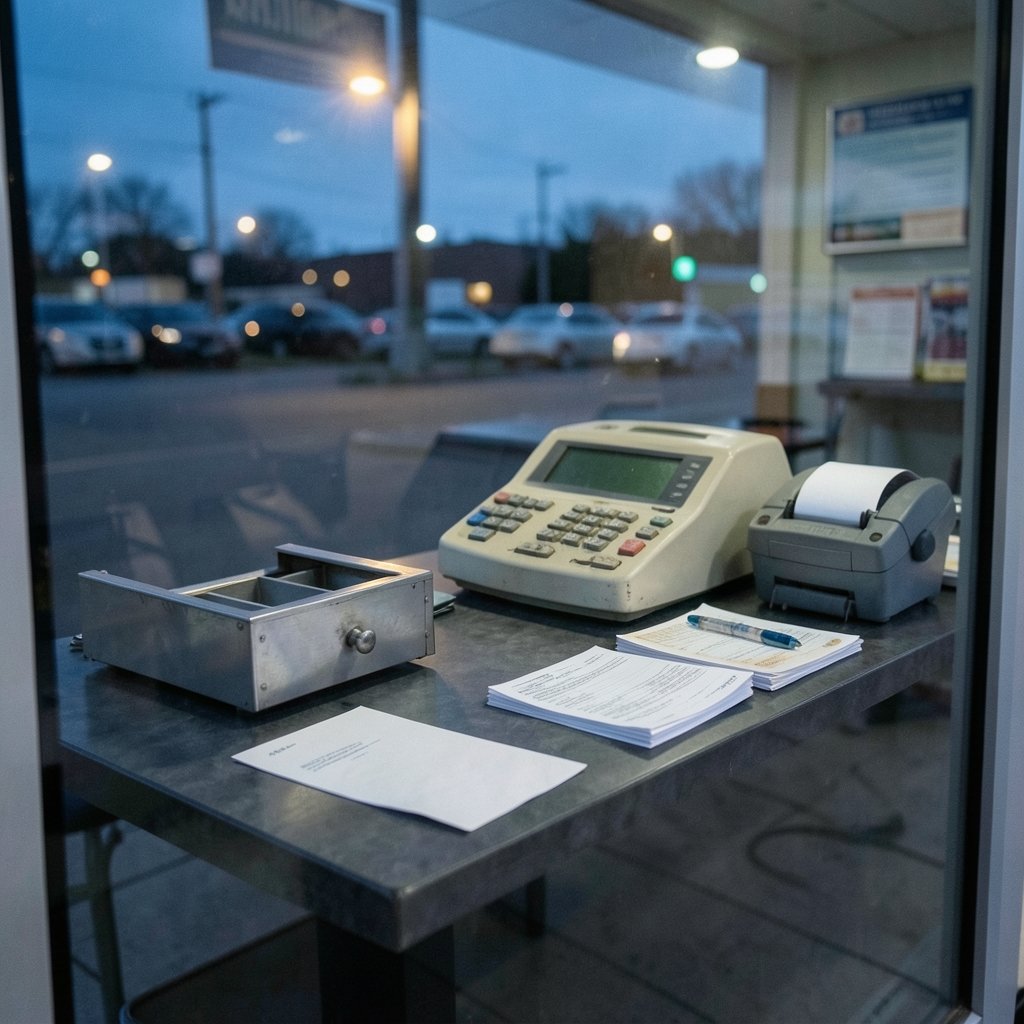
Check Cashing
The check cashing service is aimed squarely at people who don’t have a bank account or can’t wait for a deposit to clear. Kroger locations typically cash payroll and government checks, and sometimes personal checks, for a fee that is usually a percentage of the face value with a minimum charge.
Here’s the practical catch: eligibility rules and fee schedules differ by store division and are not uniformly published. A location in one state may cash a personal check; another may refuse it outright. Before you stand in line, call the specific store and ask two questions: which check types are accepted today, and what the fee is on your exact check amount. That two-minute call saves a wasted trip.
Money Orders
Money orders remain one of the most-used services at the counter. Kroger stores have long sold them at the service desk, commonly with a per-item fee in the roughly $1 range and a per-order cap that has historically sat around $1,000.
Treat both numbers as movable. Fees and caps vary by division and shift over time. If you need a money order for a large payment, such as a security deposit, buy several and confirm the per-item limit first. Also plan for the payee side: many landlords and agencies accept money orders, but some now insist on electronic payment, so check before you pay the fee.
Money Transfers
Kroger has offered domestic and international money transfers through third-party networks, historically including Western Union, and at various points other providers as well. This is the single least stable fact in the whole category. The current provider and pricing should be confirmed at your store or on Kroger’s official pages before you rely on it.
If you’re sending money internationally, compare the total cost instead of only the advertised fee. The exchange rate spread often accounts for much of the real expense. The same principle applies across the remittance market, and understanding how digital alternatives have changed the math matters, including the move toward central bank digital currencies that may reshape cross-border payments over time.
Bill Payment and Prepaid Products
In-store bill payment has been offered through third-party walk-in bill-payment networks such as CheckFreePay, though availability and provider vary by location and year. Prepaid debit cards, including Green Dot–network cards, are sold and reloaded at the desk and at registers, and the product mix changes regularly.
Prepaid cards carry real consumer protections worth knowing about. The industry is regulated at the federal level, and understanding the rules that govern prepaid accounts helps you know what to do if a card is lost or a charge is disputed.
Fees, Limits, and the Real Cost of Convenience
Nobody pays for convenience more than the unbanked and underbanked — households that rely on check cashing, money orders, and prepaid cards because they don’t have or don’t use a traditional account. A percentage fee on a paycheck sounds small until you run the numbers across a year.
| Service | Typical structure | What to watch |
|---|---|---|
| Check cashing | Percentage of face value plus minimum | Fee tiers by check size; ID requirements |
| Money orders | Flat per-item fee, per-order cap | Cap amount; payee acceptance |
| Money transfers | Provider fee plus exchange rate spread | Current provider; total landed cost |
| Bill payment | Per-payment convenience fee | Whether the biller posts same-day |
| Prepaid reload | Reload fee or none | Monthly maintenance fees on the card |
The honest comparison isn’t “Kroger versus free.” It’s “Kroger versus the check casher down the street versus a bank account.” For a one-off money order, the counter usually wins on convenience. For a weekly paycheck cashed over twelve months, a low-cost bank or credit union account often wins by a wide margin. If you’re weighing that trade-off, it helps to see where the money actually goes in identity and fraud protection products, because the same logic of hidden costs applies. (Identity threat detection really costs where money goes)
Practical tip: ask for a receipt every single time and keep it until the payment clears. Money order stubs and transfer receipts are your only proof if a payment goes missing, and replacing a lost money order can take weeks.
Who Regulates All This?
Money orders and money transmission are regulated at the state level under state money-transmitter laws, and at the federal level by the Bank Secrecy Act and rules administered by FinCEN. Those rules impose recordkeeping and reporting obligations, including Currency Transaction Reports for cash transactions over $10,000. The Bank Secrecy Act was enacted in 1970 and later amended by the USA PATRIOT Act of 2001. (Gift card scam works victims rarely get their money back) (Money transfers)
In practice, this is why the clerk asks for ID and logs larger transactions. It’s not personal; it’s a legal requirement that flows from Kroger acting as an agent for licensed providers rather than as a bank itself. If a transaction seems to trigger extra paperwork, that’s the framework at work.
Common Mistakes People Make at the Counter
A few patterns show up again and again among first-time users.
- Assuming every store offers every service. “Kroger Money Services” is a brand umbrella, not a uniform product. Availability differs store to store.
- Showing up outside service-desk hours. The counter typically runs on customer-service-desk hours, which are shorter than store hours. Arriving at 8 p.m. for a money order often ends in a locked drawer and a wasted trip.
- Not checking the per-order cap. People needing a $1,500 money order discover the limit only at the register.
- Skipping the ID. Bring government-issued photo ID. No ID, no transaction, no exceptions.
- Ignoring the fee math on repeated use. One fee is trivial. Fifty-two of them is a budget line.
- Falling for gift card payment requests. Scammers routinely demand payment in gift cards because the funds are hard to recover. If someone insists you pay a debt, a fine, or a “fee” with gift cards, it’s a scam, and the gift card scam pattern is worth recognizing before you buy.
Practical Tips That Actually Work
Call ahead and ask three specific questions: which services run today, what the fee is on your exact amount, and when the desk closes. Then arrive early in the day, mid-week if possible, because weekends and the first of the month bring long lines.
For money orders, fill out the payee information before you leave the store, and photograph the stub. For transfers, ask the clerk to write the total cost, including any exchange rate, on your receipt. For prepaid cards, read the fee schedule before you load a single dollar, because maintenance fees can quietly eat a balance.
If you’re managing money across several tools at once, it’s also worth learning how people build income streams and manage cash flow outside traditional banking, since the habits overlap with how you’d approach any money-making effort with AI tools and small side income.
Kroger Money Services vs. the Alternatives
The fairest way to judge the counter is against what else is nearby.
| Option | Strength | Weakness |
|---|---|---|
| Kroger Money Services | One stop with groceries; broad service menu | Shorter hours; fees vary by division |
| Bank or credit union | Lower long-run cost; deposit accounts | Account requirements; branch access |
| Standalone check casher | Fast; flexible hours | Often higher percentage fees |
| Digital transfer apps | Cheap for small transfers | Requires a bank account or card |
For occasional errands, the grocery counter is hard to beat on convenience. For routine, recurring needs, a low-cost account usually pays for itself. The right answer depends on frequency, not on a single fee.
Conclusion
Kroger Money Services fills a genuine gap. It gives shoppers a way to cash a check, buy a money order, pay a bill, or send funds without detouring to a bank branch, and for households outside the banking system, that access matters. But the counter rewards preparation. Fees and caps vary by division, the money transfer provider is the least stable piece of the puzzle, and service-desk hours are shorter than store hours. Confirm the details at your specific store before you count on them, keep every receipt, and run the annual math if you find yourself using the counter every week. Convenience is worth paying for — just know the price before you get in line.
Frequently Asked Questions
Does Kroger cash personal checks?
Sometimes. Many locations cash payroll and government checks, and some accept personal checks, but eligibility rules differ by store division and are not uniformly published. Call your specific store before you go.
How much does a money order cost at Kroger?
Historically, the per-item fee has sat in the roughly $1 range with a per-order cap near $1,000, but both figures vary by division and change over time. Confirm the current fee and cap at the service desk.
Is Kroger a bank?
No. Kroger is a retailer, not a chartered bank. Its money services operate as agent arrangements with licensed third-party providers, which is why ID checks and recordkeeping requirements apply.
What are the hours for Kroger Money Services?
The counter typically follows customer-service-desk hours, which are shorter than the store’s regular hours. Hours vary by location, so check with your store before making a special trip.
Can I send an international money transfer at Kroger?
Kroger has offered domestic and international transfers through third-party networks, historically including Western Union, but the current provider and pricing should be confirmed at your store. Compare the total cost, including the exchange rate, before sending.
Why do they ask for ID for larger transactions?
Federal rules under the Bank Secrecy Act and FinCEN require recordkeeping and reporting, including Currency Transaction Reports for cash transactions over $10,000. The clerk is following a legal framework, not making a judgment about you.



