
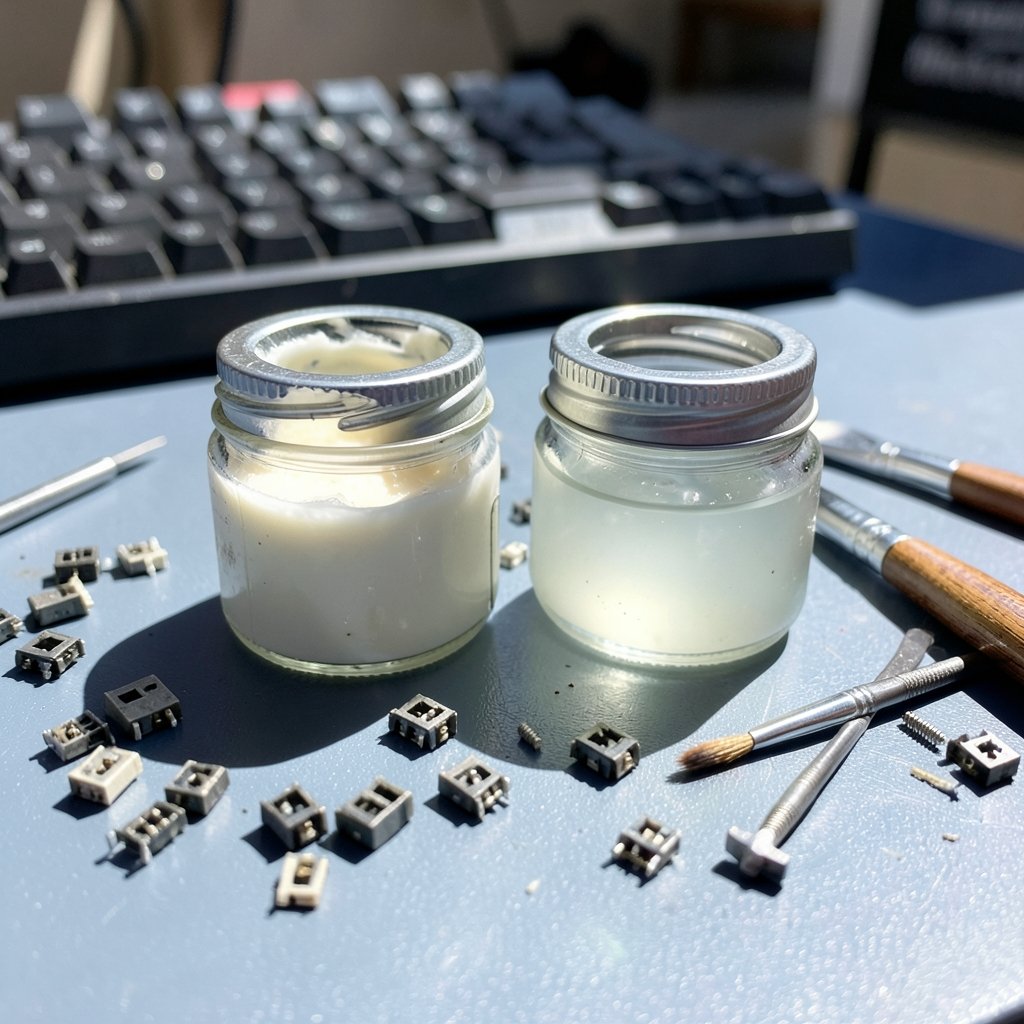
What if the biggest upgrade to your gaming keyboard in 2027 costs less than a pizza and comes in a tiny jar? That is the strange promise of switch lubricant. Two names dominate the conversation among keyboard hobbyists: Krytox 205g0 and Tribosys 3203. One is a dense, PTFE-thickened grease. The other is a lighter blend often described as easier to work with. Both can transform how a keyboard feels, and both can ruin a switch if you use too much. (Polytetrafluoroethylene (PTFE))
This guide breaks down what each lubricant actually is, how they differ in practice, and how to judge whether either one improves your everyday gaming. It also looks honestly at what the 2027 landscape might change, including switches that need no lube at all.
What Are Krytox 205g0 and Tribosys 3203?
Krytox 205g0 is a fluorinated grease built on a PFPE (perfluoropolyether) base oil thickened with PTFE powder. The “g0” refers to its NLGI grade 0 consistency, which sits on the soft end of the grease classification scale. That softness is exactly why hobbyists apply it with a tiny brush in very thin films. The perfluoropolyether family is known for low volatility, a wide operating temperature range, and chemical inertness, which is why it shows up in aerospace and industrial applications far removed from keyboards.
Tribosys 3203 is a keyboard-focused lubricant sold through enthusiast vendors. In community discussion it is generally described as lighter and less viscous than 205g0, which makes it easier to spread and harder to over-apply. One honest caveat: detailed formulation data for Tribosys 3203 is not widely published, so most comparisons rest on how it behaves in real switches rather than on a spec sheet.
Why Consistency Grade Matters More Than Brand
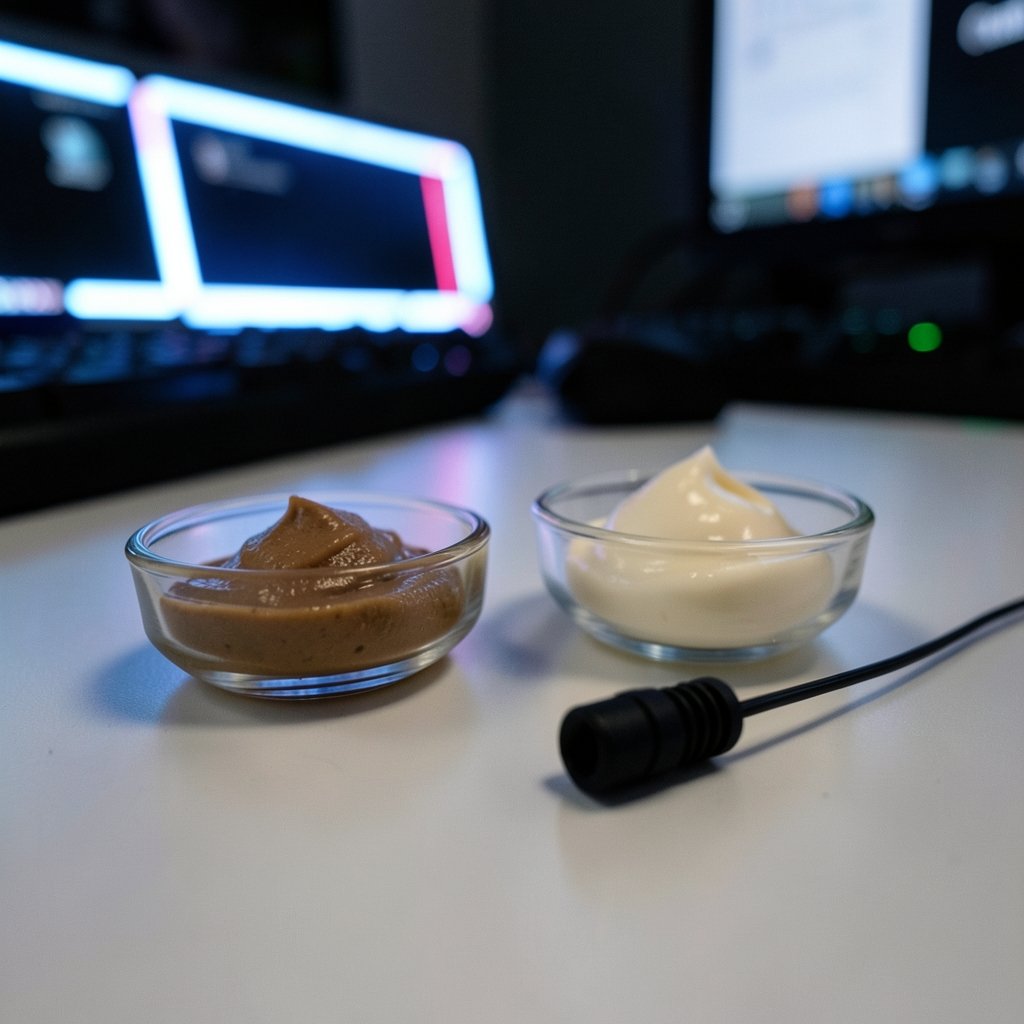
The single most useful number in this comparison is the consistency grade. Grease consistency is classified on a worked-penetration scale, and understanding how that scale works explains why 205g0 behaves the way it does. Grade 0 grease is soft enough to flow under light pressure but thick enough to stay where you put it. That combination is ideal for stabilizers and linear switch stems, and it is also the reason a little goes a very long way.
Tribosys 3203, being lighter, sits closer to the “spreadable” end of the spectrum. Think of the difference as peanut butter versus soft butter. Both lubricate. One is far easier to accidentally overload.
| Feature | Krytox 205g0 | Tribosys 3203 |
|---|---|---|
| Base chemistry | PFPE (fluorinated) | Keyboard-market grease blend |
| Consistency | NLGI grade 0, dense | Lighter, easier to spread |
| Common uses | Linear switches, stabilizers | Tactile switches, light films |
| Over-application risk | High | Lower |
| Feel when applied well | Smooth, slightly muted | Crisp, closer to stock sound |
| Published spec detail | Extensive industrial literature | Limited public data |
How Each Lube Changes Feel and Sound
Lubricant does two things to a switch: it reduces friction between stem and housing, and it dampens the high-frequency noise that friction creates. A well-lubed linear switch feels glassy and sounds deeper. A well-lubed tactile switch keeps its bump but loses the scratchy edge around it.
Here is where the two products diverge in practice. Krytox 205g0 is thick enough that even a thin film noticeably smooths a linear switch and quiets stabilizer rattle. On tactile switches, though, it can soften the very bump that makes the switch appealing, especially if it migrates onto the bump leg. Tribosys 3203 is the more forgiving choice for tactiles because its lighter body is less likely to swallow the tactile event.
Sound is a separate matter, and it is worth being blunt: there is no standardized test for switch smoothness or sound signature. Comparisons rest on blind tests and shared impressions among hobbyists, not on measured data. Anyone who claims a lube “scientifically” sounds better is overselling. (OSHA Chemical Data)
The Application Mistakes That Actually Matter
Most disappointing lube jobs are not caused by picking the wrong jar. They are caused by using too much of the right one. A few patterns show up again and again.
- Over-lubricating linears with 205g0. A thick film turns a crisp switch sluggish and mushy, particularly in cold rooms where grease stiffens.
- Putting 205g0 directly on a tactile bump. The bump gets rounded off, and the switch feels like a bad linear.
- Skipping the springs. Spring ping survives even a perfect stem lube job. A light bag-lube of the springs fixes it.
- Ignoring stabilizers. The spacebar is the loudest key on most boards. A thin coat of 205g0 on the stabilizer wire and housing does more for the everyday typing and gaming experience than any stem work.
- Lubing without a test switch. Always do one switch, reassemble, and type on it before committing to a full board.
A good rule of thumb: if you can see the grease as a visible blob, you have used too much. The goal is a haze, not a coating.
Matching Lube to Switch Type
The community convention, and it is a convention rather than a measured standard, is fairly consistent. Linears and stabilizers get 205g0. Tactiles get something lighter like Tribosys 3203, or a very careful 205g0 application kept away from the bump.
Silent switches deserve a mention because they are popular for shared spaces. Their rubber dampeners can react poorly to some lubricants over time, so test one switch and check it after a few weeks before doing the whole board.
If you are still assembling a setup and deciding where your money goes first, it helps to think about the whole chain. A great switch feel means little on a panel that smears motion, which is why it is worth reading up on whether a gaming monitor is worth buying for beginners in everyday use before spending on lube. Similarly, if your machine struggles to hold frame rates, a gaming laptop under 1000 that actually fits the budget will change your experience more than any grease. Lube is the final polish, not the foundation.
What 2027 Might Change
Any claim about the 2027 gaming experience is a prediction, and predictions about hardware age badly. Still, a few trends are worth watching.
Hall-effect and magnetic switches use no physical contact between stem and sensing element, and many are factory-lubed or designed to run dry. If these dominate gaming keyboards, the 205g0 versus 3203 debate matters less for competitive players. Optical switches similarly reduce the role of friction in actuation.
Factory lubrication has improved steadily. Budget boards that once arrived dry and scratchy now ship with decent factory lube, which lowers the payoff of a first lube job. That does not make hand-lubing pointless. It makes it a refinement rather than a rescue.
What seems unlikely to change is the underlying physics. A thin, even film reduces friction and noise. Too much grease adds drag. Those facts will still hold in 2027, whatever the switch of the moment happens to be. If you want a sense of where the hobby is heading, browsing upcoming Switch 2 games is a reminder that the software side of gaming moves on a different clock than the hardware rituals around it.
Building a Sensible Evaluation Routine
Rather than trusting a forum thread, test the lube yourself. The method is simple and costs one spare switch.
- Prepare three identical switches: one stock, one with 205g0, one with Tribosys 3203.
- Lubricate each with the same thin-film technique and the same tools.
- Mount them in a row on a test plate or a spare board.
- Type on them for a week, not five minutes. First impressions are unreliable.
- Note feel, sound, and any sluggishness, especially in a cold room.
- Re-check after a month to see whether the feel has drifted.
This routine will not produce laboratory data, but it will produce something more useful: your own preference, tested against your own hands.
Practical Tips for Everyday Use
A few habits separate a satisfying lube job from a frustrating one.
- Buy small quantities. A 3ml jar of 205g0 lubes dozens of switches. You will not run out.
- Use the right tools. A fine brush, a switch opener, and a clean work surface matter more than brand loyalty.
- Work in a ventilated space and check the safety data sheet. Fluorinated greases are generally low in toxicity, but they are not food-safe unless labeled as such, and handling guidance is worth reading rather than assuming.
- Keep the two lubes separate. Cross-contamination muddies your comparison.
- Store jars upright and sealed. Dust in a grease jar is a slow-motion problem.
For people who like to keep their digital life as tidy as their desk, the same principle of picking one good tool and sticking with it applies to security software, and an honest look at whether Bitwarden is safe and private for everyday use makes a useful parallel read.
Does Lube Actually Improve Gaming Performance?
Here is the balanced answer: it improves the experience, not the score. No study shows that lubricated switches make anyone a better player. What lube does is reduce fatigue from scratchy keypresses, cut down on stabilizer rattle that masks audio cues, and make long sessions more pleasant.
That is a real benefit, just not a competitive one. Players chasing milliseconds should look at polling rate, switch actuation force, and monitor response time first. Lube sits firmly in the comfort-and-enjoyment category.
The same logic applies to other peripheral upgrades. A bathroom humidity sensor switch that actually works in real homes is a good reminder that the best upgrades solve a specific annoyance rather than chase a spec sheet. Lube solves the annoyance of a scratchy, rattly keyboard. That is enough.
Conclusion
Krytox 205g0 and Tribosys 3203 are both good lubricants aimed at slightly different jobs. The dense, PFPE-based 205g0 shines on linear switches and stabilizers, where its body smooths and quiets without much effort. The lighter Tribosys 3203 is friendlier for tactile switches and far more forgiving of a heavy hand. Neither is objectively better, and the gap between a careful application of either one and a sloppy application of the other is larger than the gap between the two products.
For 2027, the smart approach is to treat lube as one small, satisfying part of a broader setup. Get the display and the machine right first, then refine the feel of the keys. Test on one switch, apply thin films, and let a week of real use tell you what a five-minute impression cannot.
Frequently Asked Questions
Is Krytox 205g0 better than Tribosys 3203 for gaming?
Neither is better in an absolute sense. Krytox 205g0 is denser and suits linear switches and stabilizers, where it smooths and quiets effectively. Tribosys 3203 is lighter and easier to apply evenly. For gaming specifically, the difference you notice will come from application technique more than from which jar you bought.
Can I use Krytox 205g0 on tactile switches?
You can, but apply it sparingly and keep it off the tactile bump. A thick film on the bump leg rounds off the tactile event and makes the switch feel vague. Many hobbyists prefer a lighter lubricant for tactiles for exactly this reason.
How much lubricant should I use per switch?
Very little. A thin haze on the stem rails and housing is enough for most switches. If you can see a visible blob of grease, you have used too much, and the switch will likely feel sluggish rather than smooth. A small jar lasts for dozens of switches at this rate.
Does lubricant make switches last longer?
The chemistry suggests low volatility and good stability for PFPE-based greases, but there is no controlled long-term test on keyboard switches that proves a lifespan benefit. Treat longevity claims as plausible inference rather than established fact, and check your own switches after a few months of use.
Will lubricated switches make me a better gamer?
No credible evidence supports that. Lubrication improves comfort, reduces scratchiness, and quiets stabilizer rattle, which makes long sessions more pleasant. It does not measurably improve reaction time or accuracy. Prioritize your display, input latency, and practice before expecting performance gains from grease.
Do magnetic or optical switches need lubricant?
Generally not. Hall-effect and optical switches often ship factory-lubed or are designed to run without it, since they do not rely on the same friction-based contact as traditional mechanical switches. If these switch types dominate in 2027, lubricant choice will matter less for competitive players than it does today.



