

What makes a diesel engine from 2006 and early 2007 still worth talking about nearly two decades later? Ask a Silverado HD owner with an LBZ Duramax under the hood, and you’ll get an earful. The LBZ is the RPO code for the 6.6-liter Duramax V8 that GM built for the 2006 and early 2007 model years of the Chevrolet Silverado HD and GMC Sierra HD, along with related chassis-cab and van applications. It replaced the LLY and gave way to the LMM starting with the 2007.5 model year.
That short production window is exactly why the LBZ has a cult following. It sits at a sweet spot in the Duramax timeline, and enthusiasts, tow rig builders, and used-truck shoppers have noticed. Here’s what the LBZ actually is, what it does well, and where the hype outruns reality.
Where the LBZ Fits in the Duramax Timeline
The 6.6L Duramax family was developed with Isuzu and built at the DMAX Ltd. joint-venture plant in Moraine, Ohio. “Duramax” is GM’s diesel engine brand, and the 6.6L V8 is the engine most people mean when they say it.
The LBZ didn’t arrive in a vacuum. It followed the LLY, which made 310 horsepower and 605 lb-ft of torque. The LBZ jumped to 360 hp and 650 lb-ft, a meaningful step up for a truck that was often asked to haul trailers up long grades. Then the LMM arrived for 2007.5 and brought a diesel particulate filter (DPF) into the picture.
That DPF detail matters more than any single spec. The LBZ was the last Duramax sold without a diesel particulate filter. It met the federal emissions standard in force at the time without aftertreatment hardware. The LMM introduced the DPF, and later generations piled on more emissions equipment. For a certain kind of buyer, that makes the LBZ the end of an era rather than the start of one.
One caution: exact LBZ production start and end dates vary by plant, and the precise EPA emissions tier is often repeated on forums without primary sourcing. If those details matter to a purchase decision, check GM documentation or EPA certification data rather than trusting a thread.
LBZ Engine Specs at a Glance
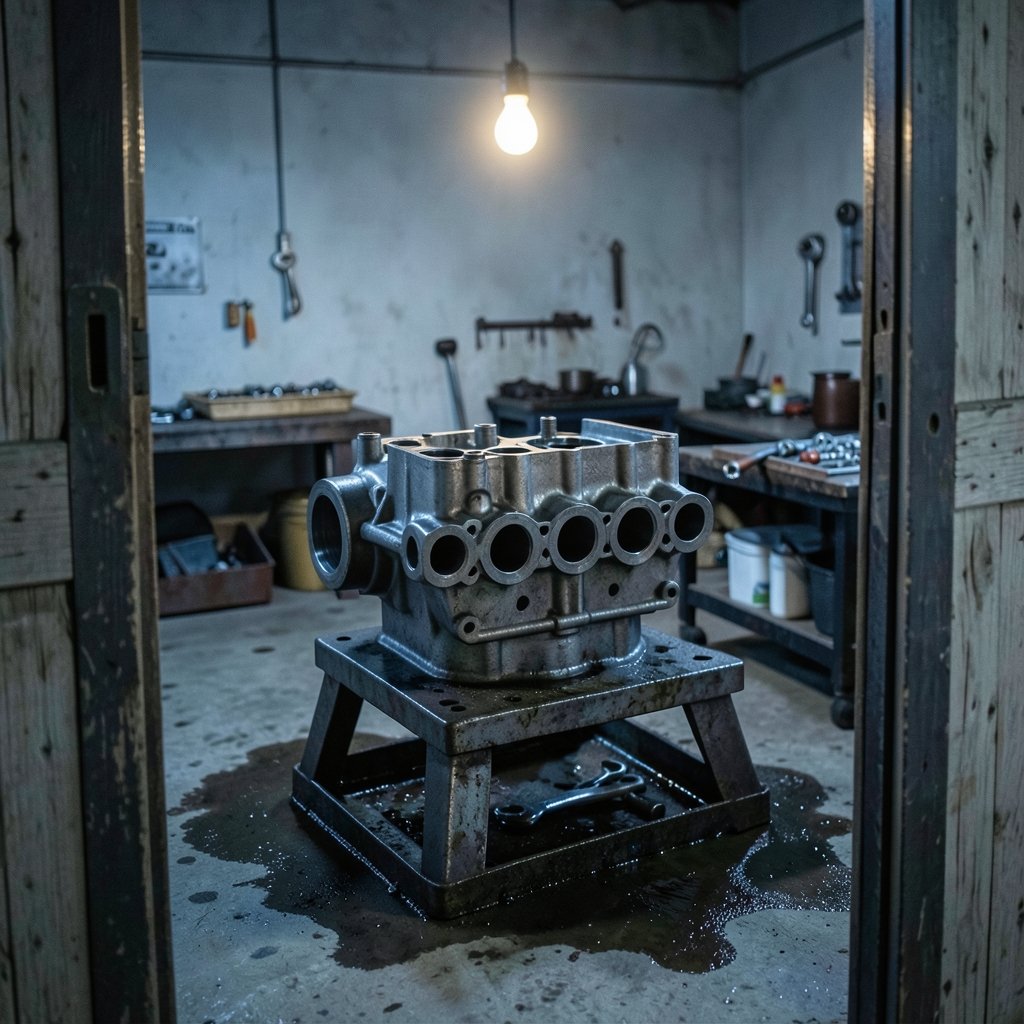
The LBZ is a traditional, simple-by-modern-standards diesel. Here’s the core architecture:
| Specification | Detail |
|---|---|
| Displacement | 6.6 L (403 cu in) |
| Configuration | 90-degree V8, overhead valve, 32 valves |
| Induction | Turbocharged and intercooled |
| Fuel system | Common-rail direct injection |
| Block and heads | Cast-iron block, aluminum heads |
| Bore x stroke | 4.06 x 3.90 in |
| Rated output | 360 hp, 650 lb-ft of torque |
| Emissions aftertreatment | None (no DPF) |
| Transmission (most trucks) | Allison 1000 automatic |
| Assembly | DMAX Ltd., Moraine, Ohio |
The cast-iron block is a big part of why these engines have a reputation for durability under load. Iron is heavy, but it holds up to heat and cylinder pressure in a way that matters when a truck spends its life hooked to a trailer.
Why Enthusiasts Seek Out the LBZ
The LBZ’s popularity rests on a few overlapping reasons, and it’s worth separating the solid ones from the folklore.
No DPF means fewer things to fail. A DPF-equipped truck has to manage regeneration cycles, and those cycles bring their own maintenance considerations. The LBZ skips all of that. For an owner who wants a tow rig with fewer emissions-related systems to think about, that’s a real advantage, not just nostalgia.
The power bump is genuine. Going from 605 to 650 lb-ft is not a rounding error. It shows up when merging onto a highway with a loaded trailer or climbing a sustained grade.
The tuning reputation. The LBZ is widely cited as a desirable platform for tuning and towing builds. Treat that as an enthusiast claim rather than an official GM position. It’s an opinion shaped by the engine’s hardware and its lack of aftertreatment, not a factory endorsement. Anyone who modifies an engine takes on responsibility for emissions compliance and durability, and that varies by jurisdiction.
The Allison pairing. Most LBZ trucks used the Allison 1000 automatic, though a manual option existed early in the run. The exact transmission mix by model year is worth verifying rather than assuming. A well-matched engine and transmission is a large part of why these trucks feel planted when loaded.
What Actually Works in Practice
Practical ownership advice on the LBZ tends to converge on a few themes. These aren’t secrets, but they’re the things people learn after the fact.
Verify the transmission before you fall in love with the truck. Most LBZ trucks got the Allison 1000 automatic, and a manual exists in the early run. Confirm what’s actually in the truck you’re looking at rather than trusting the listing.
Check the emissions history, not just the engine. The LBZ itself has no DPF, but the truck around it is nearly twenty years old. Look at the whole vehicle, not just the badge.
Don’t confuse “no DPF” with “no maintenance.” Common-rail injection systems, turbochargers, and intercoolers all need attention. The absence of one emissions component doesn’t make the rest of the engine maintenance-free.
Be skeptical of forum-sourced dates and specs. Production start and end dates, the exact EPA tier, and transmission availability by model year are all commonly repeated without primary sourcing. Cross-check anything that affects money or legality.
Budget for the truck, not the legend. A clean LBZ commands a premium partly because of its reputation. That premium is real, but it doesn’t guarantee the specific truck in front of you is in good shape.
LBZ vs. LLY vs. LMM: The Comparison That Matters
Buyers often end up choosing between the three Duramax generations that bracket the LBZ. Here’s the honest comparison:
| Factor | LLY | LBZ | LMM |
|---|---|---|---|
| Rated output | 310 hp / 605 lb-ft | 360 hp / 650 lb-ft | Higher than LBZ |
| DPF | No | No | Yes |
| Emissions hardware | Simpler | Simpler | More complex |
| Enthusiast appeal | Solid, older | High | Mixed, emissions-focused |
| Typical draw | Lower entry price | Power plus simplicity | Newer, more equipment |
The pattern is clear. The LLY is the budget entry point. The LBZ is the middle child that enthusiasts gravitate toward because it pairs more power with simpler emissions hardware. The LMM is newer and adds the DPF, which some buyers see as a step forward and others see as added complexity.
There’s no universal right answer here. A buyer who values simplicity and doesn’t mind an older truck will lean LBZ. A buyer who wants the newest hardware available in that era will lean LMM and accept the aftertreatment.
Common Mistakes Buyers Make
A few recurring missteps show up again and again when people shop for an LBZ.
Paying the badge premium without an inspection. The LBZ name carries weight, and sellers know it. A pre-purchase inspection by someone who knows diesel trucks is worth more than any forum consensus.
Assuming “no DPF” means “modify freely.” Emissions rules are local, and they change. What’s legal in one place may not be in another. Check the rules where the truck will actually be registered and driven.
Overlooking the rest of the drivetrain. The engine gets the attention, but the transmission, cooling system, and chassis all carry the load. A strong engine bolted to a tired truck is still a tired truck.
Trusting a single source on specs. Output figures like 360 hp and 650 lb-ft are well established, but finer details such as exact build dates and emissions tier designations deserve a second look.
Forgetting that “reliable” is a maintenance history, not a model year. Any nearly twenty-year-old diesel is only as good as the care it received. Service records tell you more than the RPO code ever will.
Is the LBZ Duramax Worth It?
For the right buyer, yes. The LBZ offers a combination that’s genuinely hard to find: 360 hp and 650 lb-ft from a cast-iron-block 6.6L V8, paired with an Allison 1000 in most trucks, and no diesel particulate filter to manage. That package is why the engine still has a following.
The honest counterpoint is that the LBZ is old. It’s a 2006 to early 2007 engine, which means the trucks around it are approaching two decades of service. The engine’s reputation for durability doesn’t transfer automatically to every example on the market. Condition, maintenance history, and how the truck was used matter enormously.
It’s also worth being clear-eyed about the enthusiast narrative. The idea that the LBZ is the ideal tuning platform is a widely repeated claim, not an official position. It’s a reasonable opinion given the hardware, but it’s still an opinion. Buyers should weigh it as such rather than as a specification.
Conclusion
The LBZ Duramax earns its reputation the old-fashioned way: it makes more power than the engine it replaced, it skips the diesel particulate filter that arrived with the LMM, and it sits on a cast-iron foundation built for work. In a two-model-year window, GM produced an engine that enthusiasts still seek out and that tow rig builders still respect.
But respect isn’t the same as blind trust. The LBZ is a nearly twenty-year-old engine in a nearly twenty-year-old truck. The smart approach is to verify the specifics that forums often get fuzzy, inspect the whole vehicle rather than just the badge, and understand the local rules before modifying anything. Do that, and the LBZ can be exactly what its fans claim. Skip it, and you’re paying a premium for a name.
Frequently Asked Questions
What years was the LBZ Duramax produced?
The LBZ was offered in the 2006 and early 2007 model years of the Chevrolet Silverado HD and GMC Sierra HD, plus related chassis-cab and van applications. It replaced the LLY and was itself replaced by the LMM starting with the 2007.5 model year. Exact build dates vary by plant, so check GM documentation if precision matters.
How much power does the LBZ Duramax make?
GM rated the LBZ at 360 horsepower and 650 lb-ft of torque. That’s an increase over the LLY it replaced, which was rated at 310 hp and 605 lb-ft. The gain is noticeable when towing, which is a big part of why the LBZ remains popular with people who haul heavy loads.
Does the LBZ Duramax have a DPF?
No. The LBZ was the last Duramax sold without a diesel particulate filter. It met the federal emissions standard in force at the time without aftertreatment. The LMM introduced the DPF starting with the 2007.5 model year, which is one reason some buyers specifically seek out the LBZ.
What transmission came with the LBZ Duramax?
Most LBZ trucks used the Allison 1000 automatic, and a manual option existed early in the run. The exact mix by model year is worth verifying rather than assuming. Confirm what’s actually in a specific truck before buying, since the transmission is a major part of the driving experience.
Is the LBZ a good engine for tuning?
The LBZ is widely cited by enthusiasts as a desirable platform for tuning and towing builds, largely because it lacks a DPF and has a strong cast-iron block. That’s an enthusiast claim, not an official GM position. Anyone modifying an engine should check local emissions rules and accept responsibility for durability and compliance.
Where was the LBZ Duramax built?
Duramax engines of this era were built at the DMAX Ltd. joint-venture plant in Moraine, Ohio. The 6.6L Duramax family was developed with Isuzu, and “Duramax” is GM’s diesel engine brand. The plant’s later ownership history is separate from the LBZ production era.



