When does Lent 2027 actually begin, and why does almost everyone get the date wrong on the first try? The short answer: Ash Wednesday 2027 falls on 10 February, which puts Easter Sunday on 28 March 2027. The longer answer is more interesting, because the whole season is stitched onto a lunar calculation that has been argued over since the fourth century. If you are planning a fast, booking a retreat, or just trying to work out when the fish Fridays start, the dates matter more than you might think. (Best ai translation tools 2027 deepl vs chatgpt vs google)
This guide walks through the calendar, the counting logic, the differences between Western and Eastern practice, and the practical side of observing the season without making the classic mistakes.
The key dates for Lent 2027 at a glance
The Western (Gregorian) calendar gives a clean set of dates for 2027. Here is the full sequence.
| Day | Date in 2027 | What it marks |
|---|---|---|
| Ash Wednesday | 10 February | Start of Lent; imposition of ashes |
| First Sunday of Lent | 14 February | First of six Sundays in the season |
| Holy Thursday | 25 March | Evening Mass of the Lord’s Supper; Lent ends |
| Good Friday | 26 March | Commemoration of the crucifixion |
| Easter Sunday | 28 March | Resurrection; end of the paschal fast |
Two things trip people up here. First, Lent 2027 runs 46 calendar days, not 40, even though everyone calls it “the 40 days.” Second, the season ends on the evening of Holy Thursday, not on Holy Saturday. Once the Mass of the Lord’s Supper begins, Lent is technically over and the Easter Triduum takes over.
Why Lent 2027 starts on 10 February

The date is not chosen. It is calculated backwards from Easter, and Easter itself moves every year.
The rule most Christians use today traces to the First Council of Nicaea in 325 CE, which settled that Easter falls on the Sunday after the first ecclesiastical full moon on or after the vernal equinox. Because the lunar cycle and the solar calendar drift against each other, Easter can land anywhere between 22 March and 25 April. Ash Wednesday is then set 46 days before Easter Sunday.
For 2027, Easter lands on 28 March. Count back 46 days and you arrive at 10 February. That is a relatively early Easter, which means an early Ash Wednesday and a Lent that overlaps with Valentine’s Day, school half-terms, and the tail end of winter in the Northern Hemisphere.
If you want the deeper mechanics of how the churches reconcile lunar and solar cycles, the calculation is known as computus, and it is one of the more fascinating corners of calendar history. It is also why the date of Lent 2027 is fixed but the date of Lent 2028 will not follow any simple pattern.
The 40 days versus the 46 days
Here is where the arithmetic gets satisfying. The season spans 46 calendar days because Sundays are not counted as fast days in the Western tradition. Every Sunday is treated as a mini-Easter, a celebration day, so the six Sundays inside the season are exempt. Subtract six from 46 and you get 40.
That number is not arbitrary. It echoes the biblical forty-day periods: Moses on Sinai (Exodus 34:28), Elijah’s journey to Horeb (1 Kings 19:8), and most centrally, Jesus fasting in the wilderness (Matthew 4:2). The season is designed to mirror those stories rather than to function as a simple diet plan.
The word itself is older than the practice as we know it. “Lent” comes from the Old English lencten, meaning spring or the lengthening of days. In most other European languages the season takes its name from the Latin quadragesima, literally “the fortieth.”
Western and Eastern Lent 2027 do not line up
If you live in a country with both Catholic and Orthodox communities, you will notice two different start dates in 2027.
| Tradition | Lent begins | Easter 2027 |
|---|---|---|
| Western (Catholic, most Protestant) | Ash Wednesday, 10 February | 28 March |
| Eastern Orthodox | Clean Monday, 15 February | 2 May |
The gap exists because the Orthodox churches still use the Julian computus for the paschal date, while Western churches follow the Gregorian reform. In 2027 the Julian and Gregorian calendars sit 13 days apart, and the two full-moon calculations land differently, pushing Orthodox Easter more than a month later.
A practical consequence: if you are ordering liturgical supplies, planning a parish fish fry schedule, or coordinating a shared devotional group across traditions, confirm which calendar your community follows before printing anything. Getting this wrong is one of the most common planning errors of the year.
What Ash Wednesday actually involves
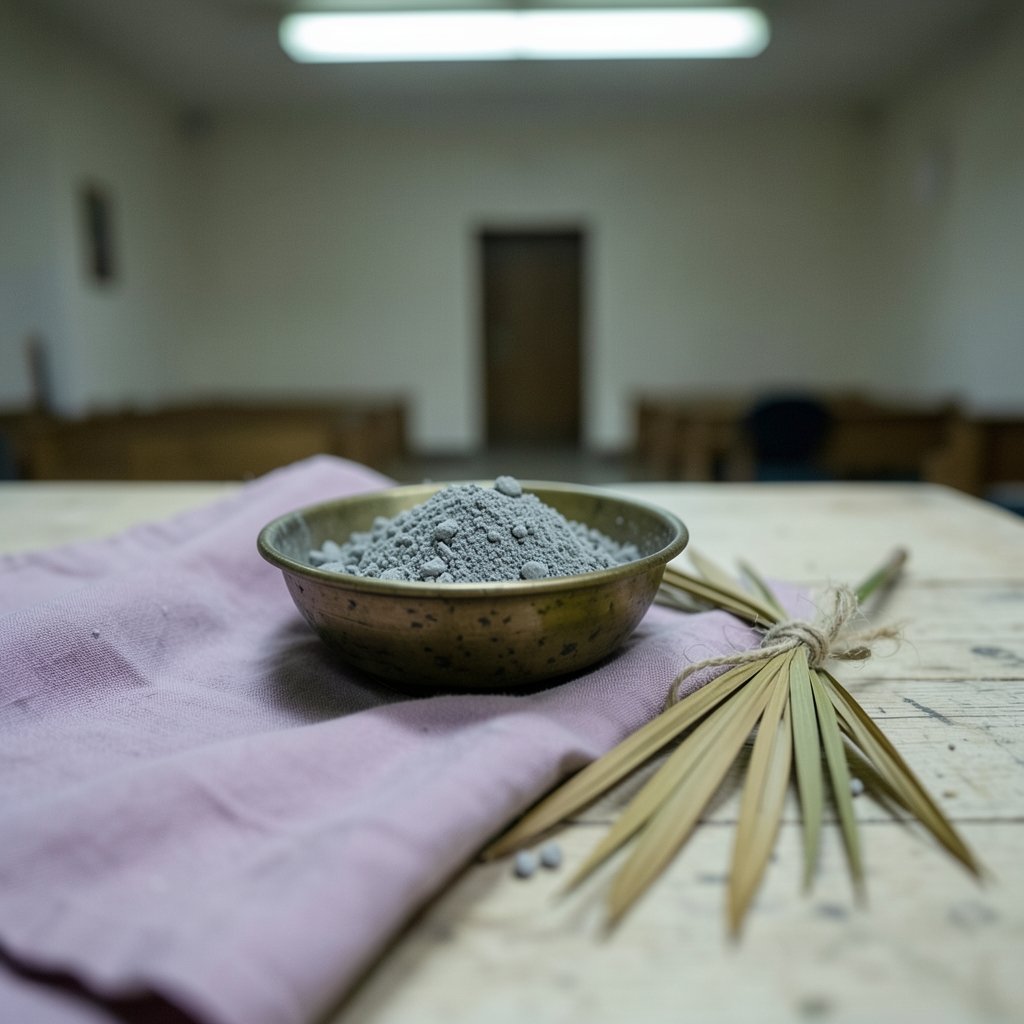
The name comes from the imposition of ashes, a practice in which ashes are marked on the forehead in the shape of a cross. The words spoken alongside it echo Genesis 3:19: “remember that you are dust, and to dust you shall return.”
A few practical notes that surprise first-timers:
- The ashes are traditionally made from the burned palm branches of the previous year’s Palm Sunday.
- Ash Wednesday is not a holy day of obligation in the Catholic Church, but it is a day of fasting and abstinence for adults within certain age ranges.
- Many Anglican and Lutheran congregations observe the day too, though the details vary.
- Ashes are usually wiped off rather than washed off, and plenty of people simply go about their day with them on.
The day sets the tone for the whole season: sober, brief, and deliberately uncomfortable.
How the 40 days are counted, and where the counting breaks
Different traditions count differently, and this is the single biggest source of confusion in Lenten planning.
In the Roman Catholic reckoning, the season runs from Ash Wednesday to the evening of Holy Thursday. The Easter Triduum (Holy Thursday evening through Easter Sunday) is a separate liturgical unit, not part of Lent. Some Anglican and Lutheran communities count the days slightly differently, and Orthodox practice adds several additional fasting periods across the year, including the Nativity Fast and the Dormition Fast.
The practical takeaway: do not assume a single universal rule. If you are following a specific devotional plan, check whether it counts Sundays, whether it ends on Holy Thursday or Holy Saturday, and whether it treats Holy Week as part of the fast.
Making the season work in practice
Lent has a reputation problem. People treat it as a 40-day willpower test, give up something ambitious, and collapse by the second week. The season is not designed for that, and the tradition itself offers better models.
Pick a practice you can actually sustain
The classic three pillars are prayer, fasting, and almsgiving. Most people focus entirely on fasting and ignore the other two, which is a bit like training one muscle and wondering why you still feel weak.
A workable approach:
- Choose one small fast. Not the biggest thing you can imagine giving up, but something you will genuinely notice three times a day.
- Add one fixed prayer or reading slot. Ten minutes at the same time daily beats an ambitious plan you abandon by day nine.
- Attach a concrete act of giving to the fast. If you skip a daily coffee, route the money somewhere specific.
Build in the Sundays
Because Sundays are exempt, the season has built-in release valves. Use them. A Lent that never relaxes tends to end in a binge rather than a breakthrough.
Plan the hard weeks early
Week five and Holy Week are where most plans fall apart. If you know in advance that 22 to 28 March will be busy, decide now what you will drop rather than improvising under pressure.
Treat failure as data, not disqualification
The most common mistake is the all-or-nothing reset: one slip, and the whole season is written off. Traditional practice assumes failure. That is rather the point of a penitential season. Start again the next day.
Common mistakes people make with Lent 2027
A few patterns show up again and again.
Confusing abstinence with fasting. Abstinence means avoiding meat; fasting means reducing food overall. They are different obligations with different rules, and in the Catholic tradition both apply on Ash Wednesday and Good Friday.
Forgetting the calendar overlap. With an early Easter, Lent 2027 collides with Valentine’s Day on 14 February and with many school breaks in late March. If you are planning community meals, check the local calendar first.
Assuming everyone starts the same day. Orthodox communities begin on 15 February, and their Easter is on 2 May. Shared planning across traditions needs both dates on the wall.
Overcommitting in week one. The people who finish Lent well almost always start smaller than they want to.
Ignoring the end date. Lent ends on the evening of Holy Thursday, 25 March. Knowing that boundary helps you pace the final stretch instead of running out of steam.
Where Lent fits in the wider year
Lent is not a standalone event. It is the runway to Easter, and its length is entirely determined by the paschal date. That means the character of the season shifts year to year. An early Lent like 2027’s feels wintry in the Northern Hemisphere, with dark mornings and cold-weather fasts. A late Lent can run into spring sunshine and lighter evenings, which changes the mood considerably.
The same logic applies to other calendar-driven planning. Anyone who has tried to pin down dates for a product launch or a seasonal campaign knows the frustration of conflicting reports, which is why guides like this breakdown of handheld console prices 2027 confirmed vs reported rumors are useful for separating what is settled from what is still speculation. The principle is the same: find the authoritative calculation, then work backwards.
For readers interested in how automated tools handle date-sensitive content and seasonal queries, the comparison of the 10 best AI chatbots, GPT-5 and Claude under the hood in 2027 offers a useful look at where these systems still struggle with calendar logic. And if you run a retail business whose traffic spikes around seasonal events, the roundup of AI chatbots for e-commerce that rescue abandoned carts in 2027 shows how timing affects conversion. Not every tool is worth adopting, though, and this honest look at when not to use an AI chatbot in 2027 is a good counterweight.
Conclusion
Lent 2027 begins on Ash Wednesday, 10 February, and runs to the evening of Holy Thursday, 25 March, with Easter on 28 March. The 46-day span contains 40 fast days because the six Sundays are exempt. Orthodox communities begin on Clean Monday, 15 February, and celebrate Easter on 2 May.
The dates are fixed by a calculation older than most nations, but the observance is entirely personal. The season works best when it is modest, consistent, and built around all three pillars rather than a single act of self-denial. Whether you observe it or simply want to understand why the fish counter is busy on Fridays in February, knowing the calendar is the place to start.
Frequently asked questions about Lent 2027
When does Lent start in 2027?
Lent 2027 begins on Ash Wednesday, 10 February. That date is set 46 days before Easter Sunday, which falls on 28 March 2027 in the Western Gregorian calendar. (10 best ai chatbots e commerce 2027 that rescue abandoned)
Why does Lent last 46 days if it is called 40 days?
The season spans 46 calendar days, but the six Sundays inside it are not counted as fast days. Subtract those six and you get the traditional 40. The number echoes the biblical forty-day periods of Moses, Elijah, and Jesus in the wilderness.
When does Lent 2027 end?
In the Roman Catholic reckoning, Lent ends on the evening of Holy Thursday, 25 March 2027, when the Mass of the Lord’s Supper begins. The Easter Triduum then runs from that evening through Easter Sunday on 28 March.
Do Orthodox Christians observe Lent on the same dates in 2027?
No. Orthodox Lent 2027 begins on Clean Monday, 15 February, and Orthodox Easter falls on 2 May. The difference comes from the continued use of the Julian computus for the paschal date alongside the 13-day offset between the calendars.
Is Ash Wednesday a holy day of obligation?
In the Catholic Church, Ash Wednesday is not a holy day of obligation, but it is a day of fasting and abstinence for adults within the specified age range. Many Anglican and Lutheran congregations also observe the day, though practice varies.
What are the three traditional practices of Lent?
The three pillars are prayer, fasting, and almsgiving. Most people focus almost entirely on fasting and neglect the other two, which tends to make the season feel like a diet rather than a period of preparation.