
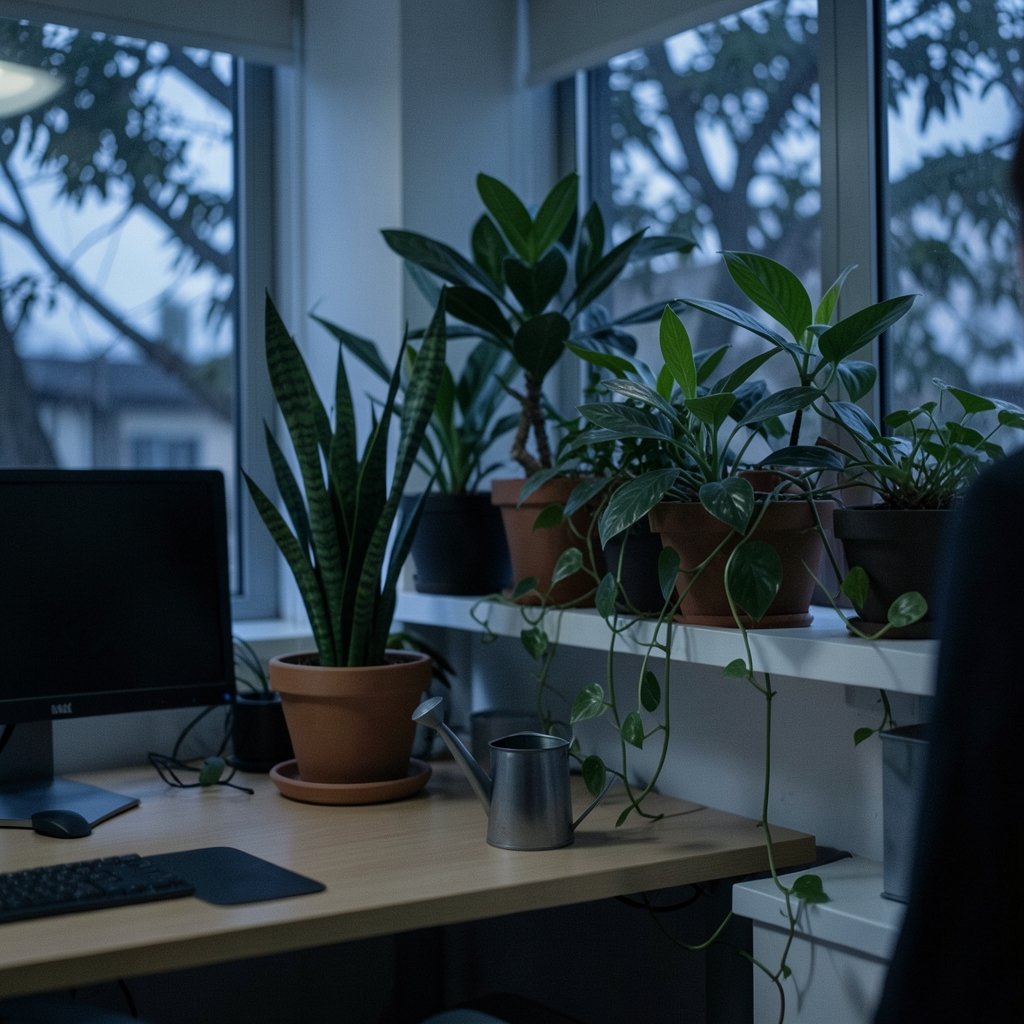
Can a plant really survive in that gloomy corner where no sunlight ever seems to land? The short answer is yes, but not the way most people imagine. Low light does not mean no light, and the plants sold as “low light houseplants” are tolerant survivors, not creatures of the dark. Understanding that distinction is the difference between a shelf of healthy greenery and a sad row of yellowing stems.
This guide covers which plants genuinely cope with dim conditions, how to measure the light you actually have, why watering kills more houseplants than darkness ever will, and the practical habits that separate thriving plants from struggling ones.
What “Low Light” Actually Means for Houseplants
Horticultural guidance generally treats low light as a spot several feet from a window, or any position near a north-facing window. It is not a windowless room, a basement, or a hallway with the blinds permanently shut. Plants still need some daylight, however indirect, or a grow light standing in for the sun.
The reason comes down to basic plant physiology. Photosynthesis sets a hard floor: no houseplant grows in true darkness. Low-light species tolerate reduced light, but they still photosynthesize, just slowly. That slower metabolism ripples through everything else, including how much water they need and how fast they grow. (Photosynthesis)
Light itself is measured in foot-candles or lux, and reference ranges vary noticeably between sources. Many horticultural references put “low light” somewhere around 50 to 250 foot-candles, but thresholds shift depending on who is writing. That inconsistency matters in practice: two experts can describe the same hallway differently, so it pays to trust your plant’s behavior over a number on a light meter.
How to Read the Light in Your Room
Before buying anything, spend a day observing the space. Practical checks that work better than guesswork:
- The hand test. Hold your hand up in the spot at midday. A sharp, defined shadow means bright light. A soft, fuzzy shadow means medium. Barely any shadow at all means low light.
- The ceiling test. On a sunny day, look up. If you can see a bright patch of reflected light on the ceiling, the room gets more light than it feels like.
- The seasonal test. A spot that works in June may fail in December. Northern hemisphere rooms lose intensity in winter, and plants near windows notice.
- The grow-light fallback. For genuinely dim rooms, full-spectrum LED grow lights supplement natural light. Horticultural extension services discuss this as a practical option rather than a gimmick, and a simple timer solves the forgetting problem.
One common mistake: people buy a low-light plant, park it in the darkest corner of the house, and then wonder why it declines. Tolerance is not preference. Most “low light” plants do better with bright, indirect light and merely survive when conditions are worse.
The Most Reliable Low-Light Houseplants
A handful of species come up again and again in horticultural extension material because they tolerate reduced light and irregular watering. These are the consensus picks, not marketing inventions.
| Plant | Botanical name | Why it copes | Watch out for |
|---|---|---|---|
| Snake plant | Dracaena trifasciata | CAM photosynthesis, stores water in leaves | Rot from overwatering |
| Pothos | Epipremnum aureum | Adaptable, fast-rooting vine | Leggy growth in deep shade |
| ZZ plant | Zamioculcas zamiifolia | Stores water in rhizomes | Yellow leaves from soggy soil |
| Peace lily | Spathiphyllum | Tolerates dim corners, droops to signal thirst | Brown tips from dry air |
| Cast-iron plant | Aspidistra elatior | Genuinely tough, slow-growing | Very slow progress in low light |
The snake plant deserves a closer look. It uses crassulacean acid metabolism, a photosynthetic pathway that opens the plant’s stomata at night rather than in daytime heat. That physiology helps explain why it copes with both low light and long gaps between waterings. It is also a reminder that “low light” plants are often drought-adapted plants, and those two traits travel together.
Names change, too. The snake plant spent decades in the genus Sansevieria before botanists moved it into Dracaena. If a label looks outdated, the plant is still the same plant.
Why Overwatering Kills More Houseplants Than Darkness
Here is the counterintuitive part: in low light, the bigger danger is usually the watering can, not the shadow. Plants transpire and grow more slowly when light is scarce, so they use less water. Water them on the same schedule as a sun-drenched plant and the soil stays wet, roots suffocate, and rot sets in.
Extension services consistently warn that most houseplant deaths trace back to overwatering. The fix is a change of habit, not a change of plant:
- Water by feel, not by calendar. Push a finger two inches into the soil. If it is damp, wait.
- Use pots with drainage holes. A decorative outer pot without drainage is a slow-motion drowning.
- Empty the saucer. Standing water wicks back up into the soil.
- Water less in winter. Growth slows, so water demand drops further.
- Choose the right mix. A chunky, airy potting mix drains faster than dense, peaty soil.
A peace lily helps here because it broadcasts its thirst by drooping dramatically, then recovers within hours of a drink. Treat that droop as a signal, not an emergency, and resist the urge to water on a fixed weekly schedule.
Spotting Trouble: Etiolation and Other Warning Signs
Plants cannot complain out loud, but they do send signals. The most useful diagnostic is etiolation: stretched, pale, leggy growth where the plant is literally reaching for light. A pothos with wide gaps between leaves, or a succulent-style plant growing tall and thin, is telling you the spot is too dim.
Other signs worth reading carefully:
- Yellowing lower leaves often mean soggy soil, not too little light.
- Brown, crispy tips usually point to dry air or inconsistent watering.
- No new growth for months suggests the plant has stalled and needs either more light or a feed.
- Pale, washed-out foliage on a normally green plant can signal light starvation.
The practical response to etiolation is simple: move the plant closer to a window, or add a grow light. Pruning the stretched growth back encourages a bushier shape once the light improves.
A Word on Air-Purifying Claims
You have probably seen low-light houseplants marketed as air purifiers. The claim traces back to a 1989 NASA study on interior landscape plants and indoor air pollution, and it gets repeated far more confidently than the evidence supports. That research tested sealed chambers, not lived-in homes, and the plant densities needed to meaningfully clean household air would be impractical.
Treat air-purifying marketing skeptically. The honest case for houseplants is aesthetic and psychological: they make a room feel alive, and caring for them is a genuinely pleasant routine. That is reason enough. Buying a plant because a label promises cleaner air is buying a promise nobody has demonstrated at realistic scale.
Practical Setup Tips That Actually Work
After the plant choice, the details decide the outcome. A few habits that consistently help:
Group plants together. Clustering raises local humidity and creates a slightly better microclimate than a lone pot on a cold windowsill.
Keep leaves clean. Dust blocks light from reaching the leaf surface, which matters more in a dim room. A wipe with a damp cloth every few weeks is enough.
Rotate pots. A quarter turn each watering keeps growth even instead of lopsided toward the window.
Watch the temperature. Low-light corners are often near draughty windows or radiators. Cold snaps and hot blasts stress plants more than dim light does.
Be patient. Low light means slow growth. A cast-iron plant may push out just a couple of new leaves a year, and that is normal, not failure.
If you are also setting up a workspace in that dim corner, the same instinct applies: match the equipment to the environment rather than fighting it. The logic behind edge computing best practices that keep latency low is oddly similar, since both are about working within constraints instead of pretending they do not exist.
Low-Light Plants and the Rest of Your Setup
Houseplant care rarely happens in isolation. The same room that hosts a snake plant often hosts a desk, a screen, and a tangle of cables. If you spend long hours there, you may have wondered whether blue light glasses actually work, based on what the evidence really shows before investing in a pair. Dim rooms and screen glare are a common pairing, and it helps to know which fixes are supported and which are marketing.
For anyone building a calmer, lower-stimulation workspace around their plants, there are also lessons in how the Light Phone 3 and Minimal Phone compare on keyboard, e-ink, and app limits. A quiet corner with a few tolerant plants and fewer notifications is a surprisingly effective combination.
Common Mistakes That Sink Low-Light Plants
Most failures follow a predictable script. Avoiding these five errors covers the majority of cases:
- Treating “low light” as “no light.” A windowless bathroom is a plant hospice, not a habitat.
- Watering on autopilot. The schedule that worked in summer drowns a plant in winter.
- Choosing a pot without drainage. No holes, no escape route for excess water.
- Repotting into a giant container. Oversized pots hold excess wet soil around small roots.
- Fertilizing a struggling plant. Feed supports growth; it does not create light. A stalled plant in deep shade needs a brighter spot first.
There is also a subtler mistake: buying a plant for the label rather than the location. A ZZ plant that tolerates low light will still look better with bright, indirect light. Buy for the spot you have, then give the plant the best version of that spot you can manage.
Conclusion
Low-light houseplants are real, but they are tolerant, not magical. Snake plants, pothos, ZZ plants, peace lilies, and cast-iron plants earn their reputation because they cope with dim conditions and irregular watering, not because they thrive in darkness. Give them some daylight or a grow light, water them far less than instinct suggests, and read the signals they send, especially stretched, leggy growth and yellowing leaves. Do that, and the gloomy corner becomes the easiest part of the house to keep green.
Frequently Asked Questions
Can low-light houseplants survive in a room with no windows?
No. Every plant needs some light for photosynthesis, and a windowless room provides none. A low-light plant can survive a dim room with indirect daylight or a full-spectrum grow light on a timer, but true darkness will eventually kill it, however slowly.
How often should I water low-light houseplants?
Less often than most people expect. Because plants grow and transpire slowly in low light, they use less water. Check the soil with a finger before watering and wait if it still feels damp two inches down. In winter, most low-light plants need watering only every two to three weeks or longer.
Which low-light houseplant is hardest to kill?
The snake plant and the ZZ plant are the most forgiving, largely because they store water in their leaves and rhizomes and tolerate long dry spells. The cast-iron plant is similarly tough but grows very slowly. All three still rot if kept constantly wet, so drainage matters more than toughness.
Why is my low-light plant growing tall and thin?
That is etiolation, the plant’s response to insufficient light. It stretches toward the nearest light source, producing pale stems and wide gaps between leaves. Move it closer to a window or add a grow light, then prune the stretched growth so the plant can bush out again.
Do low-light houseplants really purify the air?
Not in any meaningful way in a normal home. The often-cited research tested plants in sealed chambers, not lived-in rooms, and the plant densities required for real air cleaning would be impractical. Keep houseplants for their looks and the pleasure of caring for them, not for air quality claims.
What is the best light level for a low-light houseplant?
Bright, indirect light suits most so-called low-light plants best; they tolerate dim conditions rather than preferring them. Aim for a spot a few feet from a window, out of direct harsh sun. If the room is genuinely dark, a full-spectrum LED grow light for several hours a day is the practical fix.



