

What comes to mind when someone says “Maharashtrian language”? For most people, the answer is Marathi, the language of Maharashtra, the state that stretches along India’s western coast and deep into the Deccan plateau. But the phrase hides more than it reveals. Maharashtra is home to dozens of speech varieties, from the clipped coastal dialects of the Konkan to the earthy rural Marathi of Vidarbha, and the line between “language” and “dialect” is drawn as much by politics as by linguistics.
This article unpacks what the term actually means, how Marathi became one of India’s most important languages, how it is written and spoken, and what a learner or curious reader should know before diving in. It also flags the places where common claims about the language fall apart under scrutiny.
What does “Maharashtrian language” actually mean?
Strictly speaking, “Maharashtrian language” is not a formal linguistic label. It is a geographic shorthand. In everyday use, it almost always refers to Marathi, the Indo-Aryan language that serves as the official language of Maharashtra.
The confusion arises because Maharashtra contains other languages too. Konkani, an Eighth Schedule language and the official language of neighbouring Goa, is spoken along the southern coast. Varhadi dominates parts of Vidarbha. Khandeshi is spoken in the north-west. Malvani and other coastal varieties blend Marathi and Konkani features. Whether these count as dialects of Marathi or as separate languages is genuinely contested, and the answer often depends on who is asking and why.
For practical purposes, this article treats “Maharashtrian language” as meaning Marathi, while noting where the boundary blurs.
How Marathi fits into India’s language map
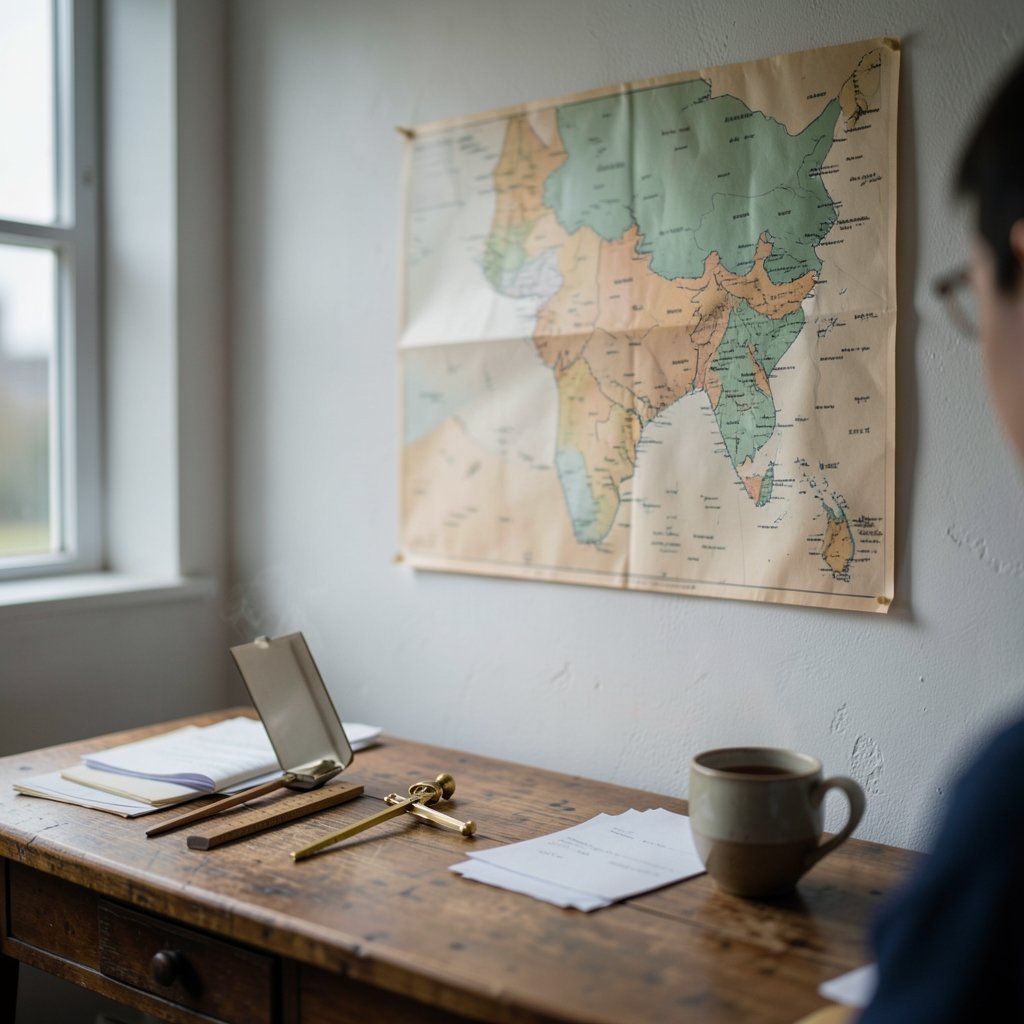
Marathi belongs to the Indo-Aryan branch of the Indo-European family, making it a distant cousin of Hindi, Bengali, Gujarati and, further back, English. It is one of India’s 22 scheduled languages, listed in the Eighth Schedule of the Constitution. Marathi was added to that schedule by the 71st Constitutional Amendment Act of 1992, a change that gave it formal recognition in national education and administration.
The state itself was formed on 1 May 1960, when Bombay State was split along linguistic lines into Maharashtra and Gujarat. That date matters: it makes Maharashtra one of the clearest examples of India’s linguistic federalism, where state borders were drawn to match the language most people spoke.
How many people speak it?
The 2011 Census of India recorded roughly 83 million Marathi speakers. That figure places it among the largest mother tongues in the country, generally cited as third or fourth depending on how Hindi’s many varieties are counted. Rankings shift because “Hindi” in census data covers a huge cluster of related speech forms, so comparisons are less precise than they look.
If you have ever wondered how a language with tens of millions of speakers can still be under-represented online, the answer is partly about digital content and partly about how language models are trained. The same dynamic shapes everything from what a large language model can do in English versus in Marathi.
A literary tradition older than most European vernaculars
Marathi has a documented literary history stretching back to roughly the 13th century. The landmark text is the Dnyaneshwari, a commentary on the Bhagavad Gita attributed to the saint-poet Dnyaneshwar and commonly dated to around 1290. Scholars debate the exact date, but the work’s importance is not in doubt: it helped establish Marathi as a vehicle for philosophy and devotion rather than just everyday speech.
That early start gave Marathi a deep tradition of poetry, saint literature, theatre and, later, prose fiction. The Warkari devotional movement produced centuries of verse that ordinary people still sing. In the 19th and 20th centuries, Marathi theatre and journalism became powerful forces in colonial India, and the language absorbed English vocabulary in ways that shaped modern usage.
How Marathi is written
Marathi uses the Devanagari script, the same writing system as Hindi, Nepali and Sanskrit. If you can read Hindi, you can read the Marathi alphabet, though not always the words. Devanagari is written left to right and is broadly phonetic, which is a genuine advantage for learners: once you know the letters, you can pronounce almost anything you see.
A few practical points that trip people up:
- Marathi has more sounds than Hindi. It distinguishes between certain retroflex and dental consonants that Hindi speakers often merge.
- The letter ळ (ḷa) is common in Marathi and rare in Hindi. Ignoring it marks you as a non-native immediately.
- Pronunciation is stress-light. Marathi does not lean heavily on stress the way English does, so learners who import English rhythm sound off.
- Formal and informal registers differ sharply. The pronoun system changes depending on who you are addressing, and getting it wrong can sound rude.
Dialects and regional variety
Marathi is not one uniform speech. The standard form taught in schools and used in Pune and Mumbai is a relatively recent, partly engineered norm. Regional varieties include:
| Variety | Where it is spoken | Notes |
|---|---|---|
| Standard Marathi | Pune, Mumbai, formal contexts | The version in textbooks and media |
| Varhadi | Vidarbha region | Distinct vocabulary and grammar; sometimes called a separate language |
| Khandeshi | North-western Maharashtra | Strongly divergent; classification debated |
| Malvani and coastal varieties | Konkan coast | Heavy Konkani influence |
| Dangii and tribal varieties | Border regions | Often under-documented |
The honest answer to “how many dialects does Marathi have?” is that nobody agrees, because the count depends on where you draw the line. Linguists catalogue these varieties, but speakers themselves often describe their speech as simply “how we talk here.”
Language politics and the classical status question
Marathi has an active language-rights movement. Campaigners have long pushed for greater use of Marathi in Mumbai’s public signage, in courts and in higher education. There have also been sustained demands for classical language status, a designation India grants to languages with an ancient and independent literary tradition.
Reports in October 2024 indicated that the Union Cabinet approved classical language status for Marathi, alongside several other languages. Because this is a recent and politically charged development, readers should verify the current official position rather than rely on any single summary, including this one.
Language politics in Maharashtra is not abstract. It affects which language a child is taught in, which script appears on a bus, and whether a court case is argued in a tongue the defendant fully understands.
What makes Marathi hard or easy for learners
The honest verdict: Marathi is moderately difficult for English speakers, easier than Mandarin or Arabic, harder than Spanish or Dutch. The main obstacles are:
- Verb conjugation changes with person, number, gender and formality, which is a lot to track.
- Gender is grammatical and not always predictable, so nouns must be memorised with their gender.
- Word order is subject-object-verb, the reverse of English in many sentences.
- Script adds an initial learning curve, though a manageable one.
The advantages are real too. Devanagari is systematic. Pronunciation is consistent once learned. And because Marathi has borrowed heavily from English in modern contexts, technical vocabulary often feels familiar.
For anyone weighing up which language to study next, the decision is less about raw difficulty and more about what you want to do with it. That same logic applies whether you are choosing between human languages or between small language models vs large language models for a technical project.
Common mistakes people make about Marathi
A few errors show up again and again in discussions of the Maharashtrian language.
Assuming Marathi is a dialect of Hindi. It is not. Marathi and Hindi are separate languages with separate literary histories, even though both descend from older Indo-Aryan speech and share a script.
Confusing Marathi with Konkani. They are related and have influenced each other, but they are distinct languages with different official status and different literary traditions.
Treating Mumbai Marathi as the whole story. Mumbai’s Marathi is heavily mixed with Hindi, English and other influences. It is one variety among many, not the standard.
Ignoring register. Learners who speak to elders using informal pronouns, or to children using formal ones, create exactly the wrong impression. Register matters more in Marathi than beginners expect.
Over-relying on translation apps. Machine translation for Marathi has improved but still stumbles on idiom, honorifics and regional vocabulary. It is a starting point, not a substitute for a speaker.
Practical tips that actually work
If you want to learn Marathi or simply understand it better, a few approaches pay off more than others.
Start with the script. Learning Devanagari takes a few focused weeks and opens the rest of the language to you, including the ability to read signs, menus and children’s books. Skipping it and relying on transliteration slows you down later.
Learn verbs in full conjugated forms rather than as bare infinitives. Marathi’s verb system is where most of the grammar lives, and memorising whole forms gives you usable sentences faster than studying tables in isolation.
Find media you actually enjoy. Marathi theatre, film and devotional music are deep wells, and listening to natural speech teaches rhythm in a way textbooks cannot. Subtitled content helps bridge the gap early on.
Speak early and accept mistakes. Marathi speakers are generally encouraging to learners, and the formality system is more forgiving in casual conversation than grammar books suggest.
Avoid the trap of studying only formal written Marathi. If your goal is conversation, the register in newspapers is not the register in a kitchen. Both are worth knowing, but they are not interchangeable.
Marathi in the digital age
Marathi’s online presence has grown quickly, driven by news sites, social media and regional streaming content. Unicode support for Devanagari is now standard, which means Marathi text renders correctly almost everywhere. Input methods have improved too, from phonetic keyboards to transliteration tools that convert Roman letters into Devanagari as you type.
The bigger challenge is content depth. A language with 83 million speakers still has far less high-quality digital text than its size would suggest, which affects everything from search results to machine translation quality. That gap is closing, but slowly.
For developers, the lesson is familiar from other domains: the tools you choose shape what you can build. Whether you are working with a large model or a compact one, understanding where large language models fail matters as much as knowing what they do well. If you are building anything language-related, whether for Marathi or another tongue, it helps to know which programming language fits the job.
Conclusion
The Maharashtrian language, in almost every practical sense, is Marathi: an Indo-Aryan language with roughly 83 million speakers, a literary tradition reaching back to the 13th century, a place in India’s Eighth Schedule, and a script shared with Hindi but a grammar and vocabulary very much its own. Around it sit regional varieties and neighbouring languages whose boundaries are debated rather than fixed.
Marathi is worth understanding for its texture as well as its size. It carries centuries of devotional poetry, a vigorous theatre tradition, and a modern public life conducted in a language that millions use every day. Whether you are learning it, working with it in software, or simply trying to make sense of a phrase you heard, the starting point is the same: Marathi is a language in its own right, not a footnote to Hindi.
Frequently asked questions
Is Marathi the same as Hindi?
No. Marathi and Hindi are separate Indo-Aryan languages with distinct grammar, vocabulary and literary traditions. They share the Devanagari script, which makes them look similar on the page, but a Marathi speaker and a Hindi speaker cannot automatically understand each other.
How many people speak Marathi?
The 2011 Census of India recorded roughly 83 million Marathi speakers, making it one of the country’s largest mother tongues. Exact rankings vary depending on how related speech varieties are grouped in census data.
Is Marathi a classical language?
There have been long-running campaigns for classical language status, and reports in October 2024 indicated that the Union Cabinet approved it. Because this is a recent development, readers should confirm the current official position rather than rely on secondary summaries.
What script does Marathi use?
Marathi is written in Devanagari, the same script used for Hindi, Nepali and Sanskrit. It is written left to right and is largely phonetic, though Marathi includes sounds such as ळ that are uncommon in Hindi.
How hard is it to learn Marathi?
For English speakers it sits in the moderate range. The main challenges are verb conjugation, grammatical gender and a new script. The advantages are consistent pronunciation, a systematic alphabet and plenty of borrowed English vocabulary in modern contexts.
Is Konkani a dialect of Marathi?
No, Konkani is generally treated as a separate language with its own official status in Goa and its own literary tradition. The two are related and have influenced each other along the Konkan coast, which is why the boundary sometimes seems blurred.



