Houston-based Mechademy has completed a $9.5 million Series A funding round led by Silverton Partners, the company announced on 25 November 2026. The industrial AI firm makes Turbomechanica, a platform that combines physics-based modelling with machine learning to watch over the gas turbines, compressors, pumps and motors that keep energy plants running.
Titanium Innovations Investments and CSL Ventures also took part in the round. CSL Ventures led Mechademy’s earlier seed financing. Including the Series A, which closed earlier this year, the company has now raised more than $12.5 million in total. Mechademy says it will use the money to carry its platform from oil and gas production facilities into power generation plants.
The timing is deliberate. Power demand in the United States is rising at its fastest pace in decades, driven by data centres, artificial intelligence, electrification and factories returning to domestic soil. New gas turbines come with multi-year delivery backlogs, so getting more out of the turbines utilities already own has become a board-level concern.
Key takeaways
- Mechademy raised $9.5 million in a Series A led by Silverton Partners, announced 25 November 2026, taking total capital raised past $12.5 million.
- Titanium Innovations Investments and CSL Ventures participated; CSL Ventures led the company’s seed round.
- Turbomechanica builds a physics-based model of how each machine should perform, then uses machine learning on live plant data to spot drift from that model.
- The platform has caught faults including vibration problems, dry gas seal issues and gas contamination months before failure, according to the company.
- New products include Turbomechanica Copilot, a plain-language question-and-answer tool, a new iOS and Android app, and Diagnostics 2.0, an agentic diagnostics engine rolling out now.
What the announcement actually says
Mechademy announced the completion of the round in a statement issued on 25 November 2026. The company describes itself as an AI-native prescriptive analytics platform for critical rotating machinery, and Turbomechanica as its flagship product. The funding, it said, will support its move from oil and gas production facilities into power generation plants, where gas turbine fleets are under growing strain.
The investor list is short and familiar to the company. Silverton Partners led the round. Titanium Innovations Investments, whose co-founder and managing partner Abhinav Jain said the firm led the seed round and invested again because its conviction had only grown, also participated. CSL Ventures, which led the seed financing, joined as well.
The round itself closed earlier this year, so the announcement confirms completed funding rather than a live raise. The money is already in, the expansion it funds is already under way, and the hiring and product launches described alongside it are happening now rather than promised for later. The funding news sits in a busy stretch for industrial AI startups, and it is worth comparing with other recent rounds, such as our report on Aiden AI’s $32 million Series A funding, to see how investors are sizing bets across the sector.
How Turbomechanica works, and why power plants want it
Turbomechanica starts with physics rather than with data alone. For each specific machine, it builds a model of how that machine should perform, grounded in thermodynamics, rotordynamics, aerodynamics and fluid mechanics. Machine learning then works on live plant data to spot where reality drifts from the model. A diagnostic engine built and maintained by Mechademy’s own turbomachinery specialists turns those findings into insights with recommended actions, rather than a bare list of anomalies.
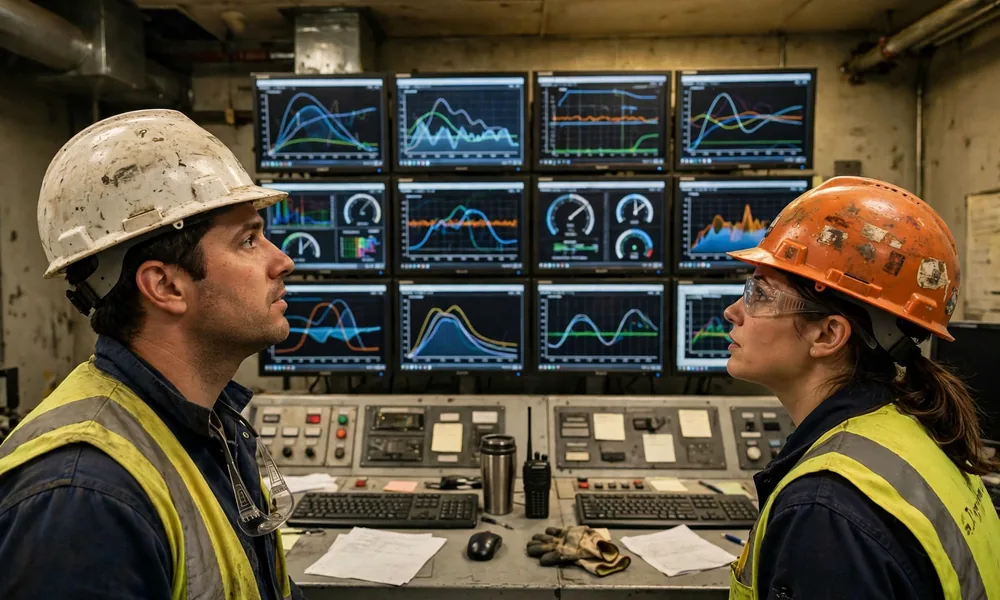
That distinction is the core of the company’s pitch. Conventional monitoring raises alarms, often far too many for a lean team to work through, but rarely explains what is actually wrong. Off-the-shelf AI tools, the company argues, do not understand turbomachinery physics, so they either bury operators in false positives or miss small faults that build into catastrophic failures over months.
On customer machines, the platform has caught performance degradation, vibration problems, dry gas seal and motor insulation issues and gas contamination, often months ahead of failure, according to Mechademy. The company says this includes faults that other monitoring providers on the same equipment missed. Because it uses simulation-based transfer learning, it needs far less historical data to model a new asset than a purely data-driven system would, and it connects to the historians and monitoring systems plants already have rather than demanding a rip-and-replace.
The newest layer is Turbomechanica Copilot, the platform’s native AI application. It lets plant and field staff ask questions in plain language and get answers grounded in their own live data and Mechademy’s diagnostics, with read-only data access built into the architecture. A new iOS and Android app puts Copilot on the phone, and Diagnostics 2.0, a next-generation agentic diagnostics engine, is rolling out now. For readers weighing similar tools, our guide to the best AI tools for manufacturing in 2027 shows how industrial AI is spreading from the factory floor into energy infrastructure.
The background: a proven LNG product meets a strained grid
Mechademy was founded in 2017 in Houston by turbomachinery experts, and its track record so far is in liquefied natural gas. The company says it spent years proving in LNG that physics, machine learning and real turbomachinery expertise together catch failures early. Silverton Partners’ Roger Chen said the firm rarely sees industrial software that combines deep turbomachinery expertise with modern AI in this way, and that Mechademy had earned the trust of LNG operators.
The team behind the product carries long industry resumés. Mechademy says its core team brings decades of experience with major organisations including Chevron, KBR, Parker Hannifin, Endress + Hauser, GE, Toyota and Siemens. Chief Product Officer Mark Weatherwax has more than three decades of turbomachinery experience, and became a Chevron Fellow in 2019, playing a central role in the design, technology qualification and operations of key LNG projects including Chevron’s Wheatstone and Gorgon developments in Australia.
The move into power generation is a bet that the same problems exist there at larger scale. When a gas turbine, compressor or pump fails without warning, a single event can cost millions of dollars in lost production or lost megawatts, plus emergency repairs. The engineers who know these machines best are retiring, the teams left behind run lean, and new turbines face multi-year delivery backlogs, so keeping existing machines healthy is often the only realistic way to meet rising demand in the near term.
Mechademy is also building the commercial side for the push. It hired Madhukar “Duke” Puniani as Head of Revenue in September to lead its go-to-market expansion, and it plans to grow its United States team significantly in 2027. The company holds SOC 2 Type 2 and ISO/IEC 27001 certifications, both audited in March 2026, which it says matter to utilities and other critical-infrastructure buyers. Mechademy was also named a Darcy Partners 2024 Top 10 Innovator.
The caveats that matter
A funding announcement is not a performance guarantee. The $9.5 million round closed earlier this year, so it is not fresh capital arriving this week, and the company has not said how the money is split. The fault-detection claims, including catching problems months ahead of failure, come from the company itself; no independent test results or named customer case studies were published with the announcement.
| Detail | What is known |
|---|---|
| Amount raised | $9.5 million Series A |
| Lead investor | Silverton Partners |
| Other participants | Titanium Innovations Investments and CSL Ventures |
| Total capital raised | More than $12.5 million including this round |
| Announced | 25 November 2026 |
| Round closed | Earlier in 2026, before the announcement |
| Product | Turbomechanica, an AI-native prescriptive analytics platform for rotating machinery |
| New products | Turbomechanica Copilot, iOS and Android app, Diagnostics 2.0 rolling out now |
The power-generation market is also a different sales environment from LNG. Utilities and independent power producers buy slowly, run long procurement cycles and demand proof on their own fleets before committing. Mechademy’s certifications help, but the company will need reference customers in power generation, not just in LNG, before the expansion can be judged a success. The hiring plan for 2027 and the new Head of Revenue role suggest it knows this and is building for a longer sales cycle.
There is also the question of what “agentic diagnostics” means in practice. Diagnostics 2.0 is described as a next-generation agentic diagnostics engine, but the announcement gives no detail on how much autonomy it has or how its recommendations are validated. Copilot’s read-only data access is a sensible safeguard, but buyers will want to know where the line sits between advice and action before they trust an AI system with machines that cannot afford surprises.
Checklist: reading this funding news honestly
Use these checks before drawing conclusions from the announcement.
- Separate the round from the announcement: the $9.5 million closed earlier in 2026, so treat this as confirmation of completed funding, not a new raise.
- Do not treat the valuation as known: no valuation, investor split or revenue figure was disclosed.
- Read the fault-detection claims as company-reported: months-ahead detection is Mechademy’s account of its own deployments, not an independent finding.
- Check the market shift, not just the money: the real test is whether LNG-proven technology wins reference customers in power generation.
- Watch the hiring and product timeline: significant United States team growth is planned for 2027, and Diagnostics 2.0 is rolling out now.
- Remember the demand backdrop: rising demand and turbine backlogs help every supplier in this space, not only Mechademy.
Frequently asked questions
How much did Mechademy raise in its Series A?
Mechademy raised $9.5 million in a Series A round led by Silverton Partners. Including this round, total capital raised stands at more than $12.5 million.
Who invested in the round?
Silverton Partners led the round. Titanium Innovations Investments and CSL Ventures participated, and CSL Ventures led Mechademy’s earlier seed financing.
What does Turbomechanica actually do?
It builds a physics-based model of how each specific machine should perform, then uses machine learning on live plant data to spot where reality drifts from that model. Its diagnostic engine then turns findings into insights with recommended actions for gas and steam turbines, compressors, expanders, pumps and motors.
What is Turbomechanica Copilot?
Copilot is the platform’s native AI application. It lets plant and field staff ask questions in plain language and get answers grounded in their own live data and Mechademy’s diagnostics, with read-only data access built into the architecture. A new iOS and Android app puts Copilot on the phone.
Why is Mechademy moving into power generation now?
United States electricity demand is growing at its fastest pace in decades, pushed by data centres, AI, electrification and industrial reshoring, while new gas turbines face multi-year delivery backlogs. Mechademy argues that getting more availability out of existing turbines has become a board-level concern for utilities and independent power producers.
When was Mechademy founded, and where is it based?
Mechademy is based in Houston and was founded in 2017 by turbomachinery experts with backgrounds in thermodynamics, rotordynamics, aerodynamics and fluid mechanics. If you want the technical background, our explainer on how deep learning works covers the machine learning side of systems like this.
The bottom line
Mechademy’s $9.5 million Series A is a modest round, but it is aimed at a very specific and expensive problem: keeping the rotating machines inside power plants healthy while demand rises and new turbines are years away. The company has a credible LNG track record, a team with deep turbomachinery experience, and a product approach that pairs physics models with machine learning.
What matters next is execution in a new market. Watch for named power-generation customers, evidence that Diagnostics 2.0 delivers on its agentic promise, and the scale of the United States hiring planned for 2027. If Mechademy can repeat its LNG results on gas turbine fleets, the round will look like a well-timed bet; if the power market proves slower to adopt, the same money will have bought a longer, harder sales push than the announcement suggests.