
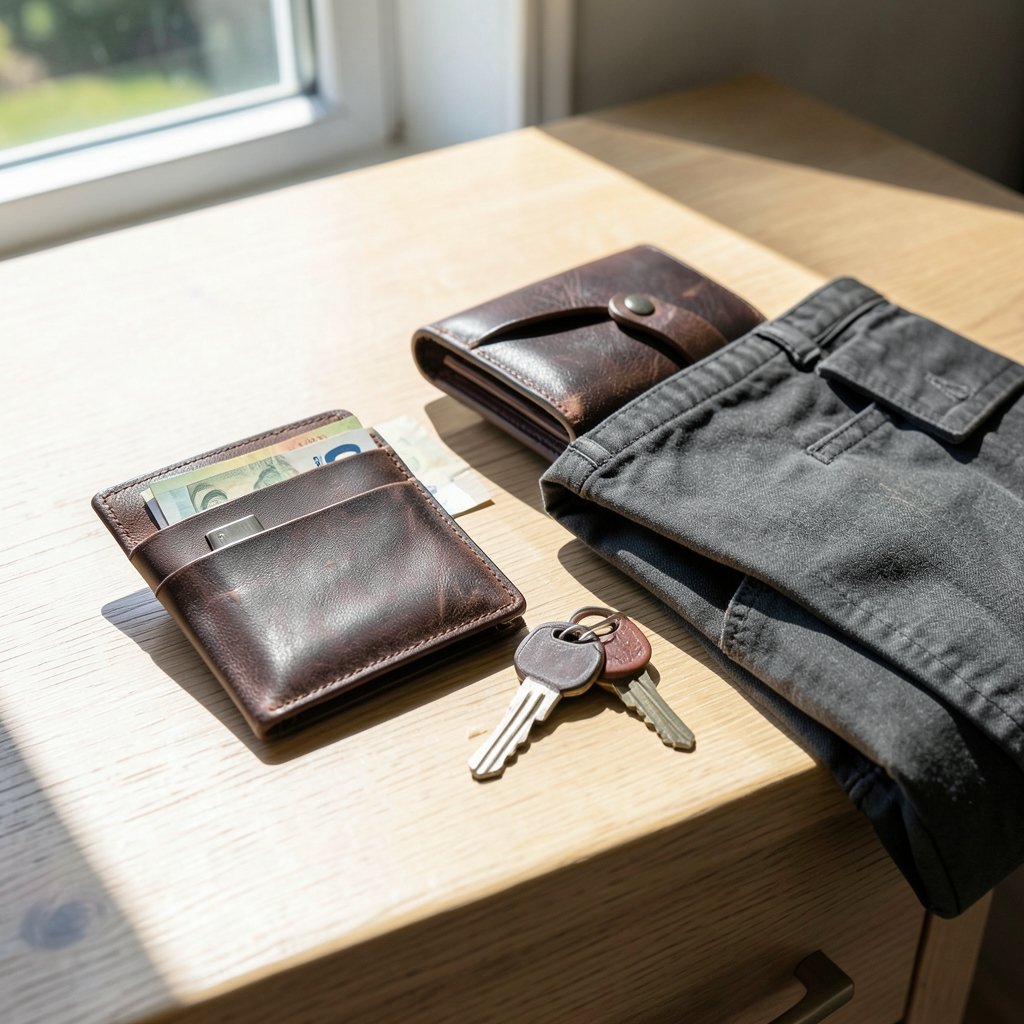
What if the bulging wallet in your back pocket is doing more harm than good? That question sends a lot of men searching for something thinner. A money clip wallet is the usual answer: a slim card holder with a metal clip that grips folded bills, replacing the bill compartment of a traditional bifold. It looks sharp, it carries less, and it forces a decision about what you actually need to bring. But it is not the right choice for every man, and the marketing around these wallets is louder than the engineering. Here is what actually matters before you buy one.
What a Money Clip Wallet Actually Is
A money clip wallet combines two jobs in one small package. The first is card storage: a rigid or semi-rigid holder, often a metal plate or leather sleeve, that keeps four to eight cards stacked and accessible. The second is cash: a spring-loaded or magnetic clip attached to the frame that grips folded banknotes.
The money clip itself is older than the wallet. The spring-loaded version is commonly dated to the early 20th century, with some accounts crediting a New York businessman around 1903. That origin story is poorly documented, so treat the exact date as folklore rather than fact. What is certain is the design logic: a clip holds cash flat against a rigid surface, which takes up far less room than a folded leather bill compartment.
Most models today fall into three families:
| Type | Frame | Typical capacity | Best for |
|---|---|---|---|
| Leather clip wallet | Full-grain leather with metal clip | 4–6 cards, 5–10 bills | Men who want a traditional feel and patina |
| Metal plate wallet | Aluminum or titanium with elastic or clip | 6–8 cards, 8–15 bills | Minimalists who want rigidity and quick access |
| Hybrid / carbon fiber | Carbon fiber or composite shell | 5–8 cards, 5–12 bills | Light weight with a modern look |
The category overlaps with minimalist wallets more broadly, and the two terms are often used interchangeably. The difference is the clip: a pure card holder has no cash solution, while a money clip wallet always does.
Why Men Are Switching to Front-Pocket Wallets
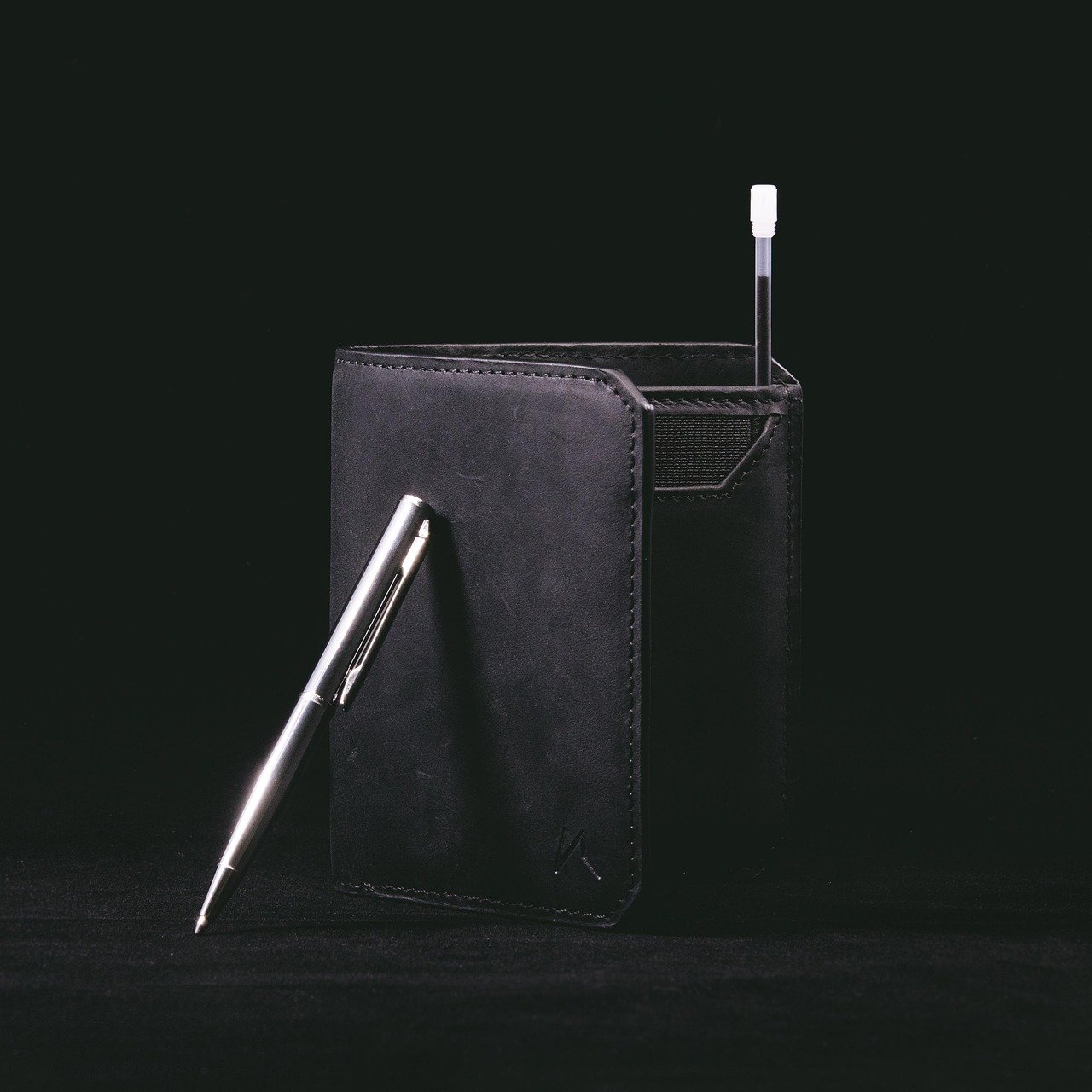
The shift toward slim, front-pocket carry is usually framed as a health decision. Sitting on a thick bifold all day puts pressure on one side of the pelvis, and the common complaint is numbness, discomfort, or sciatica-type pain. It sounds convincing, and it is repeated everywhere.
Here is the honest version: peer-reviewed evidence linking wallet use to back pain is limited and mixed. No strong clinical consensus says a fat wallet causes sciatica. What is well documented is simpler and less dramatic. A thick wallet in a back pocket is uncomfortable, it throws off how you sit, and it is a pickpocket’s easiest target. Moving to a front pocket solves all three problems whether or not the medical claims hold up. (Wallet)
That reframing matters when you are shopping, because it changes what you should optimize for. You are not buying a medical device. You are buying a smaller footprint and a better sitting posture. If back pain is a real concern, a wallet is not the fix; a conversation with a clinician is.
The RFID Question: Marketing Versus Reality
Many money clip wallets are sold with RFID-blocking card sleeves. The pitch is that thieves with hidden readers can skim your contactless card data through your pocket. It sounds alarming, and it sells wallets.
The reality is more nuanced. The U.S. Federal Trade Commission has warned that RFID shielding claims must be substantiated, and independent testing has found that many “blocking” wallets do not reliably prevent reads. Meanwhile, contactless card fraud via skimming is rare relative to other fraud types. Most card fraud happens through data breaches, online theft, and lost cards, not through a stranger waving a reader at your hip.
None of that makes RFID blocking useless. If it costs nothing extra and gives you peace of mind, fine. But do not pay a premium for it, and do not let it drive your decision. The bigger risk to your money is not a skimmer in a crowd. It is the gift card scam that works because victims rarely get their money back, which targets how people pay, not what they carry. If you want to understand where security spending actually goes, it helps to look at where the money really goes in identity threat detection. A wallet is a small part of that picture.
Capacity: The Number That Decides Whether You Will Keep It
The most common mistake buyers make is overestimating what they carry. They buy a slim wallet, then cram in nine cards and a receipt wad, and the clip loses grip within a week. The wallet ends up in a drawer.
As a rule of thumb, money clip wallets hold 4–8 cards and 5–15 folded bills. Beyond that, the clip stops gripping and the cards splay out. These numbers vary by model, so treat them as guidance rather than a standard.
Before you buy, do this in practice:
- Empty your current wallet onto a table.
- Set aside anything you have not used in 30 days: loyalty cards, old gift cards, receipts, business cards.
- Count what remains. If it is more than eight cards, a money clip wallet will frustrate you.
- Photograph the keepers and store the rest digitally. Most store loyalty programs work from a phone number or app.
- Check whether you need cash at all. If you rarely carry bills, a pure card holder may suit you better than a clip.
This five-minute audit predicts satisfaction better than any review. Men who downsize before buying love these wallets. Men who downsize after buying usually return them.
Materials: Leather, Metal, and What You Actually Feel
Full-grain leather is the top grade of leather, taken from the outer layer of the hide with the grain intact. It ages into a patina, softens over time, and feels warm in the hand. It is also the least rigid option, which matters if you want the clip to hold a firm stack.
Aluminum and titanium plates give you rigidity and a consistent grip. They are the choice if you want a wallet that behaves the same on day one and day five hundred. The trade-off is feel: metal is cold, it can scratch, and it can set off airport metal detectors.
Carbon fiber sits in between. It is light, stiff, and modern looking, though some buyers find the texture gimmicky.
A practical tip that does not get said enough: check the clip tension before you commit. A spring clip should require real effort to open. If it opens with a light pull, it will loosen fast. Magnetic clips are convenient but can demagnetize hotel key cards if they sit against them for hours.
Size, Currency, and the Details That Trip People Up
Clip width is set by the money it holds. U.S. dollar bills measure 6.14 by 2.61 inches (156 by 66.3 mm), which sets the practical minimum clip width for American cash. Euro notes run 120 to 160 mm wide depending on denomination, so a clip sized for dollars may leave larger euro notes hanging over the edge.
If you travel or handle multiple currencies, fold a note and hold it against the clip in your mind. A clip that is too narrow will let bills slip out at the corners. A clip that is too wide looks empty with a small stack.
Airport security is another small friction point. In the U.S., TSA does not require you to remove wallets from carry-on bags during screening, though metal-heavy wallets may trigger secondary screening. If you fly often and hate pat-downs, a leather clip wallet with a small metal clip draws less attention than a solid titanium plate.
How to Choose Without Overthinking It
Most buyers get stuck comparing features they will never notice. A simpler decision path works better:
- Count your cards. Eight or fewer? Proceed. More than eight? Consider a slim bifold instead.
- Decide on cash. If you carry bills weekly, get a clip. If not, a card holder is lighter.
- Pick your material by feel. Leather if you want warmth and patina, metal if you want rigidity and consistency.
- Check the clip tension in person if you can. Online, read reviews that mention grip after six months, not first impressions.
- Ignore RFID unless it is free. It is a nice extra, not a reason to buy.
- Set a realistic budget. Mid-range models from established makers usually outlast cheap ones, and the difference shows up in the clip spring, not the leather.
The same discipline applies to other money decisions that look small and compound over time. If you are weighing side projects or automation tools, the logic in how to make money with AI without wasting it is oddly similar: audit what you actually use, cut the rest, and spend only where the return is clear. Even planning a wedding follows the same pattern, as this guide to choosing a wedding venue that saves money and stress shows. Small, deliberate choices beat big, vague ones.
Common Mistakes and What Actually Works
The failures repeat in predictable ways. Men buy a metal wallet because it looks futuristic, then discover it destroys the magnetic stripe on cards stored against the plate. Others buy a leather clip wallet and overload the card slot until the leather stretches permanently. Some choose a clip with a weak spring and lose bills the first time they sit down.
What works in practice is unglamorous. Carry fewer cards than the wallet’s stated maximum, leaving one slot of breathing room. Keep bills folded once, not twice, so the clip grips a single thickness. Empty receipts weekly, because paper is what makes slim wallets bulge. And check the clip’s grip every few months; a spring that has gone soft can be tightened or the wallet replaced before you lose cash. (Cyber Crime)
There is also a security habit worth building. A front-pocket wallet is harder to lift, but it is not theft-proof. Keep only one or two cards on you when traveling, leave the rest in a hotel safe, and know how to freeze a card from your phone. The best wallet is the one that makes losing it a minor inconvenience rather than a crisis.
Conclusion
A money clip wallet for men is a trade, not an upgrade. You give up capacity and the comfort of a bill compartment. You get a slimmer profile, faster access to cards and cash, and a front-pocket carry that sits better when you drive, sit, or walk through a crowd. The trade pays off if you carry four to eight cards and a modest stack of bills. It frustrates you if you do not.
Choose by counting what you actually carry, not by what the marketing says you should. Pick leather for feel, metal for rigidity, and ignore RFID claims unless they come free. Check the clip tension, respect the capacity limit, and keep the receipts out. Do that, and a money clip wallet becomes the last wallet you think about for years. Skip it, and it becomes another slim object in a drawer.
Frequently Asked Questions
How many cards can a money clip wallet hold?
Most models hold four to eight cards comfortably. Beyond eight, the stack splays, the clip loses grip, and the wallet stops closing cleanly. If you regularly carry more than eight cards, a slim bifold is a better fit.
Is a money clip wallet safe for my cards?
Yes, with normal care. Keep magnetic stripes away from the metal plate, avoid stacking cards against a strong magnetic clip for long periods, and carry only the cards you need. RFID-blocking sleeves are a bonus, not a necessity, since contactless skimming is rare compared with other fraud types.
Do money clip wallets fit in a front pocket?
That is the point. Most models measure roughly 3.5 by 2.5 inches and under half an inch thick when loaded sensibly, which fits a front pocket easily. Bulk comes from overloading, not from the wallet itself.
Will a metal money clip wallet set off airport security?
It may trigger secondary screening, but TSA does not require you to remove wallets from carry-on bags in the U.S. A leather wallet with a small metal clip draws less attention than a solid metal plate. Allow a few extra seconds at the checkpoint.
Are money clip wallets good for back pain?
The evidence is weaker than the marketing suggests. Peer-reviewed research linking wallet use to back pain is limited and mixed. What is clear is that a thick wallet in a back pocket is uncomfortable and throws off how you sit. Front-pocket carry helps with that, whether or not it fixes anything clinical.
How do I stop bills from slipping out of the clip?
Fold bills once rather than twice so the clip grips a single thickness, avoid stuffing more than 10 to 15 notes, and check the spring tension when you buy. A clip that opens with a light pull will loosen quickly. If grip fades, tighten the spring or replace the wallet before you lose cash.



