
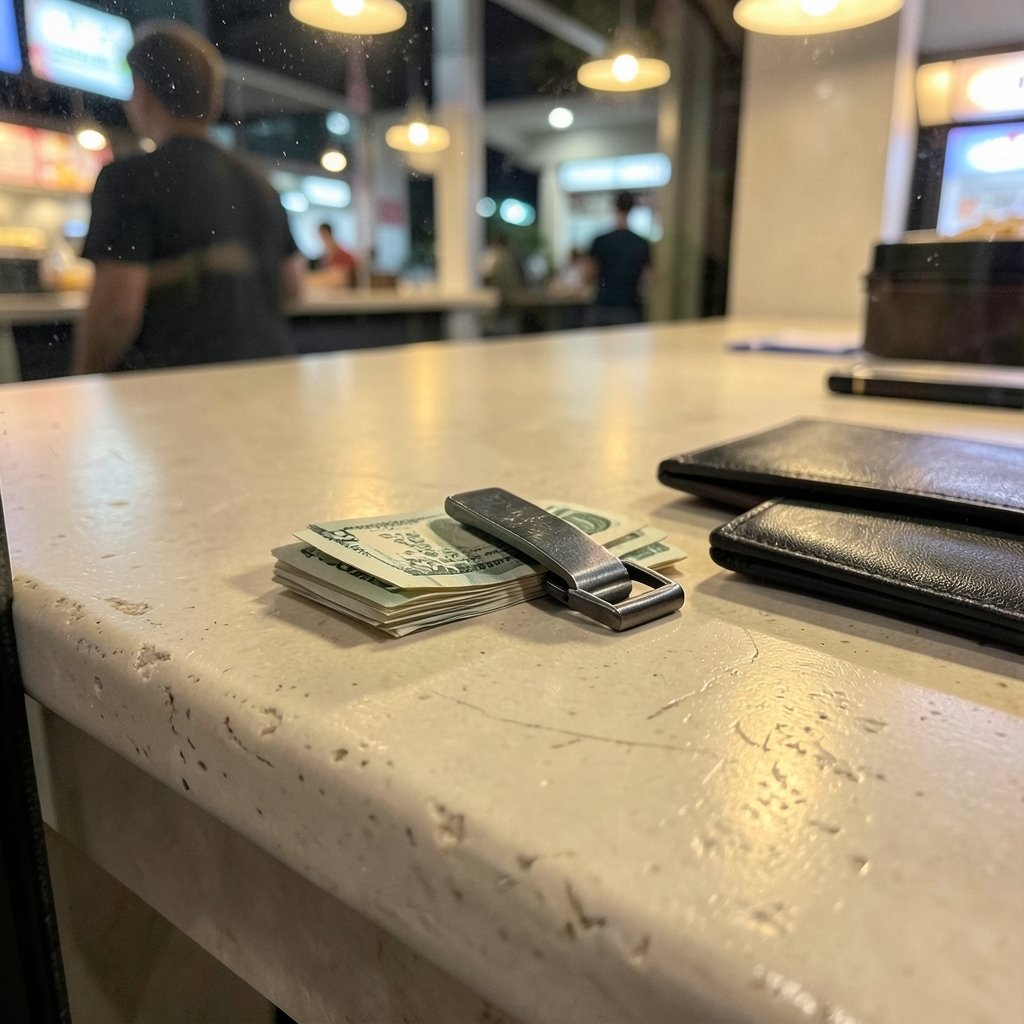
What do you reach for when you need to pay for coffee: a fat wallet, a phone, or a slim metal clip with a few folded bills? For a small but stubborn group of people, the answer is the third one. Money clips have been around for a long time, yet they remain one of the least understood everyday accessories. Some people swear by them. Others have tried one, watched a twenty flutter to the pavement, and gone straight back to leather. (Gift card scam works victims rarely get their money back) (Money clip)
This article looks at how clips actually work, what separates a good one from a bad one, the security trade-offs nobody mentions at the checkout counter, and how to choose one that survives daily use. No hype, no brand worship, just the practical picture.
What a Money Clip Actually Is
A money clip is a small device, usually metal, that holds folded banknotes together using spring tension, a hinged clamp, or two magnets. Some models include a slot or two for cards. It is a compact alternative to a wallet, built around one idea: carry fewer things, carry them flatter.
That definition matters because the market blurs it constantly. You will find “money clips” that are really slim wallets with a clip bolted on, and “clips” that are really cardholders with a cash strap. Neither is wrong, but they behave differently in a pocket. (Identity threat detection really costs where money goes)
One thing worth saying plainly: the origin story of the money clip is murky. Retail copy often claims ancient Chinese roots or a tidy 1800s debut, but no reliable primary source backs a specific date. Early-twentieth-century patent records do include money-clip designs, and anyone curious can search the original patent documents on Google Patents to see filing dates for themselves rather than trusting a product page.
Spring, Clamp, or Magnet: The Three Mechanisms

Almost every clip on the market falls into one of three mechanical families.
Spring tension
A curved strip of spring steel or titanium presses the notes against a back plate. The clip opens when you slide bills in and closes by itself. This is the classic design and the most reliable for cash. The tension does weaken over years of use, especially on cheap steel that gets bent past its limit.
Hinged clamp
Two rigid jaws meet under spring pressure, often with a small lever or a textured grip pad. Clamps hold a thicker stack than simple spring clips and are easier to load one-handed. They are also heavier and can be fussy to open if the hinge collects lint.
Magnetic
Two magnets sandwich the folded notes. Magnetic clips are fast, quiet, and easy to use with one hand. They also raise the caution most often repeated about clips: a strong magnet sitting against a card with a magnetic stripe can scramble it. That warning is largely anecdotal rather than lab-tested, but it is common enough that anyone who still carries a striped hotel key or transit card should think twice before pairing it with a magnet.
| Mechanism | Holds cash well? | Card-friendly? | Main weakness |
|---|---|---|---|
| Spring tension | Yes, up to a modest stack | Limited | Tension fades if over-bent |
| Hinged clamp | Yes, thicker stacks | Moderate | Heavier, hinge can clog |
| Magnetic | Yes, thin stacks | Risky for striped cards | Magnet interference |
Materials and What They Signal
Material choice drives price more than any other factor, and it also drives how the clip ages.
Stainless steel is the workhorse. It is affordable, corrosion-resistant, and holds tension well. Brass looks warm and develops a patina, but it tarnishes and can leave a faint smell on fingers. Titanium is the lightweight option: strong, hypoallergenic, and expensive. Sterling silver and gold push a clip into jewelry territory, where the object is as much a statement as a tool. Leather-wrapped and carbon-fiber versions exist too, mostly for people who want the clip to match a bag or a watch.
Here is the practical point most buyers miss: a clip’s job is to clamp paper, and the best material for that job is springy, not precious. A heavy silver clip with weak tension is worse at holding cash than a plain steel one at a tenth of the price. Buy the mechanism first, the finish second.
How Much Cash Should a Clip Hold?
There is no formal standard for money clips, unlike luggage or currency, so any “capacity spec” you see is a manufacturer claim. In practice, most clips comfortably hold roughly 5 to 15 folded notes. Beyond that, the stack gets bulky, the clip gapes, and the whole point of going slim disappears.
A useful rule of thumb: fold your everyday cash once, and if the resulting bundle is thicker than about half an inch, a clip is the wrong tool for that day. Clips reward people who carry modest amounts of cash and a card or two, not people who hoard receipts.
The Security Trade-Off Nobody Mentions
Clips are slimmer than wallets, and that slimness cuts both ways. A clip keeps cash visible and accessible, which is convenient until it is not. Notes can work loose from a weak clip, and a clip carried loose in a pocket offers no barrier to a pickpocket.
The bigger gap is RFID protection. Contactless card skimming is a real concern, and RFID-blocking is a standard feature of many modern wallets. It is not a typical feature of clips, because a clip is mostly open metal with no shielded compartment. If contactless card protection matters to you, a clip alone will not provide it. The same logic applies to the broader question of what identity and payment threats actually cost, which is worth understanding before deciding how much protection you need in a pocket.
There is also a quieter risk: because a clip holds cash in plain view when you open it, it invites a habit of flashing a stack. The people who carry clips well tend to be discreet about it.
Clips in Culture and Collecting
The money clip has a long run as a prop in twentieth-century American film and fiction, usually as shorthand for winnings, old money, or a character who does not bother with a wallet. Specific examples are best checked individually rather than repeated from memory.
Vintage sterling and designer clips, particularly mid-century American and Scandinavian silversmith work, are traded as collectibles. Auction-house archives are the right place to verify a maker, a date, or a hallmark before paying collector prices. Dated museum object records are another useful check for anyone who wants to confirm a piece is period-correct rather than a modern reproduction.
For most buyers, though, collecting is a side interest. The main event is daily use.
How to Choose a Clip That Lasts
Practical experience points to a short list of things that actually matter and a longer list of things that do not.
- Test the tension before you commit. Open the clip as far as it goes and let it close. It should snap back firmly, not sag. A clip that feels loose in the shop will feel looser in a month.
- Check the edge finish. Run a finger along the inside of the jaws. A sharp or rough edge will fray notes and snag pockets. Good clips have rounded or polished inner edges.
- Size it to your pocket, not your ego. A clip that is too wide for a front pocket sits sideways and digs in. Measure the fold of your typical cash bundle and match it.
- Decide on cards first. If you carry more than two cards, a clip with a card slot or a hybrid slim wallet will serve you better than a pure clip.
- Skip the magnet if you carry striped cards. The risk is small but the fix is free: choose mechanical tension instead.
- Consider the finish’s upkeep. Polished silver shows scratches; brushed steel hides them. Matte finishes wear unevenly at the corners.
Common mistakes are consistent. People buy a clip that is too large, overload it on day one, bend the spring to fit the stack, and then wonder why it stops gripping. Others buy a beautiful precious-metal clip and treat it like a tool, scratching it against keys. And plenty of people buy a clip expecting it to replace a wallet entirely, then discover they still need a place for cards, ID, and a transit pass.
Clips in a Digital Payments World
Cash use has fallen in many countries, and digital payment methods keep expanding, including central bank digital currency experiments that could reshape how people hold money day to day. That shift raises a fair question: is a money clip still useful?
The honest answer is that it depends on your habits. If you pay for nearly everything by phone or card, a clip is a small cash backup and a style choice. If you still use cash for tips, markets, and small purchases, a clip is a genuinely efficient tool. It holds exactly what you need, takes up less space than a wallet, and forces a useful discipline: carry less, spend more deliberately.
There is an economic angle too. People who notice where their money goes tend to make better decisions about it, whether that means tracking spending or simply carrying a visible, limited amount of cash. A clip makes the limit physical. When the clip is empty, the cash budget for the day is gone.
Care and Repair
Money clips need almost no maintenance, which is part of their appeal. A wipe with a soft cloth keeps most finishes clean. Brass and silver benefit from an occasional polish, though many owners prefer the patina. Avoid bending the clip open wider than necessary; that is the single fastest way to kill spring tension.
If a clip loses grip, the fix depends on the mechanism. Spring steel can sometimes be re-tensioned by careful reshaping, but most clips are not designed for adjustment. A hinge that has loosened usually needs replacement. Magnetic clips have no moving parts and simply keep working until the plating wears through.
Conclusion
Money clips are a small accessory with a clear job: hold folded cash tightly, carry it flat, and look good doing it. They are not a wallet replacement for everyone, and they come with real trade-offs in card protection and capacity. But for the right person, a well-chosen clip does its job better than a bulky wallet ever could. Buy for the mechanism, test the tension, size it to your pocket, and skip the precious-metal temptation unless you genuinely want jewelry. Get those four things right, and a good clip will outlast several wallets.
Frequently Asked Questions
What is the difference between a money clip and a wallet?
A wallet has compartments for cards, cash, and often coins, and it folds or opens. A money clip is a single small clamp that holds folded notes, sometimes with a slot or two for cards. Clips are slimmer and faster to use but carry far less and offer no RFID shielding.
Do magnetic money clips damage credit cards?
The caution is widely repeated but not well documented by testing. Modern credit cards use chips and contactless antennas rather than magnetic stripes for most transactions, so the practical risk is lower than it once was. Cards that still rely on a magnetic stripe, such as some hotel keys and transit passes, are the ones worth keeping away from a strong magnet.
How many bills can a money clip hold?
Most clips hold roughly 5 to 15 folded notes comfortably. There is no formal standard, so any capacity figure is a manufacturer claim. Beyond about half an inch of folded cash, the clip gapes and the slim advantage disappears.
Are expensive money clips worth it?
Only if the mechanism is better, not merely the material. A well-made steel or titanium clip with firm tension will outperform a heavy precious-metal clip with weak grip. Pay for spring quality and edge finish first, and treat silver or gold as a style upgrade rather than a functional one.
Can a money clip replace a wallet entirely?
For some people, yes, especially those who carry one or two cards and modest cash. Most people find they still need somewhere for an ID, a transit pass, or a couple of loyalty cards, which pushes them toward a hybrid clip with a card slot rather than a pure clip.
How do I stop my money clip from losing its grip?
Do not over-bend it. Loading a clip beyond its comfortable stack and forcing the jaws open is the fastest way to weaken the spring. Keep the inner edges clean, avoid stretching it to fit a thick bundle, and choose a clip sized to the amount of cash you actually carry each day.



