
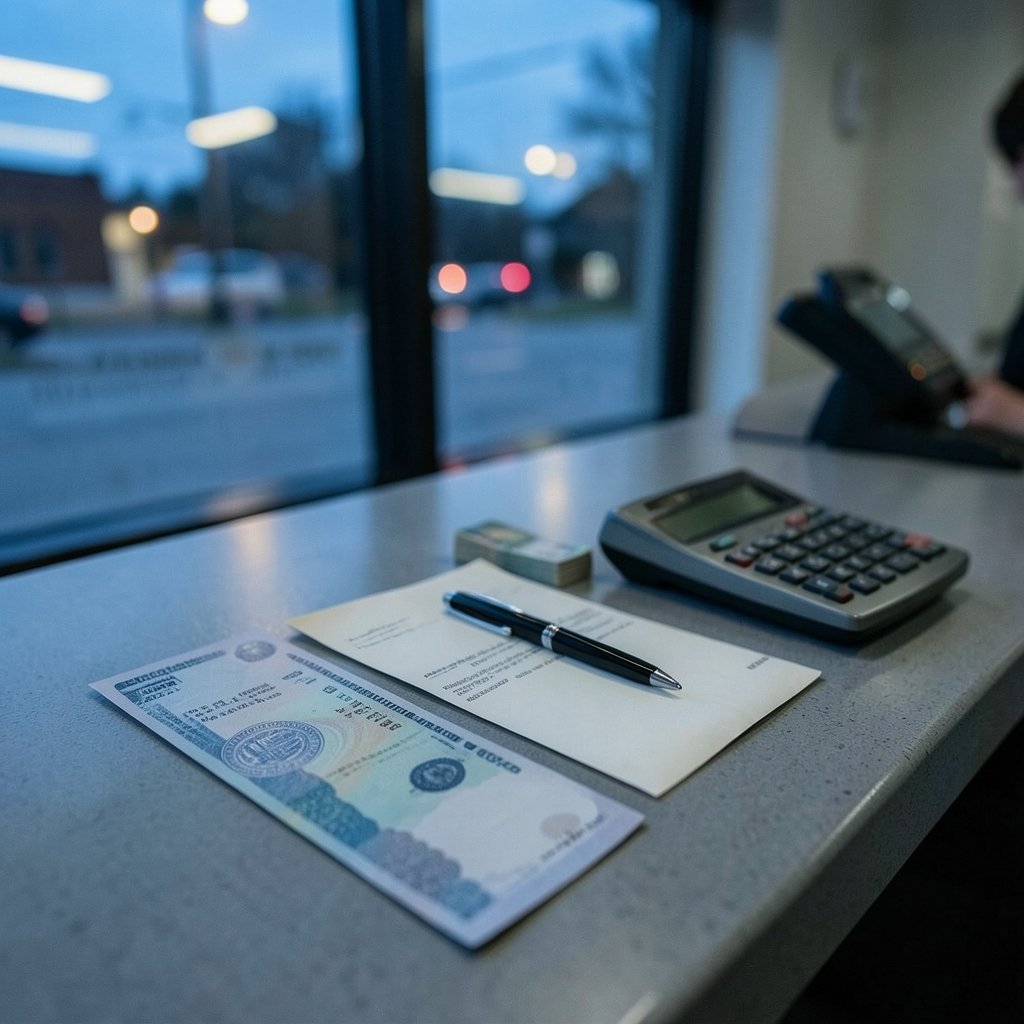
What if the payment you hand over today could be forged, frozen, or refunded weeks later? That question drives the money order vs cashier’s check debate. Both feel official. Both look safer than cash or a personal check. Yet they are built on different promises, cost different amounts, and expose you to very different risks when something goes wrong. (Coffee grinder burr alignment it matters check it)
This guide breaks down how each instrument actually works, what the law says about them, where scammers strike, and which one fits common situations like paying rent, buying a used car, or sending money to a stranger online. By the end, the choice should feel less like a coin flip and more like a clear decision.
What a money order really is
A money order is a prepaid payment instrument. You pay the full amount plus a small fee up front, and the issuer prints a document that the recipient can cash or deposit. Common sellers include the U.S. Postal Service, banks, credit unions, grocery stores, and check-cashing outlets.
Because you pay before the money moves, a money order does not draw on your checking account. That makes it attractive to people who do not have a bank account, or who want to cap their exposure. If someone talks you into sending $300, the most you can lose on that transaction is $300 plus the fee. There is no account number attached that a fraudster could drain later.
Postal money orders have their own rules. Domestic ones top out at $1,000, and international ones at $700. The Postal Service also offers a replacement process if a money order is lost or stolen, though it involves paperwork and a waiting period.
The catch is that money orders carry low ceilings. Buying a used car for $8,000 could mean assembling eight separate money orders, which is clumsy and creates a paper trail nobody wants to manage.
What a cashier’s check really is

A cashier’s check is a check drawn on the bank’s own funds rather than yours. You pay the bank the full amount plus a fee, and a bank officer signs the document. Your name typically appears as the remitter, which links the payment back to you.
Under the Uniform Commercial Code, a cashier’s check is defined as a draft drawn by a bank on itself, which is why it is treated as a direct obligation of the bank rather than a personal promise to pay. That legal status is the whole reason sellers trust it more than a personal check.
Cashier’s checks handle large amounts well. There is no fixed statutory ceiling like the postal money order limit, so they suit real estate deposits, vehicle purchases, and other big-ticket payments. The trade-off is cost and access: you generally need a bank account, the fee is higher, and you must visit a branch or use a bank’s official check service.
Side-by-side comparison
| Feature | Money order | Cashier’s check |
|---|---|---|
| Who backs it | Issuer (USPS, retailer, bank) | The bank itself |
| Typical cost | About $1 to $2 at USPS or retailers | Often $5 to $15 at banks |
| Maximum amount | $1,000 domestic, $700 international (postal) | No fixed postal-style cap |
| Bank account needed | No | Usually yes |
| Best for | Small payments, unbanked senders | Large payments, home and auto deals |
| Fraud risk | Counterfeiting is possible | Counterfeiting is common and costly |
| Replacement if lost | Yes, after a claims process | Yes, through the issuing bank |
Neither column wins outright. The right pick depends on the amount, the recipient, and how much verification you are willing to do.
Cost and access in practice
Practical buyers often make the mistake of assuming the cheaper option is always the smarter one. It usually is for small amounts. A $1.50 money order to pay a utility bill beats a $10 cashier’s check every time.
But the fee is only part of the cost. Consider the time and travel. A cashier’s check may require a branch visit during business hours, while money orders are sold at post offices, pharmacies, and supermarkets with long opening hours. If you are paying a deposit on a Saturday afternoon, the money order counter may be your only realistic option.
One more practical tip: never buy a money order or cashier’s check from an individual. Buy only from the issuing institution or an authorized retailer, and keep the receipt and stub. Those documents are what make a replacement or dispute possible later.
Fraud: where each instrument gets dangerous
Here is the uncomfortable truth. Counterfeit cashier’s checks are one of the most common tools in fake check scams. A buyer “overpays” for your item, asks you to wire back the difference, and the check later bounces because it was forged. Your bank reverses the credit, and the money you sent is gone.
The reason this works is psychological. People assume a bank-issued check is guaranteed, so they release goods or send refunds before the check clears. Banks are allowed to place holds and can return forged items even after provisional credit appears in your account.
Money orders are not immune, but the damage is capped by their smaller limits. A fake money order usually involves hundreds of dollars, not thousands. That difference matters when you are deciding how much trust to extend to a stranger.
The broader lesson applies well beyond banking. Scams that rely on urgency and irreversible transfers show up everywhere, from the way a gift card scam works to why victims rarely get their money back to the risks behind any file you install. If you want a sense of how quickly money disappears once it leaves your hands, that breakdown of why gift card scam victims rarely recover funds is worth reading. (Money transfers and remittances)
How fast you can actually use the money
Funds availability confuses almost everyone. Under the Expedited Funds Availability Act and Regulation CC, banks must make certain deposits available within set timeframes, and cashier’s checks generally receive more favorable treatment than personal checks. In plain terms, a genuine cashier’s check often clears faster than a personal check from a stranger.
Money orders are usually processed like checks. Your recipient deposits it, and the funds become available according to the depositing bank’s policy. Do not assume “prepaid” means “instant.”
The practical rule: if you are the seller, wait until the funds are fully settled before handing over goods, no matter how official the document looks. If you are the buyer, ask the recipient’s bank how long it will hold the instrument. A two-minute phone call prevents a two-week headache.
What happens if the bank fails
This is a detail most comparisons skip. Since the Dodd-Frank changes took effect in 2010, cashier’s checks, teller’s checks, and money orders are among the instruments for which a bank may be liable to a depositor if the issuing bank fails. In other words, the federal deposit insurance framework treats official checks more protectively than it once did.
For ordinary consumers, this rarely becomes relevant. But it explains why cashier’s checks are considered a strong form of payment in large transactions: the obligation sits with an insured institution, not with an individual.
Traceability and replacement
Both instruments are traceable, just through different channels. Money orders are tracked by serial number and issuer records. Cashier’s checks are traced through the issuing bank, which keeps records of the check number, amount, and purchaser.
If a postal money order is lost, the buyer can file a claim and may receive a refund after a waiting period. If a cashier’s check is lost, the purchaser typically signs an indemnity agreement with the bank before a replacement is issued. That paperwork protects the bank in case the original check resurfaces.
Keep every receipt. Photograph the front of the document before handing it over. These habits turn a potential disaster into an inconvenience.
When a money order is the better choice
Reach for a money order when the amount is small, the recipient is unfamiliar, or you do not have a bank account. It is also the sensible option for paying rent to a landlord who prefers paper, sending money to a relative, or covering a bill when you want a hard ceiling on what could go wrong.
Security-minded readers who handle a lot of files and downloads may also appreciate the discipline of verifying things before trusting them. The same instinct that makes you check whether an APK file is safe applies to payment instruments: verify the source, keep records, and do not rely on appearances.
When a cashier’s check is the better choice
Choose a cashier’s check for large payments where the seller demands certainty: a vehicle purchase, a down payment on a home, a settlement, or a deposit held by a title company. The bank’s obligation carries weight that a personal check cannot match.
If you are buying something online and the seller insists on a cashier’s check, slow down. That insistence is a classic red flag. Legitimate sellers accept traceable, reversible methods. Scammers push toward instruments that look official but settle slowly enough for them to vanish. The same caution applies when you are evaluating sketchy offers in general, whether that means a dubious app marketplace listing or a service like Packdraw that buyers should research before spending money.
Common mistakes people make
- Depositing the check and spending the money before it fully clears.
- Accepting an overpayment and wiring back the difference.
- Buying a money order from a random individual instead of an authorized seller.
- Forgetting to keep the receipt and stub, which makes replacement nearly impossible.
- Assuming a cashier’s check cannot be forged.
- Skipping the bank’s hold policy and promising a seller same-day funds.
Each of these is easy to avoid with one habit: confirm before you commit.
Practical checklist before you pay
- Confirm the exact amount and payee name, spelled correctly.
- Buy only from a bank, post office, or authorized retailer.
- Ask the recipient’s bank about hold times.
- Keep the receipt, stub, and a photo of the document.
- Never send funds back to someone who overpaid you.
- For large sums, consider a wire or escrow instead.
If you handle a lot of accounts and devices, the same verification mindset shows up in other areas, such as understanding where identity threat detection costs really go. Good financial hygiene is a habit, not a single decision.
Conclusion
The money order vs cashier’s check question has a clean answer once you separate the two use cases. Money orders win on cost, access, and capped risk for small payments. Cashier’s checks win on size, institutional backing, and seller confidence for large ones. Neither is scam-proof, and neither replaces the basic discipline of waiting for funds to settle.
Pick based on the amount and the trust level, not on which document looks more official. Buy from the source, keep the paper trail, and treat urgency as a warning sign. Do that, and both instruments become tools rather than traps.
Frequently asked questions
Is a cashier’s check safer than a money order?
Not automatically. A cashier’s check carries the bank’s obligation, which helps in large transactions, but counterfeit cashier’s checks are a leading tool in fake check scams. Money orders cap your exposure at a lower amount. Safety depends on buying from a legitimate source and waiting for funds to settle.
Can a money order be traced if it is lost?
Yes. Money orders carry serial numbers, and issuers keep records. Postal money orders can be replaced through a claims process after a waiting period. Keep your receipt and stub, because replacement depends on proving you were the purchaser.
How much does each one cost?
Money orders typically run about $1 to $2 at the post office or a retailer. Cashier’s checks usually cost more, often in the $5 to $15 range at banks, and may require an account. Fees vary by institution, so confirm before you buy.
Why do scammers prefer cashier’s checks?
Because they look official and settle slowly enough for a fraudster to disappear. A common pattern involves an overpayment, a request to wire back the difference, and a forged check that is later returned by the bank. The victim loses the wired funds.
Can I deposit a cashier’s check immediately?
You can deposit it, but availability depends on your bank’s policy under Regulation CC. Cashier’s checks often receive more favorable treatment than personal checks, yet banks may still place holds. Wait until funds are fully settled before releasing goods.
What if the issuing bank fails?
Cashier’s checks, teller’s checks, and money orders are among the instruments for which a bank may be liable to a depositor if the issuing bank fails, under rules that took effect in 2010. This is one reason cashier’s checks are trusted in large transactions.



