
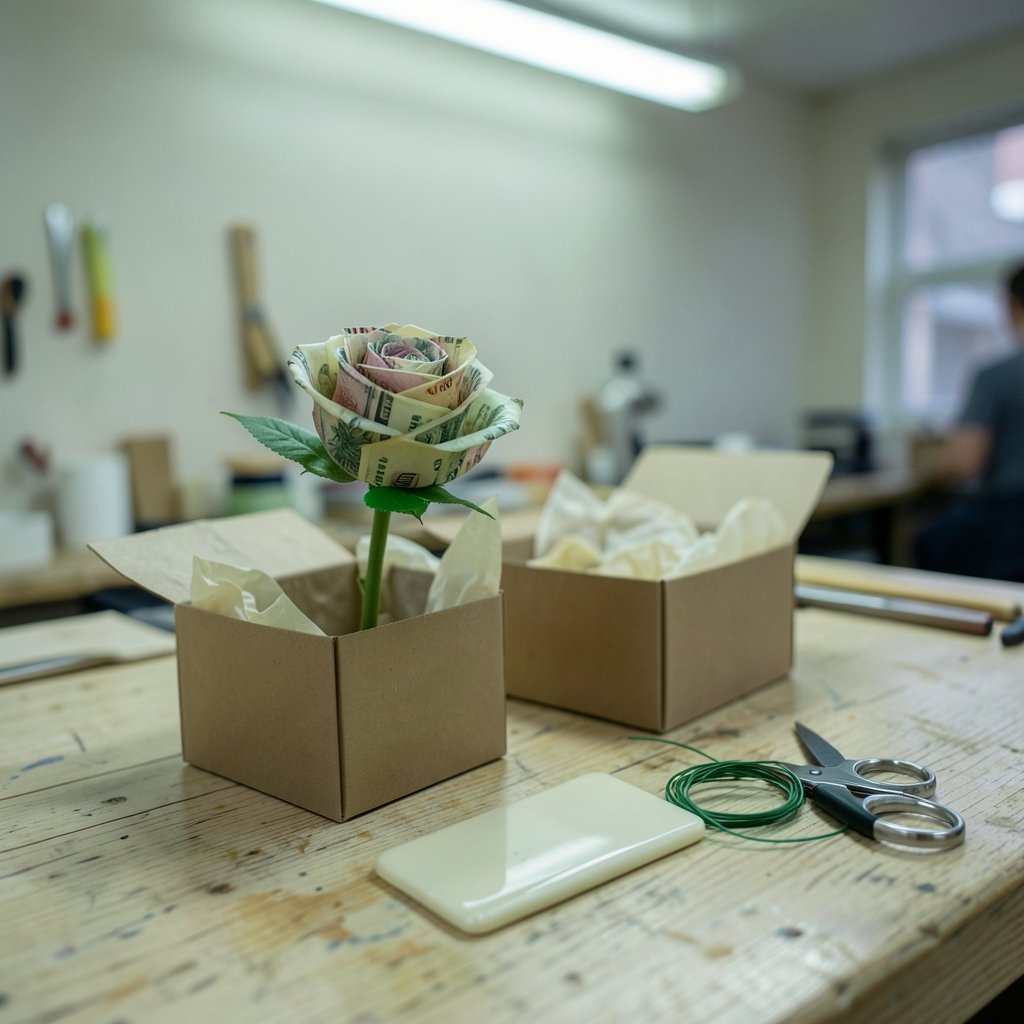
What do you give someone who has everything, at a moment when cash feels more useful than another candle or picture frame? For a growing number of gift-givers, the answer is a money rose — a rose-shaped bloom folded from real banknotes, sometimes wrapped around a stem and presented in a box or bouquet. It looks clever in photos, it costs exactly what it contains, and it turns an ordinary cash gift into something people remember.
But the phrase hides some practical questions. Is folding money legal? Which notes fold best? And why does the term sometimes pull up flower shops, crypto posts, and craft tutorials all at once? This guide walks through what a money rose actually is, how to make or buy one sensibly, and where the real risks sit. (Identity threat detection really costs where money goes)
What Is a Money Rose, Exactly?
A money rose is a decorative gift made by folding paper currency into the shape of a rose blossom, usually with a few notes layered or spiraled together. Most versions sit on a stem made from floral wire, a wooden skewer, or a rolled note, and many are finished with tape or a small elastic band hidden inside the folds. (How is U.S. currency made?)
It is worth being clear about one thing: there is no official definition. No dictionary, standards body, or government agency defines “money rose” as a term. It is an informal craft name, used the same way people say “money lei” or “money origami.” That looseness explains why search results are such a mixed bag. You will find Etsy sellers, TikTok tutorials, graduation-gift roundups, and occasionally a rose cultivar or a brand using the same words.
The everyday sense is the folded banknote gift. Assume that meaning unless the context clearly points elsewhere.
Why Cash Gifts Keep Coming Back
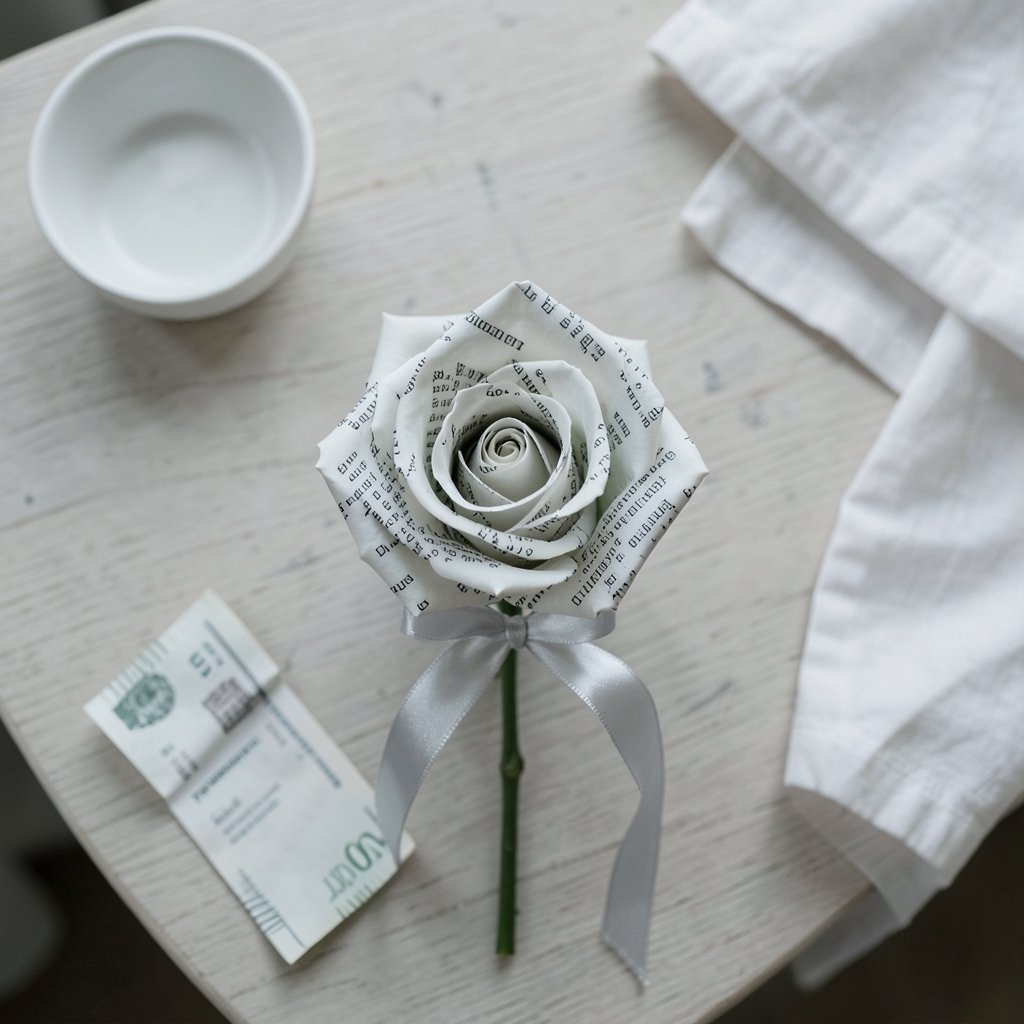
Folded-money gifts sit at an odd intersection of practical and sentimental. Cash is the most flexible gift there is, but handing someone a plain envelope can feel impersonal. Folding it into a flower adds effort, and effort is what makes a gift read as thoughtful.
This is especially true at graduations, where cash is a traditional gift and graduates often need it for moving costs, textbooks, or a first apartment. It also shows up at weddings, milestone birthdays, and holidays in cultures where giving cash is already normal. The craft tradition itself is informal and long-standing rather than codified, so treat claims about its “official” origins with suspicion.
There is also a quieter appeal: a money rose is a gift that cannot be the wrong size, the wrong color, or the wrong book. The recipient spends it on what they actually need.
The Practical Side: Which Notes Fold Best
Not all currency behaves the same in your hands, and this is where most first attempts go wrong.
U.S. dollar bills are made from a cotton-and-linen blend rather than wood pulp, which makes them springy, durable, and reasonably good at holding a crease. That blend is why a dollar bill survives the wash and why it folds differently from a sheet of printer paper. If you want the technical background on note composition, the U.S. Bureau of Engraving and Printing publishes material on how currency paper is made.
Polymer notes, used in Canada, Australia, the UK, and dozens of other countries, are a different story. They are slippery, they resist creasing, and they tend to unfold themselves. A money rose made from polymer notes usually needs hidden tape or wire to keep its shape, and the folds should be gentle to avoid permanent kinks.
A rough comparison helps set expectations:
| Note type | Fold behavior | Best approach |
|---|---|---|
| U.S. cotton-linen bills | Holds creases well, slightly springy | Classic spiral or petal folds |
| Polymer notes | Slippery, resists creasing | Light folds plus hidden wire or tape |
| Older, worn paper notes | Soft, may tear at creases | Use crisp notes or skip heavy folds |
| Very crisp new bills | Stiff, sharp creases | Pre-crease once, then fold |
The practical rule: crisp but not brand-new notes fold best. Worn bills tear at stress points, and fresh bills fight you until they have been creased once.
How to Make a Money Rose: A Simple Method
Most beginner tutorials follow the same basic sequence. This version assumes five to seven bills of the same denomination.
- Lay a bill flat and fold it in half lengthwise, then unfold it to create a center crease.
- Fold the two long edges in toward that center line, creating a narrow strip. Press the creases firmly with a fingernail or the back of a spoon.
- Roll the strip tightly from one short end to form the center bud, holding it with a small piece of tape or a twist tie.
- Repeat with the remaining bills, but roll each one more loosely than the last so the layers fan outward.
- Stack the rolls and bind them at the base with floral wire or a rubber band, then spread the outer layers to shape petals.
- Attach a stem by wrapping floral tape around the base and down a wire or skewer.
- Shape gently and place the finished rose in a small box or a bouquet with real or paper filler.
Two mistakes account for most failed attempts. The first is folding too tightly at the start, which leaves no room for the outer petals to open. The second is skipping the pre-crease, which makes crisp notes unfold mid-build. Neither ruins the gift, but both add frustration.
Is It Legal to Fold Money?
This is the question that stops people mid-craft, and the honest answer is: it depends where you live, and folding for a gift is generally not the same as defacing currency.
In the United States, federal law addresses mutilating, cutting, defacing, or altering currency with intent to render it unfit to be reissued. The relevant statute is 18 U.S.C. § 333, which you can read in full through the Cornell Legal Information Institute’s page on mutilating national bank notes. The key phrase is intent. Folding a bill into a flower for a gift does not make it unfit for circulation, and the note can be unfolded and spent. That said, this is a reading of the statute rather than an official ruling, so anyone planning something more invasive — cutting, gluing, coating, or mounting notes permanently — should check with their own bank first.
In the United Kingdom, the Currency and Banknotes Act 1928 makes it an offence to deface a banknote, and the Bank of England publishes guidance on what counts as a damaged note and when it will be replaced. Similar rules exist in many other countries, though the details vary widely.
The safe framing for anyone making a money rose: fold, do not damage. Keep the notes intact, avoid adhesive directly on the paper where you can, and skip anything that writes on or cuts the currency. If the recipient ever wants to spend it, they should be able to flatten it out.
Buying a Money Rose: What the Price Actually Covers
Pre-made money roses sell online and in mall kiosks, and the pricing is where buyers get confused. A money rose is usually priced at the face value of the notes inside plus a craft or service fee. That fee covers labor, wire, tape, packaging, and the seller’s margin.
Ask two questions before buying:
- How much of the price is actual currency? A rose made from a single $20 bill should not cost $45 unless the presentation is genuinely elaborate.
- Are the notes real and intact? Reputable sellers use genuine, unmarked currency. If a listing is vague about this, walk away.
There is a second, sharper risk in this space. Cash-adjacent gifts attract scammers, and the pattern shows up across the broader world of money fraud. Gift card scams are a useful comparison: victims rarely recover funds because the transfer is instant and hard to reverse, which is why pressure tactics around any cash-based purchase deserve suspicion. If a seller wants payment by gift card, wire, or crypto before shipping, that is a red flag, not a convenience. (Money gift)
Money Roses as Side Income: The Realistic Math
Some people fold money roses to sell, and the economics are modest but real. Materials cost little: floral wire, tape, and a box run a few dollars. The constraint is time. A clean five-bill rose takes a practiced hand maybe ten to fifteen minutes; a beginner takes far longer.
The margin comes from the fee, not the currency. That means volume, repeat buyers, and presentation matter more than folding skill alone. Sellers who do well usually specialize — graduation season, wedding favors, corporate gifts — and photograph their work well. If you are exploring small cash-based side projects more broadly, the same principle applies across many hustles: the money is in the service layer, not the raw material. Guides on how to make money with AI make a similar point about selling outcomes rather than tools.
Common Mistakes and What Actually Works
After watching enough tutorials and reading enough frustrated comments, a few patterns stand out.
Mistake one: using too many bills. A rose with twelve notes looks bulky and lopsided. Five to seven is the sweet spot for a recognizable bloom.
Mistake two: ignoring the stem. A beautiful blossom on a floppy skewer falls apart in the box. Wrap the stem properly and anchor it before shaping petals.
Mistake three: hiding the value. Recipients sometimes do not realize the flower is real money and treat it as decoration. A small card noting the amount solves this instantly.
Mistake four: forgetting the occasion. A money rose lands best where cash is already an accepted gift. At a formal event with a registry, it can read as odd. Context is everything.
What works: crisp notes, firm creases, a hidden binding, a tidy box, and a short handwritten note. The craft is simple; the presentation is what people remember.
Where the Term Gets Confusing
A quick word on ambiguity, because it affects how you search. “Money rose” is not a defined term anywhere authoritative. It is not a registered variety in horticultural databases, and it is not a financial product. When the phrase appears in crypto or investing content, it is usually a brand name, a hashtag, or loose marketing language rather than a real instrument.
That matters for readers who arrive expecting something else. If you were looking for a rose cultivar, check a proper horticultural registry instead. If you were looking for a financial scheme, be cautious: loosely named “money” products are a common hook for hype. The same wariness applies to buzzy currency topics like central bank digital currencies, where official explanations are far more useful than social media summaries.
Conclusion
A money rose is a small, clever idea that rewards a bit of care. It is a folded-currency gift with no official rulebook, which means the quality depends entirely on the maker: crisp notes, firm creases, a sturdy stem, and a presentation that shows the effort. The legal side is less frightening than people assume — folding for a gift is not the same as defacing currency — but the principle of fold, do not damage is worth keeping. Buyers should ask how much of the price is real cash and treat pressure to pay by gift card or wire as a warning. Do those things, and a money rose becomes what it was meant to be: cash that feels like a keepsake.
Frequently Asked Questions
Is it illegal to fold money into a rose?
In most places, no. Folding a banknote for a gift does not usually count as defacing it, because the note stays intact and can still be spent. U.S. law targets altering currency with intent to render it unfit, and UK law targets defacement. Cutting, gluing, or writing on notes is riskier, so check local rules if you plan anything beyond folding.
How many bills do I need for a money rose?
Five to seven bills of the same denomination produce a balanced, recognizable bloom. Fewer than five looks sparse, and more than about eight gets bulky and hard to shape. Beginners often start with five and add layers once the shaping feels comfortable.
What is the best denomination to use?
It depends on your budget and the occasion. Singles work well for practice and for large bouquets where the total matters more than each note. Fives, tens, and twenties make a single rose feel substantial. Whatever you choose, use notes of the same denomination so the petals look uniform.
Can I make a money rose with polymer banknotes?
Yes, but expect more difficulty. Polymer notes are slippery and resist creasing, so they tend to unfold. Use gentle folds, add hidden floral wire or a small piece of tape at the base, and avoid sharp creases that could permanently mark the note.
How much should a pre-made money rose cost?
A fair price is the face value of the currency inside plus a modest craft fee for labor and materials. Ask the seller directly how much real cash is included. If the markup is large, you are paying for presentation, which is fine as long as you know it.
Do people actually sell money roses as a business?
Some do, mainly around graduation and wedding seasons. The margin comes from the service fee rather than the currency, and time is the real cost. Sellers who succeed usually specialize in one occasion and invest in good photos and packaging rather than trying to compete on price alone.



