
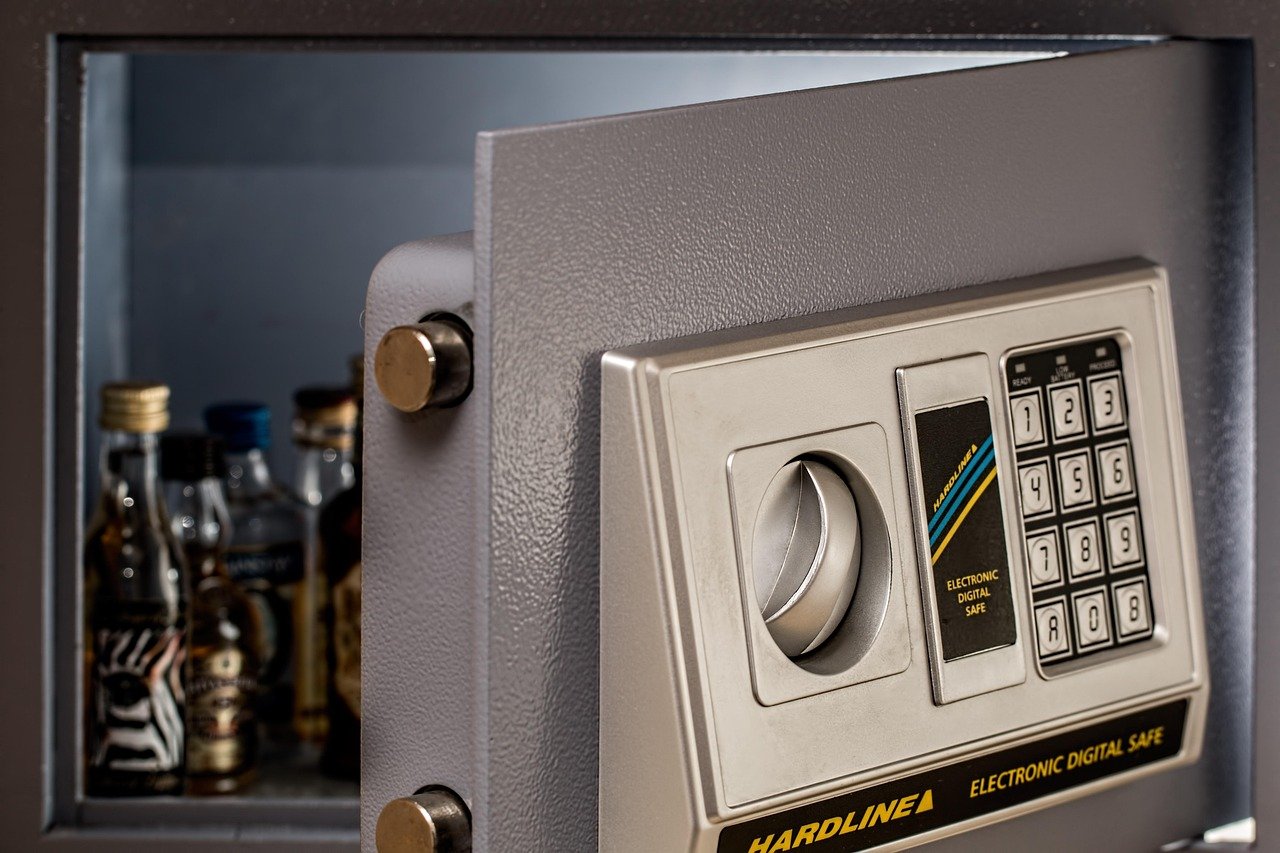
Where would you rather have your emergency fund right now: in a sock drawer, or in a steel box that survives a fire and a crowbar? That question sounds simple, but the answer splits into two very different problems. One is protecting paper and metal from flames, water, and thieves. The other is protecting your money from yourself, from inflation, and from the slow leak of small emergencies.
Most people who search for a “money safe” are actually asking one of three things. They want a physical box for cash and documents. They want a digital vault for passwords and accounts. Or they want to know how much cash is reasonable to keep outside a bank at all. This guide covers all three, with the practical details that sales pages tend to skip.
What “Money Safe” Actually Means in Practice
The phrase gets used loosely, and that looseness costs people money. A product sold as a “safe” in a big-box store is often a Residential Security Container, or RSC. That is a real rating, but it sits below a true burglary-rated safe. An RSC is designed to resist a casual, untrained attack for a few minutes. A burglary-rated safe is designed to resist a determined attack with specified tools for a specified time. (Safe (Wikipedia))
That distinction matters because marketing language blurs it. If a box weighs 40 pounds and costs less than a nice dinner, it is a deterrent, not a vault. It will stop a teenager with a screwdriver. It will not stop someone who brought a pry bar and five uninterrupted minutes.
The second meaning is digital. A password manager acts as a money safe in the sense that it guards the keys to your accounts. If someone gets your banking credentials, the loss is far larger than whatever cash sits in a drawer. Treating digital access as part of your money safety plan is not optional anymore.
The third meaning is a budgeting question: how much cash should sit outside the banking system? That number depends on your risks, your access to banks, and how you handle emergencies.
Fire Ratings and Burglary Ratings Are Not the Same Thing
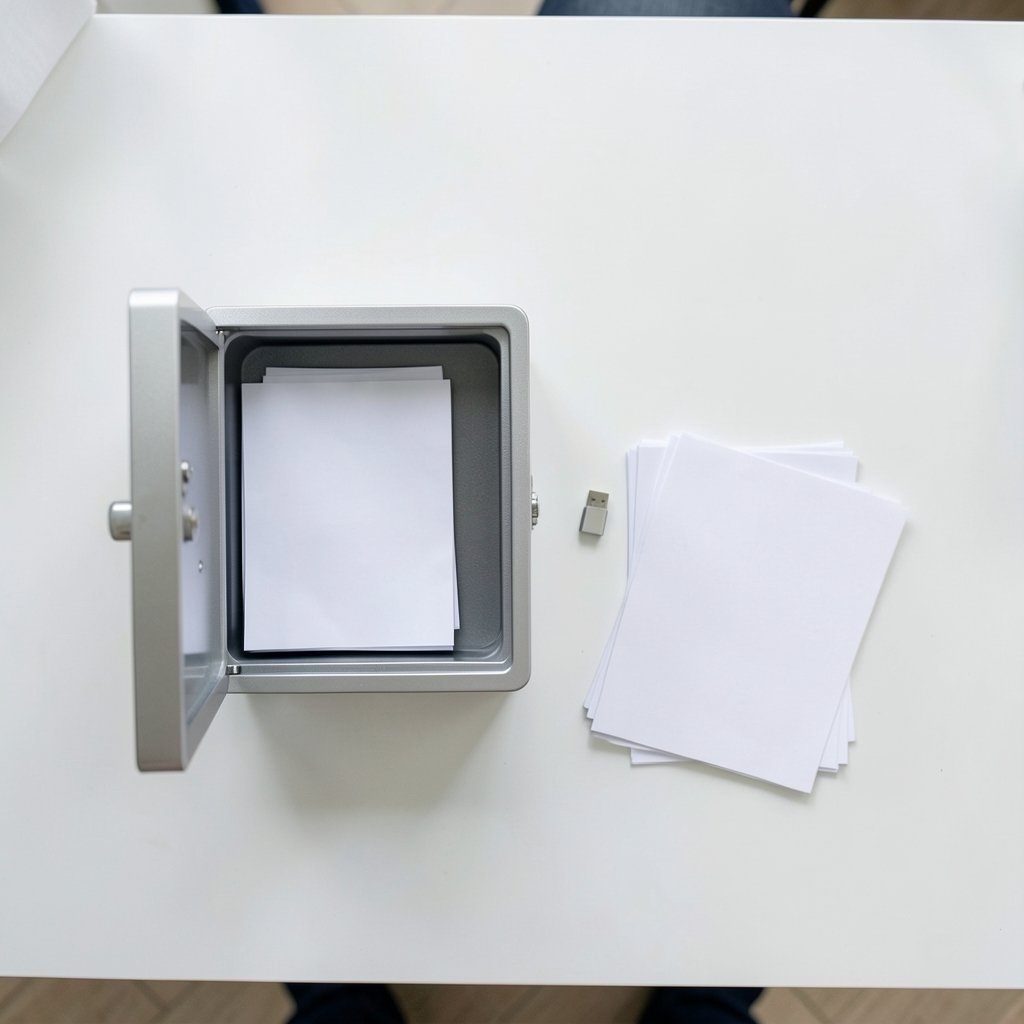
This is the mistake people make most often, and it is an expensive one. A safe can be excellent at one job and mediocre at the other.
Fire ratings are time-limited. A “one-hour” or “two-hour” rating means the interior stayed below a rated temperature for that long under a standard test fire. It does not mean forever, and it does not mean the contents will survive a house fire that burns hotter or longer than the test curve. Paper chars at roughly 350 °F, which is why paper-rated containers target that threshold. Digital media, photos, and film need a much lower interior temperature, so a paper-rated box is the wrong home for a USB drive full of family photos.
Burglary ratings work differently. They describe resistance to a defined set of tools for a defined time. A “TL-15” label, for example, means the container resisted a specified tool attack for 15 minutes. European safes use a grade scale from Grade 0 upward, with higher grades meaning more resistance to more serious tools.
| Feature | Fire-rated container | Burglary-rated safe | RSC (residential security container) |
|---|---|---|---|
| Main job | Keep interior cool | Resist forced entry | Deter casual theft |
| Typical test | Timed fire exposure | Timed tool attack | Limited attack resistance |
| Best for | Documents, photos | Cash, jewelry, valuables | Low-value items, light deterrence |
| Weakness | Easy to pry open | May cook paper in a fire | Fails against real tools |
The practical takeaway: if you need both, you either buy a safe rated for both or you split your valuables between two containers. Many households do the second because it is cheaper and honestly more secure. A thief who finds one box rarely keeps looking.
How Much Cash Belongs in a Home Safe?
There is no universal number, and anyone who gives you one is guessing. A reasonable framework looks at three things.
First, how fast can you reach a bank or ATM? If you live somewhere with reliable access, a small buffer covers most emergencies. If you are rural, travel often, or live in an area prone to power outages and storms, a larger buffer makes sense.
Second, what emergencies actually happen to you? A burst pipe, a car breakdown, a vet bill at midnight. Cash solves some of these instantly. It solves none of them if the amount is so large that losing it would hurt.
Third, what does insurance cover? Home insurance policies often cap cash coverage at a low figure, sometimes a few hundred dollars. That cap is the real ceiling on how much cash is sensible to keep at home. Check your policy before you assume a stolen stash is covered.
A common working rule is enough cash to cover a few days of essentials plus a small emergency fund, kept in small bills. Large bills are hard to break in a genuine emergency, and a roll of hundreds is exactly what a thief wants.
The Legal Tender Myth That Trips People Up
People often keep cash because they believe shops must accept it. That belief is shaky in the United States. U.S. currency is legal tender for debts, but there is no federal law forcing a private business to accept cash for a purchase. A store can set its own payment rules. Legal tender status settles debts; it does not compel a sale.
This matters for planning. If your reason for holding cash is “they have to take it,” that reason is weaker than you think. If your reason is “the card reader goes down during storms,” that reason is solid and testable. Build your cash plan on practical scenarios, not on legal assumptions.
Bank Deposits Versus Cash Under the Mattress
The strongest argument against hoarding cash is that deposits are insured. In the United States, FDIC deposit insurance covers up to $250,000 per depositor, per insured bank, per ownership category. That limit became permanent under the Dodd-Frank Act, signed in July 2010. Credit unions have a parallel limit through NCUA share insurance.
Notice the wording: per depositor, per bank, per ownership category. It is not a flat cap per account. Someone with a single account and someone with several accounts in different ownership categories can have very different coverage. Understanding those categories is worth an hour of your time if you hold meaningful savings.
Cash in a safe earns nothing and loses value to inflation. It also carries physical risk: fire, flood, theft, and simple misplacement. A safe protects against some of that, not all of it. The honest framing is that a home safe holds a working buffer, not a savings strategy.
Physical Security Habits That Actually Work
Buying a good safe is half the job. The other half is where it goes and who knows about it.
- Bolt it down. An unbolted safe is a carryable box. Most quality safes have bolt holes for exactly this reason, and anchoring it to a floor or wall stud defeats the most common attack, which is simply carrying the whole thing away.
- Put it somewhere boring. A safe in a bedroom closet is the first place a burglar looks. A safe in a garage, utility room, or under a floor plate gets far less attention.
- Do not advertise it. Delivery boxes on the curb, packaging left out, and casual conversation all leak information. So does telling the neighbor who watches your house.
- Separate the key and the combination. A safe with the combination taped inside the door is a locked box with extra steps.
- Photograph the contents. If you ever need to claim insurance, a dated photo inventory is the difference between a payout and an argument.
For digital safety, the same logic applies in a different form. Use a password manager, turn on two-factor authentication, and treat your email account as the main key to everything. If you want a grounded look at whether a popular manager is worth trusting, this honest review of Bitwarden’s safety and everyday use covers the trade-offs without hype. And if you are checking whether an app on your phone is legitimate before you trust it with financial details, this guide to checking whether an APK file is safe walks through the verification steps.
The Digital Side of Keeping Money Safe
A stolen phone or a leaked password can cost more than any burglar. Two habits carry most of the weight.
The first is layered authentication. A password alone is a single lock. Two-factor authentication means a stolen password is not enough. This is the digital equivalent of bolting your safe to the floor. (NIST)
The second is understanding what protects your browsing. DNS filtering, for example, blocks known malicious domains before your browser ever loads them. It is not a complete defense, but it removes a whole class of accidental clicks. This explanation of how DNS security layers keep browsing safe is a useful primer on what that protection does and does not cover.
For anyone moving money between accounts, speed and reversibility matter as much as security. A transfer that arrives instantly but cannot be recalled is a different risk than one that takes a day. This breakdown of how to transfer money between banks, including speeds, fees, and safer routes, is worth reading before you move a large sum.
Phones and apps deserve their own attention. A crashing banking app is annoying; a malicious one is dangerous. If an app keeps failing, this step-by-step guide to booting Android in safe mode to fix crashing apps explains how to isolate the problem without wiping your device.
Common Mistakes That Cost People Money
A few patterns show up again and again.
- Buying on weight alone. Heavier is not automatically better. A heavy box with a plastic door and a cheap lock is heavy and weak.
- Ignoring the insurance cap. People store thousands in cash and assume homeowners insurance covers it. It usually does not, or covers only a small fraction.
- Storing the wrong things together. Passports, cash, and a backup drive in one fire-rated box sounds tidy. It is also a single point of failure for three different risks.
- Forgetting humidity. Paper and metal in a damp basement degrade. A desiccant pack costs almost nothing.
- Never testing access. A safe whose combination you cannot remember under stress is a very expensive paperweight. Practice opening it, and make sure a trusted person can access it if something happens to you.
Scams deserve a mention too, because they drain more household cash than burglary does. Gift card scams in particular are nearly impossible to reverse once the card is redeemed, and victims rarely recover the money. Knowing how the gift card scam works and why recovery is so rare is cheaper than learning it the hard way.
Conclusion
A money safe is less a product than a plan. The physical box matters, but it is one layer among several: a properly rated container, bolted down and placed sensibly; a realistic cash buffer sized to your actual risks and your insurance cap; insured deposits doing the heavy lifting for real savings; and digital habits that keep your accounts out of reach. Get the layers right and the box becomes what it should be, a quiet backup rather than a false sense of security. Start with the insurance cap, work out how much cash you genuinely need, and buy a container rated for the job you are asking it to do.
FAQ
What is the difference between a safe and a security container?
A security container, often rated as a Residential Security Container, is built to resist a brief, casual break-in attempt. A burglary-rated safe is tested against a defined set of tools for a defined time and offers substantially more resistance. The two are often sold with similar language, so check the actual rating label rather than the box.
How much cash is safe to keep at home?
There is no fixed number, but most households are well served by a few days of essential expenses plus a small emergency buffer in mixed small bills. The real ceiling is usually your home insurance policy’s cash coverage limit, which is often only a few hundred dollars. Anything beyond that is better kept in an insured deposit account.
Does a fire-rated safe actually protect documents?
It protects them for a limited time under a standard test fire, not indefinitely. A one-hour rating means the interior stayed below the rated temperature for one hour under test conditions. Paper and digital media need different ratings, so store photos and drives in a container rated for media rather than paper.
Is it legal for a store to refuse cash?
In the United States, yes, in most cases. U.S. currency is legal tender for settling debts, but there is no federal requirement that a private business accept cash for a purchase. A shop can set its own payment policy, which is why keeping cash for “they have to take it” reasons is a weak plan.
Should I keep cash in a safe or in the bank?
Both, for different reasons. Insured bank deposits protect your savings and pay interest, with coverage up to $250,000 per depositor, per bank, per ownership category. A home safe holds a small working buffer for emergencies, outages, and immediate needs. Treat the safe as a backup, not a savings account.
Where should I put a home safe?
Somewhere unglamorous and hard to carry away. Utility rooms, garages, and closets other than the main bedroom get less attention from burglars. Bolt the safe to the floor or a wall stud, because an unanchored safe can simply be removed entirely.



