
Why does a plant sold as a “money tree” so often end up dropping half its leaves within a month of coming home? The answer is rarely bad luck. Most money tree problems trace back to a handful of care habits that are easy to fix once you know what the plant actually wants. A money tree is not fussy in the way orchids or calatheas are. It is a wetland tree from Central and South America that has been adapted to life in a pot, and it responds well to steady, moderate care. Get the basics right, and it will reward you with glossy green leaves and, in time, the braided trunk that made it famous. (Identity threat detection really costs where money goes)
What Is a Money Tree, Really?
The houseplant sold under the name money tree is almost always Pachira aquatica, a species native to swampy, tropical lowlands from Mexico down through northern South America. In the wild it can grow to roughly 18 metres, which is worth remembering when you see a 40-centimetre specimen on a supermarket shelf. It is a tree, not a small shrub, and it wants the light and moisture a tree expects.
The plant you buy is usually a young specimen with several stems braided together. That braid is a nursery technique, not a natural growth habit. Growers braid the stems while they are young and flexible, then let them thicken and fuse over time. It is purely cosmetic, but it is also why money trees are so often sold in tight clusters. Those clustered stems compete for water and root space, which becomes relevant later when you repot.
One warning before going further: the name “money tree” is shared by several unrelated plants. The jade plant (Crassula ovata) is sometimes called a money plant, and so is Epipremnum, a trailing vine. Care advice for those plants does not transfer. If you are unsure what you have, check the leaves. Pachira aquatica has palm-like, hand-shaped leaves with five to seven leaflets radiating from a central point. (Cbdc digital currency central bank money going digital)
Light: Bright but Never Blistering
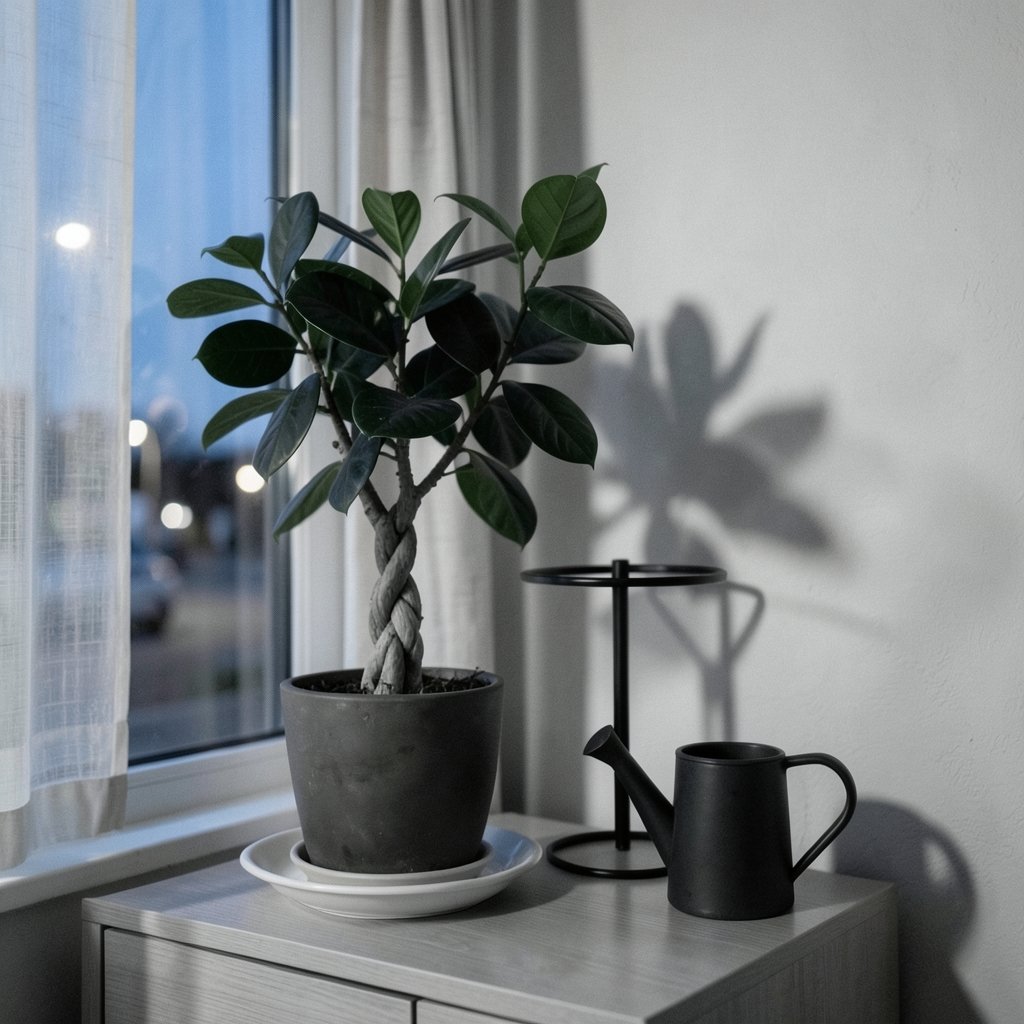
Money trees want bright, indirect light. A spot a metre or two back from a south- or west-facing window is usually ideal. Direct midday sun can scorch the leaves, leaving pale, bleached patches that never recover their colour. But the opposite mistake is more common: owners tuck the plant into a dim corner, and it responds by growing slowly, producing pale new leaves, and dropping older ones.
A practical test is to hold your hand up at midday where the plant sits. If it casts a sharp, hard-edged shadow, the light is too strong. If it casts no shadow at all, the light is too weak. A soft, defined shadow is about right.
Rotate the pot a quarter turn every week or two. Money trees lean toward the light, and an unrotated plant develops a lopsided canopy that is hard to correct later. If your only decent window faces north, consider a small grow light rather than settling for a dark corner.
Watering: The Skill Most Owners Get Wrong
Overwatering is the single most common cause of money tree decline. The plant comes from wetlands, which leads people to assume it wants constantly wet soil. It does not. In a pot, with no drainage to the water table, soggy soil suffocates the roots and invites rot.
The reliable rule is to water when the top few centimetres of soil feel dry to the touch. Push a finger in, or use a cheap moisture meter. Then water thoroughly until it runs out of the drainage holes, and empty the saucer so the pot is not sitting in a puddle. Never let the pot stand in water for more than an hour or so.
How often that translates to depends on light, pot size, room temperature, and season. In summer, a bright spot might mean watering every seven to ten days. In winter, in a cooler room, it might stretch to two or three weeks. Treat any fixed schedule you read online as a starting guess, not a rule. The soil tells you what to do.
Two symptoms are easy to mix up. Yellowing lower leaves with soft, mushy stems usually mean too much water. Crisp, brown leaf edges usually mean too little, or a sudden drop in humidity. Check the soil before you act, because guessing wrong in either direction makes things worse.
Soil and Drainage: Build the Right Foundation
A money tree needs a free-draining potting mix. A standard houseplant compost cut with perlite or coarse bark works well; aim for something that holds moisture without turning into a dense, airless block. Garden soil straight from the ground is a poor choice indoors because it compacts and drains badly in a pot.
Drainage holes are non-negotiable. If you fall for a decorative pot with no holes, keep the plant in a plastic nursery pot and lift it out to water. That extra step sounds fussy, but it prevents the root rot that kills more money trees than any pest. (Integrated Pest Management (IPM) Principles)
Temperature and Humidity: Think Tropical, Not Tropical Storm
Because it is a tropical species, a money tree prefers warm rooms and moderate to high humidity. Ordinary household temperatures suit it well. Cold draughts do not. Keep it away from air-conditioning vents, single-glazed winter windows, and doors that open onto cold air. As a rough guide, avoid letting it sit below about 10 to 12 °C, though sources vary on the exact minimum.
Dry indoor air, common in heated homes in winter, can cause brown leaf tips. Grouping plants together, using a pebble tray, or running a humidifier all help. Misting is popular but provides only a brief boost. If your home is very dry, a humidifier does more good than a spray bottle.
Fertiliser: Less Is More
Feed sparingly. A balanced liquid houseplant fertiliser at half strength, roughly once a month through spring and summer, is plenty for most money trees. Stop feeding in autumn and winter, when growth slows and unused nutrients build up in the soil. Over-fertilising shows up as salt crust on the soil surface and scorched leaf edges. If you see that, flush the pot with plenty of plain water and skip feeding for a couple of months.
Repotting and the Braid Problem
Repot every one to two years, or when roots start circling the drainage holes or pushing above the soil. Move up one pot size at a time; jumping to a much larger pot leaves excess wet soil around the roots and raises the risk of rot.
Here is where the braid matters. Money trees are often sold as several stems crammed into one small pot. When you repot, check whether the stems are genuinely fused or just tied together. If they are separate plants, you can pot them individually, which gives each one more root room and makes watering far easier to judge. Many owners never do this, then wonder why one stem thrives while another sulks.
Pruning is straightforward. Cut back leggy growth in spring to encourage a bushier shape, and remove any dead or yellowing leaves at the stem. The plant tolerates pruning well.
Common Problems and What They Mean
| Symptom | Likely cause | What to do |
|---|---|---|
| Yellowing lower leaves, soft stems | Overwatering, poor drainage | Let soil dry out, check drainage, reduce frequency |
| Crisp brown leaf tips | Dry air or underwatering | Raise humidity, check soil moisture |
| Pale, bleached patches | Direct sun scorch | Move away from harsh midday sun |
| Sudden leaf drop | Cold draught or sudden temperature change | Move to a stable, warm spot |
| Leggy, sparse growth | Too little light | Move closer to a bright window |
| Sticky residue or fine webbing | Spider mites or scale | Wipe leaves, treat with insecticidal soap |
Pests are usually a sign of stress. A healthy money tree in good light resists most infestations. Spider mites thrive in dry air, so improving humidity helps prevent them as well as cure the conditions that invite them.
Is a Money Tree Safe Around Pets?
For households with cats or dogs, this is often the deciding question. Pachira aquatica is generally listed as non-toxic to dogs and cats, which makes it a reasonable choice for pet-owning homes. That does not mean a pet should chew on it freely. Large amounts of any plant material can cause mild stomach upset, and the braided trunk and stakes can be tempting to bat at. Keep the pot stable and out of reach of determined chewers.
The Money Myth, Handled Honestly
The money tree carries a lot of folklore about fortune and prosperity, and there is nothing wrong with enjoying that. But it is worth being clear-eyed: the plant does not generate income, and no amount of careful watering will change that. If you are interested in how money actually works, from digital currencies to the economics of AI, that is a separate subject entirely. What the money tree does offer is a genuinely rewarding houseplant that teaches you to read soil moisture and light, skills that transfer to almost every other plant you own. Think of it as practice, not profit. (Gift card scam works victims rarely get their money back)
A Realistic Care Routine
Here is what actually works in practice, stripped of the extras:
- Place the plant in bright, indirect light and rotate it weekly.
- Check soil moisture with a finger before every watering, not on a calendar.
- Water thoroughly, then empty the saucer.
- Repot every one to two years in free-draining mix, one pot size up.
- Feed at half strength monthly in spring and summer only.
- Wipe the leaves every few weeks so dust does not block light.
- Keep it away from cold draughts and hot radiators.
The most common mistake is not neglect. It is over-attention: watering on a schedule, feeding too often, and repotting into a pot that is far too large. Money trees do better with a slightly hands-off owner who checks the soil and then leaves the plant alone.
Conclusion
Money tree care comes down to mimicking a warm, bright, humid forest edge without drowning the roots. Give Pachira aquatica bright indirect light, water it only when the top of the soil dries, use a free-draining mix, and keep it away from cold draughts. Feed lightly, repot sensibly, and separate those braided stems if they turn out to be separate plants. Do that, and the plant that dropped half its leaves in week one will settle in and grow into the calm, glossy centrepiece it was sold as. The fortune it brings is mostly the pleasure of keeping something alive and thriving, which turns out to be worth quite a lot.
How often should I water a money tree?
Water when the top few centimetres of soil feel dry, which in practice is often every seven to ten days in summer and every two to three weeks in winter. Light, pot size, and room temperature all shift that interval, so check the soil rather than following a fixed calendar.
Why is my money tree losing leaves?
Sudden leaf drop usually points to a change in conditions: a cold draught, a move to a darker spot, or a watering swing in either direction. Yellowing lower leaves with soft stems suggest overwatering, while crisp edges suggest dry air or underwatering. Check the soil first before changing anything.
Can a money tree live in low light?
It can survive in lower light, but it will grow slowly, produce pale leaves, and drop older ones. Bright, indirect light keeps it compact and healthy. If your only window is dim, a small grow light is a better fix than hoping the plant adapts.
Is a money tree toxic to cats and dogs?
Pachira aquatica is generally listed as non-toxic to cats and dogs, so it is a reasonable choice for pet-owning homes. That said, no plant should be treated as a chew toy, and large amounts of any plant material can cause mild stomach upset.
Should I undo the braid on my money tree?
You should not undo the braid itself, since the stems may already be fused. But if the pot contains several separate plants bundled together, separating them at repotting time gives each more root room and makes watering much easier to judge.
How big does an indoor money tree get?
Indoors, most money trees settle somewhere between one and two metres tall over several years, depending on light, pot size, and pruning. In the wild the species can reach around 18 metres, so an indoor plant is a deliberately constrained version of a much larger tree.



