
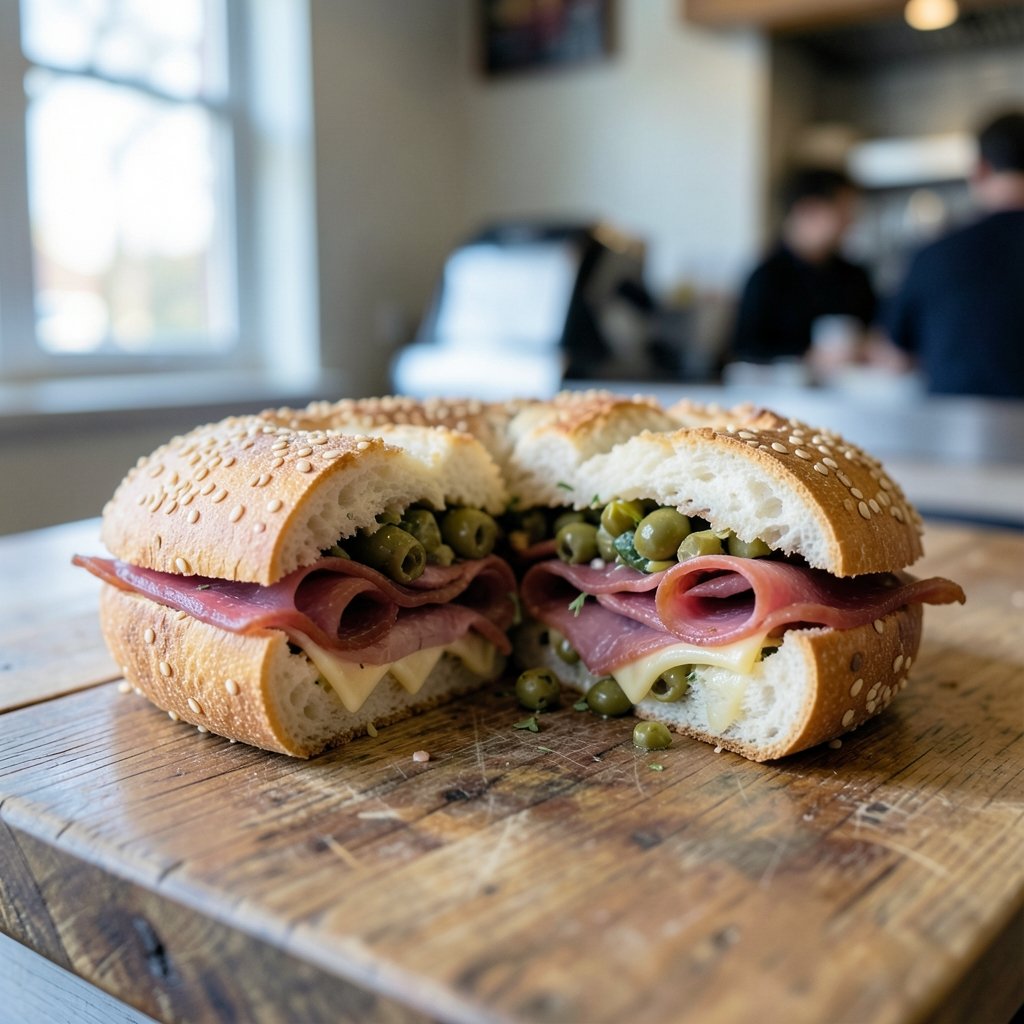
What makes a sandwich so famous that a city treats it like a civic treasure? In New Orleans, the answer comes on a big round loaf, dripping with olive oil and stuffed with cold cuts. It is the muffaletta sandwich, and it holds a place next to the po’ boy in the local food pantheon. It is also one of the most misunderstood sandwiches in America. People spell the name wrong, they skip the rest that makes it work, and they often build it on the wrong bread. This article covers where the muffaletta came from, what actually goes into it, how to build one at home, and the mistakes that turn a great sandwich into a soggy one.
Where the Muffaletta Comes From
The muffaletta is most commonly credited to Central Grocery, an Italian-American market in the French Quarter. According to the widely told story, owner Salvatore Lupo assembled the sandwich for Sicilian immigrant workers in the early 1900s. The date usually given is around 1906. That year is traditional rather than firmly documented, so it is fair to treat it as approximate. It is also unclear whether Lupo truly invented the sandwich or simply popularized a lunch that workers were already putting together from the ingredients they bought at his store.
The name itself comes from Sicily. There, muffuletta (sometimes spelled muffuledda) refers to a round, sesame-crusted loaf of bread. That is a useful distinction. In Sicily, the word describes the bread. In the United States, it describes the sandwich built on that bread. The etymology beyond that point is debated, and popular accounts disagree about which baker or term it traces back to.
One more thing worth knowing: origin stories in food are rarely clean. Some accounts credit other French Quarter grocers, including the now-closed Progress Grocery, with shaping the sandwich as it is known today. No single archival record settles the question. What is clear is that the muffaletta grew out of the Sicilian immigrant community in New Orleans and became a citywide staple over the following decades.
The Bread Makes or Breaks It
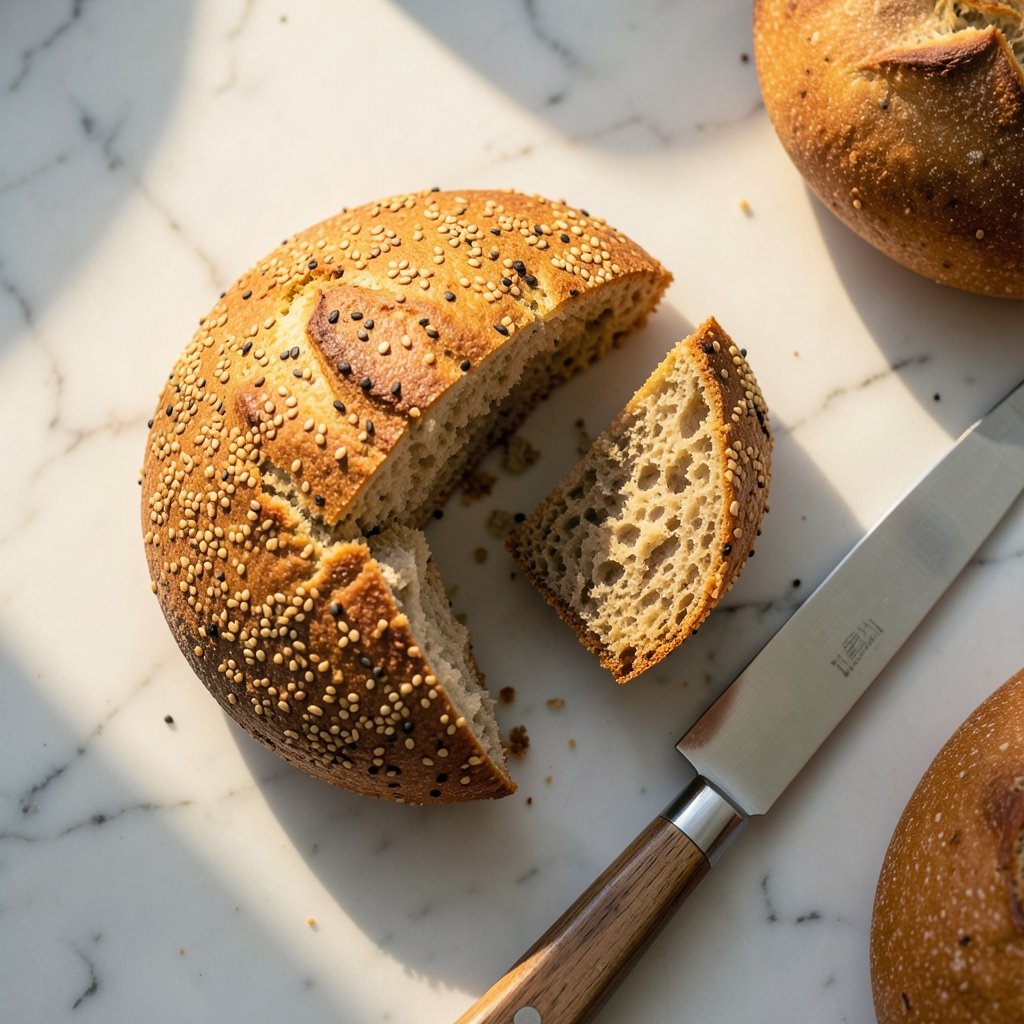
A real muffaletta starts with the right loaf. The classic bread is a large round loaf, roughly 10 inches across, with a soft crumb and a sesame-seed crust. In New Orleans bakeries, that loaf is itself called a muffuletta. The size matters for more than looks. The bread has to be sturdy enough to hold a heavy filling and porous enough to soak up olive oil without falling apart.
This is where most home cooks go wrong. A crusty sourdough boule looks impressive, but its tough crust and tight crumb fight the sandwich. A soft supermarket round is closer, but many are too airy and collapse under the weight. The ideal loaf sits in the middle: a thin, slightly crisp crust, a tender interior, and enough structure to survive being pressed.
If a proper muffuletta loaf is not available, look for a soft round Italian or sesame-crusted loaf of similar size. Avoid anything labeled “artisan” with a thick, blistered crust. The sandwich is not about chew. It is about the bread drinking up flavor.
What Goes Inside
The filling is simple, and that is the point. A traditional muffaletta layers:
| Component | Typical choices |
|---|---|
| Cured meats | Salami, ham, mortadella |
| Cheese | Provolone, sometimes mozzarella or Swiss |
| Signature relish | Olive salad |
| Bread | Round sesame-crusted loaf |
The meats are sliced thin and layered generously, though not to the point of absurdity. Provolone is the standard cheese, with mozzarella and Swiss appearing in some versions. What separates a muffaletta from a generic Italian sub is the olive salad, and it deserves its own section.
Olive Salad: The Defining Ingredient
Olive salad is a chopped relish, and it is what gives the muffaletta its identity. A typical version combines green olives, sometimes black olives, celery, carrot, garlic, oregano, and olive oil. Many recipes add pickled vegetables such as cauliflower or pepperoncini for tang and crunch. Every household and deli has its own formula, and the variations are wide.
The relish does two jobs. First, it brings a briny, salty, herbal punch that cuts through the richness of the cured meats and cheese. Second, its oil soaks into the bread and softens it, which is not a flaw. It is the design.
A practical note from people who make these often: chop the olives by hand or pulse them briefly in a food processor. Over-processing turns the salad into paste, and paste disappears into the bread instead of sitting in it. Let the finished olive salad rest for at least a few hours, ideally overnight, so the garlic and oregano meld with the oil. A jarred version works fine, but homemade gives you control over salt and acidity.
The Step Most People Skip: Pressing and Resting
Here is the mistake that ruins more muffalettas than any other ingredient choice. People build the sandwich and eat it immediately. A muffaletta is not a sandwich you assemble and serve. It is a sandwich you assemble and wait for.
The tradition calls for pressing or weighting the sandwich and letting it rest so the bread absorbs the olive oil and juices. Then it gets cut into quarters. Central Grocery is widely described as selling it in halves or quarters, and that quarter is a substantial meal on its own.
To do this at home:
- Build the sandwich on the bottom half of the loaf, layering meats, cheese, and a generous spread of olive salad.
- Replace the top half and press down firmly with your hands.
- Wrap the whole loaf tightly in plastic wrap or parchment.
- Set a heavy pan or a plate weighted with cans on top.
- Refrigerate for at least one hour, and preferably several hours or overnight.
- Unwrap, cut into quarters with a serrated knife, and serve at room temperature or slightly chilled.
The rest does real work. The bread compresses, the flavors marry, and the olive oil distributes evenly instead of pooling at the bottom. Skipping this step gives you a dry, crumbly sandwich with a puddle of oil on the plate.
Serving and Eating It
A muffaletta is traditionally served cold or at room temperature, not hot. That surprises people who expect a pressed, melty sandwich. The cold version is the classic. Some delis offer a heated variation, and it is enjoyable, but it is a departure from tradition.
Cut it into quarters. Each quarter is a full meal for most people, which is why the sandwich is often sold as a shareable loaf rather than a single serving. If you are packing one for later, keep it wrapped until serving. The tight wrap holds the shape and keeps the bread from drying out.
For a full New Orleans-style spread, pair it with something light and acidic. A simple green salad, pickled vegetables, or a cold drink balances the salt and richness. Heavy sides compete with the sandwich rather than complement it.
Common Mistakes and How to Avoid Them
A few recurring errors show up again and again, both in home kitchens and in delis outside Louisiana.
Using the wrong bread. A crusty artisan loaf or a soft sandwich roll both miss the mark. Seek out a round sesame loaf with a tender crumb.
Going light on the olive salad. The relish is not a garnish. It is the reason the sandwich exists. Use more than feels reasonable, and let its oil do its work.
Skipping the rest. This is the single biggest cause of disappointing results. Give it time in the fridge under weight.
Over-stuffing. A muffaletta is rich. Piling in twice the meat and cheese makes it heavy and hard to eat without improving it. Balance matters.
Serving it ice cold and dry. Straight from the fridge, unwrapped and un-rested, the bread turns stiff and the flavors stay separate. Let it come up slightly in temperature before serving, or at least let it rest properly before chilling.
Forgetting the wrap. Plastic wrap or parchment pressed tight around the loaf does more than store it. It holds the sandwich together while the weight does its job.
Making It Ahead and Scaling It
The muffaletta is one of the best make-ahead sandwiches in existence. Because it improves with rest, it is ideal for parties, picnics, and game days. Build several loaves the night before, weight them in the fridge, and slice just before serving.
For a crowd, keep the components separate until assembly: sliced meats, sliced cheese, and a bowl of olive salad. Let guests build their own quarters, or assemble a few loaves with different meat ratios. Some people prefer more mortadella, others more salami. The olive salad stays constant.
Leftovers hold up well for a day or two in the refrigerator, tightly wrapped. Beyond that, the bread starts to break down. If you have extra olive salad, it keeps for weeks in a jar in the fridge and works on pasta, grilled cheese, or roasted vegetables.
Why the Muffaletta Endures
The muffaletta is commonly listed alongside the po’ boy as a signature New Orleans sandwich, and it appears on menus citywide and in Italian-American delis far beyond Louisiana. That reach makes sense. The sandwich is a story about immigration, resourcefulness, and a city’s habit of turning simple ingredients into something memorable. A round loaf of bread, some cold cuts, and a jar of chopped olives became an emblem.
It also rewards patience in a way few sandwiches do. The rest, the weight, the wait: these are small acts that transform ordinary components into something cohesive. That is a satisfying lesson for anyone who cooks. For more on regional American sandwiches and the techniques behind them, see
Whether you grew up eating muffalettas in New Orleans or you are trying one for the first time, the formula is forgiving. Get the bread roughly right, make a punchy olive salad, layer with restraint, and then walk away for a few hours. The sandwich will do the rest.
Frequently Asked Questions
What is the difference between a muffaletta and a muffuletta?
They refer to the same thing. Muffuletta is the more common American spelling, while muffaletta appears frequently in New Orleans usage and in many menus. Both describe the round sesame-crusted Sicilian-style loaf and the sandwich built on it. Spelling varies by region and by deli, and neither version is wrong.
Is a muffaletta served hot or cold?
Traditionally it is served cold or at room temperature, after being pressed and rested so the bread absorbs the olive oil. Some delis offer a heated version, which is enjoyable but not the classic preparation. If you make one at home, rest it in the refrigerator under weight, then slice and serve slightly chilled or let it sit briefly at room temperature.
What is in a traditional muffaletta?
The classic build is a round sesame-crusted loaf filled with salami, ham, mortadella, and provolone, layered with olive salad. The olive salad, a chopped relish of green olives, celery, carrot, garlic, oregano, and olive oil, often with pickled vegetables added, is the defining ingredient. Mozzarella or Swiss sometimes replaces provolone.
Why does my muffaletta turn out soggy?
Sogginess usually comes from skipping the rest and from overfilling. The bread is meant to absorb oil, but it needs time under weight to do so evenly. Wrap the sandwich tightly, press it under a heavy pan in the refrigerator for several hours, and use a soft-crumbed loaf rather than a very airy one. Drain excess liquid from the olive salad before spreading it.
Can I make a muffaletta ahead of time?
Yes, and it is one of the best sandwiches for it. Build the loaf the night before, wrap it tightly, weight it in the refrigerator, and slice just before serving. It holds up well for a day or two wrapped in the fridge. Beyond that, the bread begins to break down and the texture suffers.
Where did the muffaletta sandwich originate?
It is most commonly credited to Central Grocery in New Orleans’ French Quarter, where Salvatore Lupo is said to have made it for Sicilian immigrant workers around 1906. That date is traditional rather than firmly documented, and some accounts credit other French Quarter grocers with shaping the modern sandwich. The name comes from the Sicilian word for the round sesame-crusted loaf itself.
Conclusion
The muffaletta sandwich is proof that a great sandwich does not need heat, technique, or expensive ingredients. It needs the right round loaf, a bold olive salad, a sensible layering of cured meats and cheese, and the patience to let it rest under weight. That last step is where most people stumble, and it is the easiest to fix. Whether you are recreating a New Orleans classic at home or ordering one at a deli, the muffaletta rewards anyone who respects its simple logic: soft bread, briny relish, salty meat, and time.



